
Nearly 90 percent of travelers rely on online comparison sites before booking a trip, revealing just how crucial these tools have become for finding the best options. With travel costs soaring and hundreds of deals scattered across the web, choosing the right platform can feel overwhelming. Knowing how these sites operate and what sets them apart gives you more control over your time, budget, and overall travel experience.
Table of Contents
- Defining Travel Comparison Sites And Their Purpose
- How Travel Aggregators Work To Find Deals
- Types Of Travel Sites And Provider Variations
- Comparing Features, Prices, And Hidden Fees
- Risks, Common Pitfalls, And How To Avoid Them
Key Takeaways
| Point | Details |
|---|---|
| Consolidated Travel Options | Travel comparison sites aggregate services from multiple providers, enabling users to efficiently compare prices and availability in one place. |
| Opaque Travel Inventory Benefits | These platforms offer access to significant discounts on unsold travel inventory, enhancing value for consumers. |
| Pricing Awareness | Travelers should be mindful of hidden fees and varying price structures across platforms to ensure they understand total costs before booking. |
| Potential Risks | Misleading comparisons and incomplete pricing information can affect travel experiences, making it crucial to read fine print and confirm total expenses. |
Defining Travel Comparison Sites and Their Purpose
Travel comparison sites are sophisticated online platforms that aggregate and consolidate travel services across multiple providers, enabling travelers to efficiently compare prices, features, and availability in one convenient location. Understanding the Benefits of Travel Comparison Sites reveals these platforms serve as comprehensive digital marketplaces where users can explore and evaluate travel options without navigating numerous individual websites.
According to research exploring online tourism aggregators, these platforms are strategically designed to improve user engagement and conversion rates by presenting travelers with a centralized, streamlined search experience. Key functions of travel comparison sites include:
- Consolidating travel inventory from multiple providers
- Offering real-time price comparisons
- Providing transparent booking options
- Presenting comprehensive travel service details
- Enabling quick and informed decision-making
One particularly intriguing aspect of travel comparison platforms is their ability to sell opaque travel inventory – unsold travel services at significant discounts while maintaining supplier anonymity. This approach allows travelers to access unique deals that might not be available through direct booking channels, creating additional value beyond traditional travel purchasing methods.
How Travel Aggregators Work to Find Deals
Travel aggregators are sophisticated digital platforms that function as comprehensive search engines specifically designed for travel services. According to research, understanding how aggregators like Kayak and Orbitz work reveals a complex ecosystem of data compilation and price optimization that goes far beyond simple price comparisons.
The core mechanism of travel aggregators involves several intricate steps:
- Collecting real-time pricing data from multiple travel providers
- Analyzing contractual relationships between platforms and suppliers
- Processing large volumes of travel inventory dynamically
- Applying advanced algorithms to rank and filter results
- Presenting users with most relevant and cost-effective options
Research indicates that these platforms’ effectiveness depends heavily on their contractual relationships with travel providers. This means the visibility and pricing of travel options can be strategically influenced by the backend agreements between aggregators and airlines, hotels, and other service providers. By negotiating bulk rates and maintaining extensive digital networks, travel aggregators create a marketplace where travelers can access potentially better deals than they might find through individual booking channels.
Types of Travel Sites and Provider Variations
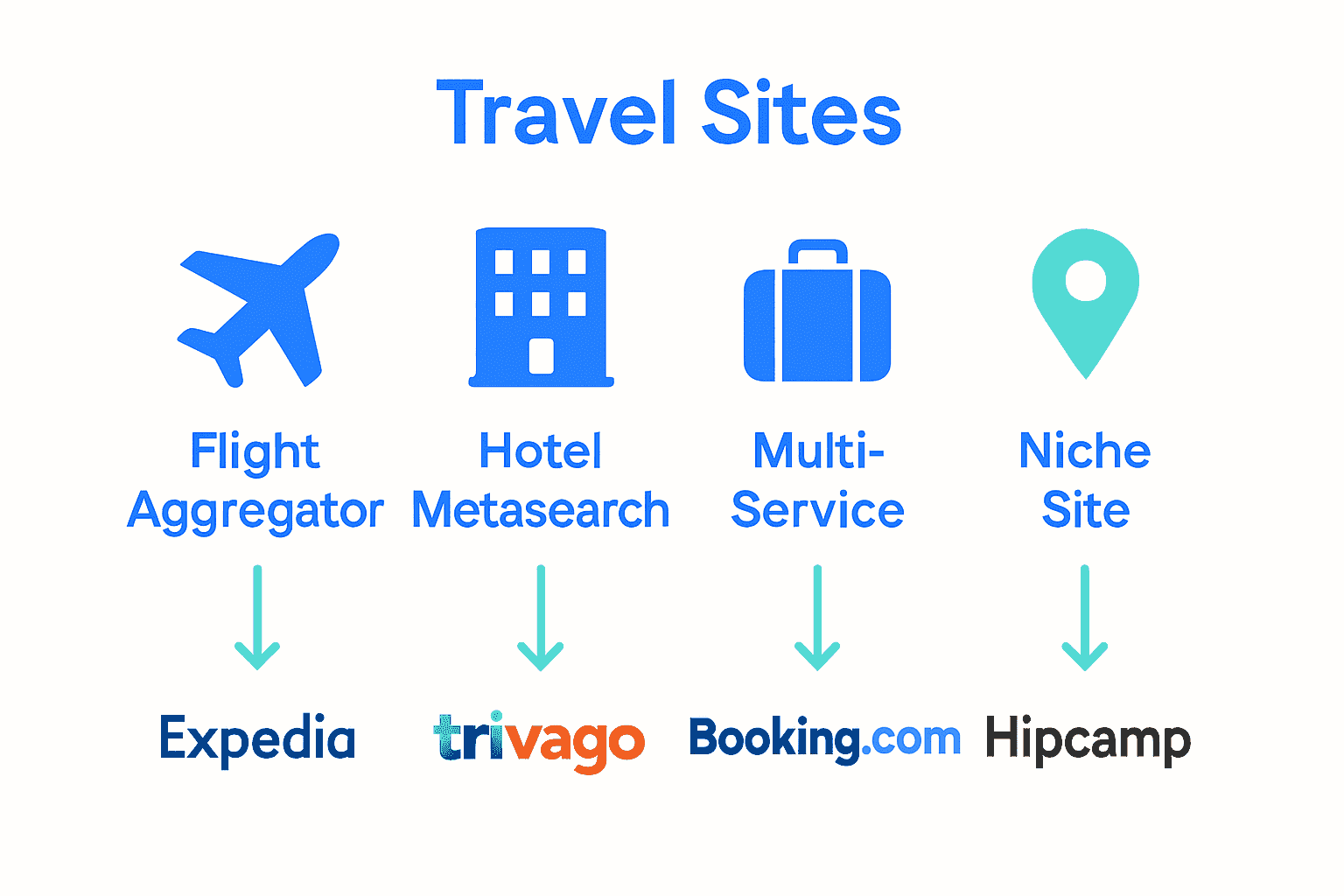
Travel websites have evolved into diverse ecosystems with multiple specialized platforms catering to different traveler needs. Understanding types of travel booking sites reveals a complex landscape of comparison services ranging from flight aggregators to comprehensive travel search engines that offer unique approaches to finding travel deals.
The primary categories of travel sites include:
Here’s a comparison of the primary types of travel sites:
| Type of Site | Main Focus | Example Platforms | Unique Features |
|---|---|---|---|
| Flight Aggregator | Airline tickets | Skyscanner Google Flights |
Multi-airline searches Flexible dates |
| Hotel Metasearch | Hotel & accommodations | HotelsCombined Trivago |
Compare hundreds of providers Map search options |
| Multi-Service Site | Flights, hotels, packages | Kayak Expedia |
All-in-one booking Package discounts |
| Niche Travel Site | Specialized travel segments | Hostelworld Luxury Escapes |
Focused experiences Unique inventory |
- Flight Aggregators: Platforms like Skyscanner and Google Flights that compile airline ticket prices
- Hotel Metasearch Engines: Services that collect accommodation options from hundreds of providers
- Multi-Service Comparison Sites: Platforms offering comprehensive travel package comparisons
- Niche Travel Websites: Specialized sites focusing on specific travel segments like budget travel or luxury experiences
Particularly fascinating is the emergence of meta-aggregator platforms that stack multiple comparison layers. For instance, some services now aggregate results from multiple flight search engines, creating a super-layer of travel price comparison. Research demonstrates the complexity of these systems, with global hotel metasearch engines like HotelsCombined now capable of collecting over 2 million deals across hundreds of sites, supporting multiple languages and currencies. This intricate network allows travelers unprecedented access to diverse travel options and competitive pricing strategies.
Comparing Features, Prices, and Hidden Fees
Navigating the complex world of travel pricing requires a strategic approach to understanding the nuanced fee structures across different platforms. How to use travel comparison sites for smart savings can help travelers decode the intricate pricing mechanisms that often hide significant additional costs.
Travelers should be aware of several critical pricing considerations:
- Base Price Variations: Different platforms display dramatically different initial pricing
- Add-On Fee Structures: Potential markup on services like seat reservations
- Mandatory vs. Optional Fees: Distinguishing between required and supplementary charges
- Currency Conversion Rates: Potential additional costs in international bookings
According to recent market analysis, some online travel agencies can markup add-ons like seat reservations and baggage by up to 220% compared to direct provider pricing. Moreover, the U.S. Federal Trade Commission’s new rule effective April 2025 will require full upfront disclosure of fees, including resort, convenience, and service fees, to combat misleading pricing practices.
 This regulatory change signals a significant shift towards transparency, empowering travelers to make more informed decisions by seeing the true total cost of their travel arrangements before completing a booking.
Risks, Common Pitfalls, and How to Avoid Them
Travel comparison sites offer tremendous value, but savvy travelers must navigate potential risks with careful strategy. Understanding the role of travel comparison sites becomes crucial in mitigating potential pitfalls that could compromise your travel experience and budget.
Common risks travelers should be aware of include:
- Incomplete Pricing Information: Hidden fees not initially displayed
- Misleading Comparisons: Platforms prioritizing commission over best value
- Insurance Coverage Gaps: Inadequate or misunderstood policy details
- Limited Provider Transparency: Restrictions on full service information
According to industry research, many aggregators tend to over-emphasize price at the expense of suitability, particularly with insurance products. This can lead travelers to misunderstand critical details like coverage excesses, potentially causing significant disappointment during actual claims. A reputable news source further warns about mandatory resort fees and other hidden charges frequently not disclosed during initial booking. To protect yourself, budget conservatively, read all fine print meticulously, and always confirm total costs before finalizing any travel arrangements. By maintaining a proactive and detailed approach, travelers can transform potential risks into manageable, transparent travel planning experiences.
Maximize Your Travel Savings by Comparing Like a Pro
Navigating the maze of travel prices and hidden fees can feel overwhelming, especially when you want the best deal without surprises. This guide highlights how comparing travel sites can save you from inflated fees and obscure charges while helping you spot true bargains. If you have struggled with unclear pricing or felt unsure about which booking site to trust, you are not alone. Understanding key concepts like opaque inventory and contractual relationships gives you the power to make smarter travel choices.
Ready to take control of your travel plans and uncover unbeatable deals? Start with our Travel Tips section to learn insider strategies that boost savings and confidence.

Don’t wait to transform your trip planning. Visit PilotTravelDeals.com today to compare flights, hotels, bike rentals, and more with ease. Dive deeper into expert advice at Miscellaneous and explore thrilling options at Adventure. Finding smart, transparent deals has never been easier or more essential for 2025 travel. Start your journey now and save big.
Frequently Asked Questions
What are travel comparison sites?
Travel comparison sites are online platforms that consolidate travel services from multiple providers, allowing users to compare prices, features, and availability in one location.
How do travel aggregators work to find deals?
Travel aggregators collect real-time pricing data from various travel providers and use advanced algorithms to rank and filter results, presenting users with the most relevant and cost-effective options.
What types of travel sites are available for comparison?
There are several types of travel sites, including flight aggregators, hotel metasearch engines, multi-service comparison sites, and niche travel websites, each focusing on different aspects of travel.
What should travelers look for when comparing prices on travel sites?
Travelers should consider initial base prices, add-on fees, mandatory versus optional charges, and currency conversion rates to ensure they understand the true total cost of their travel arrangements.