Every American traveler trying to stick to a budget knows how fast flight prices can soar when you wait too long. Studies show that booking early can save up to 40 percent compared to last-minute fares, yet a surprising number of myths keep people from acting quickly. Understanding airline pricing tricks is key for solo travelers determined to explore the world without breaking the bank. Discover how booking early unlocks more savings and better choices for your next trip.
Table of Contents
- Booking Early Flights: Core Concept and Myths
- Airfare Trends and When to Book in 2026
- Availability, Flexibility, and Seat Choices
- Financial Perks: Discounts and Upgrades
- Risks of Waiting and Common Mistakes
Key Takeaways
| Point | Details |
|---|---|
| Early Booking Benefits | Booking early allows travelers to access better prices, seating options, and more flexible change policies. |
| Timing for Optimal Prices | For international flights, book 3-4 months in advance, and for domestic, 1-2 months is ideal. |
| Understanding Pricing Dynamics | Dynamic pricing models mean that waiting to book can lead to higher costs and fewer options. |
| Maximizing Financial Advantages | Utilize price alerts and compare booking platforms to take advantage of discounts and incentives. |
Booking Early Flights: Core Concept and Myths
Early flight booking is a strategic approach travelers use to secure better prices and availability, but misconceptions often cloud understanding of this practice. Airlines implement complex pricing algorithms that reward proactive planners while penalizing last-minute purchasers. Understanding these mechanisms can help travelers make smarter booking decisions and potentially save significant money on their trips.
Contrary to popular belief, booking early doesn’t always guarantee the absolute lowest price. Airlines use dynamic pricing models that fluctuate based on demand, seasonal trends, and complex economic mechanisms. These strategies involve intricate calculations considering factors like route popularity, historical booking patterns, and projected passenger volumes. Travelers who assume a simple linear pricing model might miss nuanced opportunities for securing the best deals.
The core concept of early booking revolves around understanding airline incentive structures. Most carriers create pricing tiers that reward passengers who plan ahead, offering lower fares during initial booking windows. Typically, the sweet spot for booking international flights falls between 3-6 months prior to departure, where prices tend to be most stable and competitive. Budget-conscious travelers can leverage this knowledge by tracking fare trends, setting price alerts, and maintaining flexibility with travel dates.
Pro tip: Set up price tracking alerts on multiple platforms and be prepared to book when you see a fare drop below your target price threshold.
Airfare Trends and When to Book in 2026
As travelers prepare for upcoming journeys, understanding the evolving landscape of airfare pricing becomes crucial. Airfare trends in 2026 are expected to be influenced by complex economic factors, including global fuel prices, inflation rates, and post-pandemic travel recovery. Airlines are increasingly utilizing sophisticated pricing algorithms that dynamically adjust fares based on real-time market conditions, making strategic booking more important than ever for budget-conscious travelers.
The Bureau of Transportation Statistics reveals that booking timing remains a critical factor in securing optimal prices. Domestic and international flight prices typically follow predictable patterns, with certain months offering more favorable rates than others. For 2026, experts recommend booking international flights approximately 3-4 months in advance, while domestic flights show the best pricing when booked 1-2 months before departure. Travelers should also pay close attention to seasonal variations, as holiday periods and peak travel seasons can significantly impact pricing strategies.
Economic indicators suggest that 2026 will be a pivotal year for travel pricing. Factors such as fuel costs, global economic recovery, and airline capacity will play significant roles in determining airfare trends. Budget-conscious travelers can gain an advantage by remaining flexible with travel dates, monitoring price fluctuations, and utilizing advanced flight price prediction tools to identify the most cost-effective booking windows. Additionally, understanding the nuanced pricing strategies of different airlines can help travelers make more informed booking decisions.
Pro tip: Create price alerts for your desired routes and set up flexible date searches to maximize your chances of finding the most competitive airfares in 2026.
Here’s how optimal flight booking windows compare for 2026 travel:
| Trip Type | Recommended Booking Window | Price Stability Level | Influencing Factors |
|---|---|---|---|
| Domestic | 1-2 months before trip | Moderate during shoulder season | Holidays, major events, school breaks |
| International | 3-4 months before trip | High between 3-6 months | Fuel cost, global demand, airline capacity |
| Peak Season | As early as possible | Low, frequent price spikes | Vacation periods, festivals, global disruption |
Availability, Flexibility, and Seat Choices
Early flight booking provides travelers with unprecedented access to comprehensive seat selection options. Modern airline reservation systems offer intricate seating maps that allow passengers to choose their preferred locations well in advance, ranging from extra legroom exit rows to quiet zones and strategic window or aisle positions. This early selection process becomes increasingly important as prime seats get claimed quickly, especially during peak travel seasons.

The advantages of booking early extend far beyond simple seat preferences. Travelers who reserve flights months in advance gain significant flexibility in managing their travel plans. Airlines typically offer more lenient change and cancellation policies for early bookings, allowing passengers to adjust their itineraries with minimal financial penalties. Premium seats like exit rows and bulkhead locations are particularly sought after, with availability diminishing rapidly as the departure date approaches. Budget-conscious travelers who understand airline seat dynamics can strategically secure more comfortable accommodations without paying substantial upgrade fees.
Navigating seat selection requires understanding airline-specific strategies and timing. Some carriers release specific seat categories at different booking stages, with premium options often becoming available first to frequent flyers or passengers booking early. Travelers can maximize their chances of securing ideal seats by joining airline loyalty programs, monitoring seat map changes, and being prepared to make selections immediately after booking. The most desirable seats typically include exit rows, seats near the front of the cabin, and locations with extra legroom or enhanced recline capabilities.
Pro tip: Create a seating preferences spreadsheet tracking your ideal seat characteristics across different airlines to streamline your booking strategy.
Below is a summary of seat selection strategies for early flight booking:
| Strategy | Benefit | When Most Effective |
|---|---|---|
| Book at opening window | Access to premium seat choices | High-demand routes |
| Join loyalty programs | Early access and upgrades | Frequent flyer with status |
| Monitor seat maps | Track best remaining options | Days leading to departure |
| Flexible travel dates | Avoid overcrowded seat selections | Off-peak seasons |
Financial Perks: Discounts and Upgrades
Early flight booking offers travelers significant financial advantages through strategic airline incentive programs. Airlines consistently reward proactive travelers with exclusive discounts, promotional rates, and potential upgrade opportunities that become increasingly scarce as departure dates approach. These financial perks are designed to encourage advance planning while providing substantial savings for budget-conscious passengers.
The economics of early booking revolve around reducing uncertainty for airlines and offering tangible benefits to passengers. Booking platforms leverage sophisticated pricing algorithms that create tiered discount structures, with the most attractive financial incentives typically available during initial reservation windows. Travelers who book early can access lower base fares, receive complimentary upgrades, and take advantage of flexible change policies that protect their financial investment. These strategies benefit both airlines, by securing early revenue, and passengers, by providing cost-effective travel options.
Understanding the nuanced landscape of travel discounts requires strategic approach. Different airlines and booking platforms offer unique financial incentives, including loyalty program points, companion ticket discounts, and seasonal promotional rates. Savvy travelers can maximize their savings by comparing multiple booking channels, tracking price fluctuations, and being prepared to lock in rates during optimal booking periods. Credit card partnerships, frequent flyer programs, and early booking bonuses can provide additional financial advantages that significantly reduce overall travel expenses.
Pro tip: Set up price tracking alerts across multiple platforms and be prepared to book immediately when you spot a significant discount.
Risks of Waiting and Common Mistakes
Delaying flight bookings carries significant financial and logistical risks that many travelers underestimate. Booking window research reveals that procrastination often leads to dramatically higher prices and reduced travel options. Airlines and booking platforms employ sophisticated revenue management strategies that incrementally increase prices as departure dates approach, systematically penalizing last-minute travelers.
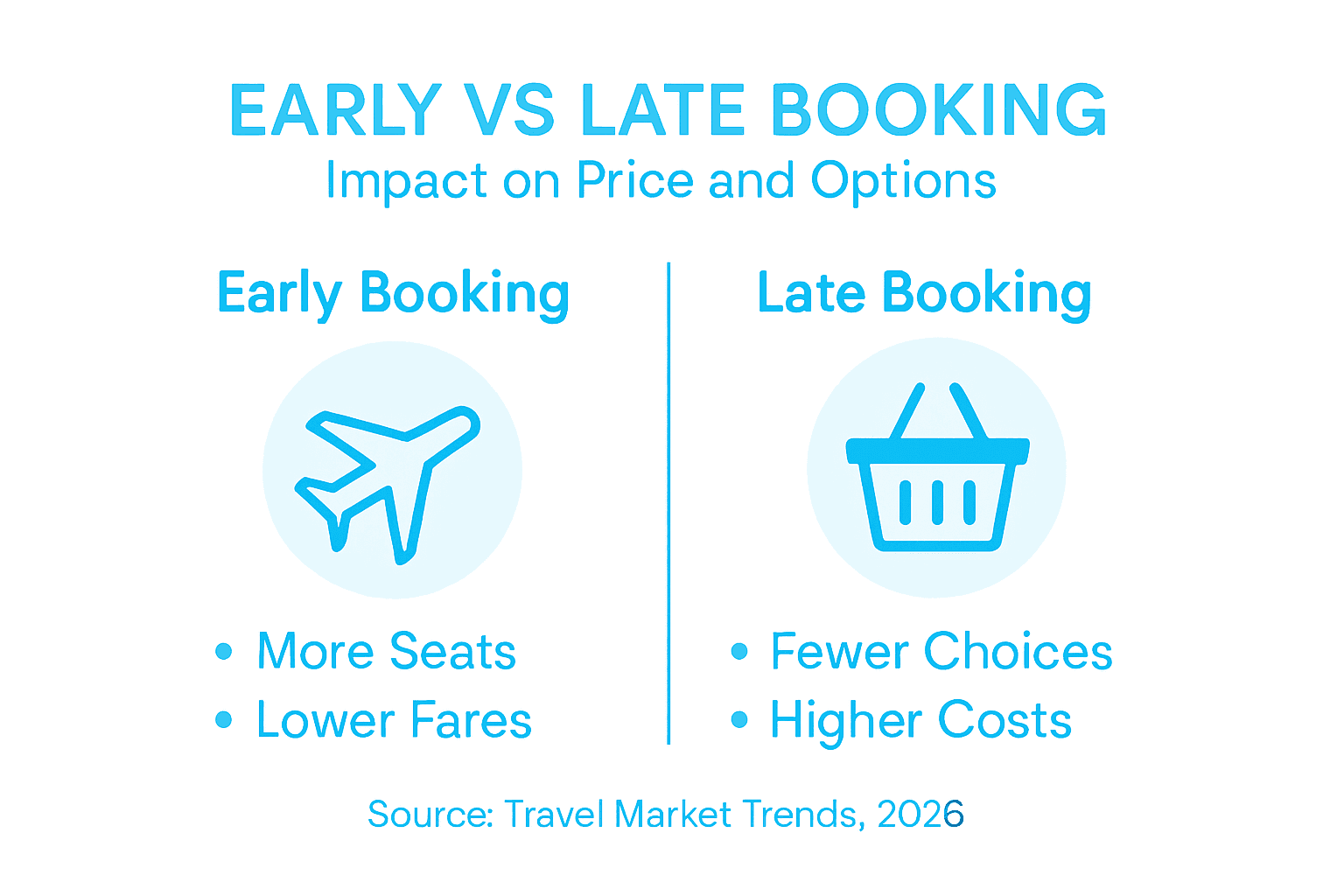
Some of the most common mistakes travelers make include assuming prices will magically drop, waiting for non-existent last-minute deals, and failing to understand dynamic pricing mechanisms. These misconceptions can result in paying substantially more for flights, losing preferred seat selections, and experiencing limited itinerary choices. The IATA Reservations Handbook highlights that passenger behavior segmentation clearly demonstrates how delayed booking disproportionately impacts budget-conscious travelers, who are most vulnerable to price fluctuations.
Strategic travelers mitigate risks by understanding pricing trends and maintaining flexibility. This involves monitoring fare trends across multiple platforms, setting price alerts, and being prepared to book when optimal pricing windows emerge. Different routes and destinations have unique booking patterns, so generic advice about waiting for deals can be dangerously misleading. International flights, in particular, tend to have the most predictable pricing curves, with the most competitive rates typically available 3-4 months before departure.
Pro tip: Create a spreadsheet tracking historical prices for your preferred routes to develop a personalized understanding of when to book for maximum savings.
Maximize Your Savings by Booking Early with PilotTravelDeals.com
The challenge many travelers face is navigating the complex and dynamic pricing strategies airlines use. This article explains how early booking can unlock significant financial perks, better seat choices, and greater flexibility but also warns against delaying flights due to rising prices and limited availability. If your goal is to secure the best deals with confidence and avoid last-minute stress, understanding when and how to book is essential.
At PilotTravelDeals.com, we understand these pain points and help you overcome them by aggregating thousands of flight deals and travel options in one easy-to-use platform. With tools designed around savvy booking habits, you can track fare trends, compare prices across airlines, and set alerts for your preferred routes. Our extensive Travel Tips section also empowers you with insider knowledge on timing and seat selection so you can book smart and save more.
Don’t let rising prices catch you off guard. Start exploring the best flight deals today at PilotTravelDeals.com to lock in your savings early. Visit our Miscellaneous category for additional insights and get ready for your most cost-effective trip in 2026.
Frequently Asked Questions
How far in advance should I book international flights in 2026?
Booking international flights approximately 3-4 months prior to departure is recommended to secure optimal prices and availability.
What are the financial benefits of booking flights early?
Early flight bookings can lead to lower base fares, exclusive discounts, complimentary upgrades, and flexible change policies that can save travelers significant money.
How does dynamic pricing affect flight booking?
Dynamic pricing allows airlines to adjust fares based on demand and other factors in real-time, meaning prices can increase as the departure date approaches, making early booking more advantageous.
What strategies can I use to secure better seats when booking early?
To secure better seats, book as soon as possible, join airline loyalty programs, monitor seat map changes, and be flexible with travel dates to avoid overcrowded options.
Recommended
- Advantages of Early Flight Booking for Families – PilotTravelDeals.com
- How to Get Flight Discounts 2025: Step-by-Step Savings – PilotTravelDeals.com
- Essential Tips to Book Cheap Flights Easily Online – PilotTravelDeals.com
- Top Tips to Book Cheap Flight Tickets Easily – PilotTravelDeals.com
- What Is Flexible Booking? Complete Guide for 2025 – Guestly Homes