TL;DR:
- A travel side hustle allows travelers to earn money through activities like trip planning and content creation while exploring new places. It is ideal for budget travelers because it relies on skills they already possess and requires little upfront investment. Success depends on validating ideas, charging professional fees, and treating the work as a small business for sustainable income.
A travel side hustle is a flexible, travel-related income stream you run alongside your main job, earning money through activities like trip planning, content creation, or flight deal curation while you explore. Think of it as turning the research and experiences you already enjoy into a paid service. For budget-conscious travelers, the appeal is obvious: the skills you use to find discounted flights and cheap hotels are exactly the skills clients will pay for.
Common entry points include:
- Travel advising: Booking hotels, tours, and packages for clients and earning supplier commissions
- Travel deal curation: Building newsletters or social media channels around flight and hotel discounts
- Content creation: Photos, short videos, and social posts for local hospitality businesses
- Group trip planning: Organizing itineraries and negotiating rates for groups of friends or colleagues
- Freelance travel writing: Producing destination guides and articles for publications or blogs
None of these require a large upfront investment. Most start with tools you already own.
What are the most popular travel side gigs for budget travelers?
The best travel side gigs for budget travelers are the ones that cost almost nothing to start and draw on knowledge you have already built.

Travel advising is the most direct path. You book hotels, cruises, and tours for clients and earn commissions paid by the suppliers after the trip completes. Travel deal curation is a natural fit if you already spend hours tracking flight prices and error fares. Curators share deals through free newsletters, Instagram, or paid membership communities, and monetize through affiliate links or subscriptions.
Content creation does not require a big following. Local cafes, hostels, and tour operators regularly pay for authentic content without expecting influencer reach. A clean 30-second video of a hostel common room or a well-lit photo of a cafe’s breakfast spread is exactly what small hospitality businesses need for their social feeds. Platforms like YouTube, TikTok, and Instagram also pay creators directly through sponsorships and creator funds as audiences grow.
Group trip planning suits travelers who already organize getaways for friends. You earn through supplier commissions or a flat planning fee added to the trip price. Itinerary design is a lighter version: clients book their own travel, but pay you for a detailed day-by-day plan. Both gigs reward destination knowledge over technical skills.
How to start and validate a travel side hustle
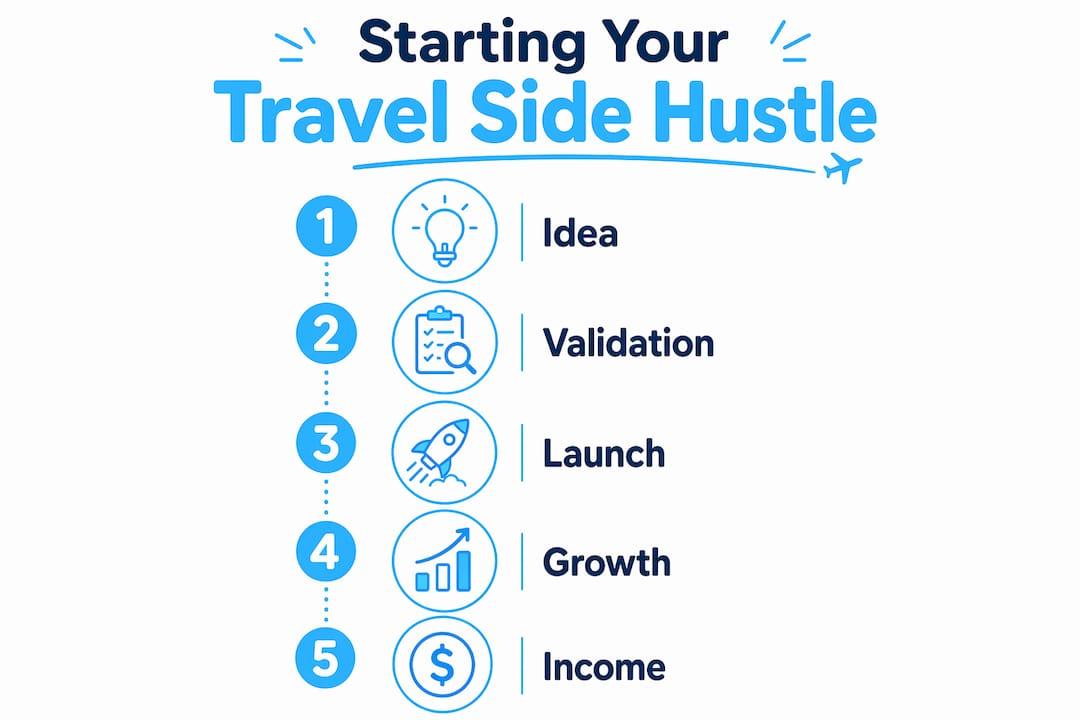
The fastest way to waste time on a side hustle is to build something nobody wants. Validation comes first: test whether your idea solves a real traveler pain point before committing serious hours to it.
A practical validation sequence looks like this:
- Define the service clearly: What exactly will you do, for whom, and at what price?
- Test the idea with prompts: Use ChatGPT to pressure-test your concept. Ask it to identify gaps in your offer, common objections, and the fastest path to a first paying client.
- Get early feedback: Offer the service to one or two people in your network at a reduced rate in exchange for honest feedback.
- Confirm willingness to pay: A compliment is not validation. A payment is.
For travel advisors specifically, joining a host agency skips months of certification. Host agencies already hold accreditation numbers like IATA credentials, and you book under their umbrella from day one. Fora Travel, for example, charges $300 per year and gives new advisors access to booking tools, training, and vendor relationships immediately.
Pro Tip: Before building a website or logo, spend one week pitching your service concept directly to five people who match your ideal client. Their questions will tell you more about your offer than any planning session.
What should you realistically expect from travel side hustle income?
Travel side hustle income is supplementary, not a salary replacement, at least at the start. Consistency and patience are what separate people who build real income streams from those who quit after a slow first month.
A travel advisor who books a single six-day trip can earn a $100 planning fee plus commissions on hotels and tours. Planning fees are typically charged as a non-refundable upfront fee per travel day, usually ranging from $20 to $50, and hotel commissions generally vary depending on the property and host agency relationship. That is real money for a few hours of work, but building a steady client pipeline takes months.
A few habits that keep side hustlers on track:
- Set a fixed weekly time block for client outreach and content production, even during trips
- Treat the side hustle as a small business: track income, expenses, and client communications separately
- Avoid taking on more clients than you can serve well; a bad review early on costs more than a missed booking
- Charge upfront planning fees from the start to protect your time and signal professionalism
Burnout usually hits people who try to monetize every hour of every trip. Focusing on one or two tasks per trip, such as capturing content or following up with one prospective client, keeps the work sustainable.
How content creation for travel brands can fund your trips
You do not need thousands of followers to get paid for travel content. Local hospitality businesses value quality over audience size, which opens a real niche for travelers with a good eye and a smartphone.
The types of content small businesses actually pay for include:
- Short-form video walkthroughs of rooms, menus, or tour experiences
- Still photography for Google Business profiles and Instagram feeds
- Written descriptions and captions for booking pages
Platforms like RoamReel connect traveling creators directly with local businesses posting paid gigs. A cafe or hostel posts a shot list, you shoot it during a visit you would have made anyway, and payment arrives on approval. No cold pitching, no follower threshold.
Pro Tip: When approaching a hospitality client, bring a one-page PDF showing two or three sample deliverables and a clear price. Businesses respond to specifics. “Three Instagram reels and ten still photos for $150” closes faster than a vague offer to “create content.”
For travelers interested in the gastronomy tourism niche, food-focused content for restaurants and culinary tour operators is a growing segment with consistent demand and relatively little competition from large agencies.
Legal and tax considerations for US travel side hustlers
Earning money through a travel side hustle in the US means the IRS considers you self-employed, even if it is just a few hundred dollars a month. That comes with real obligations.
Self-employment income is subject to both income tax and self-employment tax, which covers Social Security and Medicare contributions. You report this income on Schedule C of your federal return. Keep records of every payment received, and save receipts for legitimate business expenses: software subscriptions, professional photography gear, host agency fees, and travel costs directly tied to client work may all be deductible.
Quarterly estimated tax payments are required if you expect to owe $1,000 or more in federal taxes for the year. Missing these payments triggers penalties. A tax professional who works with self-employed individuals, or a service like TaxesForTravelAgents.com for advisors specifically, can help you stay compliant without overpaying.
If you earn income through platforms that pay via PayPal, Venmo, or direct bank transfer, those platforms are required to issue a 1099-K form once payments cross the IRS reporting threshold. Do not assume small amounts go unnoticed.
Skills and tools that give travel side hustlers an edge
The skills that matter most depend on which gig you choose, but a few cross every category.
Research and organization are non-negotiable for travel advisors and deal curators. Knowing how to use travel comparison tools efficiently, track price alerts, and read booking fine print separates advisors who save clients money from those who just pass along whatever the first search returns.
Visual storytelling drives content creation income. You do not need professional camera gear, but you do need to understand basic composition, natural lighting, and video editing. Free tools like CapCut handle most mobile video editing needs. Adobe Lightroom Mobile covers photo editing at no cost on a basic plan.
Communication and client management matter more than most new side hustlers expect. Responding quickly, setting clear expectations, and delivering exactly what you promised builds the referral base that makes income grow. A simple CRM tool like Notion or even a well-organized Google Sheet tracks clients, bookings, and follow-ups without any cost.
For staying current on deals and industry news, breaking travel updates give content creators and advisors the timely angles that keep their audiences engaged.
Key Takeaways
A travel side hustle earns real supplementary income when you validate the idea first, charge professional fees from day one, and treat it as a small business rather than a hobby.
| Point | Details |
|---|---|
| Validate before building | Test your idea with real potential clients before investing time in branding or websites. |
| Host agencies speed up entry | New travel advisors can start earning commissions immediately by joining a host agency like Fora Travel. |
| Planning fees protect your time | Travel advisors typically charge a non-refundable upfront planning fee ranging from $20 to $50 per travel day. |
| Content gigs need no big following | Local hospitality businesses pay for quality photos and video regardless of your follower count. |
| Self-employment taxes apply | US side hustle income is taxable; track expenses and make quarterly estimated payments to stay compliant. |
Recommended
- 9 Essential Budget Travel Hacks Every Traveler Must Know – PilotTravelDeals.com
- Unlocking Affordable Adventures: Tips for Cheaper Travel Without Sacrificing Fun – PilotTravelDeals.com
- Travel Budgeting – Smart Choices for Affordable Trips – PilotTravelDeals.com
- Budget travel guide: Proven strategies to save on every trip – PilotTravelDeals.com