
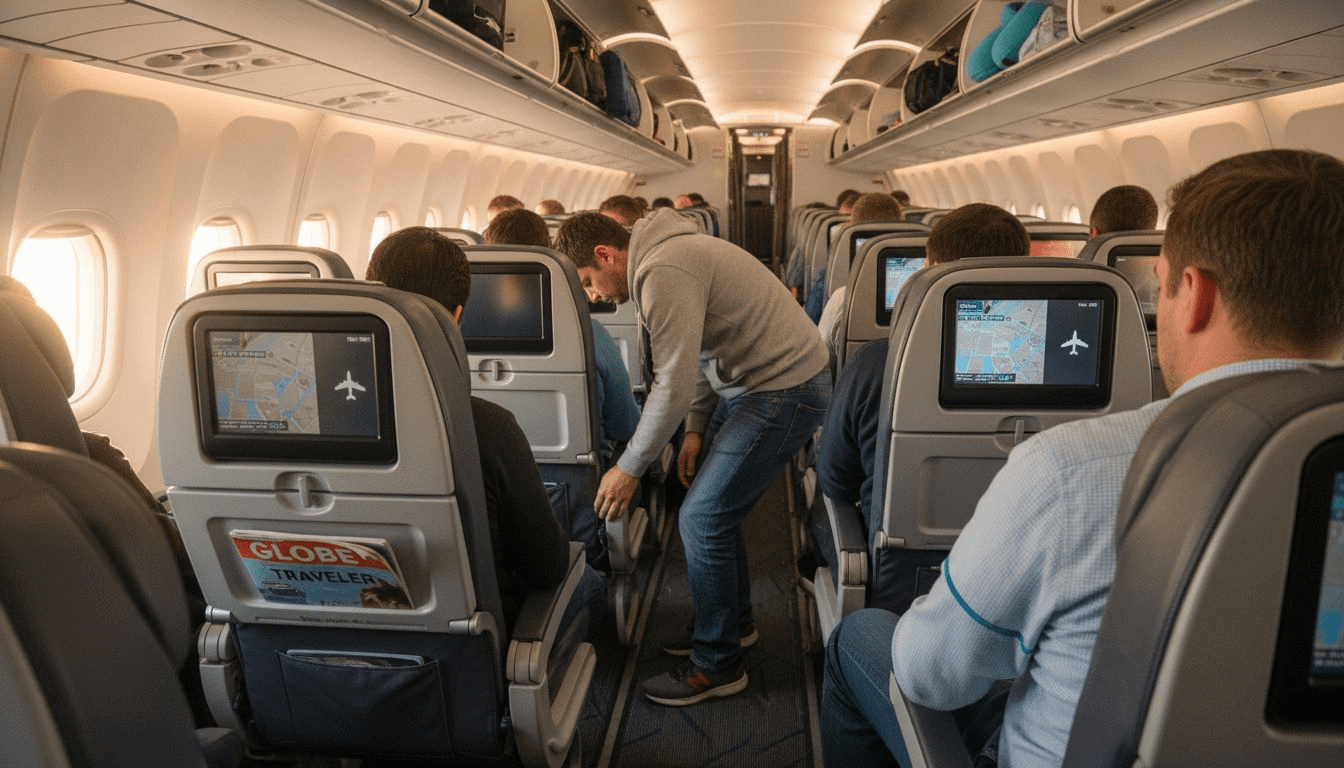
Every parent faces that moment when booking flights for a family trip feels like solving a puzzle with too many pieces. Choosing between economy, premium economy, business, or first class is not just about seats—it reflects a carefully crafted pricing strategy that shapes your travel budget and comfort. Understanding how airlines structure these cabin classes helps families match their needs with the right fare, ensuring a smoother journey without overspending.
Table of Contents
- What Cabin Classes Mean for Airlines
- Main Differences Among Cabin Classes
- Popular Airlines’ Cabin Class Features
- Evaluating Comfort Versus Ticket Prices
- Tips for Scoring Upgrades and Savings
Key Takeaways
| Point | Details |
|---|---|
| Cabin Class Strategies | Airlines employ sophisticated pricing structures to effectively segment passengers and maximize revenue across various cabin classes. |
| Traveler Targeting | Each cabin class is designed to cater to specific passenger profiles, from budget travelers to high-net-worth individuals, enhancing perceived value and service levels. |
| Comfort vs. Pricing | The trade-off between comfort and ticket price varies significantly among cabin classes, influencing traveler decisions based on personal priorities and budgets. |
| Shared Upgrade Strategies | Utilizing loyalty programs and effective communication can enhance chances of securing upgrades and maximizing travel savings. |
What Cabin Classes Mean for Airlines
Airlines have transformed cabin classes into sophisticated revenue optimization strategies that go far beyond simple seat assignments. By carefully designing pricing structures across different cabin classes, airlines create nuanced economic models that maximize financial performance.
Understanding cabin class economics reveals a complex landscape of pricing psychology. Airlines use strategic pricing mechanisms to segment passengers based on their willingness to pay and perceived value. This segmentation allows carriers to extract maximum revenue from each passenger category by tailoring pricing and service offerings.
The primary cabin classes typically include:
- Economy Class: Standard seating with basic amenities
- Premium Economy: Enhanced comfort with slightly more legroom
- Business Class: Significantly upgraded seating and services
- First Class: Luxury experience with maximum personalization
Each cabin class represents a deliberate revenue strategy. By creating distinct tiers, airlines can attract multiple market segments simultaneously – from budget-conscious travelers to corporate executives and luxury travelers. The pricing differences aren’t just about physical space, but about perceived value and targeted service levels.
Here’s a concise comparison of how airlines target different traveler profiles with each cabin class:
| Cabin Class | Target Passenger | Key Value Proposition |
|---|---|---|
| Economy | Budget travelers | Lowest fares, essential services |
| Premium Economy | Value-focused leisure | Added comfort without premium pricing |
| Business | Corporate executives | Productivity and premium service |
| First | High-net-worth travelers | Maximum exclusivity, luxury |
Pro tip: Compare cabin class offerings carefully before booking to ensure you’re getting the best value for your specific travel needs.
Main Differences Among Cabin Classes
Cabin classes represent far more than simple seating arrangements – they are carefully designed economic ecosystems that dramatically impact passenger experience and airline revenue strategies. Operational differences between cabin classes reveal complex approaches to passenger segmentation and service delivery.
The primary differences among cabin classes extend beyond physical space and encompass service quality, amenities, and pricing structures. Airlines strategically design these classes to attract different market segments:
- Economy Class: Basic amenities, most affordable pricing
- Premium Economy: Slightly enhanced comfort, moderate price increase
- Business Class: Significantly upgraded seating and services
- First Class: Maximum personalization and luxury experience
Each cabin class offers distinct features that justify its pricing model. Comprehensive cabin class comparisons demonstrate how ticket prices escalate with increased comfort and personalized services. For instance, first class passengers might enjoy private suites, gourmet meals, and dedicated check-in services, while economy passengers receive standard seating and basic in-flight amenities.
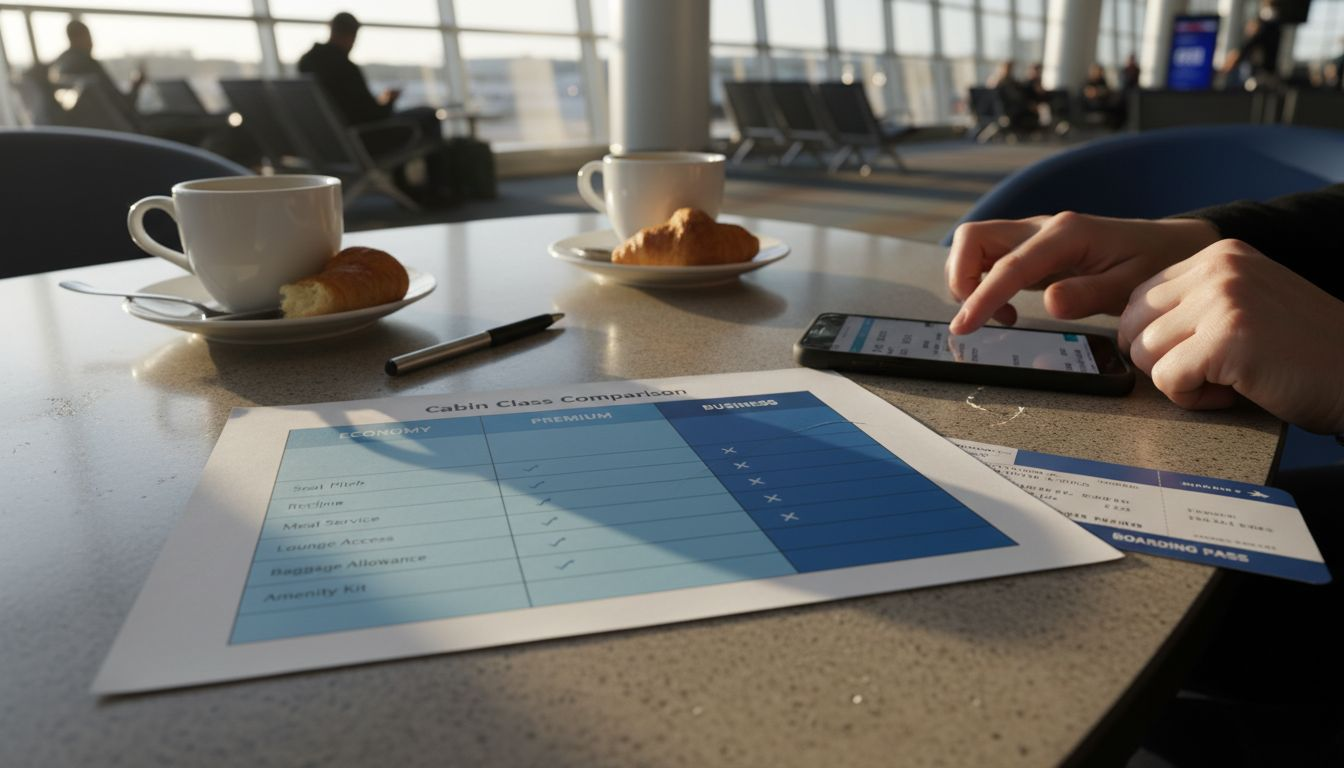
The nuanced differences reflect sophisticated market segmentation strategies. Airlines carefully calibrate these classes to extract maximum revenue while providing perceived value to different passenger types – from budget travelers to corporate executives seeking premium experiences.
Pro tip: Always compare the specific amenities included in each cabin class to determine which offers the best value for your specific travel requirements.
Popular Airlines’ Cabin Class Features
Global airlines have developed intricate cabin class features that go well beyond simple seating arrangements. Worldwide cabin class variations reveal complex strategies designed to attract different passenger segments and maximize revenue potential.
The distinctive features across cabin classes demonstrate significant variation in service quality and passenger experience:
-
Economy Class:
- Standard seat configuration
- Basic in-flight entertainment
- Limited meal options
- Minimal additional services
-
Premium Economy:
- Extra legroom
- Enhanced seat comfort
- Priority boarding
- Improved meal selections
-
Business Class:
- Lie-flat or angled seat beds
- Gourmet dining
- Lounge access
- Enhanced entertainment systems
-
First Class:
- Private suites
- Personal concierge services
- Customized meal experiences
- Maximum privacy and luxury
Cabin crew performance standards play a critical role in differentiating service quality across these cabin classes. Airlines invest heavily in training staff to deliver personalized experiences that justify the significant price differences between economy and premium cabin classes.
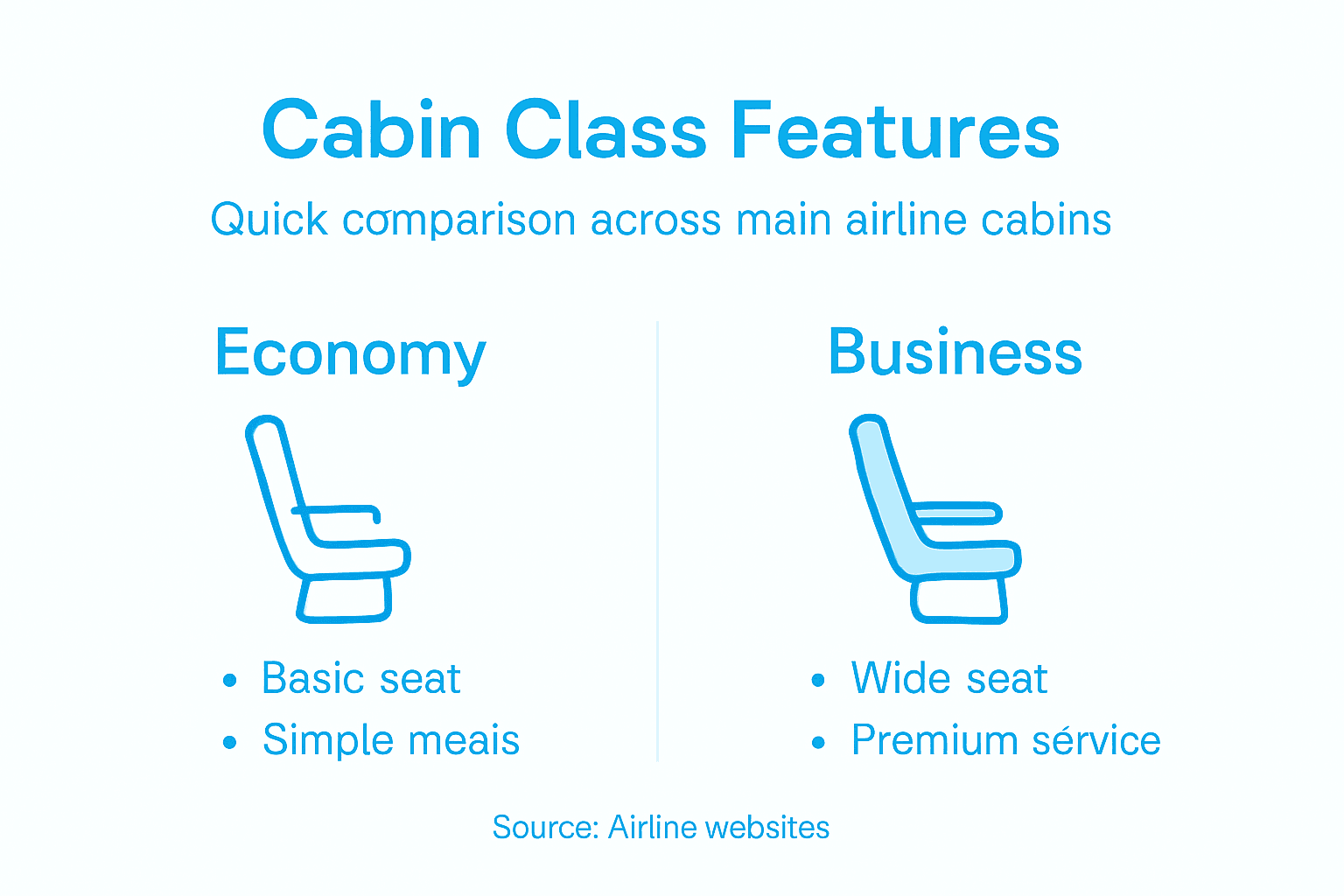
The competitive landscape of airline cabin classes continues to evolve, with carriers constantly innovating to distinguish their offerings and attract high-value passengers. This ongoing competition benefits travelers by driving continuous improvements in comfort, technology, and service quality.
Pro tip: Research specific airline cabin features before booking to ensure you select the most value-appropriate option for your travel needs.
Evaluating Comfort Versus Ticket Prices
Travelers face a complex decision when balancing comfort and budget during flight selection. Aircraft cabin comfort factors reveal a nuanced trade-off between passenger experience and financial investment.
The comfort versus price equation involves multiple critical considerations:
-
Economy Class Price Range: $300-$800
- Minimal comfort features
- Basic seat configuration
- Limited personal space
-
Premium Economy Price Range: $700-$1,200
- Enhanced seat width
- Extra legroom
- Improved in-flight amenities
-
Business Class Price Range: $1,500-$3,500
- Lie-flat seats
- Personalized services
- Significant comfort upgrades
-
First Class Price Range: $3,500-$10,000
- Private suites
- Gourmet dining
- Maximum luxury experience
Passenger satisfaction research demonstrates that travelers consistently evaluate comfort enhancements against incremental price increases. Budget-conscious passengers typically prioritize fundamental travel needs, while business and luxury travelers are willing to invest significantly more for superior comfort and personalized experiences.
The decision ultimately depends on individual travel priorities, trip duration, and personal financial flexibility. Sophisticated travelers analyze not just the ticket price, but the overall value proposition of each cabin class.
Below is a summary of comfort features relative to typical ticket prices for each cabin class:
| Cabin Class | Typical Price Range | Notable Comfort Differentiator |
|---|---|---|
| Economy | $300-$800 | Standard seat, basic amenities |
| Premium Economy | $700-$1,200 | Wider seats, extra legroom |
| Business | $1,500-$3,500 | Fully flat seats, lounge access |
| First | $3,500-$10,000 | Privacy suites, gourmet dining |
Pro tip: Calculate the cost-per-hour of comfort by dividing the ticket price by total travel time to determine your personal comfort value threshold.
Tips for Scoring Upgrades and Savings
Passenger service dynamics reveal strategic approaches for securing flight upgrades and maximizing travel savings. Understanding airline systems and leveraging insider knowledge can significantly improve your chances of enjoying premium experiences at reduced costs.
Effective strategies for scoring upgrades and savings include:
-
Loyalty Program Tactics:
- Accumulate frequent flyer miles
- Maintain elite status with airlines
- Track promotional upgrade opportunities
-
Timing and Booking Techniques:
- Book during off-peak seasons
- Choose less crowded flight times
- Monitor last-minute upgrade availability
-
Communication Strategies:
- Politely inquire about upgrade possibilities
- Be flexible with travel dates
- Demonstrate consistent customer loyalty
-
Technology and Membership Advantages:
- Use airline mobile applications
- Sign up for email upgrade notifications
- Compare upgrade prices across platforms
Airline service training insights suggest that knowledgeable and courteous passengers are more likely to receive favorable treatment. Airlines often prioritize upgrades for passengers who understand the system and communicate effectively.
Successful upgrade hunting requires patience, strategic planning, and a deep understanding of airline policies. Travelers who combine multiple approaches are more likely to unlock premium experiences without breaking their budget.
Pro tip: Always maintain a flexible and friendly demeanor when requesting upgrades, as staff discretion can significantly influence your chances.
Maximize Comfort Without Breaking Your Budget When Booking Flights
Choosing the right cabin class can feel overwhelming especially when balancing comfort and cost. This article reveals how different cabin classes target various traveler needs from Economy to First Class. If you want to avoid overspending while still enjoying the best possible amenities it’s crucial to compare options carefully before booking.
Explore practical tips and deals in our Miscellaneous category designed to help budget-conscious travelers like you.
Take control of your travel experience today by checking out PilotTravelDeals.com where you can easily compare prices across airlines and cabin classes. Unlock significant savings with up to 80 percent off while securing the comfort level that fits your trip. Don’t miss out on perfect flight deals that match your budget and preferences. Start planning smarter travel now at Uncategorized – PilotTravelDeals.com.
Frequently Asked Questions
What are the main differences between cabin classes on flights?
The main differences among cabin classes include seating comfort, amenities, service quality, and pricing structures. Economy class is the most affordable with basic seating, while first class offers maximum luxury and personalized services. Each class is designed to attract different market segments, from budget travelers to luxury seekers.
How do cabin class choices impact overall travel costs?
Cabin class choices significantly impact overall travel costs; economy class offers the lowest fares with essential services, while premium economy, business, and first class come with higher ticket prices that correspond to increased comfort and service levels. Travelers should weigh the cost against their comfort and service expectations.
What strategies can travelers use to save money when booking flights?
Travelers can save money by booking during off-peak seasons, using loyalty programs, inquiring about upgrades, and being flexible with travel dates. Monitoring promotional opportunities for upgrades can also enhance their flying experience without breaking the bank.
How can travelers evaluate the value of comfort versus price when choosing cabin classes?
Travelers can evaluate the value of comfort versus price by calculating the cost-per-hour of comfort, dividing the ticket price by the total travel time. This helps them determine if the comfort enhancements in premium classes justify the additional cost for their specific travel needs.
Recommended
- Airfare Classes Explained: Your Key to Better Savings – PilotTravelDeals.com
- What Is Budget Airline Travel and Why It Matters – PilotTravelDeals.com
- The Essential Guide to Budget Airlines Worldwide – PilotTravelDeals.com
- 7 Top Picks: What Are the Best Budget Airlines Now – PilotTravelDeals.com
- Tu kit de supervivencia para viajar en avión estas vacaciones – Academia Atenea
- 5 Tips To Keep Your Temper Under Control During A Flight


