
TL;DR:
- Travel gift experiences provide lasting happiness across anticipation, enjoyment, and reflection stages. They deepen relationships, grow richer in memory, and offer flexible options that suit diverse lifestyles. Giving experiences supports mindful consumption and reduces environmental waste compared to physical gifts.
Travel gift experiences are defined as gifts that provide memorable travel opportunities rather than physical objects, and research confirms they deliver greater long-term emotional satisfaction than material goods. The role of travel gift experiences goes far beyond a simple gesture. They create happiness in three distinct stages: anticipation before the trip, enjoyment during it, and warm reflection afterward. Unlike a sweater or gadget, a well-chosen travel gift becomes part of someone’s life story. Pilottraveldeals helps travelers and gift givers find the right deals to make those stories happen.
How do travel gift experiences enhance relationships and emotional well-being?
Experience-based gifts outperform physical gifts on every emotional measure. Psychological research shows that experience gifts generate happiness across three stages: before, during, and after the event. That three-stage effect means the recipient benefits long before they board a plane.
The anticipation phase alone sets travel gifts apart. Anticipatory joy from trip planning extends the emotional value of a travel gift well beyond the trip itself. A person who receives a travel voucher in december may spend weeks researching destinations, reading reviews, and imagining the experience. That planning process is itself a source of genuine pleasure.
Shared travel adventures also deepen relationships in ways that physical gifts cannot. When two people experience something together, whether it is a cooking class in New Orleans or a hiking trip in Patagonia, they build a shared memory that neither can own alone. Memory formation and social sharing are the primary reasons experience gifts create stronger emotional bonds than objects.

Physical gifts suffer from hedonic adaptation. A new phone feels exciting for a week, then fades into the background. Travel memories work in the opposite direction. Memories of experiences grow richer over time through a process called rosy retrospection, where positive details become more vivid with each retelling.
Key emotional benefits of travel gifts include:
- Anticipatory happiness: The planning phase creates real joy before the trip begins.
- Shared bonding: Experiences enjoyed with others build lasting relational ties.
- Memory appreciation: Travel memories gain emotional value over time instead of depreciating.
- Recipient autonomy: Letting someone choose their destination or timing increases satisfaction.
Pro Tip: When giving a travel experience to a couple or close friend, include a handwritten note describing why you chose that specific destination or activity. That personal detail amplifies the emotional impact of the gift.
What makes travel gifts practical and flexible for diverse lifestyles?
Flexibility is the single most practical advantage of travel gift experiences. Flexible travel credits have higher redemption and satisfaction rates than fixed-date bookings. That gap exists because life is unpredictable. A fixed-date experience gift can become useless if the recipient has a work conflict, a family obligation, or a health issue.
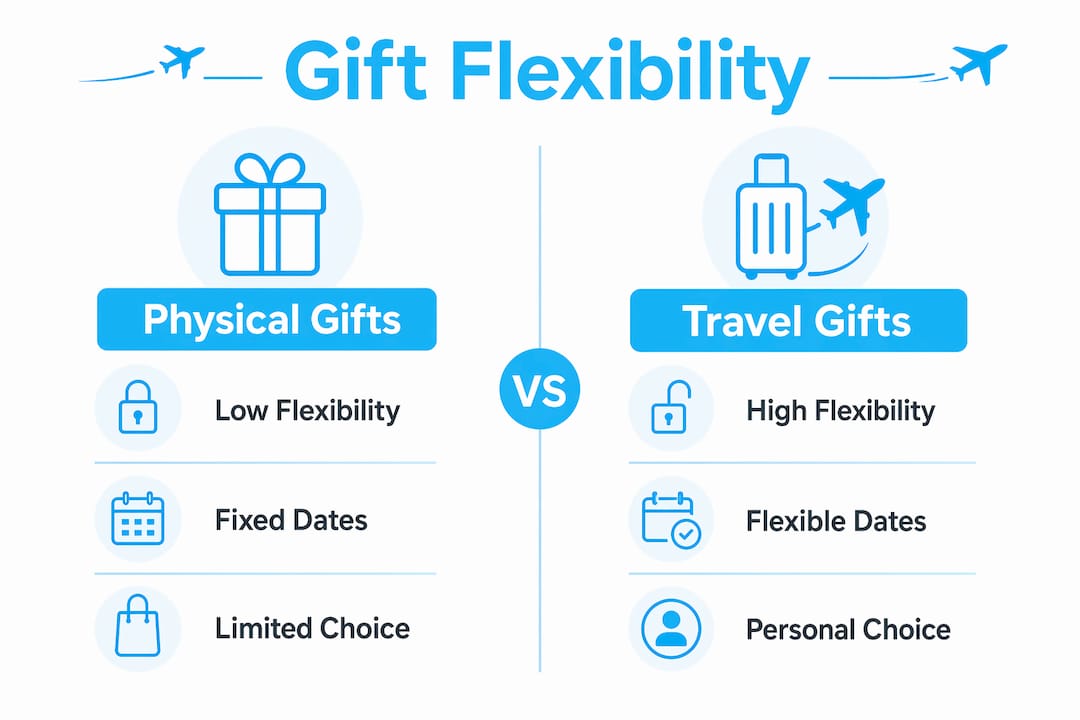
Travel vouchers solve this problem directly. Gifts with flexible vouchers that allow the recipient to choose timing and destination are consistently preferred over rigid activity bookings. The recipient controls when and where they go, which removes the scheduling pressure that kills many well-intentioned gifts.
Understanding a travel voucher’s full value helps both givers and recipients get the most from this format. Vouchers can cover flights, hotels, tours, or combinations of all three, giving the recipient genuine freedom to design their own experience.
There is also a psychological benefit to flexible travel gifts. Recipients often hesitate to spend on themselves for leisure. A travel voucher removes that guilt by earmarking the funds specifically for rest and adventure. This “permission factor” makes the gift easier to use and more likely to be redeemed.
| Gift type | Flexibility | Best for |
|---|---|---|
| Open travel voucher | High: recipient chooses destination and dates | Frequent travelers, busy professionals |
| Hotel credit | Medium: destination set, dates flexible | Couples, anniversary gifts |
| Fixed-date tour | Low: date and location predetermined | Recipients with open schedules |
| Flight credit | High: recipient selects route and timing | Long-distance travelers, adventurers |
Pro Tip: Choose a travel voucher with at least a 12-month validity window. Shorter windows create pressure and reduce the chance the recipient will actually use the gift.
The advantages of flexible travel dates extend beyond convenience. Travelers who book on their own schedule often find better prices, less crowded destinations, and a more relaxed overall experience.
What are unique and memorable travel gift ideas that create lasting impact?
The best travel gifts match the recipient’s personality, not just their destination wish list. A solo adventurer wants something different from a couple celebrating an anniversary. Getting that match right is what separates a forgettable gift from one that gets talked about for years.
Here are four categories of experience-based travel gifts that consistently deliver strong emotional returns:
- Adventure tours: Think white-water rafting in Colorado, zip-lining in Costa Rica, or a multi-day trek in the Scottish Highlands. These gifts work best for travelers who prioritize physical challenge and outdoor settings.
- Cultural immersion experiences: City-specific experiences like a guided street food tour in Bangkok, a flamenco class in Seville, or a pottery workshop in Kyoto. These suit travelers who want to connect with local life rather than just see the sights.
- Culinary workshops: A culinary travel experience such as a farm-to-table cooking class or a wine-pairing dinner in a vineyard region gives recipients a skill alongside the memory. These gifts appeal to food-focused travelers of all ages.
- Wellness retreats: A weekend at a spa resort, a yoga retreat in Bali, or a digital detox cabin stay. These work especially well for recipients who are overworked and unlikely to book a break for themselves.
Pairing a physical token with the experience gift adds a meaningful moment at the time of giving. A small travel journal, a custom destination map, or a quality travel accessory gives the recipient something tangible to open while the experience itself remains the real gift.
Concierge or travel expert support can reduce stress and increase enjoyment by managing planning logistics. For recipients who find trip planning overwhelming, including professional itinerary help as part of the gift removes the mental load entirely. That support turns a good gift into a great one.
The guest experience standards in hospitality have risen sharply in recent years. Travelers now expect personalization, local knowledge, and attentive service as baseline features of any quality experience. Choosing gifts from providers who meet those standards protects the quality of the experience you are giving.
How do travel gifts compare environmentally and ethically to physical gifts?
Travel gifts carry a lower environmental footprint than most physical gifts at the point of production. Physical gifts require raw materials, manufacturing, packaging, and shipping, each of which generates waste and emissions. A travel voucher, by contrast, produces no physical waste at the point of giving.
That said, travel itself has an environmental impact. Flights contribute to carbon emissions, and high-traffic destinations face overtourism pressure. Responsible gifting means choosing experiences that minimize harm: train travel over short-haul flights, locally owned accommodations over large chain hotels, and off-season timing to reduce crowd pressure on fragile destinations.
| Factor | Physical gift | Travel experience gift |
|---|---|---|
| Production waste | High: packaging, materials, shipping | None at point of giving |
| Long-term disposal | Often ends in landfill | No physical item to discard |
| Carbon footprint | Moderate to high depending on product | Varies by transport mode chosen |
| Ethical sourcing | Often opaque supply chains | Recipient controls provider choice |
| Alignment with values | Passive consumption | Active, intentional experience |
The ethical dimension of travel gifts also reflects a broader shift in consumer values. Gifting an experience signals that you value the recipient’s time and growth over their accumulation of objects. That message resonates strongly with younger recipients and with anyone who has consciously moved toward mindful consumption. Affordable adventures do not have to compromise on ethics. Budget-friendly travel gifts can still prioritize local businesses, sustainable accommodations, and low-impact activities.
Key Takeaways
Travel gift experiences outperform physical gifts because they generate happiness before, during, and after the event, while memories grow richer over time instead of fading.
| Point | Details |
|---|---|
| Three-stage happiness | Travel gifts create joy in anticipation, during the trip, and in memory, unlike physical gifts. |
| Flexibility drives redemption | Vouchers with open dates and destination choice have higher use rates than fixed bookings. |
| Permission factor matters | Recipients spend more freely on travel when funds are earmarked specifically for leisure. |
| Match gift to personality | Adventure tours, culinary workshops, and wellness retreats each suit different recipient profiles. |
| Ethical gifting advantage | Travel experience gifts produce no manufacturing waste and reflect mindful consumption values. |
Why I think most people underestimate travel gifts
Most gift givers default to physical items because they feel safer. You can hold a gift card to a restaurant or wrap a piece of luggage. A travel experience feels abstract, even risky. I understand that instinct, and I think it is exactly wrong.
The gifts that people remember ten years later are almost never objects. They are the weekend in New Orleans, the cooking class in Tuscany, the hiking trip that almost did not happen. Physical gifts fade. Experiences compound. Every time someone retells a travel story, the memory gets a little richer and a little more meaningful.
The mistake I see most often is over-specifying the gift. Booking a fixed tour on a fixed date for someone with a busy life is a recipe for the gift going unused. The smarter move is always a flexible voucher with a generous validity window. Give the destination as a suggestion, not a mandate. Let the recipient own the planning process. That autonomy is part of the gift.
Travel gifts also work as an investment in a relationship. When you give someone the means to take a trip, you are telling them their rest and growth matter to you. That message lands differently than a wrapped box under a tree. The trend toward experience-based gifting is not a passing phase. It reflects something real about what people actually want: time, freedom, and the chance to feel something worth remembering.
— Asher
Plan a travel gift with Pilottraveldeals
Pilottraveldeals makes it straightforward to find and book the right travel experience for any recipient. Whether you are looking for flexible hotel options, flight deals, or full travel packages, the platform aggregates offers from multiple providers so you can compare value and choose with confidence.

Gift givers can search flexible hotel deals by destination and date range, making it easy to match the gift to the recipient’s preferences without locking in a rigid itinerary. Pilottraveldeals also offers deals on SIM cards, bike rentals, and travel packages, so you can build a complete gift around a single destination. For travelers heading abroad, a travel SIM card makes a practical and thoughtful add-on that keeps the recipient connected throughout their trip. Savings of up to 80% are available across categories, which means a meaningful gift does not have to carry a high price tag.
FAQ
What are travel gift experiences?
Travel gift experiences are gifts that provide a memorable travel opportunity rather than a physical item. They include travel vouchers, hotel stays, adventure tours, culinary workshops, and wellness retreats.
Why do travel gifts create more lasting happiness than physical gifts?
Experience gifts deliver happiness across three stages: anticipation, enjoyment, and memory. Physical gifts fade through hedonic adaptation, while travel memories grow richer over time.
What makes a travel voucher better than a fixed-date gift?
Flexible travel vouchers allow recipients to choose their own timing and destination, which removes scheduling conflicts and increases the likelihood the gift gets used.
How do I choose the right travel gift for someone?
Match the gift to the recipient’s travel style. Adventure-focused travelers prefer active tours, while food lovers respond to culinary experiences and overworked recipients benefit most from wellness retreats.
Are travel gifts environmentally better than physical gifts?
Travel gifts produce no manufacturing waste or packaging at the point of giving. The environmental impact depends on the transport mode chosen, but responsible options like train travel and locally owned accommodations reduce that footprint significantly.