Booking transportation for an international trip can quickly become overwhelming, especially when every extra fee or confusing platform threatens your savings and peace of mind. For solo travelers determined to make every dollar count, understanding the world of digital booking systems is crucial. This guide breaks down how modern platforms replace old hassles with user-friendly solutions, letting you plan smarter, compare real options, and catch hidden costs before they upend your travel budget.
Table of Contents
- Transportation Booking Defined and Debunked
- Major Options: Flights, Trains, Buses, Shared Rides
- How Modern Platforms and Apps Work
- Key Features: Flexibility, Fare Types, Rules
- Costs, Savings, and Hidden Fees
- Avoiding Common Mistakes and Hassles
Key Takeaways
| Point | Details |
|---|---|
| Modern Transportation Booking | Digital platforms now streamline the reservation process, allowing travelers to secure various modes of transportation efficiently. |
| Diverse Travel Options | Travelers can choose from flights, trains, buses, and shared rides, each offering unique benefits suited to different preferences and budgets. |
| Hidden Costs Awareness | Be mindful of potential hidden fees including baggage charges and service fees to accurately compare total travel costs. |
| Strategic Planning | Avoid common booking mistakes by thoroughly researching options, understanding cancellation policies, and confirming provider credentials. |
Transportation Booking Defined and Debunked
Transportation booking represents the systematic process of reserving travel services across multiple modes of transportation. At its core, this practice enables travelers to secure seats, tickets, and passage through automated digital platforms that streamline reservation experiences.
Modern transportation booking transcends traditional methods by integrating multiple travel options into seamless digital experiences. These platforms now support various transportation types, including:
- Road transport services
- Railway ticket reservations
- Airline seat selections
- Maritime and cruise bookings
- Inter-city and regional transit options
The evolution of transportation booking has dramatically transformed how travelers plan and execute their journeys. Electronic platforms have replaced cumbersome manual processes, introducing technologies like QR codes and near-field communication (NFC) that enhance security and convenience. Digital booking systems now provide real-time availability, instant confirmations, and integrated payment solutions that simplify the entire reservation process.

Traditional transportation booking methods often involved significant time investments, complicated paperwork, and limited transparency. Contemporary digital platforms have systematically dismantled these barriers, offering travelers unprecedented flexibility and control. By leveraging secure electronic booking technologies, travelers can now compare prices, select precise seat preferences, and manage reservations from anywhere in the world.
Pro tip: Always screenshot or save digital booking confirmations in multiple locations to ensure you have backup documentation for your transportation reservations.
Major Options: Flights, Trains, Buses, Shared Rides
Travelers today have unprecedented choices for transportation, with each mode offering unique advantages for navigating global destinations. Integrated transportation networks have revolutionized how people move between cities, countries, and continents, creating flexible and interconnected travel experiences.
The primary transportation options for modern travelers include:
- Flights: Fastest long-distance travel method
- Trains: Comfortable, scenic, and often economical for regional journeys
- Buses: Budget-friendly and extensive route coverage
- Shared Rides: Flexible, cost-effective local transportation
Each transportation mode comes with distinct characteristics that appeal to different traveler preferences and budgets. Flights remain the quickest option for crossing significant distances, particularly for international travel. They provide rapid point-to-point connections but typically represent the most expensive transportation choice. Trains offer a more relaxed alternative, allowing travelers to enjoy landscapes while traveling between cities and countries, often with additional amenities like onboard dining and workspace.
Buses and shared rides represent the most economical transportation methods, especially for budget-conscious travelers. These options provide extensive route networks, lower costs, and greater scheduling flexibility. Shared ride services like carpooling and ridesharing have emerged as particularly innovative solutions, enabling travelers to split transportation expenses and reduce overall travel costs.
Here’s a side-by-side look at how major travel modes differ for typical journeys:
| Travel Mode | Typical Cost Range | Speed (City to City) | Comfort/Amenities |
|---|---|---|---|
| Flights | $100–$800+ | Fastest (1–5 hours) | Reclining seats, meals |
| Trains | $30–$150 | Moderate (2–6 hours) | Spacious, dining car |
| Buses | $15–$70 | Slowest (3–12 hours) | Limited, basic seats |
| Shared Rides | $10–$40 | Varies (30 min–2 hours) | Conversation, flexible stops |
Pro tip: Combine multiple transportation modes to optimize your travel budget and experience, leveraging the strengths of each option for different segments of your journey.
How Modern Platforms and Apps Work
Transportation booking platforms have undergone a radical transformation, leveraging cutting-edge digital technologies to create seamless, user-friendly experiences. Digital technologies now power transportation booking with unprecedented efficiency, integrating complex systems into intuitive mobile and web interfaces that simplify travel planning.
The key technological features of modern transportation platforms include:
- Real-time data integration
- Dynamic pricing algorithms
- Artificial intelligence recommendations
- Secure online payment systems
- Multi-modal travel planning
Modern platforms excel at creating personalized travel experiences through advanced technological solutions. Artificial Intelligence plays a crucial role in these systems, analyzing user preferences and historical data to generate tailored travel recommendations. The platforms can quickly compare prices, suggest optimal routes, and provide instant booking confirmations across multiple transportation modes.
Interconnected digital systems have revolutionized how travelers plan and book transportation. Platform technologies support multi-modal travel planning by breaking down traditional barriers between different transportation options. These sophisticated apps now allow users to seamlessly combine flights, trains, buses, and shared rides into comprehensive travel itineraries, with intelligent systems that optimize routes for cost, time, and convenience.
Pro tip: Download multiple transportation booking apps and compare their features to create a comprehensive travel planning toolkit.
Key Features: Flexibility, Fare Types, Rules
Transportation booking has evolved dramatically, with flexible fare options transforming travel planning. Modern travelers demand unprecedented control over their travel arrangements, moving beyond traditional rigid booking structures that penalized last-minute changes.
The primary fare types travelers encounter include:
- Fully Refundable Tickets
- Semi-Flexible Fares
- Non-Refundable Economy Tickets
- Academic or Special Purpose Fares
- Promotional Rate Tickets
Flexible booking has become a critical feature for travelers seeking adaptability in their plans. Different fare categories offer varying levels of modification potential, with some specialized fares providing extended change windows and reduced penalties. These options allow travelers to adjust itineraries without incurring substantial financial losses, a significant advancement from traditional booking models.
Understanding the nuanced rules surrounding different fare types is crucial for budget-conscious travelers. Fare flexibility typically correlates with ticket price, with more adaptable options commanding higher initial costs. Travelers must carefully evaluate their potential schedule uncertainties and weigh the additional expense of flexible tickets against the potential cost of last-minute changes or cancellations.
Pro tip: Always read the fine print for fare modification rules and calculate the potential savings of flexible tickets versus standard rates for your specific travel scenario.
Costs, Savings, and Hidden Fees
Transportation costs extend far beyond simple ticket prices, with numerous hidden expenses impacting travel budgets. Savvy travelers must navigate a complex landscape of fees, surcharges, and supplementary expenses that can significantly inflate overall travel expenditures.
Common hidden transportation costs include:
- Baggage fees
- Seat selection charges
- Insurance premiums
- Booking platform service fees
- Currency conversion expenses
- Airport transfer costs
Budget-conscious travelers understand that published prices rarely represent the total expense of a journey. Strategic planning involves anticipating and mitigating these additional charges by carefully comparing total costs across different booking platforms and transportation modes. Some travelers can save up to 30% by understanding and navigating these complex fee structures.
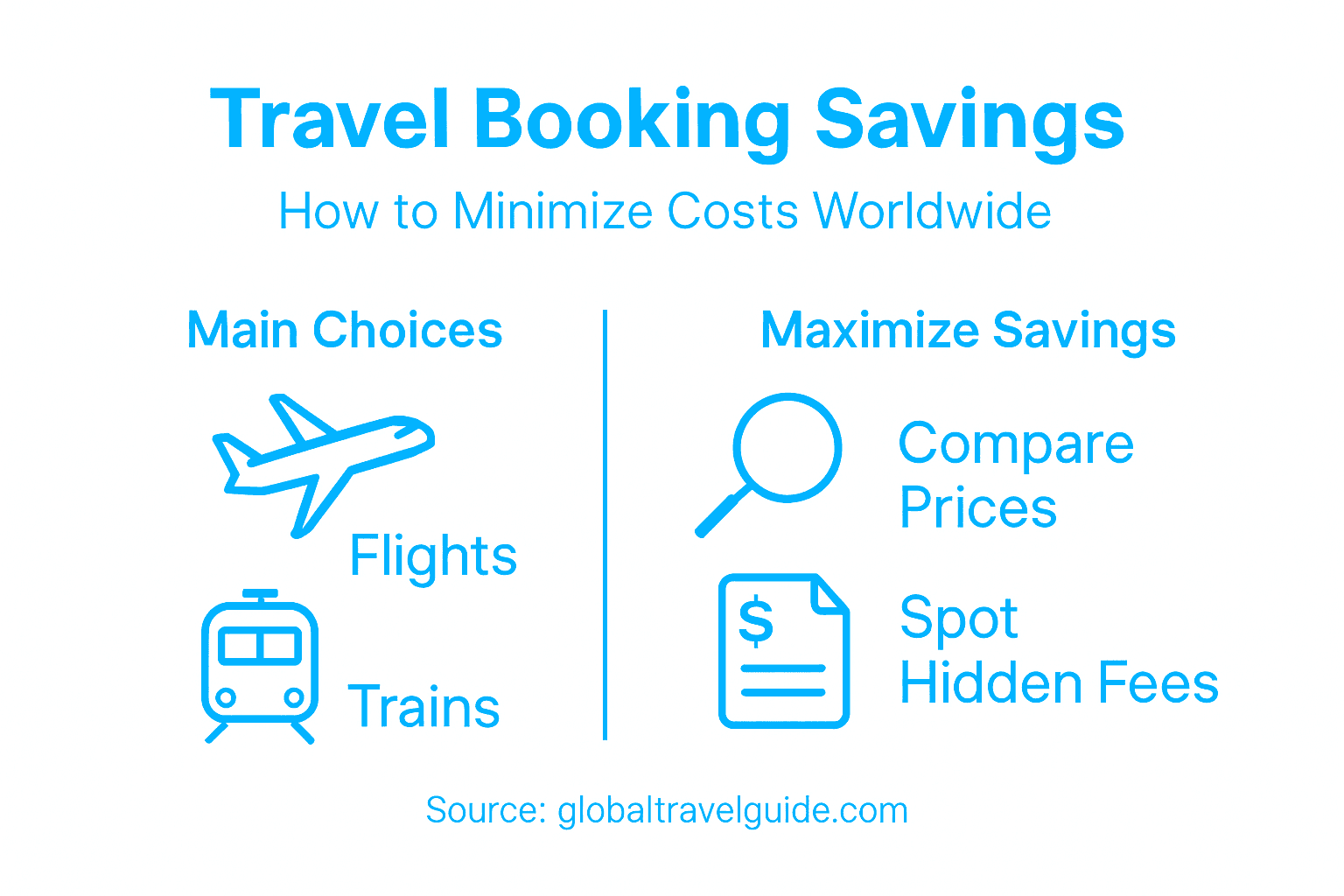
Transportation fee structures often conceal unexpected expenses that can catch unprepared travelers off guard. Ancillary fees represent a significant portion of transportation companies’ revenue, making it crucial for travelers to read the fine print and understand the complete cost breakdown before finalizing any booking.
For quick reference, compare common hidden travel fees and tips to avoid them:
| Hidden Fee Type | How It Adds Up | How to Minimize Impact |
|---|---|---|
| Baggage charges | Per bag, per journey | Travel light, use carry-on |
| Booking service fees | % of fare or flat rate | Use direct provider booking |
| Insurance premiums | Optional per ticket | Evaluate if coverage needed |
| Currency conversion | Adds to international cost | Pay in local currency, compare rates |
Pro tip: Create a comprehensive travel budget spreadsheet that accounts for potential hidden fees, allowing you to accurately compare the true cost of different transportation options.
Avoiding Common Mistakes and Hassles
Transportation booking requires strategic planning to prevent costly and frustrating errors that can derail travel experiences. Common booking mistakes often stem from inadequate preparation and a lack of comprehensive research before finalizing travel arrangements.
Frequent transportation booking mistakes include:
- Booking without comparing multiple options
- Ignoring cancellation policies
- Overlooking additional fees
- Failing to verify transportation credentials
- Neglecting travel insurance considerations
- Not confirming exact pickup/drop-off locations
Travel logistics demand meticulous attention to detail. Verifying provider credentials prevents potential travel disruptions by ensuring reliability and professionalism. Many travelers mistakenly prioritize price over quality, which can lead to unexpected complications during their journey.
Effective transportation booking requires a comprehensive approach that goes beyond simple price comparisons. Travelers should carefully review provider backgrounds, understand complete pricing structures, and maintain flexible communication channels to address potential last-minute changes or unexpected challenges.
Pro tip: Create a digital folder with screenshots of booking confirmations, provider contact information, and important travel documents to quickly resolve any potential issues.
Save Big and Simplify Your Transportation Booking Today
Booking transportation can feel overwhelming with so many options, hidden fees, and complex fare rules to navigate. This article highlights the pain points travelers face such as last-minute changes, confusing fare types, and unexpected costs. At PilotTravelDeals.com you can take control of your travel plans by comparing millions of deals on flights, hotels, and transportation services all in one place. With our user-friendly platform, you can easily find flexible fare options and avoid hidden fees to save money and stress.
Explore expert tips and tricks in our Travel Tips section to become a smarter traveler. Whether you want affordable flights, reliable transportation, or budget-friendly accommodations, start your journey with PilotTravelDeals.com. Act now to secure your best rates and enjoy seamless booking experiences tailored to your needs.
Frequently Asked Questions
What is transportation booking?
Transportation booking is the systematic process of reserving travel services across multiple modes of transportation, allowing travelers to secure seats, tickets, and passage through automated digital platforms for a more streamlined experience.
How do modern transportation booking platforms work?
Modern transportation booking platforms leverage advanced digital technologies to provide seamless experiences, integrating real-time data, dynamic pricing, and secure online payment systems, allowing travelers to plan and book their journeys efficiently.
What are the different modes of transportation available for booking?
The primary modes available for booking include flights, trains, buses, and shared rides, each offering unique advantages such as speed, comfort, and cost-effectiveness suited to different travel preferences.
What should travelers consider to avoid hidden fees when booking transportation?
Travelers should anticipate potential hidden costs such as baggage fees, seat selection charges, and service fees by carefully reviewing the complete cost breakdown and comparing pricing across different platforms to manage their travel budgets effectively.
Recommended
- Group Airfare Explained: Maximizing Savings on Travel – PilotTravelDeals.com
- 8 Smart Ways to Travel for Cheap and Save Big Money – PilotTravelDeals.com
- Travel Smart: Essential Tips for Affordable Adventures Around the Globe – PilotTravelDeals.com
- Benefits of Booking Early Flights: Save More in 2026 – PilotTravelDeals.com