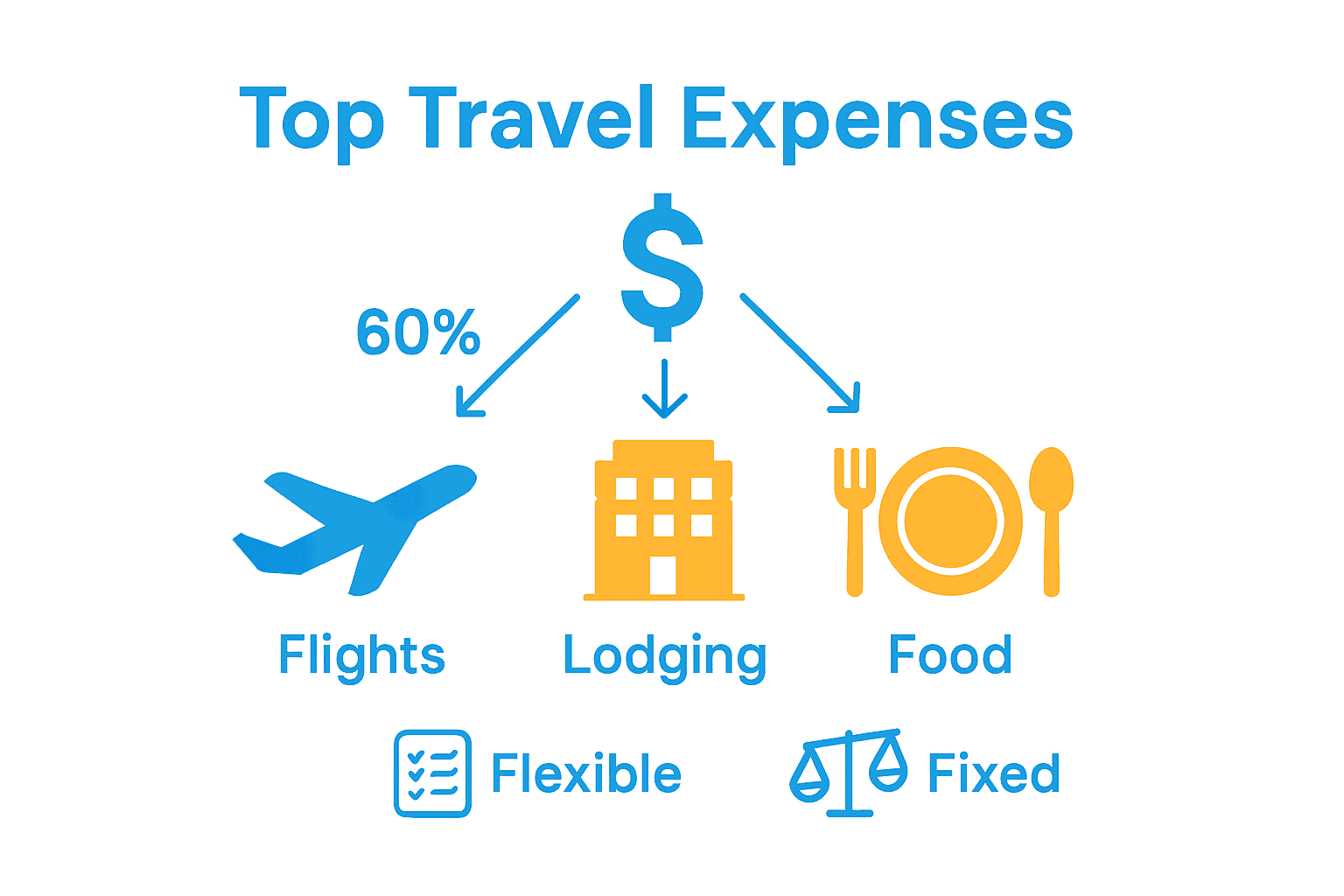
Most travelers are surprised to learn that over 60 percent of trip budgets get blown on just three categories: flights, lodging, and food. Planning an adventure should be exciting, but hidden expenses and rushed decisions can quickly add up. Understanding the basics of travel budgeting gives you the power to stretch your savings further without missing out on memorable experiences. You’ll discover clear strategies to manage your money and make the most of every journey, no matter your destination.
Table of Contents
- Defining Travel Budgeting And Core Concepts
- Types Of Travel Budgets And Approaches
- Key Components Of A Travel Budget Plan
- Common Mistakes And How To Avoid Them
- Maximizing Savings With Comparison Tools
Key Takeaways
| Point | Details |
|---|---|
| Effective Travel Budgeting | Travel budgeting is about strategic planning and optimizing expenses to enhance experiences. Focus on detailed tracking and flexibility in spending. |
| Diverse Budgeting Approaches | Different strategies like zero-based or incremental budgeting cater to various travel styles and needs. Choose a method that aligns with your priorities. |
| Comprehensive Expense Tracking | Break down your travel budget into key components like airfare, accommodation, and activities for better financial management. This ensures no area is overlooked. |
 |
|
| Avoid Common Pitfalls | Proactively identify and mitigate budgeting mistakes, such as underestimating meal costs or neglecting to compare transportation options. Adequate preparation helps prevent budget overruns. |
Defining Travel Budgeting and Core Concepts
Travel budgeting is a strategic approach to managing travel expenses while maximizing experiences. According to Wikipedia, budget travel emphasizes minimizing costs while exploring destinations, focusing on planning, resourcefulness, and immersing oneself in local cultures rather than relying on luxury services.
At its core, travel budgeting involves creating a comprehensive financial plan that allocates funds across different travel categories. These typically include transportation, accommodation, food, activities, emergency reserves, and miscellaneous expenses. Smart travelers understand that budgeting isn’t about restricting experiences but optimizing them – getting the most value without overspending.
Key elements of effective travel budgeting include:
- Researching destination costs in advance
- Setting realistic spending limits
- Tracking expenses during the trip
- Building flexibility into your financial plan
- Prioritizing experiences over expensive amenities
Successful budget travelers recognize that careful financial planning doesn’t mean sacrificing enjoyment. 7 Proven Budget Travel Tips 2025 for Smart Savings can help travelers understand how strategic spending leads to richer, more memorable travel experiences. The goal is creating a balanced approach that allows you to explore, experience, and enjoy without financial stress.
Types of Travel Budgets and Approaches
Travel budgeting is far from a one-size-fits-all strategy. According to las-accounting, there are several budgeting techniques travelers can employ, each with unique advantages. These include zero-based budgeting, where every expense must be justified; incremental budgeting, which adjusts previous budgets by a set percentage; and activity-based budgeting, which allocates funds based on specific travel experiences.
Different travelers also approach budgeting through their personal travel styles. Umatechnology highlights various traveler archetypes, such as the Social Butterfly who prioritizes social interactions, and the Culinary Traveler focused on food experiences. Each type requires a tailored budgeting approach that reflects their travel priorities and spending patterns.
Key budget approaches include:
- Zero-Based Budgeting: Justify every single expense
- Incremental Budgeting: Adjust previous budget by percentage
- Activity-Based Budgeting: Allocate funds by specific experiences
- Flexible Budgeting: Allow adjustments based on changing conditions
Effective budget travelers learn to adapt their financial strategy to their unique travel style. Understanding the Budget Travel Planning Guide can provide deeper insights into matching your budgeting technique with your travel goals. The key is finding a method that balances financial discipline with the freedom to enjoy spontaneous experiences.
Key Components of a Travel Budget Plan
Creating a comprehensive travel budget requires careful planning and strategic allocation of funds. According to Rustic Pathways, a well-structured travel budget plan should account for multiple essential categories including program costs, flight prices, travel medical insurance, passport and visa fees, vaccinations, personal spending money, and potential optional upgrades.
Financial experts recommend breaking down travel expenses into specific, trackable components. Ramad Admissions suggests a structured approach that typically includes allocations for key spending areas such as:
- Airfare: Transportation to and from destination
- Local Transportation: Buses, trains, taxis, ride-shares
- Accommodations: Hotels, hostels, rentals
- Meals and Dining: Restaurant expenses, groceries
- Activities and Entertainment: Tours, entrance fees, experiences
- Emergency Fund: Unexpected expenses and backup resources
While creating your budget, remember that flexibility is crucial. 9 Essential Budget Travel Hacks Every Traveler Must Know can provide additional insights into maximizing your travel funds. Smart travelers understand that a budget is a living document – one that should adapt to changing circumstances while maintaining overall financial discipline.
Common Mistakes and How to Avoid Them
Travel budgeting is fraught with potential pitfalls that can quickly derail your financial planning. According to Grad UW, travelers frequently make critical budgeting errors such as not considering alternative transportation options, overlooking meal expenses, and failing to implement cost-saving strategies like advance flight bookings or choosing budget-friendly accommodations.
Clyr recommends several strategic approaches to prevent budget blowouts. Key mistakes to watch for include:
- Ignoring fare price fluctuations
- Failing to set clear expense policies
- Not comparing transportation costs
- Underestimating daily meal and incidental expenses
- Neglecting to build a contingency fund
Smart travelers develop a proactive approach to financial planning. Unexpected expenses will always arise, but with careful preparation, you can minimize their impact. 10 Essential Budget Travel Tips for Smart Travelers can provide additional guidance on maintaining financial discipline while still enjoying your travel experience. Remember, a well-planned budget isn’t about restricting your adventure – it’s about creating financial freedom to explore without constant worry.
Maximizing Savings With Comparison Tools
In the modern travel landscape, comparison tools have become essential for budget-conscious travelers seeking the best deals. According to Brex, travel and expense management software now integrates budgets with booking workflows, providing unprecedented control over travel spending through real-time tracking and informed decision-making.
Grad UW recommends several strategic approaches to leverage comparison tools effectively:
- Utilize flight aggregators for price comparisons
- Track price fluctuations across multiple platforms
- Join hotel membership programs for additional discounts
- Compare transportation options systematically
- Set up price alerts for targeted destinations
Maximizing savings requires a proactive approach to research and comparison.
 How to Use Travel Comparison Sites for Smart Savings can provide deeper insights into navigating these tools effectively. Smart travelers understand that spending a few extra minutes comparing prices can result in significant financial savings, transforming the way we plan and book travel experiences.
Master Your Travel Budget and Save More Starting Today
Struggling to stick to your travel budget without missing out on unforgettable experiences? This guide breaks down the essentials of travel budgeting, from zero-based budgeting to flexible plans that let you enjoy spontaneous moments. If you want to avoid costly mistakes like overlooking meal expenses or ignoring price comparisons, PilotTravelDeals.com is your perfect partner. Our platform helps you find and compare top deals on flights, accommodations, and more so you can maximize your travel funds with confidence.
Discover expert savings and smart travel strategies with our rich collection of Travel Tips – PilotTravelDeals.com. Ready to break free from financial stress and unlock budget-friendly adventures? Visit PilotTravelDeals.com now to explore unbeatable discounts and easy booking options. Start planning smarter and traveling richer today. Don’t wait—your next great journey at a fraction of the cost is just a few clicks away.
Frequently Asked Questions
What is travel budgeting?
Travel budgeting is a strategic approach to managing travel expenses while maximizing experiences. It involves creating a comprehensive financial plan that allocates funds across categories such as transportation, accommodation, food, and activities.
What are some common mistakes to avoid when budgeting for travel?
Common mistakes include ignoring fare price fluctuations, failing to set clear expense guidelines, underestimating daily meal costs, and neglecting to build a contingency fund for unexpected expenses.
How can I maximize savings while planning my travel budget?
You can maximize savings by using comparison tools to track prices across different platforms, utilizing flight aggregators, joining hotel membership programs for discounts, and setting up price alerts for targeted destinations.
What are some effective budgeting techniques for travelers?
Effective budgeting techniques include zero-based budgeting (justifying every expense), incremental budgeting (adjusting previous budgets), activity-based budgeting (allocating funds based on specific experiences), and flexible budgeting (allowing adjustments based on changing conditions).