
Sorting through endless airline and hotel websites can wear out even the most determined solo traveler. If you want to stretch your budget without sacrificing choice or time, understanding travel fare aggregator platforms makes all the difference. These platforms combine real-time data from airlines, hotels, and more, giving you a single, simple view of the best deals available for every trip across North America and beyond.
Table of Contents
- What Is Travel Deal Aggregation Defined
- Major Types of Aggregation Platforms
- How Travel Deal Aggregators Work
- Benefits For Solo And Budget Travelers
- Risks, Limitations, And What To Avoid
- Travel Deal Aggregation Vs Alternatives
Key Takeaways
| Point | Details |
|---|---|
| Travel Deal Aggregators Streamline Research | Aggregators consolidate travel options, saving you time and effort by allowing you to compare flights, hotels, and rental cars in one place. |
| Price Alerts Enhance Budgeting | Set up price alerts on aggregator platforms to monitor fare drops, particularly for your preferred destinations, which helps maximize savings. |
| Different Aggregator Types Offer Unique Advantages | Understanding the distinctions between Global Distribution Systems and Online Travel Agencies can help you choose the best platform for your needs. |
| Verify Prices Before Booking | Always check the complete price breakdown before confirming a booking to avoid hidden fees and ensure that you are getting the best deal. |
What Is Travel Deal Aggregation Defined
Travel deal aggregation sounds like industry jargon, but it’s actually straightforward. A travel fare aggregator is a platform that collects and displays travel fare information from multiple sources, allowing you to compare and book travel options in one place. Instead of visiting 15 different airline websites, hotel booking sites, and car rental companies separately, you go to one aggregator platform. It gathers data from airlines, hotels, car rental companies, and other travel providers to give you a comprehensive view of what’s available. The aggregator acts as your personal research assistant, handling all the heavy lifting so you can focus on finding the best deal.
Here’s why this matters for your budget. Without aggregation, you’d spend hours hopping between websites, comparing prices, checking dates, and tracking deals across dozens of providers. With aggregation, that work happens automatically. The platform consolidates flight data from airlines, Global Distribution Systems (GDS), and third-party providers into a single searchable interface. You punch in your destination and travel dates, and within seconds, you see every available option ranked by price, departure time, or whatever criteria matter most to you. This means you’re making informed decisions faster, and you’re less likely to miss a cheaper option because you simply didn’t check that one obscure website.
What makes travel deal aggregators different from booking directly is their role as an intermediary. They don’t own the flights, hotels, or cars themselves. Instead, they function as a bridge between you and the actual providers. When you book through an aggregator, you’re getting the same product you’d get booking directly, but the aggregator found it for you and may have negotiated better rates or unique deals that aren’t available elsewhere. Many aggregators also add their own discounts or promotions on top of what providers are already offering. For solo travelers especially, this approach works because you can customize your search exactly to your needs, set price alerts, and get notifications when flight prices drop for your target destinations.
Pro tip: Set up price alerts on your aggregator platform for your top three destinations at least two months before you plan to travel, then book when you see a price drop of 20 percent or more, which typically happens midweek on Tuesdays through Thursdays.
Major Types of Aggregation Platforms
Not all aggregation platforms work the same way. The travel industry uses several distinct models, each designed to serve different parts of the booking ecosystem. Understanding which type you’re using helps explain why you see certain deals, pricing structures, and booking processes. The main categories break down into two foundational structures: Global Distribution Systems (GDS) and Online Travel Agencies (OTAs), though the line between them has blurred significantly as the industry evolved.
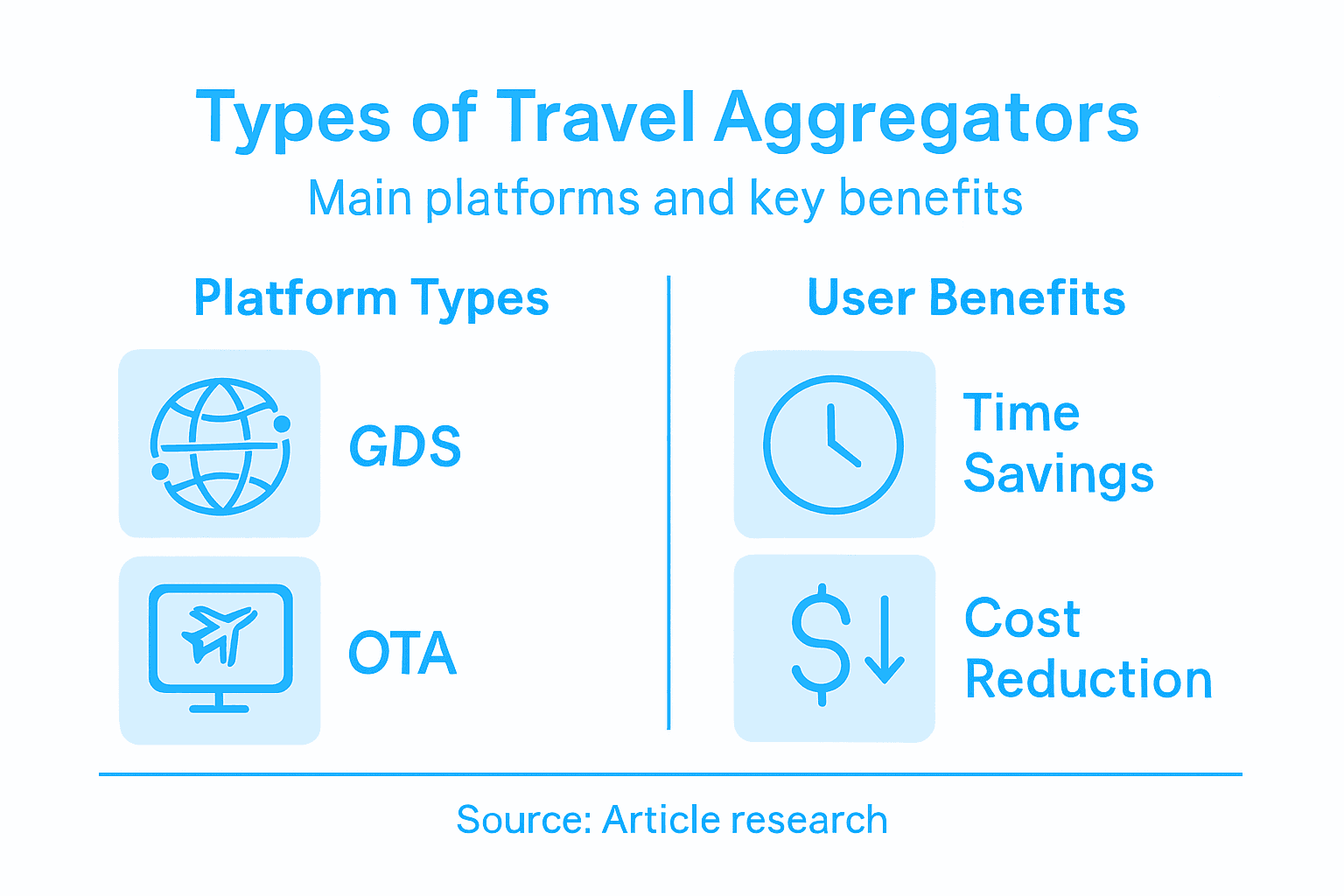
Global Distribution Systems are the backbone of the travel industry. GDS platforms connect travel suppliers like airlines, hotels, and car rental companies directly with travel agents and booking platforms. Think of a GDS as the wholesale marketplace of travel. These systems have been around for decades and maintain real-time access to inventory and pricing across thousands of options worldwide. Major GDS providers like Amadeus, Sabre, and Galileo power countless booking platforms you use today. When you search for flights on a consumer-facing website, that search often runs through a GDS in the background, pulling live data from airlines’ systems. GDSs provide transparency and competition, which theoretically keeps prices competitive because every booking platform sees the same base prices simultaneously.
Online Travel Agencies (OTAs) operate differently. These are consumer-facing platforms that aggregate travel options and add their own layer of service on top. OTAs purchase inventory in bulk from suppliers or negotiate special rates, then resell directly to consumers. Kayak, Expedia, and Booking.com are examples you probably recognize. The difference from a GDS is that OTAs market directly to travelers like you, handle customer service, offer loyalty programs, and sometimes negotiate exclusive deals that aren’t available elsewhere. OTAs often pull data from multiple GDSs and also have direct connections with major suppliers, giving them access to a comprehensive view of available options. They make money through commissions from suppliers and by taking a markup on bookings.
Beyond these two main types, travel platformization now includes promotion platforms and sharing economy platforms. Promotion platforms focus on marketing travel experiences and destinations rather than just transactional bookings. Sharing economy platforms like Airbnb disrupted traditional hotel aggregation by offering alternative accommodation inventory that never appeared in GDS systems. Many modern aggregators now blend all three approaches, combining traditional supplier connections with promotional content and alternative accommodation options. This creates a more complete picture of your travel options, though it also means different platforms may show different prices for the same flights or hotels depending on their supplier relationships and negotiated rates.
For solo travelers on a budget, knowing these platform types matters. A GDS-based platform shows you baseline pricing directly from suppliers, while an OTA might show slightly higher prices but include extra perks like free cancellation or loyalty points. Some aggregators intentionally mix both sources, showing you GDS prices alongside OTA exclusives so you can compare. The best approach is using multiple types of platforms when planning your trips, since each has different supplier connections and may surface deals the others miss.
Pro tip: Check both a pure GDS aggregator and an established OTA when booking flights or hotels, as GDS platforms often show the absolute lowest fares while OTAs frequently offer better cancellation policies and hidden discounts that justify slightly higher base prices.
Here’s a quick comparison of major travel aggregation platform types and their unique advantages:
| Platform Type | Key Data Sources | Main User Benefits | Typical Drawbacks |
|---|---|---|---|
| Global Distribution | Direct supplier feeds, GDS | Access to real-time wholesale fares | Limited consumer support |
| Online Travel Agency | GDS, direct deals, suppliers | Extra services; loyalty programs | May show slightly higher prices |
| Promotion Platform | Marketing partnerships | Curated experiences and offers | Less focus on bookings |
| Sharing Economy | User listings, direct owners | Unique local accommodations | Variable quality and standards |
How Travel Deal Aggregators Work
Travel deal aggregators operate through a surprisingly elegant system. Behind the scenes, these platforms constantly pull data from thousands of travel service providers, organize that information, and display it in ways that help you find the best deals. The process happens in real-time, which is why you can search for flights departing tomorrow and see accurate pricing and availability instantly. Understanding how this machinery works gives you insight into why certain deals appear, why prices change, and how to use aggregators more effectively to maximize your savings.
The foundation of aggregation relies on data collection technologies. Flight aggregators use web scraping and APIs to collect real-time data from airlines, hotel chains, car rental companies, and booking platforms. Web scraping automatically visits websites and extracts pricing information, while APIs allow direct connections between the aggregator and travel suppliers’ systems. This dual approach means aggregators capture data from both major providers and smaller regional airlines or boutique hotels that might not have traditional GDS connections. The aggregators then organize this raw data, removing duplicates and standardizing formats so comparisons are meaningful. When you enter your travel dates and destination, the aggregator searches through millions of options in its database and returns results ranked by price, departure time, or user ratings. This meta-search approach allows you to compare dozens of options simultaneously without visiting each provider’s website individually.
Revenue generation directly shapes how aggregators operate. Most travel aggregators buy blocks of hotel rooms or flight tickets at discounted wholesale rates and resell them at a markup. This commission-based model means aggregators negotiate with suppliers for bulk discounts, which they pass along to you, at least partially. Some aggregators earn money through affiliate marketing, meaning they receive a commission when you book through their platform. Understanding this model is important because it explains why some aggregators push certain airlines or hotel chains more aggressively—these suppliers are paying higher commissions. The best aggregators balance showing you the cheapest options with maintaining revenue streams, but occasionally bias creeps in. This is why comparing results across multiple aggregators remains valuable, as different platforms negotiate different rates with different suppliers.
Filtering and customization are where aggregators add real value for budget travelers. Once data is collected and organized, the platform lets you customize your search extensively. You can filter by price range, departure times, airline preferences, layover limits, hotel amenities, or review scores. You can set price alerts that notify you when fares drop for specific routes. You can compare refund policies across providers to understand cancellation risk. Some aggregators let you save favorite results and track price history, showing you whether current prices are genuinely low or just average. This layer of customization transforms raw data into actionable information. Rather than manually checking 20 airline websites daily to track price trends, the aggregator monitors thousands of options and surfaces exactly what matters to your trip.
Pro tip: Use the price history and filtering features on your aggregator platform to identify the cheapest days and times for your route, then set up alerts for those specific search parameters so you catch drops before prices climb back up.
Benefits for Solo and Budget Travelers
Travel deal aggregators exist because solo and budget travelers have unique needs that traditional booking methods fail to address. When you’re traveling alone, every dollar matters, and your flexibility often exceeds that of group travelers. You might shift your dates by a day or two if it saves fifty dollars, choose a hostel over a hotel, or take a longer layover for cheaper flights. Aggregators give you the power to make these tradeoffs with full information. You can see exactly how much time you gain or lose with each option and whether that tradeoff justifies the cost difference. This level of control transforms travel from something that feels financially risky into something genuinely achievable on a tight budget.

The core advantage is time savings combined with cost reduction. Travel aggregators consolidate options from airlines, hotels, and car rentals in one place, allowing you to compare prices and schedules without visiting dozens of websites individually. For a solo traveler planning a two week trip to three countries, this efficiency is genuinely transformative. Instead of spending eight hours across multiple evenings researching flights to each destination, comparing hotel options in each city, and tracking car rental quotes, you spend maybe ninety minutes in an aggregator platform seeing everything at once. That time savings means you actually plan trips instead of abandoning them due to research fatigue. More importantly, the cost savings compound. You might find a flight that’s forty dollars cheaper, a hotel that’s thirty dollars less per night, and a rental car that’s twenty dollars cheaper. Across a two week trip, that’s potentially four to five hundred dollars recovered, which funds additional experiences or extends your travel timeframe.
Access to discounted rates is where aggregators truly shine for budget travelers. Many aggregators purchase blocks of hotel rooms and flight inventory at wholesale prices, then offer these to you at rates individual travelers cannot access independently. A hotel room that costs one hundred twenty dollars when you call directly might be ninety dollars through an aggregator’s negotiated rates. Multiply that across multiple nights and multiple destinations, and you’re looking at substantial savings. Additionally, aggregators make it simple to compare refund policies and cancellation options without missing any details. You can filter hotels to show only those with free cancellation, then compare pricing among those options. You can see which airlines charge for checked bags and which include them, which routes have layovers and which don’t, transforming pricing transparency into actual decision making power.
User reviews and ratings integrated into aggregator platforms solve a problem solo travelers face constantly: trust. When you’re booking accommodation in a city you’ve never visited, staying alone, you need confidence that the place is safe, clean, and accurately described. Aggregators display hundreds of verified guest reviews alongside pricing and amenities, letting you make informed decisions grounded in actual traveler experiences. This reduces the anxiety around budget travel significantly. A cheap hotel with four and a half stars and three hundred reviews gives you confidence; a cheap hotel with no reviews and a vague description creates worry. Solo travelers especially appreciate this, since they cannot rely on group decision making and must trust their own judgment entirely. The combination of seeing what other solo travelers experienced, comparing options side by side, and accessing discounted rates creates a psychological shift. Budget travel stops feeling risky and starts feeling strategic.
Pro tip: Filter aggregator results to show only accommodations and flights with good reviews from other solo travelers, then set up price alerts for your top three choices so you can book when prices drop without spending weeks researching.
Risks, Limitations, and What to Avoid
Travel aggregators are powerful tools, but they come with real pitfalls that can turn a great deal into a frustrating experience. The most common problem solo travelers encounter is the gap between displayed price and final charge. You see a flight listed at two hundred ninety-nine dollars, book confidently, then discover taxes, fuel surcharges, and booking fees push the total to three hundred seventy-five dollars. Travel aggregators sometimes display incomplete pricing versus final charges at checkout, which feels deceptive even when technically not fraudulent. The aggregator showed the base price, but didn’t highlight how much the extras would add. Similarly, hotel prices might omit resort fees, parking charges, or city taxes until the final step. These aren’t hidden fees exactly, but the presentation creates a misleading picture of value. To protect yourself, always scroll to the final booking screen before committing, reviewing the complete price breakdown. Compare that total against direct booking with the hotel or airline to confirm the aggregator actually saved you money.
Another significant risk involves outdated or inaccurate information. Aggregators pull data constantly, but that data can lag behind real-time changes. A flight showing as available might already be booked. Hotel inventory listed might be slightly inaccurate. Cancellation policies displayed on the aggregator platform occasionally differ from the actual policy you receive after booking. This creates frustration specifically for budget travelers who plan carefully and rely on aggregator information to make tight decisions. The technical challenges are substantial. Aggregators must handle dynamic pricing that changes constantly and complex website structures designed to prevent scraping. When supplier websites block or restrict aggregator access, data becomes stale or incomplete. Some aggregators handle this better than others, but no aggregator maintains perfect real-time accuracy across all suppliers and destinations.
Customer support quality varies dramatically between aggregators, and this matters when problems arise. If you book a flight through an aggregator and the airline cancels it, your recourse depends on the aggregator’s policies and support responsiveness. Some aggregators provide excellent customer service with actual humans who can advocate for you. Others offer minimal support, directing you to contact the airline or hotel directly. For solo travelers who value reliability, this represents real risk. You cannot reliably assume that booking through an aggregator simplifies problem resolution. Some travelers have experienced situations where an aggregator booking was significantly cheaper than direct booking, but when issues arose, the aggregator refusal to help made the cheaper price feel like a bad decision in hindsight. Read aggregator reviews specifically about their customer service before booking anything significant, and prioritize platforms that offer email support and clear refund policies.
Verification and caution before booking protects you from most aggregator pitfalls. Always check the complete price breakdown before confirming. Visit the original airline or hotel website and confirm that the aggregator price actually beats direct booking, accounting for all fees. Read recent customer reviews on that specific aggregator platform, not just general reviews of the aggregator. Understand the cancellation policy completely, since some aggregators use non-refundable rates to offer lower prices. For accommodations, verify room descriptions and photos match current offerings, since hotels occasionally update their properties and aggregator data lags. For flights, confirm directly with the airline that your booking exists in their system before considering it finalized. These steps add maybe fifteen minutes to your booking process but eliminate ninety percent of aggregator related problems.
Pro tip: Bookmark the direct websites of airlines and hotels you frequently use, then check those sites immediately after finding a deal on an aggregator to confirm the aggregator price genuinely beats direct booking, since some suppliers offer better rates or perks when you book directly.
Travel Deal Aggregation vs Alternatives
You have choices when booking travel. You can visit airline websites directly, call a traditional travel agency, use a single online travel platform like Expedia, or turn to an aggregator. Each approach has legitimate advantages and real drawbacks. Understanding these tradeoffs helps you choose the method that actually saves you the most money and stress for your specific trip. Direct booking, travel agencies, and aggregators represent fundamentally different approaches to the same problem: finding the best travel deal.
Direct Booking with Suppliers
When you book directly with an airline or hotel website, you skip intermediaries entirely. You control the entire process and speak directly to customer service when problems arise. Airlines sometimes offer perks for direct bookings, like extra loyalty points or better seat selection. However, direct booking requires researching every supplier individually. If you want to compare five airlines and three hotel chains across different dates, you are manually visiting eight websites and tracking information across browser tabs and notebooks. This approach works if you have very specific preferences and know exactly which airline or hotel you want. For budget travelers comparing dozens of options, direct booking creates information overload and takes hours. Additionally, direct booking rarely offers the lowest prices since aggregators negotiate bulk discounts that suppliers don’t offer to individual bookers.
Traditional Travel Agencies
Travel agents handle research for you, offering personalized service and expert recommendations. They maintain relationships with suppliers, sometimes accessing perks unavailable to regular customers. For complex trips involving multiple destinations, unusual routing, or specific preferences, a good travel agent provides genuine value. However, travel agencies charge fees, typically ranging from 50 to 250 dollars per booking depending on complexity. Travel aggregators offer greater convenience by consolidating multiple options in one place with wider selections and often exclusive discounts, making them more cost-effective for budget-conscious travelers. Travel agencies work best for expensive trips where their expertise justifies the fee, or for travelers who hate researching. For solo budget travelers booking moderately priced trips, the agency fee often exceeds your savings.
Single-Source Online Platforms
Expedia, Booking.com, and similar platforms operate as single aggregators with their own inventory and partnerships. They show you many options from a large pool of suppliers, but their pool is limited compared to true aggregators. Their advantage is that they often bundle services, offering package deals on flights plus hotels at discounted rates. They maintain customer service teams and handle dispute resolution. However, they don’t show you every available option. Travel deal aggregation uses automated data scraping to collect vast amounts of real-time pricing and availability from multiple sources, providing more extensive comparison options than single-platform sites. A flight available on three smaller airlines might not appear in a single platform’s results if they don’t have partnerships with those carriers. For complex searches or niche destinations, single platforms sometimes miss better options entirely.
Multi-Source Aggregators
True aggregators pull data from multiple platforms, GDS systems, and direct supplier connections simultaneously. They show you the widest possible range of options and typically offer the lowest base prices through negotiated bulk rates. They excel at speed and breadth of comparison. However, they provide minimal customer service and handle complicated refund situations less consistently than travel agencies or single platforms. They work best when you need to compare many options quickly and want the lowest possible price, accepting that you’ll handle your own customer service if issues arise. For solo travelers comfortable with self-service and focused on cost, aggregators win decisively.
When to Use Each Option
Use direct booking when you have loyalty status with a specific airline or hotel, want to build elite status, or have very specific requirements that one supplier meets perfectly. Use travel agencies for complex trips, expensive bookings where expertise justifies the fee, or when you value personalized service over cost savings. Use single-platform sites when you want convenience bundled with moderate savings and prefer dealing with one company. Use aggregators when you prioritize finding the lowest price, have flexibility with your travel dates and preferences, and are comfortable handling your own customer service. For most solo travelers aged 25-40 in North America, aggregators deliver the best combination of price, speed, and control.
Pro tip: Use an aggregator to find and compare your top three options, verify those prices on each supplier’s direct website, then decide based on total cost and customer service reputation whether to book through the aggregator or directly with the cheapest supplier.
This table highlights how travel deal aggregation compares to other booking options:
| Booking Method | Price Transparency | Research Time Needed | Customer Service Quality |
|---|---|---|---|
| Aggregator | High; shows many fares | Short; fast comparison | Moderate, varies by platform |
| Direct Supplier | Highest for that brand | Long; manual lookup | Strong, direct support |
| Travel Agency | Varies, agent advice | Minimal; agent handles | Personalized, professional |
| Single-Source Site | Limited by inventory | Moderate; some bundles | Reliable, one company focus |
Transform Your Travel Planning with Smart Deal Aggregation
Struggling to find the best travel deals without wasting hours hopping between websites The article highlights how travel deal aggregators solve this challenge by collecting and comparing fares from multiple sources in real time to unlock major savings. If you want to save time and money on flights and hotels while seeing every possible option in one place PilotTravelDeals.com is your ultimate solution. By combining bulk discounts with powerful aggregation technology our platform helps solo and budget travelers discover exclusive offers with ease.
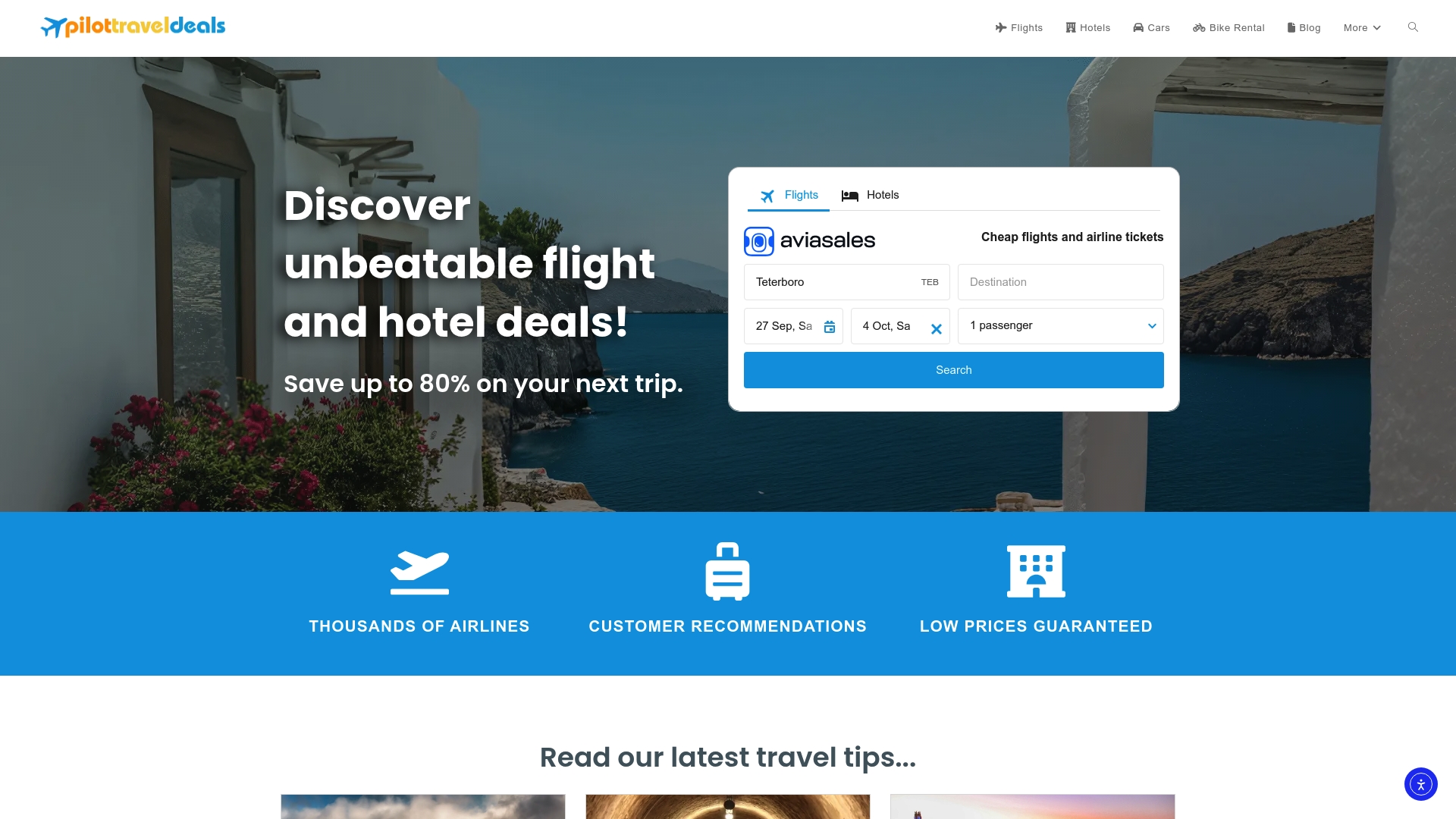
Explore our Travel Tips for expert advice on setting price alerts and customizing searches just like the article recommends. Then visit PilotTravelDeals.com directly to start searching thousands of deals on flights, hotels, bike rentals, and more. Experience how effortless it is to plan your next trip confidently while capturing savings up to 80 percent. Don’t let hidden fees or confusion hold you back join thousands of savvy travelers using Pilot Travel Deals today and book smarter with complete transparency and convenience.
Frequently Asked Questions
What is travel deal aggregation?
Travel deal aggregation is a service that collects travel fare information from multiple sources, allowing travelers to compare and book options like flights, hotels, and car rentals in one place. It simplifies the booking process by providing a comprehensive view of available options.
How do travel aggregators differ from booking directly with airlines or hotels?
Travel aggregators act as intermediaries, compiling prices and deals from various providers without owning the products themselves. When booking directly, travelers may miss out on potential discounts that aggregators negotiate or offer.
What are the main types of travel aggregation platforms?
The primary types of travel aggregation platforms include Global Distribution Systems (GDS) that connect travel suppliers with booking platforms, and Online Travel Agencies (OTAs) that market directly to consumers. Each has its unique advantages and sourcing methods for deals.
How can solo and budget travelers benefit from using travel deal aggregators?
Travel deal aggregators save time and money by consolidating options from multiple providers, helping travelers find the best deals available. They also allow for extensive customization and filtering, enabling users to find options that best suit their travel needs.
Recommended
- Why Book With Travel Aggregators: Save More, Stress Less – PilotTravelDeals.com
- Travel Deal Terminology Explained: Maximizing Savings – PilotTravelDeals.com
- How to Maximize Travel Savings with Smart Deal Strategies – PilotTravelDeals.com
- Defining Travel Deal Sites: Complete 2024 Guide – PilotTravelDeals.com
- 5 Ways to Save Money When Traveling in Costa Rica | Costa Rica Waterfall Tours