Most american and European travelers miss out on real savings simply because deal terminology feels confusing. For solo explorers trying to stretch every pound, understanding flight and hotel jargon can be the key to unlocking better rates and avoiding common traps. More than half of budget travelers admit to feeling overwhelmed by industry lingo, which means learning these terms can put you ahead when scoring serious bargains.
Table of Contents
- What Travel Deal Terminology Really Means
- Types of Travel Deals and Their Differences
- How Travel Discounts and Offers Work
- Key Terms in Flight and Hotel Deals
- Common Pitfalls and How to Avoid Them
Key Takeaways
| Point | Details |
|---|---|
| Understanding Terminology | Familiarize yourself with travel deal terms like Advance Purchase and Blackout Dates to maximize savings opportunities. |
| Compare Deal Types | Review various travel package types to determine which best suits your needs and budget constraints. |
| Be Aware of Pitfalls | Avoid risks associated with Non-Refundable Fares and Ancillary Fees by reading the fine print and opting for flexible options. |
| Utilize Discounts Effectively | Leverage discounts and offers by booking in advance and being flexible with travel dates to find the best prices. |
What Travel Deal Terminology Really Means
Travel deal terminology can feel like decoding a complex foreign language, especially for budget-conscious travelers seeking the best possible prices. Understanding these technical terms is crucial for navigating the intricate world of travel discounts and promotions. Travel industry professionals use specific vocabulary that can make or break your ability to secure significant savings.
Let’s break down some key terminology that travelers frequently encounter. Advance Purchase refers to booking flights or accommodations well in advance of your travel dates, typically offering lower rates for those willing to plan early. Blackout Dates are specific periods when special discounts or promotional rates are not available, often surrounding peak travel seasons like holidays. Bundled Pricing represents package deals that combine multiple travel services (such as flights, hotels, and car rentals) at a potentially reduced overall cost compared to booking each component separately.
Some additional critical terms include Dynamic Pricing, where ticket and accommodation prices fluctuate based on real-time demand, and Flash Sales, which are extremely time-limited promotions offering steep discounts that disappear quickly. Understanding these terms empowers travelers to recognize genuine savings opportunities and avoid marketing tricks designed to create artificial urgency.
Pro tip: Always screenshot or save the detailed terms and conditions when encountering travel deals to ensure you fully understand the specific restrictions and requirements associated with any promotional offer.
Types of Travel Deals and Their Differences
Travel deals come in multiple varieties, each designed to cater to different traveler needs and preferences. Different travel package structures offer unique advantages that can significantly impact your overall travel experience and budget. Understanding these variations helps travelers make informed decisions and maximize their savings potential.

One primary category is FIT (Free Independent Traveller) deals, which provide maximum flexibility for solo or small group travelers. These packages allow individuals to customize their travel experience without the constraints of group tours. In contrast, Group Travel deals offer substantial discounts by bundling accommodations, transportation, and activities for larger parties. Another specialized category is MICE (Meetings, Incentives, Conferences, and Exhibitions) deals, specifically tailored for business travelers and corporate events, often including comprehensive service packages with negotiated corporate rates.
Additional deal types include All-Inclusive Packages, which cover nearly all travel expenses upfront, and Advance Purchase Fares, offering significant discounts for travelers who book well in advance. Affinity Group Tours target specific demographics like students, seniors, or professional associations, providing specialized travel experiences with group-specific pricing structures. Each deal type has unique benefits: all-inclusive packages eliminate unexpected expenses, advance purchase fares reward early planning, and affinity tours create community-driven travel experiences.
Pro tip: Always compare multiple deal types and read the fine print to ensure the package truly meets your specific travel needs and budget constraints.
Here’s a quick comparison of major travel deal types and their typical benefits:
| Deal Type | Flexibility | Cost Savings | Ideal For |
|---|---|---|---|
| FIT (Independent) | Very high | Moderate | Solo travelers, small groups |
| Group Travel | Limited | Significant | Families, large parties |
| All-Inclusive | Moderate | Predictable | Budget-focused travelers |
| MICE | Business-centric | Negotiable | Corporate groups, events |
| Advance Purchase | Low flexibility | Highest potential | Early planners |
How Travel Discounts and Offers Work
Travel discounts operate through complex mechanisms that balance pricing strategies, market demand, and business objectives. Government travel policies provide insights into discount structures that reveal how travel providers create and implement attractive offers. Understanding these underlying principles can help travelers strategically approach booking and maximize potential savings.
The primary discount mechanisms include Negotiated Rates, where travel providers establish predetermined pricing with specific organizations or groups, and Capacity Controlled Fares, which limit the number of seats or rooms available at discounted prices. Dynamic Pricing plays a crucial role, allowing prices to fluctuate based on real-time factors like demand, seasonality, and booking proximity to travel dates. These strategies enable travel companies to optimize revenue while providing consumers with potential savings opportunities.
Advanced discount techniques also involve Advance Purchase Discounts, which reward travelers who book significantly ahead of their travel dates, and Centrally Billed Accounts, typically used by corporations to manage travel expenses more efficiently. Some providers implement Tiered Pricing Models that offer progressively better discounts based on factors like loyalty program status, booking volume, or specific membership affiliations. These intricate pricing strategies create a complex ecosystem where savvy travelers can find substantial savings by understanding and navigating these systems strategically.
Pro tip: Always compare multiple booking platforms and be flexible with your travel dates to uncover the most significant discounts and promotional offers.
Key Terms in Flight and Hotel Deals
Understanding the specialized vocabulary of flight and hotel bookings can significantly improve your ability to find and secure the best travel deals. Business travel terminology provides critical insights into pricing and booking mechanisms that can help travelers navigate complex booking landscapes more effectively.
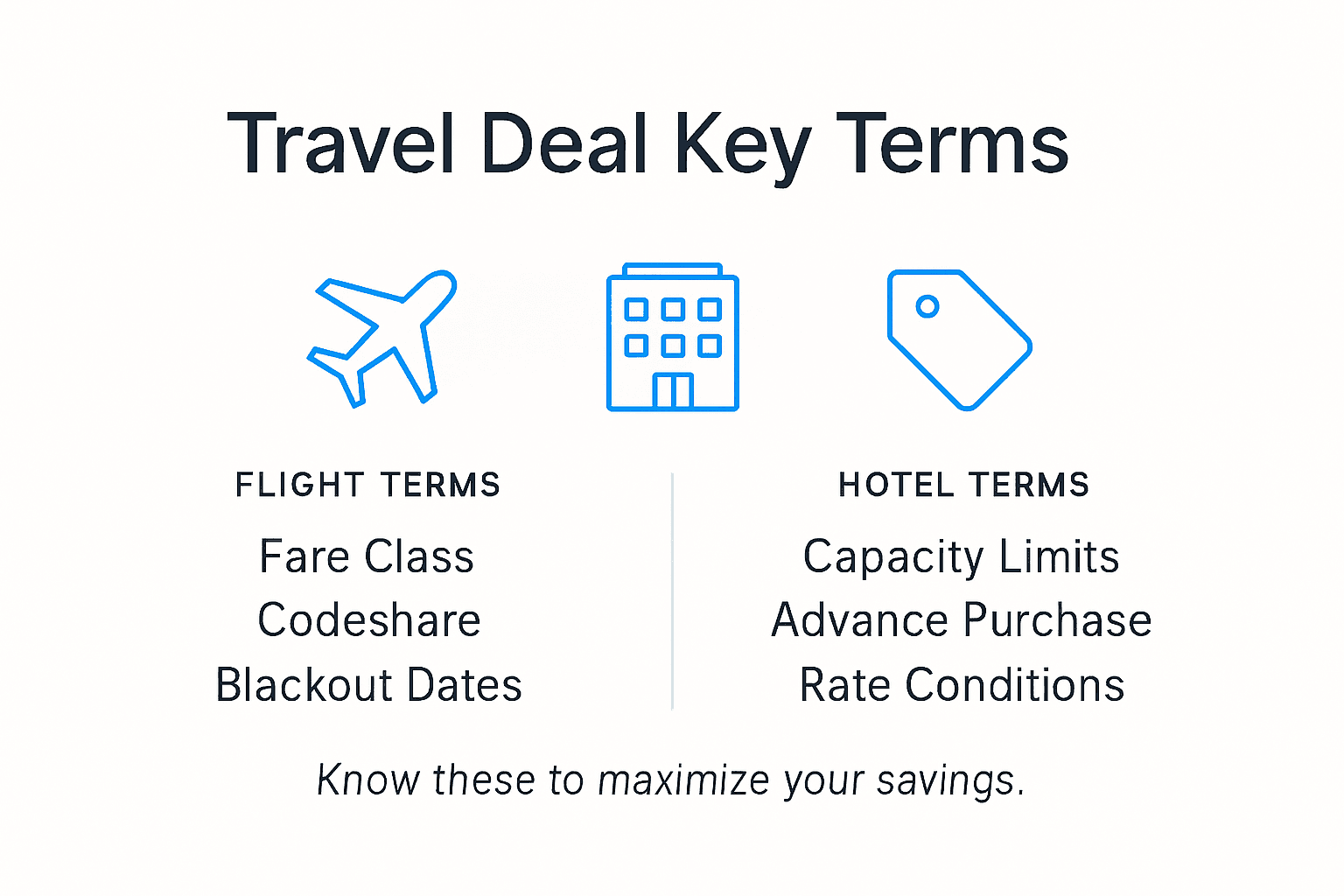
Key flight-related terms include Fare Class, which determines pricing and amenity levels, and Codeshare Flights, where multiple airlines share the same flight under different marketing designations. Passenger Name Record (PNR) represents your unique booking identifier, tracking all details of your travel reservation. In the hotel booking world, important terms like Average Daily Rate (ADR) and Best Available Rate (BAR) help travelers understand pricing strategies, with ADR representing the typical room rate and BAR indicating the lowest current rate for a specific room type.
Additional critical terms include Capacity Controlled Fares, which limit discounted seats or rooms based on availability, and Ancillary Fees, which cover extra services beyond the base ticket or room price. Global Distribution Systems (GDS) and New Distribution Capability (NDC) represent technological platforms that enable complex pricing and booking processes, allowing travel providers to create more flexible and personalized pricing strategies. Understanding these terms empowers travelers to make more informed decisions and potentially uncover hidden savings opportunities.
Pro tip: Always ask about hidden fees and compare the total price, not just the advertised base rate, when booking flights and accommodations.
Common Pitfalls and How to Avoid Them
Travel deals can be complex, with numerous potential pitfalls that can quickly transform an exciting trip into a frustrating experience. Understanding the most common travel booking traps helps travelers protect their investments and make more informed decisions.
One of the most significant pitfalls is Non-Refundable Fares, which may seem attractive due to lower prices but can become financial traps if travel plans change unexpectedly. Blackout Dates represent another critical challenge, where promotional rates and rewards become unavailable during peak travel periods. Travelers should carefully review these restrictions before booking, as they can significantly impact trip flexibility. Advance Purchase Restrictions often require bookings made weeks or months in advance, which can be problematic for those with unpredictable schedules.
Overbooking remains a persistent issue in both flights and accommodations, potentially leaving travelers without confirmed reservations during peak travel seasons. Additional risks include hidden Ancillary Fees that can dramatically increase the total trip cost, and complicated cancellation policies that make modifying travel plans expensive or impossible. Some deals also feature Capacity Controlled Fares that limit the number of discounted tickets, creating a high-stakes booking environment where desired rates can vanish quickly.
Pro tip: Always read the fine print, purchase travel insurance, and maintain flexible booking options to protect yourself against unexpected changes and potential travel deal complications.
These are common pitfalls in travel deals and strategies to avoid them:
| Pitfall | Why It’s Risky | How to Avoid |
|---|---|---|
| Non-Refundable Fares | No returns on changed plans | Choose refundable options |
| Blackout Dates | Restrictions on promos | Check eligible travel dates |
| Ancillary Fees | Higher total costs | Review fee details upfront |
| Overbooking | Possible loss of reservation | Confirm bookings, insure trip |
| Advance Purchase Limits | Rigidity in schedule | Book with flexible policies |
Take Control of Travel Deals with Confidence and Ease
Mastering travel deal terminology is only the first step to unlocking significant savings. If you find yourself overwhelmed by terms like Advance Purchase, Blackout Dates, or Dynamic Pricing, you are not alone. Many travelers struggle to navigate the complex jargon and restrictions that hide true discount opportunities. At PilotTravelDeals.com, we simplify this process by bringing together a wide range of real deals on flights, hotels, and more — all clearly presented so you can compare and conquer travel costs with confidence.
Explore our Travel Tips for insider advice on spotting the best offers and avoiding common pitfalls. Then, visit PilotTravelDeals.com to start searching for deals tailored to your destination and schedule. With savings of up to 80 percent, you can finally plan your perfect trip without the stress of confusing terms holding you back. Don’t wait until blackout dates limit your options. Act now and transform your travel experience today.
Frequently Asked Questions
What is Advance Purchase in travel deals?
Advance Purchase refers to booking flights or accommodations well in advance of your travel dates, typically offering lower rates for those willing to plan early.
How do Blackout Dates affect travel deals?
Blackout Dates are specific periods when special discounts or promotional rates are not available, often surrounding peak travel seasons like holidays, limiting your ability to utilize certain offers during those times.
What is Dynamic Pricing in the travel industry?
Dynamic Pricing is a pricing strategy where ticket and accommodation prices fluctuate based on real-time demand, seasonality, and how close you are to your travel dates, potentially affecting the final cost of your booking.
What are Ancillary Fees, and how can travelers avoid them?
Ancillary Fees cover extra services beyond the base ticket or room price, such as checked baggage or room upgrades. Travelers can avoid these fees by carefully reviewing the terms of their booking and selecting options that include necessary services.