

Did you know that travelers can save as much as 60% on flights and hotels by using the right discount strategies? Prices for vacation stays and airfare are climbing every year, making affordable travel feel out of reach for many people. Learning how discounts work can help you access trips that match your dreams and your budget, giving you more choices while avoiding extra costs and frustration.
Key Takeaways
| Point | Details |
|---|---|
| Travel Discounts | Strategic opportunities for reducing travel expenses, often requiring flexibility and acceptance of certain trade-offs. |
| Discount Categories | Key categories include opaque inventory, hotel consolidators, and employee discounts, each offering unique savings potential. |
| Comparison Strategy | Proactive comparison of multiple providers is essential to maximize savings and ensure the best travel value. |
| Red Flags | Be cautious of deals that appear too good to be true, as they may come with hidden costs or unfavorable conditions. |
Table of Contents
- Defining Travel Discounts And Core Concepts
- Major Travel Discount Categories Explained
- How Travel Discounts Work And Key Requirements
- Comparing Deal Providers And Savings Strategies
- Common Pitfalls To Avoid When Seeking Discounts
Defining Travel Discounts and Core Concepts
Travel discounts represent strategic opportunities for budget-conscious travelers to reduce trip expenses by accessing reduced-price travel services. These savings mechanisms enable individuals to experience travel more affordably, transforming what might seem like an expensive endeavor into an accessible adventure.
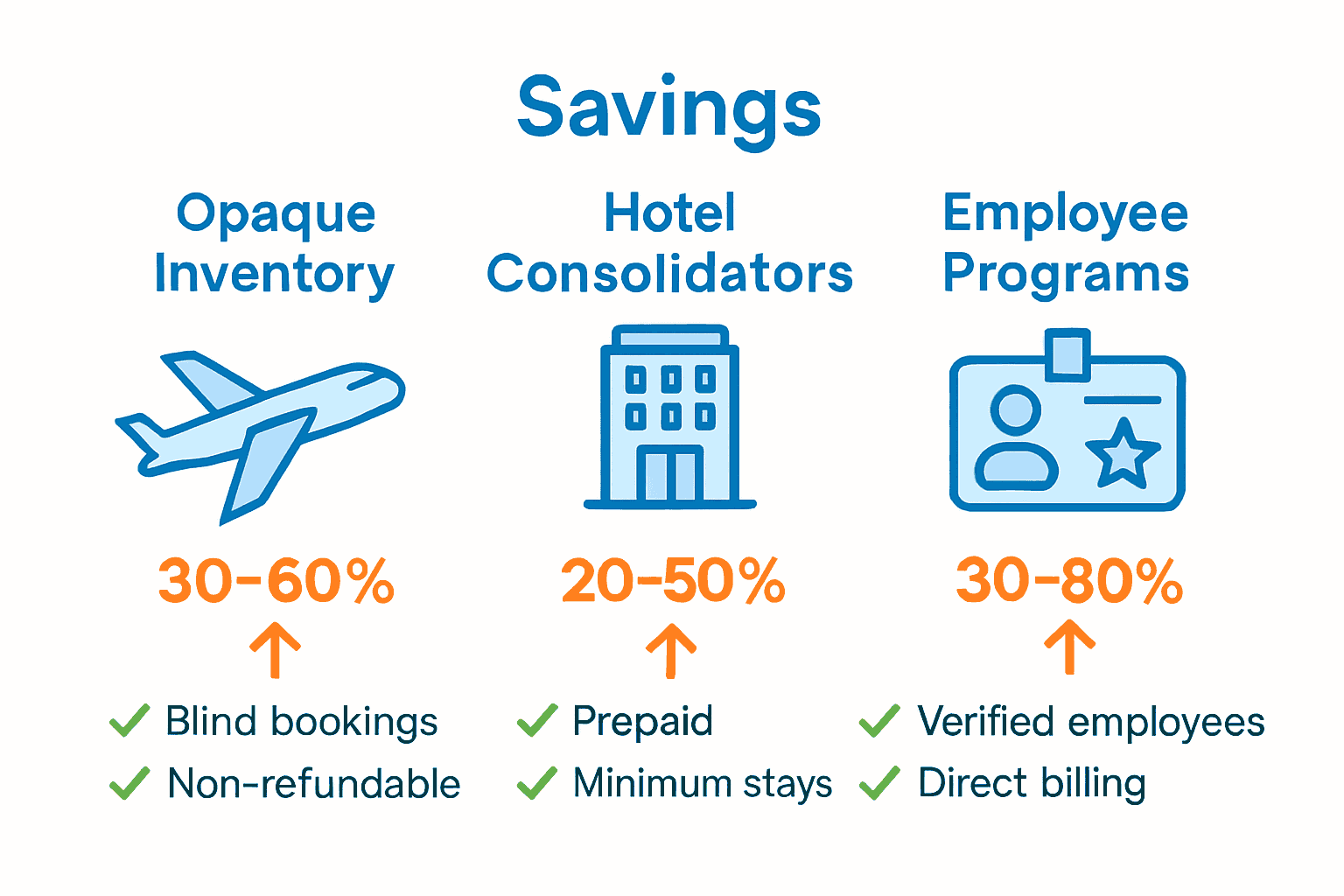
According to research on understanding travel discount strategies, opaque travel inventory represents a fascinating discount model where unsold travel capacity gets sold at significantly reduced prices. This approach allows travelers to purchase airline seats or hotel rooms without knowing the exact provider until after the transaction. Typical discount ranges hover between 30-60%, presenting an attractive option for flexible travelers willing to embrace some uncertainty.
Key characteristics of travel discounts include:
- Reduced pricing for travel services
- Potential limitations on refunds or changes
- Variable discount percentages across different providers
- Opportunities for substantial savings
The travel discount landscape involves multiple players, including airline consolidators who function essentially as wholesale ticket brokers. These intermediaries contract directly with carriers, enabling them to offer tickets at rates lower than traditionally published prices. While appealing, travelers should understand potential trade-offs like different fare rules or limited frequent-flyer point accumulation. Smart travelers recognize that understanding these nuanced discount strategies can unlock remarkable travel opportunities without compromising overall trip quality.
Major Travel Discount Categories ExplainedTravel discounts emerge through multiple strategic channels, offering savvy travelers numerous opportunities to reduce their overall trip expenses. Understanding these diverse discount categories can transform how you approach travel planning and budgeting.
Hotel Discounts
Hotel discounts represent a significant savings avenue for travelers. According to research, hotel consolidators play a critical role in this ecosystem, functioning as specialized wholesalers who purchase large room blocks at volume discounts. Learn more about travel comparison strategies to maximize these opportunities. These consolidators leverage their bulk-buying power to negotiate rates substantially lower than standard market prices, particularly in major tourist destinations.
Airline Employee and Professional Discounts
A fascinating discount category involves professional travel privileges. The Zonal Employee Discount (ZED) program exemplifies this, representing a multilateral arrangement where airline employees receive discounted personal travel fares across member airlines. This unique system allows industry professionals and their associates to access travel opportunities at significantly reduced rates under specific predefined conditions.
Key travel discount categories include:
Here’s a comparison of major travel discount channels and their key characteristics:
| Discount Channel | Typical Savings | Main Requirements | Key Trade-Offs |
|---|---|---|---|
| Opaque Inventory | 30-60% off | Accept unknown provider Non-refundable booking |
No advance refund Brand not revealed until after purchase |
| Hotel Consolidators | 20-50% off | Flexible dates Comparison shopping |
Limited room selection Restricted loyalty benefits |
| Airline Consolidators | 10-40% off | Flexible travel plans Willing to accept fare rules |
Limited changes Restricted frequent flyer points |
| Employee & Professional Programs | 30-80% off | Industry or professional affiliation | Strict eligibility Advance planning required |
- Hotel consolidator rates
- Airline employee programs
- Corporate and professional network discounts
- Seasonal promotional offers
- Loyalty program rewards
Understanding these discount mechanisms requires flexibility and strategic planning. Smart travelers recognize that each category offers unique advantages, whether through bulk purchasing power, professional networks, or strategic timing. The key is remaining informed and proactively seeking opportunities that align with your specific travel needs and preferences.
How Travel Discounts Work and Key RequirementsTravel discounts operate through sophisticated mechanisms that balance provider needs with consumer savings opportunities. Understanding these intricate systems allows travelers to strategically navigate complex pricing landscapes and unlock significant cost reductions.
Operational Mechanics of Discounts
According to research on opaque bookings, these discount models require buyers to accept certain trade-offs in exchange for reduced prices. Explore detailed travel deal alerts to stay informed about emerging opportunities. Key characteristics include accepting unknown travel providers, committing to non-refundable purchases, and accepting limited booking flexibility.
Consolidator Discount Strategies
Airline consolidators represent another critical discount mechanism. These specialized intermediaries contract directly with carriers, purchasing pre-negotiated seat blocks which they then sell to niche market segments. Research indicates these tickets often come with unique conditions that differ from standard public fares:
- Limited frequent flyer point accumulation
- Specific fare rule variations
- Potential restrictions on changes or cancellations
Important requirements for accessing travel discounts typically involve:
- Flexibility in travel dates
- Willingness to accept specific terms
- Advance planning
- Membership in loyalty programs
- Monitoring deal platforms consistently
Successful discount navigation demands a proactive approach. Travelers must remain adaptable, thoroughly read fine print, and understand that deep discounts often require compromising certain traditional booking conveniences. The most strategic travelers view these requirements not as obstacles, but as opportunities for significant savings.
Comparing Deal Providers and Savings StrategiesSmart travelers understand that comparing multiple deal providers is the cornerstone of maximizing travel savings. Strategic comparison requires a comprehensive approach that evaluates different discount channels and their unique advantages.
Hotel Discount Comparison
According to research on hotel booking strategies, hotel consolidators offer a powerful avenue for reducing accommodation expenses. Learn more about travel comparison techniques to optimize your booking approach. These specialized wholesalers purchase room inventory in bulk, enabling them to offer rates significantly lower than standard market prices. Travelers should compare these consolidated rates against opaque deals and direct hotel channels to identify the most cost-effective option.

Airline Deal Evaluation Strategies
Airline discount strategies demand equally nuanced evaluation. Airline consolidators cater to specific market segments, frequently presenting fares lower than publicly published rates. Effective savings strategies involve:
- Comparing consolidator prices against direct airline rates
- Evaluating potential loyalty point implications
- Assessing fare flexibility and cancellation terms
- Considering total trip cost, not just ticket price
Key comparison criteria for travelers include:
- Price differential between providers
- Booking flexibility
- Additional fees and charges
- Potential loyalty program benefits
- Reputation and reliability of discount source
Successful travel savings require more than just finding the lowest price. The most sophisticated travelers blend multiple strategies, remaining adaptable and understanding that the cheapest option isn’t always the best value. Continuous learning, flexibility, and strategic comparison are the true keys to unlocking remarkable travel deals.
Common Pitfalls to Avoid When Seeking DiscountsNavigating travel discounts requires more than just finding a low price. Smart travelers understand that seemingly attractive deals can hide significant risks and unexpected complications that could ultimately cost more than anticipated.
Red Flags in Travel Deals
Research highlights critical warning signs travelers must recognize. Discover smart booking strategies to protect your travel investments. According to expert analysis, suspicious deals often exhibit key characteristics:
- Pricing 30-70% below standard market rates
- Pressure tactics demanding immediate booking
- Unclear or complicated payment methods
- Websites lacking verifiable contact information
- Hidden fees not disclosed upfront
Booking Strategy Pitfalls
Timing and careful examination are crucial when pursuing travel discounts. Booking strategy involves understanding nuanced risks:
- Avoid booking too early or too late
- Read cancellation policies thoroughly
- Verify website and provider legitimacy
- Compare multiple sources before committing
- Understand all potential additional charges
Critical warning signs suggest travelers should pause and thoroughly investigate deals that seem extraordinarily cheap. The most sophisticated travelers approach discounts with a blend of excitement and skepticism, recognizing that if an offer appears too good to be true, it probably is.
Protecting your travel investment requires patience, research, and a willingness to walk away from deals that don’t meet rigorous standards of transparency and value.
Ready to Unlock Real Travel Savings?
Navigating all the types of travel discounts can be overwhelming. You want real savings but face confusion with opaque inventory, confusing loyalty terms, or providers making big promises with little transparency. If you are tired of hidden fees or worrying if a deal is too good to be true, you are not alone. Smart travelers deserve clear answers and trusted solutions. That is why our Travel Tips help you make sense of strategies like those mentioned in this guide, from consolidator rates to employee programs, so you can travel with confidence.

It is time to put knowledge into action. Find exceptional deals on flights, hotels, and more with PilotTravelDeals.com. Compare offers, avoid common booking pitfalls, and discover how much you can really save today. Start exploring for your next adventure and see just how far your travel budget can take you.
Frequently Asked Questions
What are travel discounts?
Travel discounts are strategic opportunities for travelers to access reduced-price travel services, helping to make trips more affordable.
How do opaque travel inventories work?
Opaque travel inventories allow travelers to purchase unsold airline seats or hotel rooms at a discount without knowing the exact provider until after the purchase, often resulting in savings of 30-60%.
What are hotel consolidators and how do they offer discounts?
Hotel consolidators buy large blocks of hotel rooms at volume discounts, allowing them to offer significantly lower prices than standard rates, especially in popular tourist areas.
What should I consider when comparing travel discounts?
When comparing travel discounts, consider factors like price differences, booking flexibility, additional fees, potential loyalty program benefits, and the reputation of the discount source.
Recommended
- Understanding the Role of Travel Discounts for All Travelers – PilotTravelDeals.com
- Travel Smart: Essential Tips for Affordable Adventures Around the Globe – PilotTravelDeals.com
- Understanding the Budget Travel Planning Guide – PilotTravelDeals.com
- Understanding Why Check Budget Airlines for Smart Travel – PilotTravelDeals.com
- Map of Japan: Guide to Cities, Islands, and Landmarks Oct-2025 | SimCorner

