TL;DR:
- Not all travel comparison sites are trustworthy; rely on transparency and full price details.
- Using multiple platforms and flexibility strategies helps travelers find the best fares and deals.
- Building a routine of cross-checking and pricing verification saves money and avoids hidden fees.
You find what looks like a perfect flight deal, click through, and then discover the same route is $80 cheaper on a site you didn’t check. That stings. With hundreds of travel comparison sites competing for your attention, picking the wrong one doesn’t just waste time — it costs real money. This guide cuts through the noise. You’ll get a clear framework for evaluating travel sites, a breakdown of which platforms work best for flights, hotels, and packages, and the insider habits that separate savvy budget travelers from everyone else who’s still overpaying.
Table of Contents
- What to look for in top travel comparison sites
- Flight comparison sites: Finding the cheapest fares
- Hotel and package deals: Comparing stays the smart way
- Common traps to avoid and insider booking strategies
- Why ‘best site’ is a myth — and how experienced travelers really win
- Simplify your search with PilotTravelDeals
- Frequently asked questions
Key Takeaways
| Point | Details |
|---|---|
| No site always cheapest | Cross-check top rated sites to find the best deal on every trip. |
| Transparency matters | Choose sites with clear reviews, fee breakdowns, and booking warnings to avoid surprises. |
| Stacked strategies work | Use alerts, flexible searches, and loyalty perks for maximum savings on flights and hotels. |
| Watch for red flags | Avoid obscure OTAs, hidden fees, and unclear cancellations to prevent headaches. |
What to look for in top travel comparison sites
Not all comparison sites are built the same. Some pull prices from dozens of airlines and hotels. Others quietly favor partners who pay for placement, which means the “best deal” you see might not actually be the best deal available. Knowing what separates a trustworthy site from a misleading one is the first skill every budget traveler needs.
Start with transparency. A reliable site shows you the full price, including taxes, baggage fees, and booking surcharges, before you click through. Skyscanner and Google Flights are top rated for usability, transparency, and surfacing cheap rates. That matters because hidden fees are one of the most common ways travelers lose money after they think they’ve locked in a deal.
Here’s a quick checklist of what every solid comparison site should offer:
- Price accuracy: Rates shown should match what you see at checkout
- Wide coverage: Multiple airlines, hotel chains, and booking partners
- User-friendly filters: Sort by price, stops, duration, or flexibility
- Verified reviews: Real traveler feedback, not just star ratings
- Clear fee breakdowns: Taxes and extras visible before you commit
- OTA transparency: Warnings or ratings for third-party booking agents
One smart habit: browse in incognito mode. Some sites use cookies to track your searches and nudge prices upward after repeated visits. Incognito removes that variable and gives you a cleaner read on actual rates.
Here’s how leading platforms stack up across travel categories:
| Site | Best for | Strengths |
|---|---|---|
| Google Flights | Flights | Flexible date tools, price tracking |
| Skyscanner | Flights + Hotels | Transparency, broad coverage |
| Kayak | Flights + Packages | Price alerts, multi-site search |
| Trivago | Hotels | Wide hotel inventory |
| Booking.com | Hotels | Loyalty perks, cancellation options |
For deeper analysis on which platforms hold up under real testing, check out these hotel booking platform reviews and travel booking hacks that go beyond surface-level rankings.
Pro Tip: Never book on the first site you find. Cross-check at least two or three platforms before committing. A five-minute check can easily save you $50 or more on a single booking.
Flight comparison sites: Finding the cheapest fares
Flights are usually the biggest line item in any travel budget, so this is where your comparison skills pay off the most. The good news: there are several strong tools available. The tricky part is knowing what each one does well.
Skyscanner, Google Flights, Momondo, and Kayak all scored well in independent flight searches, but none of them is always the cheapest. Prices shift constantly based on demand, seat availability, and booking window. That’s why relying on a single site is a mistake even experienced travelers make.
Notably, Momondo ranks first for airfare in 2026 according to Frommer’s, largely because it searches a wider pool of sources including some smaller booking engines others miss. But Google Flights wins on usability, especially for flexible date searches where you can see an entire month of fares at once.
Here’s a step-by-step approach that consistently finds lower fares:
- Start with Google Flights to get a baseline price and see the flexible date calendar
- Run the same search on Momondo to catch any rates Google missed
- Check Skyscanner using the “whole month” view if your travel dates are flexible
- Set a price alert on whichever site shows the lowest fare so you’re notified if it drops
- Once you find the best rate, visit the airline’s website directly to compare — sometimes booking direct saves on fees
| Site | Flexible dates | Price alerts | Direct booking link |
|---|---|---|---|
| Google Flights | Yes | Yes | Yes |
| Skyscanner | Yes | Yes | Yes |
| Momondo | Yes | Yes | Yes |
| Kayak | Yes | Yes | Partial |
For complex itineraries, learning multi-city flight booking strategies can unlock routes that don’t appear in standard searches. And if you want a full toolkit, our cheap flight tips and easy cheap flight booking guides walk through every major technique.
Pro Tip: After comparing, book directly with the airline when the price difference is small. You’ll keep your loyalty points, get easier access to customer service, and have more flexibility if the flight changes.
Hotel and package deals: Comparing stays the smart way
Hotel pricing is even more unpredictable than flights. The same room on the same night can vary by 30% or more depending on which site you use. That’s not an accident. Hotels negotiate different rate agreements with different platforms, and those gaps flow straight to your bill.

Google Hotels, Skyscanner, and Trivago consistently lead hotel comparisons in independent testing, with Google delivering the cheapest rates most often. But cheapest isn’t always the full story. A low headline rate can hide resort fees, mandatory service charges, or non-refundable policies that make the deal less attractive once you read the fine print.
Independent testing also shows that flexible dates and multi-site comparisons can unlock savings of 20 to 50% on hotel stays. That’s a meaningful difference, especially on longer trips.
Watch out for these red flags when booking hotels or packages:
- Resort fees not shown upfront: Common in Las Vegas and Miami; can add $40+ per night
- Non-refundable rates with no flexibility: Fine if your plans are locked in, risky if they’re not
- Obscure OTA partners: If the comparison site links to a booking agent you’ve never heard of, check their Trustpilot rating first
- Package deals that bundle poor-value flights: Sometimes a flight-plus-hotel package is more expensive than booking separately
- “Free cancellation” with hidden conditions: Always read the actual cancellation window, not just the label
| Site | Best for | Key strength |
|---|---|---|
| Google Hotels | Hotels | Cheapest rates, price history |
| Trivago | Hotels | Wide inventory comparison |
| Skyscanner | Hotels + Flights | Transparent partner ratings |
| Booking.com | Hotels + Packages | Loyalty discounts, flexibility |
For a practical breakdown of what actually works, our essential hotel booking tips and why compare hotel deals guides cover the tactics that save the most money.
Pro Tip: Booking last-minute and need a hotel tonight? HotelTonight specializes in same-day hotel deals and often surfaces rates that standard comparison sites don’t show.
Common traps to avoid and insider booking strategies
Even when you use the right sites, certain habits and traps can quietly drain your travel budget. The most dangerous ones feel like good deals right up until they aren’t.
Hidden fees are extremely common across travel booking platforms. Baggage charges, seat selection fees, and taxes that appear only at checkout can turn a $200 flight into a $290 one. Always expand the full price breakdown before you enter payment details.
No single comparison site is always the cheapest. Cross-verifying across multiple platforms is the only reliable way to confirm you’re getting the best available rate before booking.
Here are the booking mistakes that cost travelers the most:
- Booking on the first site without checking competitors
- Ignoring the OTA (online travel agent) that processes your booking
- Skipping the fine print on cancellation and change policies
- Assuming “sale” prices include all taxes and fees
- Not checking the airline or hotel’s own website for price matching
- Forgetting to verify the OTA’s customer service reputation before paying
The insider move is building a short routine: search on two or three sites, compare the full price including all fees, check the OTA’s Trustpilot score if you don’t recognize the name, and then decide whether to book through the comparison site or go direct. It takes an extra ten minutes and regularly saves $50 to $150 per trip.
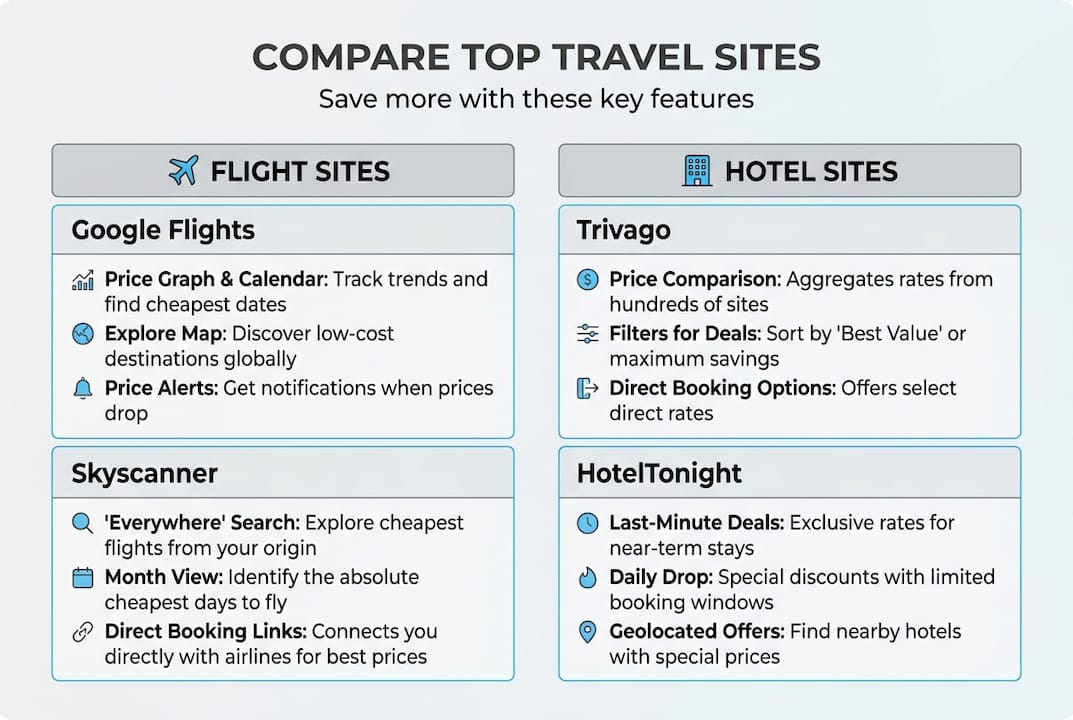
For a side-by-side look at which platforms handle this best, the discount travel website comparison breaks down the major players by reliability, fee transparency, and real user experience.
Pro Tip: Set price alerts on two different sites for the same route or hotel. When both alerts trigger around the same price, that’s usually a genuine market low, not a temporary glitch.
Why ‘best site’ is a myth — and how experienced travelers really win
Here’s the uncomfortable truth that most travel content won’t tell you: there is no single best travel comparison site. Every “top 10” list is a snapshot that expires the moment airline pricing algorithms update. Chasing the definitive answer wastes energy that’s better spent building a smarter process.
Experienced budget travelers don’t pick one site and trust it. They use comparison site strategies that stack multiple tools, set alerts across platforms, and stay flexible on dates and airports. The mindset shift is the real unlock. When you stop asking “which site is best?” and start asking “how do I verify this is actually the lowest price?”, your results improve dramatically.
Flexibility is the most underrated savings tool available. Travelers who can shift departure by one or two days, or fly into a nearby airport, consistently find rates that rigid searchers never see. No comparison site can manufacture that advantage for you. It comes from how you approach the search, not which app you open first.
Build your own routine, stick to it, and ignore the noise.
Simplify your search with PilotTravelDeals
Putting all of these strategies into practice is easier when you have the right tools in one place. PilotTravelDeals brings together flight, hotel, and package comparisons so you can run through your verification routine without jumping between a dozen separate tabs.
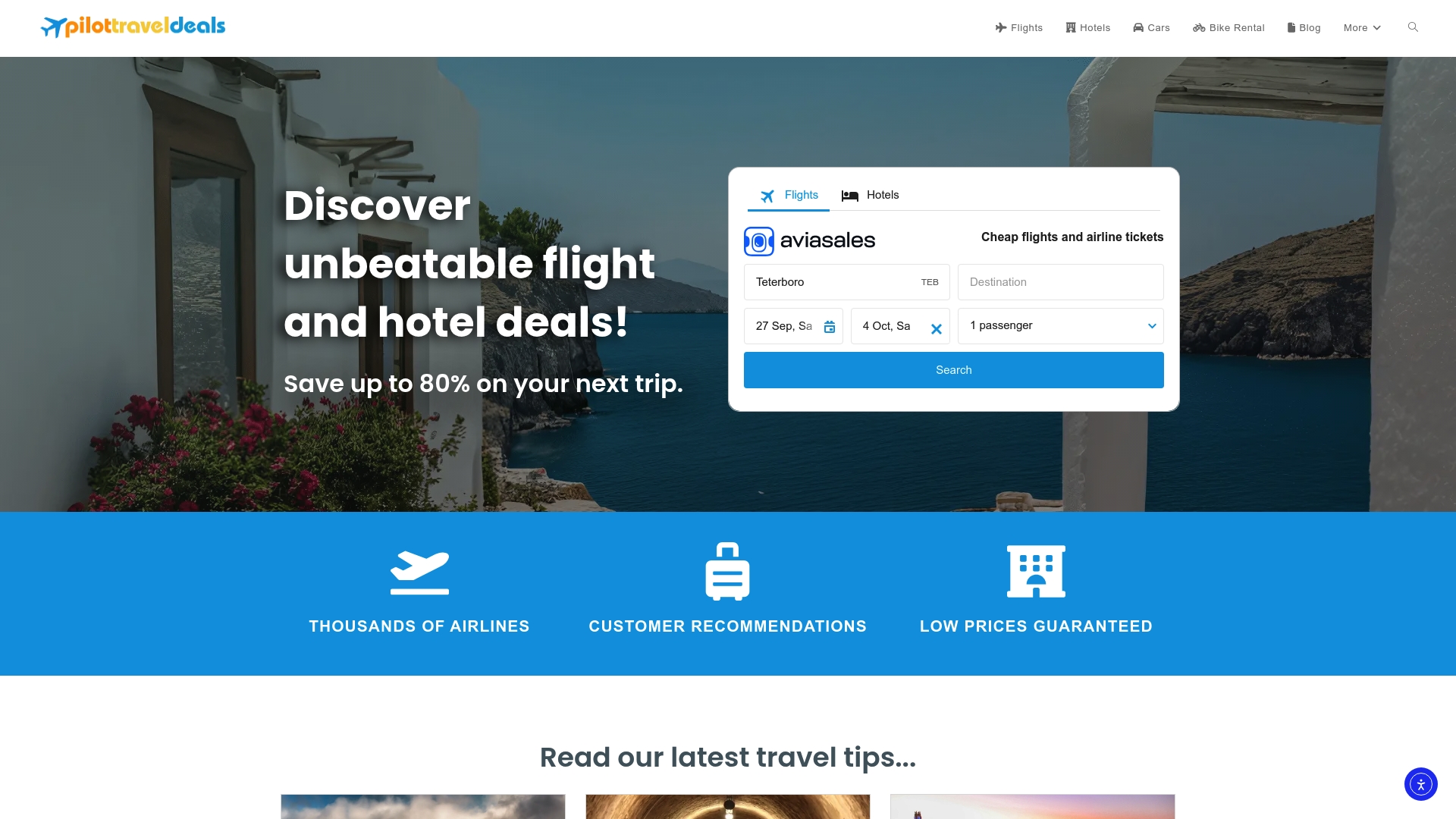
Whether you’re hunting for cheap airfare tips, looking for hotel saving strategies, or want a full comparison site guide to sharpen your booking routine, PilotTravelDeals has the resources to back up every step covered in this article. Browse the site before your next trip and see how much faster smart comparison shopping gets when everything is organized for you.
Frequently asked questions
Which travel site is always cheapest for flights or hotels?
No single site is always cheapest; independent testing consistently shows prices vary across platforms for the same route or room, so using multiple comparison sites and flexible date searches is the only reliable approach.
What are the biggest red flags of unreliable travel sites?
Sites that route you to obscure OTAs with poor reviews, bury fees until checkout, or offer vague cancellation terms are the ones most likely to cause problems after you’ve paid.
How can I find hidden fees before booking?
Always expand the full price breakdown before paying to check taxes, baggage charges, and resort fees, and look up the booking partner’s customer ratings on Trustpilot before confirming.
Should I book through a comparison site or directly with the airline or hotel?
After comparing prices, booking direct is often smarter unless the third-party savings are significant, since direct bookings give you loyalty points, easier changes, and direct access to customer support.
Recommended
- How to choose the best travel deals: save on flights & hotels – PilotTravelDeals.com
- 7 Best Sites to Find Cheap Flights for Smart Travelers – PilotTravelDeals.com
- How to Use Travel Comparison Sites for Smart Savings – PilotTravelDeals.com
- How to Maximize Travel Savings with Smart Deal Strategies – PilotTravelDeals.com
- Best Value Holidays in the Sun