

Planning a trip shouldn’t feel overwhelming. Many travelers assume creating an itinerary means locking yourself into a rigid schedule with zero room for spontaneity. That’s a myth. A well-crafted travel itinerary is actually your ticket to stress-free exploration, helping you maximize experiences while staying on budget. This guide walks you through everything you need to know about building flexible, effective itineraries that transform how you travel without sacrificing adventure or breaking the bank.
Table of Contents
- Key takeaways
- What is a travel itinerary and why does it matter?
- How to build a balanced travel itinerary: step by step
- Budget-friendly itinerary tips and digital tools
- Common pitfalls and expert nuances to optimize your itinerary
- Plan your next trip smarter with PilotTravelDeals
- Frequently asked questions
Key Takeaways
| Point | Details |
|---|---|
| Core itinerary components | A travel itinerary should include travel dates, accommodations, daily activity schedule, transportation, budget breakdown, and emergency contacts. |
| 70/30 planning rule | Build your daily plan so 70 percent of time is scheduled while leaving 30 percent for spontaneous exploration. |
| Limit daily activities | Limit to two to three major experiences per day to reduce burnout and leave room for meals and transit. |
| Add transit buffers | Include 20 to 30 percent extra time for travel, weather, and delays to keep plans intact. |
| Define trip goals | Start with clear goals and travel style to shape destinations and activities. |
What is a travel itinerary and why does it matter?
A travel itinerary is a detailed schedule outlining trip dates, destinations, activities, accommodations, transportation, and other logistics. Think of it as your trip’s blueprint. Instead of scrambling to figure out where to eat or how to get from point A to point B, you’ve already mapped the essentials. This doesn’t mean every minute is scripted. The best itineraries leave breathing room for spontaneity while ensuring you don’t miss must-see experiences or blow your budget on last-minute bookings.
Every solid itinerary includes these core components:
- Travel dates with arrival and departure times
- Accommodation details including addresses and confirmation numbers
- Daily activity schedule with estimated durations
- Transportation arrangements between destinations
- Budget breakdown for flights, lodging, food, and activities
- Emergency contacts and important documents
Why bother with all this planning? Itineraries maximize your travel efficiency. You spend less time deciding what to do next and more time actually experiencing your destination. They also help you spot budget pitfalls before you’re standing at an overpriced tourist trap with no alternatives. Research shows travelers with structured plans report higher satisfaction because they accomplish their trip goals without feeling rushed or stressed.
“A travel itinerary transforms chaotic trips into memorable journeys by organizing logistics while preserving the freedom to explore.”
The biggest misconception? That itineraries kill spontaneity. Actually, they create space for it. When you’ve handled the basics like where you’re sleeping and how you’re getting around, you’re free to stumble upon that hidden cafe or join a local festival without worrying about missing your flight home.
How to build a balanced travel itinerary: step by step
Creating an effective itinerary isn’t about cramming every tourist attraction into your schedule. It’s about intentional planning that aligns with your travel style and goals. Follow this step-by-step process to build an itinerary that actually works.
-
Define your trip goals and style. Are you chasing adventure, seeking relaxation, or diving into culture? Your answer shapes everything else. Adventure seekers might pack hiking and water sports, while relaxation travelers prioritize beach time and spa visits.
-
Research must-see destinations and group activities geographically. List your top attractions, then map them out. Group nearby sites together to minimize backtracking. Spending three hours commuting between scattered locations wastes precious vacation time and money.
-
Build your daily schedule with the 70/30 rule. Allocate 70% of your time to planned activities and reserve 30% for spontaneous exploration. This balance prevents the exhaustion that comes from over-scheduling while ensuring you hit your priorities.
-
Limit activities to 2-3 per day. More than three major experiences leads to burnout. Factor in meal times, transit between locations, and simple downtime. Your brain needs processing time to actually form travel memories.
-
Add detailed logistics for each day. Include accommodation addresses, restaurant reservations, transport booking confirmations, and emergency contacts. Store everything digitally so it’s accessible offline.
-
Build in buffers for transit, weather, and delays. Add 20-30% extra time for transportation. Flights get delayed. Trains run late. Weather changes plans. Buffers keep these hiccups from derailing your entire trip.
-
Review and test your itinerary for feasibility. Walk through each day mentally. Does the timeline make sense? Are you trying to cover too much ground? Adjust before you book anything permanent.
Pro Tip: Use geographic clustering when planning daily activities. If you’re visiting museums, hit all the ones in the same neighborhood on the same day. This strategy cuts transport costs and gives you more time actually exploring instead of commuting.
The importance of flexible booking can’t be overstated. When possible, choose refundable accommodations and flexible flight options. This gives you room to adjust if your itinerary needs tweaking once you’re on the ground.

Budget-friendly itinerary tips and digital tools
Smart itinerary planning directly impacts your bottom line. The right strategies and tools help budget travelers squeeze maximum value from every dollar without sacrificing experience quality.
Start with free digital tools that simplify planning and tracking:
- Google Sheets for collaborative budget tracking and itinerary sharing
- TripIt to organize confirmations and create automatic itineraries from booking emails
- Google Travel for flight and hotel price tracking with alerts
- Maps.me for offline navigation without data charges
- Trail Wallet for daily expense tracking across multiple currencies
These tools eliminate the need for expensive travel planning apps while keeping everything organized and accessible.
Budget travelers should establish daily spending targets before finalizing their itinerary. Here’s a realistic breakdown:
| Traveler type | Daily budget (Southeast Asia) | Daily budget (Europe) | Key savings strategies |
|---|---|---|---|
| Backpacker | $25-40 | $50-75 | Hostels, street food, walking tours, public transport |
| Comfortable budget | $50-80 | $100-150 | Mid-range hotels, local restaurants, mix of paid/free activities |
| Moderate comfort | $100-150 | $175-250 | Private rooms, sit-down dining, organized tours, occasional splurges |
Add a 15-20% buffer to these ranges for unexpected expenses. Nothing derails a budget faster than surprise costs you didn’t plan for.
Implement these budget travel hacks to stretch your dollars:
- Book flights and accommodations during off-peak seasons when prices drop 30-50%
- Use credit card rewards and airline miles strategically for flights and hotels
- Prioritize destinations where your currency goes further
- Cook some meals if your accommodation has kitchen access
- Choose free walking tours over expensive guided experiences
- Travel slower to reduce transportation costs between cities
Pro Tip: Start your itinerary planning by selecting your destination first, then build your budget around it. Research typical costs for flights, accommodation, food, and activities in that specific location. This prevents the disappointment of falling in love with a destination you can’t afford. Allocate roughly 35% for accommodation, 30% for food, 20% for activities, and 15% for transportation within your destination.
For couples or groups, maximize savings through shared accommodations and split transportation costs. A private Airbnb often costs less per person than individual hostel beds while offering more space and amenities. Check out 8 smart ways to save on hotels for additional strategies.
Common pitfalls and expert nuances to optimize your itinerary
Even experienced travelers fall into planning traps that turn dream trips into stressful marathons. Understanding these mistakes helps you build better itineraries from the start.
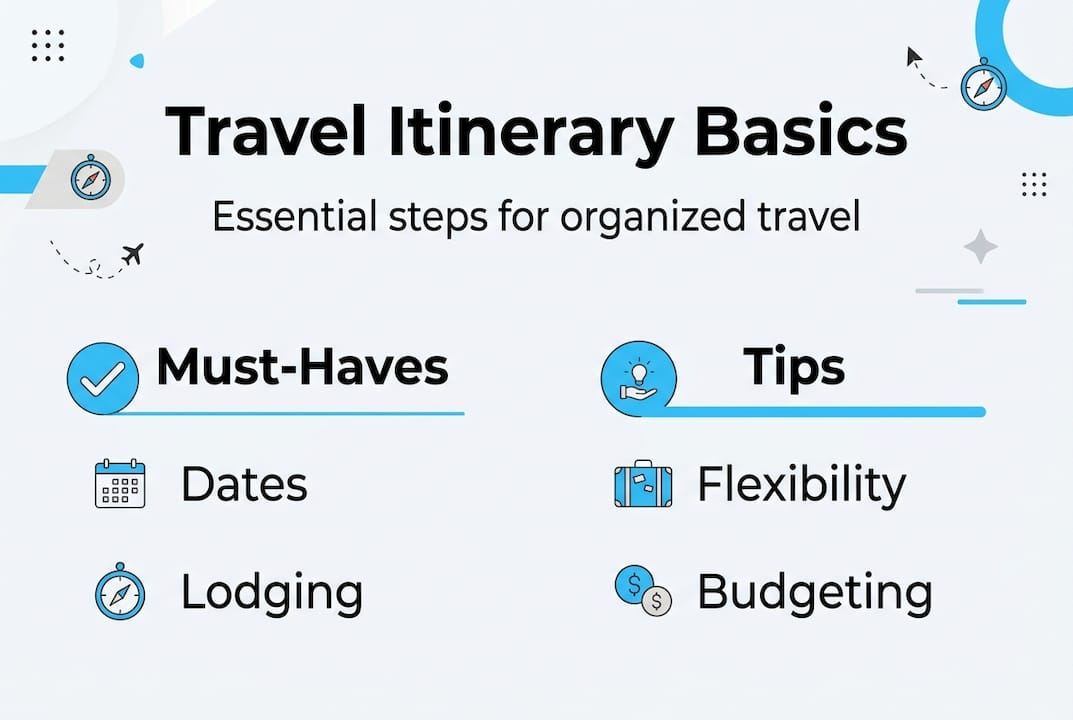
Research reveals that 41% of travelers face disruptions from poor planning, with over-scheduling being the primary culprit. Cramming too many activities into each day creates exhaustion rather than enjoyment. Your brain needs downtime to process experiences and form lasting memories.
The most common itinerary mistakes:
- Over-planning every hour leaves zero flexibility for spontaneous discoveries or rest
- Ignoring realistic transit times between activities causes constant rushing and stress
- Underestimating how tiring travel days are leads to burnout by mid-trip
- Booking non-refundable everything removes your ability to adjust when plans change
- Failing to research local customs and holidays can mean arriving when attractions are closed
Experts recommend the Rule of Three: limit yourself to three significant activities per day maximum. Anchor each day around one major must-do experience, then add one or two smaller nearby activities. This structure provides accomplishment without overwhelm.
The balance between rigid and flexible planning styles significantly impacts trip satisfaction:
| Approach | Structure level | Best for | Potential drawbacks |
|---|---|---|---|
| Rigid detailed | Every hour planned | First-time travelers, complex logistics, group trips | Zero spontaneity, stress from delays, missed discoveries |
| Loose framework | Major activities only | Experienced travelers, solo trips, familiar destinations | Risk missing key experiences, potential budget overruns |
| Flexible hybrid | 70% planned, 30% open | Most travelers, balanced trips | Requires discipline to not over-plan |
The flexible hybrid approach consistently produces the highest satisfaction ratings. You’ve secured the essentials like flights and accommodation while leaving breathing room for unplanned adventures.
“Travelers who balance structured plans with spontaneous buffers report 60% higher trip satisfaction and create more vivid long-term memories than those with rigid hour-by-hour schedules.”
Psychological research on travel satisfaction links memory formation to varied experiences rather than quantity. Your brain remembers the unexpected coffee shop conversation more vividly than the fifteenth church you rushed through. Quality beats quantity every time.
Pro Tip: Before booking anything permanent, test your itinerary timeline by walking through each day in detail. Use Google Maps to check actual travel times between locations during the time of day you’ll be moving. Add 25% to those estimates for realistic planning. This simple exercise reveals unrealistic schedules before they cost you money or ruin your trip.
When planning group travel, build even more buffer time. Groups move slower than solo travelers, and coordinating multiple people’s needs requires flexibility. Agree on must-do experiences but allow individuals to opt out of activities that don’t interest them.
Plan your next trip smarter with PilotTravelDeals
Now that you understand how to build effective travel itineraries, it’s time to put that knowledge into action. PilotTravelDeals helps budget-conscious travelers find the deals that make smart itinerary planning actually affordable. Whether you’re searching for flights, comparing hotel options, or figuring out how to stay connected abroad, we’ve gathered the resources you need in one place.

Start by exploring our comprehensive guide to searching for cheap flights to lock in the best airfare for your dates. Once your flights are sorted, browse our hotel booking options to find accommodations that fit your budget and itinerary. Don’t forget to check out our international SIM card deals so you can navigate, communicate, and share your adventures without racking up roaming charges. Smart planning starts with smart booking.
Frequently asked questions
What details are usually included in a travel itinerary?
A complete travel itinerary includes your travel dates, flight and transportation details, accommodation addresses with confirmation numbers, daily activity schedules, restaurant reservations, budget breakdown, and emergency contacts. The best itineraries also note important documents you’ll need and backup plans for key activities.
How flexible should a travel itinerary be?
Aim for the 70/30 rule: plan 70% of your time with confirmed activities and accommodations, leaving 30% open for spontaneous exploration and rest. This balance ensures you accomplish your trip goals while staying flexible enough to embrace unexpected opportunities or adjust when things don’t go as planned.
Are digital tools necessary for itinerary planning?
While not strictly necessary, digital tools make itinerary planning significantly easier and more organized. Free options like Google Sheets, TripIt, and Maps.me help you track bookings, share plans with travel companions, and access information offline. They’re especially valuable for budget travelers who need to monitor spending across multiple categories and currencies.
How do I budget effectively when creating an itinerary?
Start by researching typical daily costs for your specific destination, then allocate roughly 35% for accommodation, 30% for food, 20% for activities, and 15% for local transportation. Add a 15-20% buffer for unexpected expenses. Choose your destination first, then build your budget around realistic costs rather than picking a place you can’t afford.
What are must-dos to avoid itinerary planning mistakes?
Limit yourself to 2-3 major activities per day to prevent burnout. Build 20-30% extra time into all transportation estimates. Test your daily timelines using mapping tools before booking anything permanent. Choose refundable options when possible so you can adjust if needed. Most importantly, resist the urge to pack every hour with activities. Your trip should refresh you, not exhaust you.
Recommended
- Importance of Travel Planning for Major Savings – PilotTravelDeals.com
- 7 Essential Steps for Your Travel Planning Checklist – PilotTravelDeals.com
- 7 Smart Steps for an Effective Cheap Travel Checklist – PilotTravelDeals.com
- Understanding the Travel Planning Process: A Comprehensive Guide – PilotTravelDeals.com


