

Chasing adventure on a tight budget can feel overwhelming, especially when every penny counts for your next overseas experience. Smart planning is not only about choosing destinations and finding deals, but also shaping a journey that brings real joy and peace of mind. Research shows that having travel plans or booked trips significantly increases happiness and a sense of control, even during uncertain times. Discover how strategic travel preparation empowers North American solo travelers to stretch every dollar while unlocking a world of possibilities beyond the expected.
Table of Contents
- What Is Travel Planning and Why It Matters
- Major Types of Travel Planning Strategies
- How Smart Planning Maximizes Savings
- Key Steps for Efficient International Travel
- Common Pitfalls and How to Avoid Them
Key Takeaways
| Point | Details |
|---|---|
| Effective Travel Planning | Planning enhances your travel experience by managing budgets, logistics, time, and risks. It transforms spontaneous trips into well-organized adventures. |
| Diverse Planning Strategies | Selecting the right strategy—like analytical or flexible planning—tailors the trip experience to personal preferences and objectives. |
| Financial Efficiency | Smart travel planning can significantly reduce trip expenses through early bookings, flexible travel dates, and comprehensive research. |
| Avoiding Common Pitfalls | Researching destination specifics, managing budgets, and preparing health documentation helps avoid potential travel complications and enhances trip success. |
What Is Travel Planning and Why It Matters
Travel planning is a strategic process that transforms spontaneous trips into well-organized, cost-effective adventures. At its core, travel planning involves comprehensive preparation that goes far beyond simply booking flights and accommodations.
Effective travel planning encompasses multiple critical dimensions that impact both your experience and expenses:
- Financial Strategy: Creating a detailed budget
- Logistical Preparation: Coordinating transportation and accommodations
- Time Management: Scheduling activities and potential downtime
- Risk Mitigation: Understanding travel requirements and potential challenges
Beyond logistics, travel planning carries significant psychological benefits. Research demonstrates that anticipatory planning itself generates excitement and positive emotions. Booked trips substantially increase personal happiness, providing a sense of control and motivation during uncertain times.
Successful travel planning transforms random journeys into memorable experiences by helping travelers make intentional choices. It’s not about over-scheduling, but rather creating a flexible framework that maximizes enjoyment while minimizing stress and unexpected expenses.
Pro tip: Start your travel planning at least 2-3 months in advance to secure better rates and have ample time for thoughtful preparation.
Major Types of Travel Planning Strategies
Travel planning strategies are diverse approaches tailored to different travel styles, objectives, and personal preferences. Advanced planning techniques combine automated systems with user-specific constraints, creating increasingly sophisticated methods for trip preparation.
The primary types of travel planning strategies can be categorized into several key approaches:
- Analytical Planning: Systematic research and detailed itinerary development
- Flexible Exploration: Loose scheduling with room for spontaneity
- Goal-Oriented Planning: Trip design focused on specific objectives
- Budget-Driven Strategy: Prioritizing cost management and financial constraints
- Experience-Centered Approach: Designing trips around desired activities and cultural immersion
Travel planning strategies vary significantly based on trip purpose, ranging from day trips to complex multi-destination adventures. Each strategy requires unique considerations, such as understanding destination regulations, assessing personal limitations, and preparing appropriate contingency plans.

Technology has revolutionized travel planning, introducing AI-powered tools that can generate personalized itineraries. These systems analyze traveler preferences, budget constraints, and destination-specific information to create highly customized travel experiences that balance structure with flexibility.
Here’s a comparison of major travel planning strategies to help you select the best fit for your trip:
| Strategy Type | Best For | Main Advantage | Potential Drawback |
|---|---|---|---|
| Analytical Planning | Detailed itineraries | Minimal surprises | Time-consuming research |
| Flexible Exploration | Adventurous travelers | Maximized spontaneity | Risk of missed bookings |
| Goal-Oriented Planning | Purpose-driven trips | Fulfills specific aims | Less room for surprises |
| Budget-Driven Strategy | Cost-conscious travelers | Maximizes savings | May limit experiences |
| Experience-Centered | Culture seekers | Deep immersion | Can be expensive |
Pro tip: Combine multiple planning strategies to create a comprehensive travel approach that maximizes enjoyment while maintaining practical flexibility.
How Smart Planning Maximizes Savings
Smart travel planning is a strategic approach that transforms ordinary trips into financially efficient adventures. Strategic travel preparation can dramatically reduce overall trip expenses, creating opportunities for travelers to maximize their budget potential.
Key strategies for maximizing savings through intelligent planning include:
- Advance Booking: Securing early discounts and better rates
- Flexible Date Selection: Targeting off-peak travel periods
- Comprehensive Research: Comparing prices across multiple platforms
- Multi-Destination Cost Optimization: Combining destinations for better value
- Reward Program Utilization: Leveraging travel points and loyalty programs
Comprehensive travel preparation prevents costly emergencies, which can significantly impact overall travel expenses. By anticipating potential challenges and planning strategically, travelers can avoid unexpected financial pitfalls that often derail budget-conscious trips.
Technology has revolutionized savings strategies, introducing dynamic pricing tools and predictive analytics that help travelers identify the most cost-effective travel windows. These advanced systems analyze historical pricing data, seasonal trends, and market conditions to recommend optimal booking times and destinations.
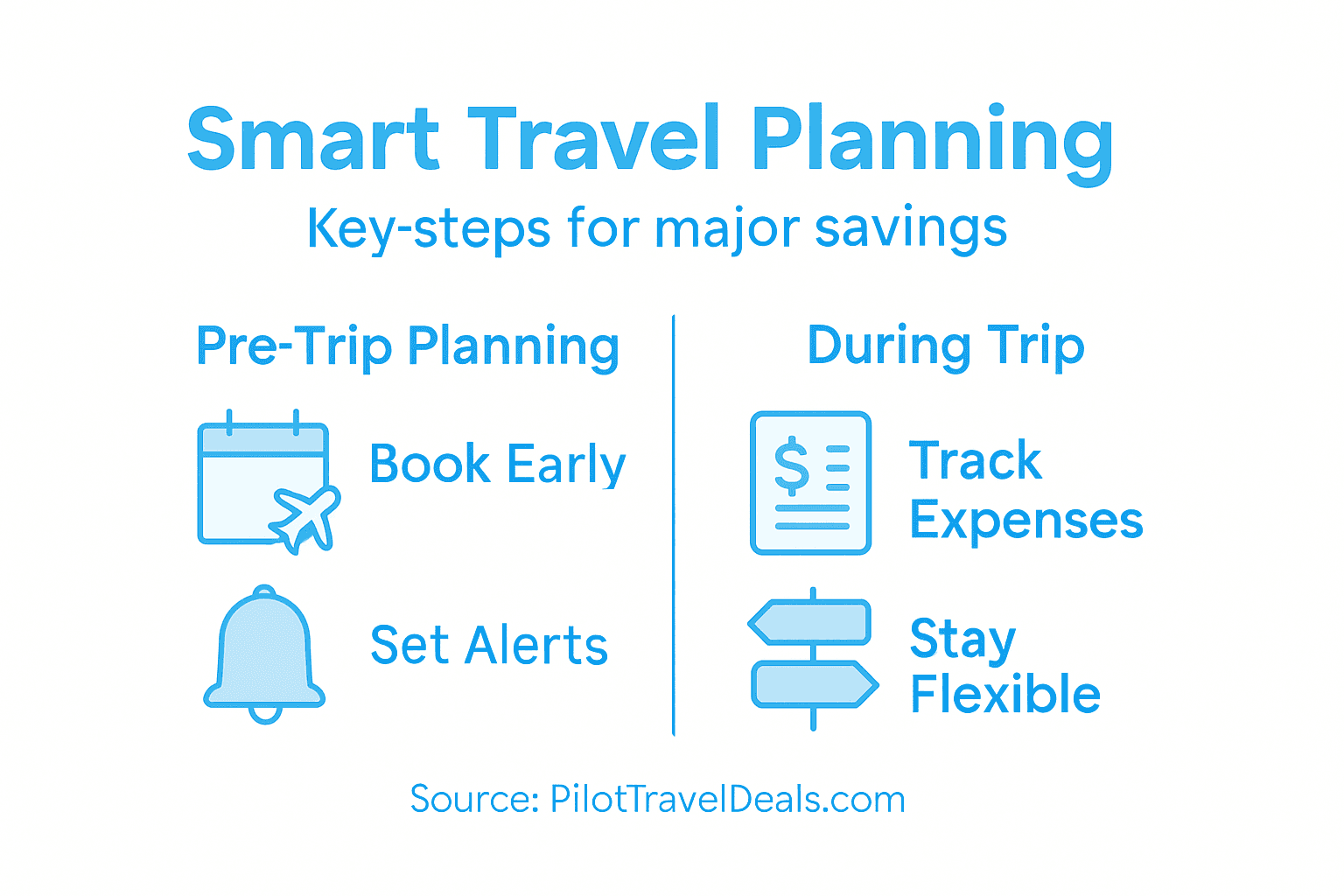
Pro tip: Create a dedicated travel savings fund and set price alerts 6-8 months before your intended travel dates to capture the most significant discounts.
Key Steps for Efficient International Travel
International travel planning requires meticulous attention to detail and strategic preparation. Comprehensive travel checklists help travelers navigate complex international requirements, ensuring a smooth and well-organized journey across borders.
Key steps for efficient international travel encompass several critical areas:
- Documentation Preparation: Securing valid passports and necessary visas
- Health Readiness: Completing required vaccinations and medical preparations
- Financial Planning: Notifying banks, obtaining travel currency, and managing international transactions
- Communication Strategy: Arranging international phone and internet access
- Safety Protocols: Registering with government travel programs and obtaining comprehensive travel insurance
Destination-specific health research prevents potential travel complications, ensuring travelers are fully prepared for medical and environmental challenges. Understanding local health requirements and potential risks can save significant time and money during international trips.
Technology has transformed international travel preparation, offering digital tools that streamline planning processes. Travelers can now access real-time information, digital visa applications, and comprehensive travel resources with unprecedented ease and efficiency.
To make travel planning easier, here’s a quick reference to essential steps for international trips and why each matters:
| Step | Why It’s Essential | Example Benefit |
|---|---|---|
| Prepare documents | Border entry approval | Avoid denied boarding |
| Vaccinations | Health protection | Prevents illness abroad |
| Currency arrangements | Smooth transactions | No excessive exchange fees |
| Digital access set-up | Stay connected | Easy real-time updates |
| Safety preparations | Crisis readiness | Quick emergency response |
Pro tip: Create a digital travel folder with scanned copies of critical documents and store them securely in cloud storage for instant access during your international journey.
Common Pitfalls and How to Avoid Them
Travel planning involves navigating a complex landscape of potential challenges that can derail even the most carefully crafted trips. Understanding common travel pitfalls helps travelers develop robust contingency strategies, ensuring smoother and more predictable experiences.
Most frequent travel planning pitfalls include:
- Insufficient Research: Neglecting destination-specific requirements and cultural nuances
- Poor Budget Management: Underestimating expenses and lacking financial flexibility
- Health Oversight: Ignoring medical preparation and destination-specific health risks
- Documentation Errors: Incomplete or incorrect travel documentation
- Communication Gaps: Limited understanding of local communication infrastructure
Travelers often underestimate critical health and safety considerations, which can lead to unexpected complications. Comprehensive preparation involves understanding local health standards, vaccination requirements, and potential medical risks specific to your destination.
Modern travelers can mitigate these risks through strategic pre-trip planning and leveraging technology. Digital tools, travel forums, and expert resources provide unprecedented access to real-time information and insights that can help anticipate and prevent potential travel challenges.
Pro tip: Create a digital travel risk assessment document that includes potential scenarios and corresponding backup plans to ensure you’re prepared for unexpected situations.
Take Control of Your Travel Budget with Smart Planning and Great Deals
The challenge of mastering travel planning to maximize savings can feel overwhelming without the right tools and insights. This article highlights key pain points such as creating a detailed financial strategy, avoiding unexpected expenses, and balancing budget-driven planning with enjoyable experiences. Concepts like advance booking, comprehensive research, and budget management are crucial to turning travel dreams into reality without stress or overspending.
Start your journey to smarter, budget-friendly travel by exploring expert advice in our Travel Tips – PilotTravelDeals.com section. PilotTravelDeals.com offers a powerful platform to compare and book discounted flights, hotels, and travel services. Save up to 80 percent on your next trip while enjoying diverse travel options tailored to your preferences. Visit PilotTravelDeals.com now for comprehensive planning resources and unbeatable deals that help you travel more for less.
Enhance your travel planning today and unlock extraordinary savings on your next adventure. Don’t wait until prices rise Start planning early and make your travel budget work harder with Adventure – PilotTravelDeals.com and our easy-to-use comparison tools.
Frequently Asked Questions
What are the benefits of travel planning for saving money?
Effective travel planning allows travelers to secure better rates through advance booking, maximize savings through flexible date selections, and avoid unexpected expenses by thoroughly researching prices across various platforms.
How can I maximize my travel savings through planning?
You can maximize savings by booking in advance, selecting off-peak travel dates, comparing prices from different sources, optimizing multi-destination itineraries, and utilizing reward programs effectively.
What are common pitfalls in travel planning that can lead to higher costs?
Common pitfalls include insufficient research on destination requirements, poor budget management, overlooking health preparations, documentation errors, and lacking knowledge of local communication infrastructure, all of which can lead to unexpected costs.
What steps should I take for efficient travel planning?
Key steps for efficient travel planning include preparing necessary documentation, ensuring health readiness with vaccinations if required, planning financial matters, setting up communication access, and ensuring safety protocols are in place.
Recommended
- Understanding the Travel Planning Process: A Comprehensive Guide – PilotTravelDeals.com
- 7 Smart Steps for an Effective Cheap Travel Checklist – PilotTravelDeals.com
- Complete Guide to Saving on Travel Costs – PilotTravelDeals.com
- Understanding the Role of Travel Discounts for All Travelers – PilotTravelDeals.com
- 7 Smart Affordable Travel Tips for College Students in Utah | ReVroom
- 7 Smart Ways to Save on Airport Transfers
- 7 Smart Group Airport Transfer Strategies for Success

