
Booking trips without locking into rigid dates often feels impossible when searching for affordable international flights and hotels. Yet, flexible travel options actually give you more control over your expenses and can help you bypass steep penalties. Flexible travel lets you adjust or cancel bookings with minimal fees, offering budget-conscious millennials the chance to respond to sudden changes while still saving money. This guide clears up common myths and shows how smart flexibility opens up practical strategies for cutting travel costs worldwide.
Table of Contents
- Defining Flexible Travel Dates And Common Myths
- How Flexibility Impacts Flight And Hotel Prices
- Variations In Flexibility: Full, Partial, And Rigid Dates
- Finding The Best Deals Using Flexible Dates
- Common Pitfalls And How To Avoid Them
Key Takeaways
| Point | Details |
|---|---|
| Flexible Travel Options | Travelers can book tickets that allow for date or destination changes with minimal penalties, offering flexibility for unpredictable situations. |
| Dynamic Pricing Advantages | Understanding market fluctuations can help travelers save on flights and hotels by strategically booking during off-peak times or midweek. |
| Flexibility Spectrum | Travel flexibility varies from full to rigid options; selecting the right level depends on personal needs and potential change costs. |
| Common Pitfalls to Avoid | Be wary of low-cost carrier restrictions and read fine print carefully to prevent unexpected fees and expenses. |
Defining Flexible Travel Dates and Common Myths
Travel flexibility represents a strategic approach to booking trips that allows travelers maximum freedom in adjusting their plans. Flexible travel essentially means purchasing tickets or accommodations that permit date modifications with minimal financial penalties. Flexible booking options enable travelers to change departure dates, times, and even destinations without incurring substantial fees.
At its core, flexible travel provides a safety net for unpredictable situations. Unlike traditional rigid bookings that charge steep change or cancellation fees, flexible tickets offer travelers peace of mind. Different flexible travel options exist, ranging from fully refundable tickets to modifiable bookings within specific date windows. Some options might involve a slightly higher upfront cost but can save significant money if travel plans unexpectedly shift.
Common myths about flexible travel can discourage budget-conscious travelers from exploring these valuable options. Contrary to popular belief, flexible tickets are not always more expensive. In fact, they can provide substantial savings by avoiding punitive change fees. Another misconception is that flexible travel is complicated – modern booking platforms have streamlined these processes, making modifications straightforward and user-friendly.
Pro tip: Always read the fine print of flexible booking options and compare the potential change fees against the cost of a flexible ticket to determine the most economical strategy for your specific travel needs.
How Flexibility Impacts Flight and Hotel Prices
Dynamic pricing fundamentally transforms how travelers can optimize their travel expenses by understanding market fluctuations. Flexible pricing strategies reveal significant opportunities for budget-conscious travelers to secure more affordable flights and accommodations by strategically timing their bookings.
Airline and hotel industries utilize sophisticated algorithms that continuously adjust prices based on demand, seasonality, and market conditions. Travelers with flexible dates can leverage these pricing variations to their advantage. For instance, flying midweek instead of on weekends or booking during shoulder seasons can result in substantial savings. Hotels similarly adjust room rates dynamically, with prices fluctuating based on expected occupancy, local events, and competitive market conditions.
Understanding these pricing mechanisms requires recognizing the complex interplay between supply, demand, and timing. Peak travel periods typically command premium prices, while less popular travel windows offer more attractive rates. Business travelers and tourists with rigid schedules often pay significantly higher prices compared to travelers who can adjust their plans. By remaining adaptable, travelers can potentially save hundreds of dollars on both flights and accommodations.
Pro tip: Use price tracking tools and set flexible date ranges when searching for flights and hotels to automatically identify the most cost-effective travel windows and maximize your potential savings.
Variations in Flexibility: Full, Partial, and Rigid Dates
Travel booking flexibility exists on a spectrum, ranging from completely adaptable options to strictly fixed arrangements. Travel flexibility models demonstrate how travelers can choose booking styles that best match their personal needs and risk tolerance.
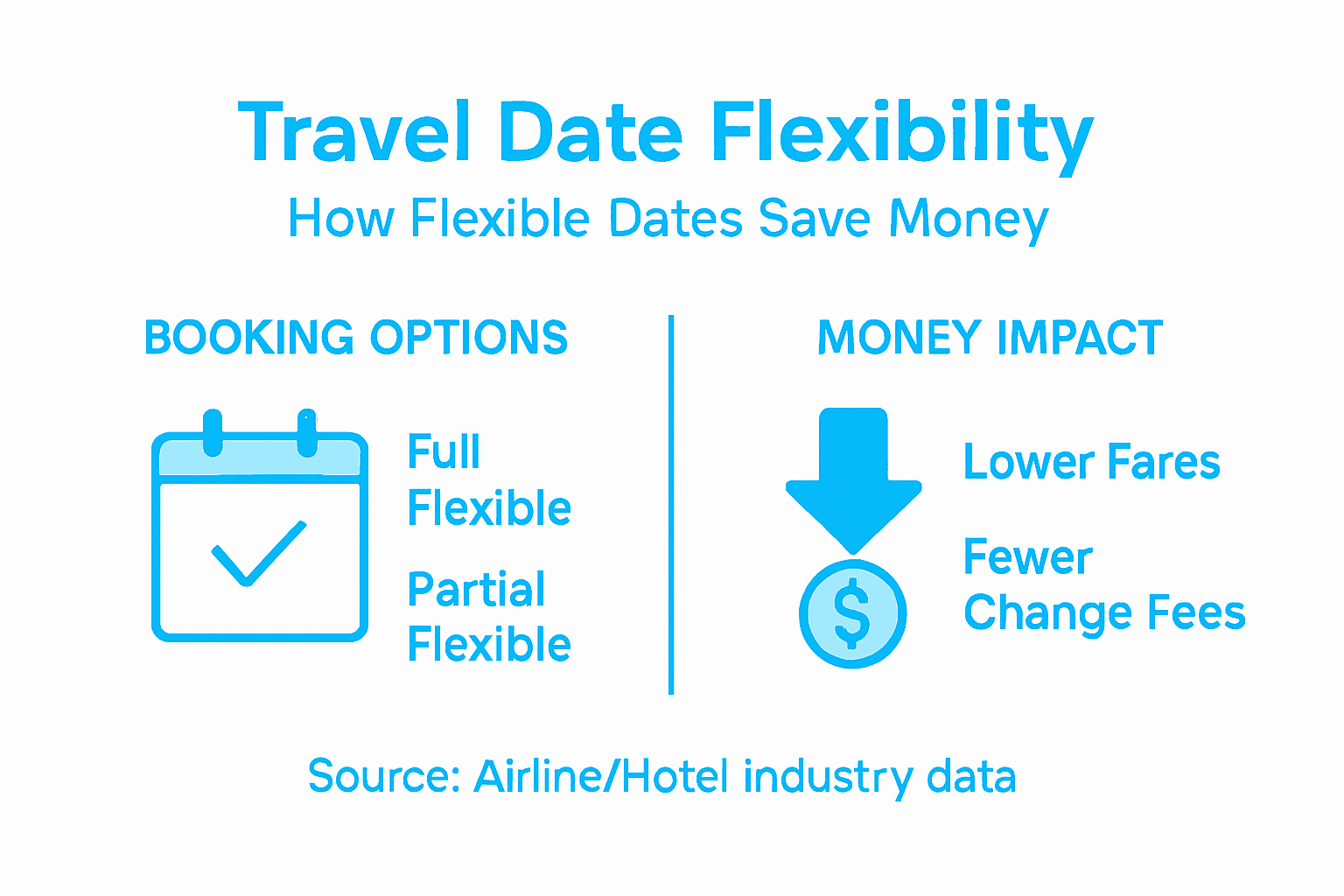
Full flexibility represents the most liberal booking approach, allowing travelers to change dates, destinations, and itineraries with minimal or no financial penalties. These tickets typically cost more upfront but provide maximum freedom. Partial flexibility offers more constrained modifications, permitting changes within specific timeframes or under certain conditions. For example, a partially flexible ticket might allow date changes for a modest fee or within a 14-day window before travel.

Rigid dates represent the most restrictive booking option, where travelers commit to exact travel dates with zero room for adjustment. Non-refundable tickets fall into this category, often providing the lowest initial prices but carrying significant risk. Business travelers and those with unpredictable schedules typically avoid rigid bookings, while budget-conscious travelers might accept these constraints to secure the lowest possible prices.
Pro tip: Carefully assess your personal travel uncertainty and select a flexibility level that balances potential change costs with your initial ticket price to optimize your overall travel investment.
Here’s a comparison of travel booking flexibility types and who benefits most from each:
| Flexibility Type | Typical Upfront Cost | Who Benefits Most | Change/Cancellation Impact |
|---|---|---|---|
| Full Flexibility | Highest | Business, unpredictable travel | Minimal or no penalties |
| Partial Flexibility | Moderate | Leisure, some date uncertainty | Some fees or limited windows |
| Rigid Dates | Lowest | Budget travelers, fixed plans | High penalties or no changes |
Finding the Best Deals Using Flexible Dates
Maximizing travel savings requires a strategic approach to date selection and booking timing. Best flight deals emerge when travelers embrace flexibility and understand the nuanced dynamics of pricing fluctuations across different dates and seasons.
Midweek travel consistently offers more affordable options compared to weekend flights. Tuesdays and Wednesdays typically feature lower prices as fewer travelers choose these days for departure. Similarly, traveling during shoulder seasons – the periods between peak and off-peak travel times – can yield significant discounts. Avoiding major holidays and popular vacation windows allows budget-conscious travelers to secure substantially reduced fares and accommodation rates.
Advanced search tools and price comparison platforms have revolutionized how travelers find optimal pricing. Modern travelers can leverage flexible date search features that display price variations across multiple date ranges, enabling quick identification of the most economical travel windows. Some platforms even offer price prediction algorithms that suggest the best times to book based on historical pricing trends and current market conditions.
Pro tip: Set up price alerts for your desired destinations and remain open to shifting your travel dates by 2-3 days to unlock potentially substantial savings.
Common Pitfalls and How to Avoid Them
Travelers often encounter unexpected challenges when attempting to maximize their booking flexibility. Travel booking mistakes can significantly impact travel budgets and overall trip experience, making it crucial to understand potential pitfalls before making reservations.
Low-cost carrier traps represent one of the most common flexibility challenges. These airlines frequently advertise cheap base fares but impose strict change and cancellation policies with substantial hidden fees. Budget-conscious travelers might find themselves paying more in change fees than the original ticket price. Additionally, many travelers mistakenly assume all tickets offer similar modification options, leading to unexpected financial penalties when plans inevitably shift.
Another significant pitfall involves misinterpreting flexible booking terms. Not all flexibility is created equal. Some tickets marketed as “flexible” actually have narrow change windows, specific conditions, or require costly upgrades. Travelers should carefully read the fine print, understanding exact change fee structures, refund conditions, and any time-based restrictions before committing to a booking. Comparing multiple booking platforms and thoroughly examining their flexibility policies can prevent costly misunderstandings.
Pro tip: Screenshot and save the specific flexibility terms when booking, and always confirm change policies directly with the carrier to avoid unexpected fees and complications.
Below is a quick reference guide to spotting common pitfalls in flexible travel bookings:
| Pitfall | Why It’s Risky | How to Mitigate |
|---|---|---|
| Low-cost carrier fees | Hidden costs for changes | Review terms before booking |
| Misleading flexibility | Unexpected restrictions | Read all fine print thoroughly |
| Overlooking change policies | Financial loss on changes | Confirm terms with provider |
Unlock Big Savings by Embracing Flexible Travel Dates
Struggling with strict travel plans that drain your budget? This article highlights how flexible travel dates can turn unpredictable schedules into opportunities for major savings by avoiding high change fees and taking advantage of dynamic pricing. If you want to stop overpaying for flights and hotels due to rigid dates, understanding and applying flexible booking strategies is your key to smarter travel.
Ready to explore how flexibility adds value to your trip planning? At PilotTravelDeals.com, you can browse through a wide range of deals tailored to travelers who want freedom and savings. Check out our Travel Tips to learn how to optimize bookings based on flexible dates and timing.

Start controlling your travel budget today by finding the best flexible deals on flights, hotels, and more. Visit PilotTravelDeals.com for seamless price comparisons and booking options that fit your lifestyle. Don’t miss the chance to transform your travel experience with smart flexibility and incredible discounts.
Frequently Asked Questions
What are flexible travel dates?
Flexible travel dates refer to the ability to change travel plans, such as departure dates or destinations, with minimal financial penalties or fees.
How can flexible travel dates help save money?
By allowing travelers to adjust their travel dates to avoid peak pricing periods, flexible travel dates can lead to substantial savings on flight and accommodation costs.
Are flexible tickets always more expensive than rigid tickets?
No, flexible tickets are not always more expensive. In fact, they can sometimes save money by avoiding high change fees associated with rigid bookings.
What should I consider when choosing flexible travel options?
It’s important to read the fine print of flexible booking options and compare potential change fees against the cost of flexible tickets to determine the best value for your travel needs.
Recommended
- Flexible Travel Dates: Complete Guide to Big Savings – PilotTravelDeals.com
- Flexible Booking: Maximizing Savings and Travel Freedom – PilotTravelDeals.com
- Seasonal Pricing in Travel Explained: Smart Savings Strategies – PilotTravelDeals.com
- Travel Deal Terminology Explained: Maximizing Savings – PilotTravelDeals.com
- 5 Ways to Save Money When Traveling in Costa Rica | Costa Rica Waterfall Tours