

Business travel booking shapes how companies manage employee trips for everything from client meetings to global conferences. Yet even with new booking apps everywhere, handling travel is far more complex than picking a hotel room. The real surprise is that 79% of business travelers say their company’s travel policy actually determines what they book, so setting the right guidelines can completely change both your travel costs and employee happiness.
Table of Contents
- What Is Business Travel Booking And Why It Matters
- Key Concepts In Business Travel Booking
- Understanding Different Types Of Business Travel
- Factors Influencing Business Travel Booking Decisions
- Real-World Applications Of Business Travel Booking Strategies
Quick Summary
| Takeaway | Explanation |
|---|---|
| Develop a comprehensive travel policy. | A solid travel policy guides booking choices and ensures compliance with organizational standards and cost management. |
| Utilize advanced travel management technologies. | Implementing sophisticated systems enhances booking efficiency, tracks expenses, and ensures adherence to travel policies. |
| Focus on employee safety and risk management. | Organizations must prioritize traveler wellbeing with protocols for emergency support and tracking during trips. |
| Recognize various types of business travel. | Understanding client-facing, conference, and project-based travel helps tailor strategies to specific business goals. |
| Analyze travel spending for strategic optimization. | Regular evaluation of travel expenses allows companies to negotiate better rates and allocate resources effectively. |
What is Business Travel Booking and Why It Matters
Business travel booking represents a strategic process where organizations plan, reserve, and manage travel arrangements for employees who need to travel for work purposes. Unlike leisure travel, business travel booking involves complex considerations that extend beyond simple destination selection.
Understanding the Core Concept
At its fundamental level, business travel booking encompasses the comprehensive management of transportation, accommodation, and associated logistics for professional trips. Employees might require travel for various reasons: client meetings, conferences, training sessions, sales presentations, or collaborative project work. Research from the Global Business Travel Association reveals that corporate travelers prioritize specific factors when booking travel
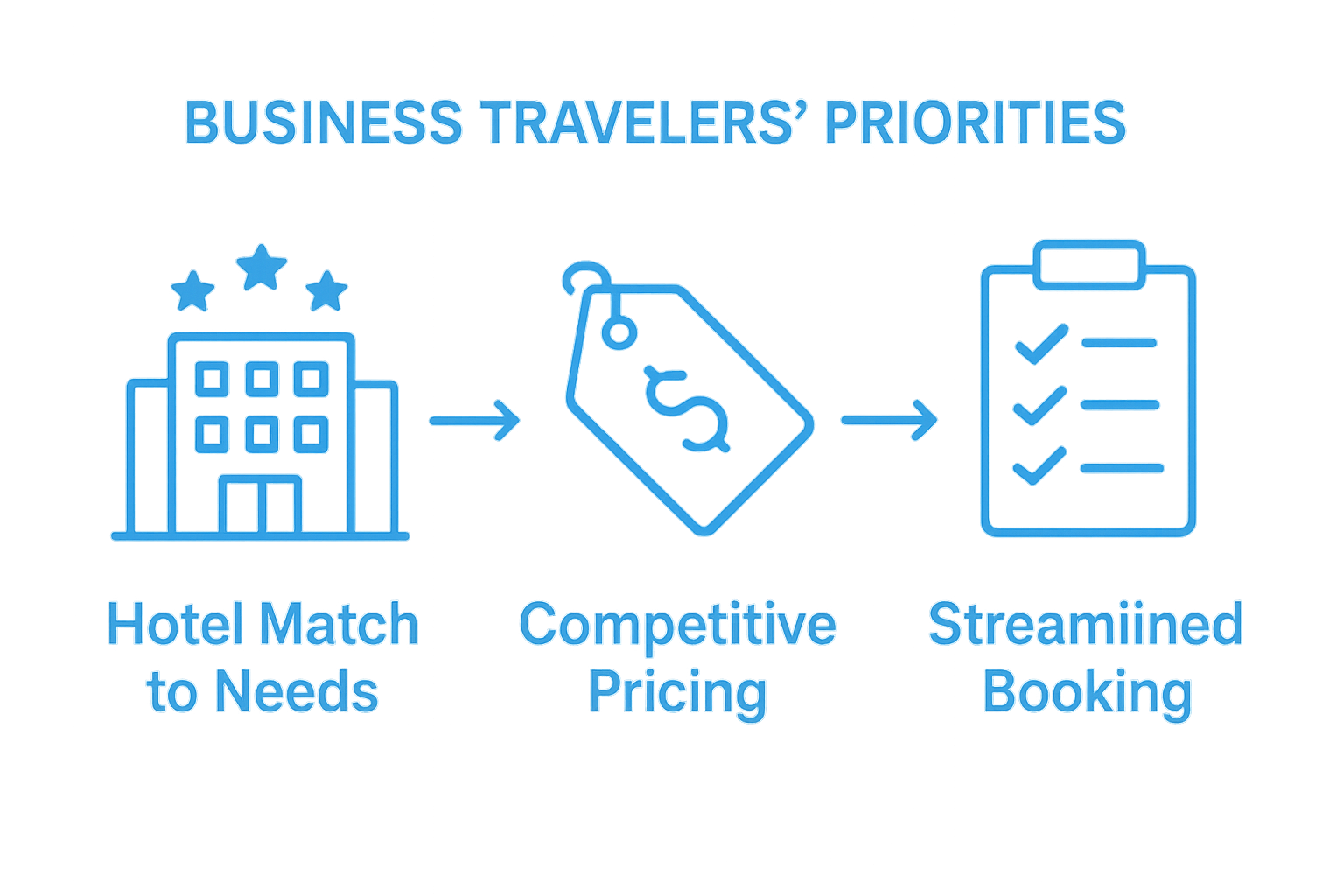 :
:
- Finding the right hotel matching their professional needs
- Securing competitive pricing
- Experiencing a streamlined booking process
Strategic Importance for Organizations
Business travel booking is not merely about moving employees from point A to point B. It represents a critical operational function that directly impacts an organization’s efficiency, cost management, and employee satisfaction. Companies invest significant resources in developing robust travel policies that balance employee comfort with financial prudence.
According to GBTA Foundation research, 79% of business travelers indicate that their company’s travel policy significantly influences their booking decisions. This statistic underscores the importance of creating clear, comprehensive travel guidelines that provide employees with sufficient flexibility while maintaining fiscal responsibility.
Effective business travel booking strategies help organizations:
- Control and predict travel expenditures
- Ensure employee safety and compliance
- Optimize travel-related expense management
- Support seamless professional interactions
By understanding and implementing sophisticated business travel booking approaches, companies can transform what might seem like a mundane administrative task into a strategic advantage that enhances overall organizational performance. Check out our comprehensive guide on hotel booking strategies to learn more about optimizing travel arrangements.
Key Concepts in Business Travel Booking
Business travel booking involves intricate processes and considerations that go far beyond standard travel arrangements. Understanding these key concepts helps organizations develop comprehensive and efficient travel management strategies.
Corporate Travel Policy Framework
A robust corporate travel policy serves as the foundational element of effective business travel booking.
The following table outlines the core components of a robust corporate travel policy framework, based on the topics highlighted in the article.
| Component | Description |
|---|---|
| Approved Transportation Methods | Specifies allowed modes of travel (air, rail, car, etc.) |
| Maximum Expense Limits | Defines caps for spending on flights, hotels, meals, etc. |
| Preferred Vendors/Platforms | Details required providers or booking systems for compliance |
| Documentation & Reporting | Outlines procedures for submitting receipts and expense reports |
 This framework outlines specific guidelines that define acceptable travel expenses, booking procedures, and reimbursement protocols. According to research from Stanford University’s Travel Program, a well-designed travel policy should address:
- Approved transportation methods
- Maximum allowable expense limits
- Preferred vendor and booking platform requirements
- Documentation and expense reporting procedures
Travel Management Technologies
Modern business travel booking relies heavily on sophisticated technological platforms that streamline reservation processes and provide comprehensive tracking capabilities. Advanced travel management systems enable organizations to centralize booking, monitor expenses, and ensure policy compliance. These technologies typically offer features like:
- Real-time expense tracking
- Automated approval workflows
- Integration with accounting and financial systems
- Comprehensive reporting dashboards
Risk Management and Traveler Safety
Beyond logistical considerations, business travel booking encompasses critical risk management components. Organizations must proactively address employee safety, emergency preparedness, and duty of care responsibilities.
This involves implementing protocols for traveler tracking, providing emergency support, and maintaining clear communication channels during business trips.
By developing a holistic approach to business travel booking that balances operational efficiency, cost management, and employee well-being, companies can transform travel from a potential administrative burden into a strategic organizational asset. Explore our comprehensive hotel booking strategies to enhance your travel management approach.
Understanding Different Types of Business Travel
Business travel is not a monolithic concept but a diverse spectrum of professional journeys that serve distinct organizational objectives. Understanding these variations helps companies develop targeted travel strategies that align with specific business needs and goals.
Client-Facing Travel Engagements
Client-facing travel represents a critical category of business trips focused on direct professional interactions. These journeys involve employees traveling to meet potential or existing clients, deliver presentations, negotiate contracts, or provide on-site consultations. Such travel is fundamental for:
- Building and maintaining professional relationships
- Closing critical sales agreements
- Providing specialized service or technical support
- Conducting face-to-face project evaluations
Conference and Professional Development Travel
Conference and training-related travel enables employees to enhance their professional capabilities, represent their organization, and stay current with industry developments. According to UNESCO’s guidelines on professional travel, these trips serve multiple strategic purposes beyond simple knowledge acquisition.
Key professional development travel objectives include:
- Attending industry conferences and seminars
- Participating in specialized training programs
- Presenting research or organizational achievements
- Networking with industry professionals
- Exploring emerging technological and methodological trends
Project-Based and Collaborative Travel
Project-based travel involves employees traveling to specific locations to collaborate directly, conduct field research, or support complex organizational initiatives. These trips are characterized by their specific, time-bound nature and direct contribution to organizational objectives.
Unique aspects of project-based travel include:
- Short-term assignments at remote project sites
- Cross-team or cross-departmental collaboration
By recognizing and categorizing different types of business travel, organizations can develop more nuanced, efficient, and targeted travel management strategies.
To clarify the different forms of business travel, the following table categorizes each type, its primary purpose, and key characteristics discussed in the article.
| Type of Business Travel | Purpose | Key Characteristics |
|---|---|---|
| Client-Facing Travel Engagements | Build/maintain professional relationships | Direct client interactions, sales, presentations, consultations |
| Conference & Professional Development | Employee growth, networking, industry updates | Conference attendance, training participation, networking |
| Project-Based & Collaborative Travel | Support specific projects or initiatives | Short-term assignments, on-site collaboration, field research |
Explore our travel tips for professional journeys to optimize your business travel experiences.
Factors Influencing Business Travel Booking Decisions
Business travel booking decisions are complex processes influenced by multiple interconnected factors that extend beyond simple price considerations. Organizations must carefully balance financial constraints, employee preferences, operational requirements, and strategic objectives when making travel arrangements.
Financial and Cost Considerations
Cost management remains a primary driver in business travel booking decisions. Organizations scrutinize travel expenses through multiple lenses, analyzing direct costs and potential indirect financial implications. These financial evaluations typically encompass:
- Base transportation and accommodation expenses
- Per diem allowances
- Potential productivity gains or losses associated with travel
- Long-term cost-effectiveness of specific travel arrangements
- Potential negotiated corporate rates with travel providers
Operational and Strategic Requirements
Beyond financial metrics, business travel booking decisions are profoundly shaped by specific operational and strategic requirements. According to research exploring business travel decision-making, organizations prioritize travel choices that directly support their broader business objectives.
Key strategic considerations include:
- Alignment with project timelines
- Potential for relationship building
- Necessity of in-person interactions
- Risk management and traveler safety protocols
- Compliance with internal travel policies
Technological and Convenience Factors
Modern business travel booking increasingly relies on technological platforms that offer enhanced convenience, real-time tracking, and comprehensive management capabilities. Advanced booking technologies enable organizations to make more informed, data-driven travel decisions.
Technological factors influencing booking decisions include:
- User-friendly booking interfaces
- Integration with expense management systems
- Mobile accessibility
- Comprehensive reporting and analytics features
Learn more about optimizing your travel booking strategies to enhance organizational efficiency and employee satisfaction.
Real-World Applications of Business Travel Booking Strategies
Business travel booking strategies transform from theoretical concepts to practical tools when organizations implement systematic approaches that address complex operational challenges. The real-world application of these strategies demonstrates their profound impact on organizational efficiency, employee satisfaction, and financial management.
Corporate Compliance and Risk Management
Effective business travel booking strategies serve as critical risk management frameworks for organizations navigating complex professional landscapes. Companies develop comprehensive approaches that integrate safety protocols, expense tracking, and regulatory compliance. These strategies typically involve:
- Creating detailed travel approval workflows
- Implementing centralized booking systems
- Establishing clear documentation requirements
- Developing emergency response mechanisms
- Ensuring traveler tracking and communication protocols
Technological Integration and Efficiency
According to research published in the International Journal of Environmental Research and Public Health, organizations are increasingly leveraging technological platforms to streamline business travel booking processes. Advanced digital solutions enable real-time tracking, comprehensive reporting, and enhanced decision-making capabilities.
Key technological integration strategies include:
- Implementing cloud-based travel management platforms
- Utilizing artificial intelligence for predictive cost analysis
- Creating mobile-responsive booking interfaces
- Integrating expense management systems
- Developing automated compliance checking mechanisms
Cost Optimization and Strategic Planning
Successful business travel booking strategies go beyond mere expense tracking, evolving into sophisticated tools for strategic organizational planning. Companies use comprehensive travel data to make informed decisions about resource allocation, client engagement, and operational efficiency.
Strategic optimization approaches encompass:
- Analyzing travel spending patterns
- Negotiating corporate rates with travel providers
- Identifying opportunities for remote collaboration
- Balancing travel costs with potential business outcomes
- Developing flexible travel policies
Explore our smart travel strategies to transform your business travel management approach.
Take Control of Your Business Travel Booking – Achieve More With Less Stress
Managing business travel often means juggling costs, tight schedules, and the need to keep employees satisfied and safe. As explored in this guide, creating an efficient process can be overwhelming. You want to simplify booking, maximize value, and stay within corporate travel policies, but the daily reality is far from simple. Missed savings opportunities and outdated booking methods can drain budgets and create unnecessary stress. Discover practical travel tips that transform your experience and empower you to book smarter every time.
Ready to find the best deals and simplify your business travel booking? Visit PilotTravelDeals.com where you can instantly compare flight and hotel offers, save up to 80 percent, and access a variety of travel services that align with your strategic goals. Act now to secure the best rates, save time, and see how true efficiency feels. Explore our full travel planning platform and start making smarter choices for your organization today.
Frequently Asked Questions
What is business travel booking?
Business travel booking is the process by which organizations plan and manage travel arrangements for employees traveling for work purposes. This includes logistics such as transportation, accommodation, and compliance with corporate travel policies.
Why is a corporate travel policy important?
A corporate travel policy is crucial as it outlines specific guidelines for acceptable travel expenses, booking procedures, and reimbursement protocols. It influences booking decisions and ensures employees can travel effectively while managing costs.
How do technology and travel management systems enhance business travel booking?
Technology streamlines business travel booking by enabling real-time expense tracking, automating approval workflows, and integrating with accounting systems. These tools help organizations centralize booking processes and ensure compliance with travel policies.
What types of business travel should organizations consider?
Organizations should consider client-facing travel, conference and professional development travel, and project-based travel. Each type serves specific strategic purposes and necessitates tailored travel management strategies to optimize efficiency and effectiveness.


