Most American travelers pay far more for flights than they need to, often missing out on simple ways to dramatically cut costs. With airline ticket prices changing daily, even a small adjustment in your planning can make a major difference. By learning how to choose flexible dates, use smart comparison tools, and time your purchase, you could save hundreds every year. Discover the strategies that help real people land the best deals, not just empty promises.
Table of Contents
- Step 1: Assess Travel Dates For Flexibility
- Step 2: Research Flight Comparison Platforms
- Step 3: Set Fare Alerts And Track Trends
- Step 4: Book At The Optimal Time For Savings
- Step 5: Verify Final Price And Booking Details
Quick Summary
| Key Point | Explanation |
|---|---|
| 1. Be Flexible with Travel Dates | Choose midweek flights and consider off-peak months for substantial savings. |
| 2. Utilize Multiple Flight Comparison Tools | Use various platforms to find the best deals and set price alerts for savings. |
| 3. Track Airfare Trends with Alerts | Set fare alerts to monitor price changes and buy when prices drop significantly. |
| 4. Book at Optimal Times | Look to book around seven weeks ahead for the best ticket prices and deals. |
| 5. Verify All Booking Details Carefully | Double-check total costs, passenger names, and flight details to avoid errors. |
Step 1: Assess travel dates for flexibility
Unlocking significant savings on airplane tickets starts with understanding how your travel dates impact pricing. Flight costs fluctuate dramatically based on timing, with strategic date selection potentially reducing expenses by hundreds of dollars. Mid week flights are often substantially cheaper than weekend travel, making your departure and return days critical factors in overall trip expenses.
To maximize savings, start by exploring flexible travel windows. August typically offers more affordable domestic travel rates compared to peak summer months like June and July. Aim to book approximately seven weeks before your planned departure, as airlines frequently offer discounts during this booking window to fill seats. Off peak months such as January, November, and February generally present more budget friendly options, allowing savvy travelers to significantly reduce their transportation costs.
Pro tip: Use online flight search tools that allow you to view pricing across multiple date ranges. Some websites display entire months of pricing, helping you quickly identify the most economical travel periods without manually checking each potential date. By remaining adaptable with your travel schedule, you can transform your flight booking from a fixed expense into a strategic financial decision.
Step 2: Research flight comparison platforms
Mastering affordable travel starts with understanding how to effectively compare flight prices across multiple platforms. Modern travelers have access to an impressive array of online tools designed to simplify the complex process of finding budget friendly airfares. Usability studies reveal that both mobile apps and websites offer unique advantages for booking flights, making it crucial to explore various comparison platforms to maximize your potential savings.
When researching flight comparison platforms, look for features that go beyond basic price matching. Some advanced tools provide sophisticated tracking capabilities that can dramatically reduce your travel expenses. Some platforms automatically monitor airfares for 24 hours after booking and can rebook tickets if a lower fare becomes available, potentially saving travelers an average of 14% on their flights. Prioritize platforms that offer real time price tracking, flexible date searching, and comprehensive comparisons across multiple airlines.
Pro tip: Dont limit yourself to a single comparison site. Create accounts on multiple platforms, set up price alerts, and compare results across different services. Many travelers find that combining insights from several comparison tools helps uncover the most competitive pricing and hidden deals that might be missed by using just one resource. The extra few minutes spent researching can translate into significant savings on your next travel adventure.
Step 3: Set fare alerts and track trends
Tracking airfare trends is a crucial strategy for budget conscious travelers seeking the best possible ticket prices. Fare alert services help travelers monitor price fluctuations and identify optimal purchasing moments, giving you a significant advantage in securing affordable flights. Modern technology makes this process surprisingly simple with numerous online tools and mobile applications designed to simplify price tracking.
Purchasing tickets approximately seven weeks before your planned travel can result in average savings of 9.7%, making early and strategic monitoring essential. When setting up fare alerts, consider creating notifications for multiple potential travel dates and destinations. Most platforms allow you to set price thresholds, ensuring you receive notifications only when prices drop below your specified target. Look for services that offer comprehensive tracking across multiple airlines and provide historical price trend data.

Pro tip: Create alerts for similar destination routes and be flexible with your travel plans. Some platforms offer predictive pricing models that can help you understand whether current prices are likely to increase or decrease. By investing a few minutes in setting up intelligent fare tracking, you can potentially save hundreds of dollars on your next flight booking.
Step 4: Book at the optimal time for savings
Timing is everything when hunting for affordable airline tickets, and understanding the strategic windows for booking can translate into substantial savings. For domestic flights during off-season periods, booking one to three months in advance offers the best pricing opportunities, while peak seasons require more advanced planning. International travelers should consider even more flexible booking strategies, with recommended timeframes extending from two to ten months depending on the destination and travel season.
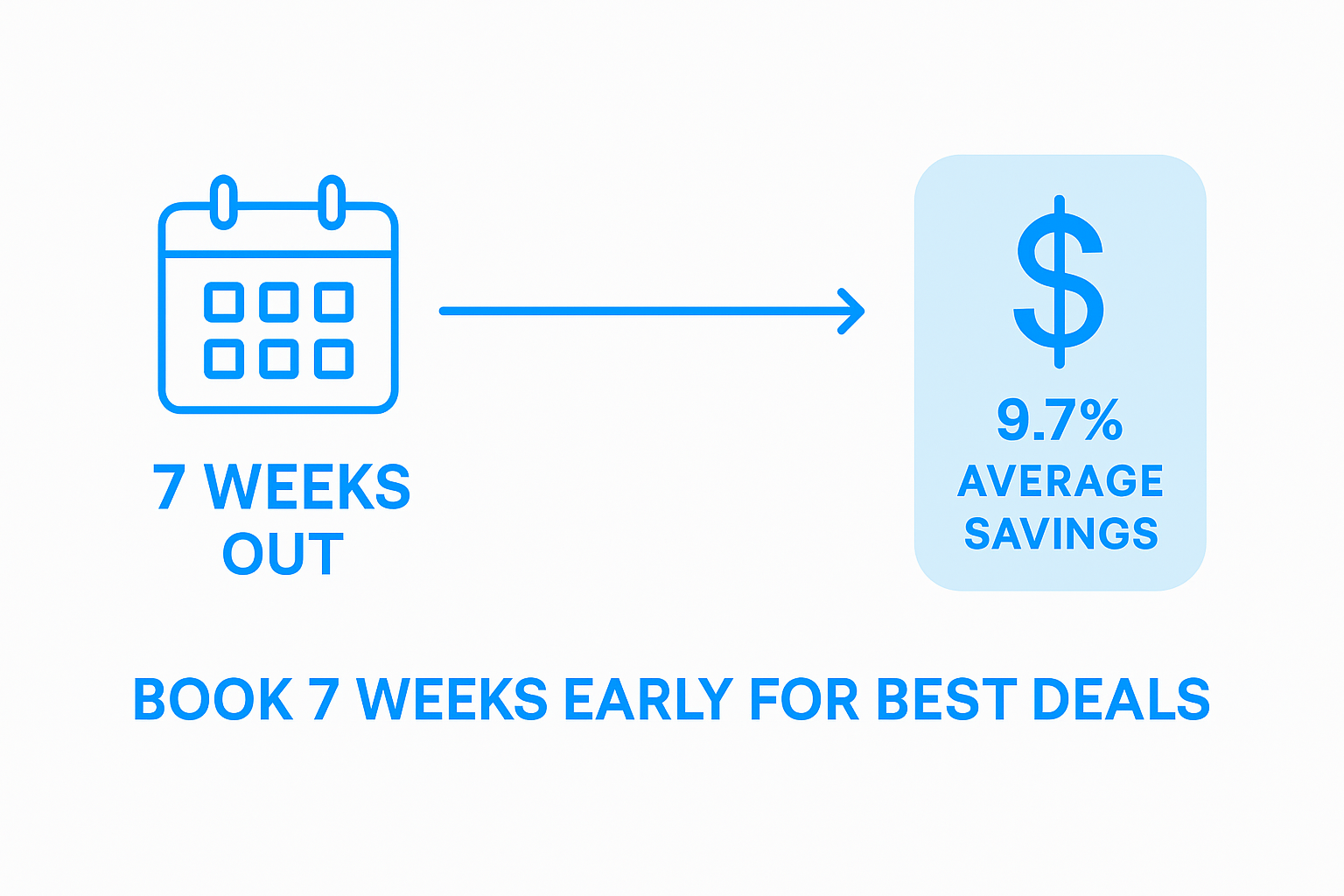
Purchasing tickets approximately seven weeks before departure can lead to average savings of 9.7%, making this a sweet spot for budget conscious travelers. Airlines typically release their most competitive pricing during this window to ensure maximum seat occupancy. Pay close attention to off peak travel months like January, November, and February, which traditionally offer more economical flight options. Consider creating a spreadsheet or using a digital tracking tool to monitor price trends and identify the most opportune moment to book your tickets.
Pro tip: Develop a flexible approach to your travel planning. Sometimes shifting your departure or return date by just a few days can unlock significant price reductions. Many travelers find that midweek flights and early morning or late night departures tend to be less expensive than peak travel times. By remaining adaptable and strategic, you can transform ticket purchasing from a fixed expense into a calculated opportunity for savings.
Step 5: Verify final price and booking details
The final stage of booking affordable flights requires meticulous attention to detail to prevent unexpected costs and potential booking errors. Documenting fare comparisons and ensuring all booking details are accurate is crucial to avoiding discrepancies and potential additional expenses, making this step a critical component of smart travel planning. Before clicking the confirm button, carefully review every aspect of your potential flight reservation with a critical eye.
Travelers should comprehensively verify the total cost, including all taxes and hidden fees, to prevent financial surprises after booking. Double check passenger names, ensuring they exactly match government identification documents. Verify flight times, connections, and airport codes to confirm you are booking precisely the itinerary you intend. Pay special attention to departure and arrival terminals, as some airports have multiple locations that could impact your travel logistics.
Pro tip: Create a pre booking checklist that includes verifying passenger details, total pricing, flight times, baggage allowances, and cancellation policies. Screenshot your booking confirmation and save all related documents digitally. By taking these extra moments to review thoroughly, you protect yourself from potential booking mistakes that could cost significantly more than the few minutes spent confirming details.
Unlock Big Savings on Flights with Expert Travel Tools
Finding cheap plane tickets can be overwhelming with fluctuating prices and complex booking windows. The article emphasizes how flexibility with travel dates, early fare alerts, and careful price comparisons are key to saving money on flights. If you are tired of juggling multiple platforms or missing out on deals due to timing, PilotTravelDeals.com has you covered. Our Travel Tips section complements the article’s advice by offering additional insights to make your trip planning smarter and more affordable.

Don’t let confusion or last-minute bookings cost you hundreds. Visit PilotTravelDeals.com today and use our powerful comparison tools to search for airline tickets, hotels, and more all in one place. Explore the best deals across various providers and save up to 80 percent. Take control of your travel budget by starting now and securing your next flight at the perfect price. For even more tips and tricks, check out our Miscellaneous category and turn travel stress into travel success.
Frequently Asked Questions
How can I find the cheapest travel dates for my flight?
To find the cheapest travel dates, compare flight prices across flexible travel windows. Use online flight search tools that display prices for entire months to identify the most economical options, aiming to book approximately seven weeks before your departure date.
What features should I look for in flight comparison platforms?
When researching flight comparison platforms, prioritize those that offer real-time price tracking, flexible date searching, and comprehensive comparisons across multiple airlines. These features can help you uncover lower fares and potentially save an average of 14% on your tickets.
How do fare alerts work, and how can they save me money?
Fare alerts monitor price fluctuations for specific routes or destinations. By setting alerts for multiple travel dates, you can receive notifications when prices drop, helping you catch discounted fares and make purchasing decisions when savings are at their highest.
What is the optimal time to book my flight for the best savings?
Book your flight one to three months in advance for domestic trips or two to ten months for international trips to access the best pricing. Timing your purchase, especially around the seven-week mark before departure, can lead to average savings of 9.7%.
What details should I verify before finalizing my flight booking?
Before confirming your flight, verify all details, including passenger names, total pricing, and flight times. Create a pre-booking checklist to ensure accuracy and avoid potential mistakes that could lead to additional costs after booking.
Can shifting my travel dates help me save on plane tickets?
Yes, shifting your travel dates by a few days can unlock significant savings. Midweek flights and early morning or late-night departures tend to be less expensive, so consider adjusting your schedule to take advantage of these lower rates.
Recommended
- Best Tips for Cheap Flights: Save More on Airfare – PilotTravelDeals.com
- 7 Best Sites for Cheapest Flight Tickets and Smart Savings – PilotTravelDeals.com
- Complete Guide to Cheap International Flights – PilotTravelDeals.com
- Proven Tips to Find Cheap Flights and Save Big on Travel – PilotTravelDeals.com
- 7 Smart Ways to Find Cheap Luxury Perfumes in the UK
- Master Healthy Eating on a Budget: Save Money & Eat Well – LeanAndFit