Booking flights can quickly drain your travel budget if you go in blind. Most people are shocked to learn that just being flexible with your travel dates can save you hundreds of dollars on airfare. The real surprise is you do not need complicated tools or travel insider status to find better deals—just a few smart tweaks will give you the upper hand most travelers never use.
Table of Contents
- Step 1: Set A Budget For Your Flight Travel
- Step 2: Research And Compare Multiple Airlines
- Step 3: Be Flexible With Your Travel Dates
- Step 4: Use Fare Alerts And Track Prices
- Step 5: Book In Advance For The Best Rates
Quick Summary
| Key Point | Explanation |
|---|---|
| 1. Set a Comprehensive Flight Budget | Allocate 20-30% of your overall trip expense to your flight budget, considering all potential costs. |
| 2. Research Multiple Airlines Thoroughly | Compare several airlines based on total costs, including hidden fees and service quality, not just ticket prices. |
| 3. Be Flexible with Travel Dates | Adjust your travel dates to find better prices, as midweek flights often cost less than weekends. |
| 4. Utilize Fare Alerts and Tracking Tools | Sign up for price alerts to monitor ticket fluctuations and identify the best times to book flights. |
| 5. Book Flights in Advance | Purchase flight tickets 6-8 weeks for domestic and 3-4 months for international travel to secure the best rates. |
Step 1: Set a Budget for Your Flight Travel
Preparing for travel begins with financial strategy. Setting a realistic budget for flights isn’t just about saving money – it’s about creating a framework that transforms your travel dreams into achievable plans. Most travelers underestimate the complexity of flight pricing, but understanding how to establish a smart budget can unlock significant savings.
Start by assessing your total travel funds comprehensively. This means looking beyond just the ticket price and considering additional expenses like baggage fees, seat selection, travel insurance, and potential currency exchange costs. Your total flight budget should represent approximately 20-30% of your overall trip expenses, giving you flexibility while maintaining financial discipline.
To create an effective flight budget, leverage digital tools and comparison platforms. Websites and apps that track flight prices can provide historical data and predictive pricing models, helping you understand typical cost ranges for your desired routes. Check out our guide on finding budget-friendly flight options to discover strategies that can help you maximize your travel funds.
Consider developing a flexible budget range rather than a rigid number. For international flights, budget between $500-$1200 depending on destination, season, and advance booking time. Domestic flights typically range from $100-$400. These ranges allow you to adjust expectations and prepare for potential price fluctuations. Pro travelers often recommend setting aside an additional 10-15% as a contingency fund for unexpected price changes or last-minute adjustments.
Remember that timing plays a crucial role in budget planning. Booking flights during off-peak seasons, being flexible with travel dates, and avoiding major holidays can dramatically reduce your expenses. By approaching your flight budget strategically, you transform financial planning from a constraint into an empowering travel preparation technique.
Step 2: Research and Compare Multiple Airlines
Comparing airlines is more than just finding the cheapest ticket – it’s about understanding the total value and experience each carrier offers. Smart travelers recognize that the lowest price doesn’t always translate to the best overall travel experience. Your goal is to evaluate multiple factors beyond basic ticket pricing, including baggage allowances, in flight amenities, overall reputation, and hidden fees.
Begin your research by utilizing comprehensive flight comparison platforms that aggregate pricing and details from multiple airlines simultaneously. Digital tools like Skyscanner, Google Flights, and Kayak provide robust search capabilities that allow you to view side-by-side comparisons of routes, prices, and flight times. Learn more about our recommendations for finding budget-friendly flight options to streamline your research process.
Pay close attention to the nuanced differences between budget and traditional carriers. Budget airlines might offer lower base prices, but they frequently charge additional fees for services like seat selection, carry on luggage, and in flight refreshments. Traditional airlines often include more complimentary services within their ticket price. Calculate the total trip cost including all potential extras to make an accurate comparison.
Develop a systematic approach to your airline research. Create a comparison spreadsheet tracking key metrics such as base ticket price, baggage fees, seat selection costs, flight duration, layover times, and cancellation policies. This methodical strategy transforms your research from an overwhelming task into a structured decision making process. Pro travelers recommend comparing at least 5-7 different airline options before making a final booking decision.
Remember that airline reputation matters significantly. Read recent customer reviews, check safety ratings, and investigate the carrier’s on time performance record. Some budget airlines might save you money upfront but could cost more in stress and potential travel disruptions. Your research should balance financial considerations with overall travel quality and reliability.
Here is a comparison table to quickly assess key factors when choosing between budget and traditional airlines, based on the features discussed in this section.
| Airline Type | Base Ticket Price | Included Services | Common Extra Fees | Overall Experience |
|---|---|---|---|---|
| Budget Airlines | Lower | Minimal (often none) | Baggage, seat selection, food, drinks | Basic, fewer amenities |
| Traditional Airlines | Higher | Baggage, meals, seat selection | Less frequent, some premium services | More comfortable, better service |
| Value to Traveler | Best for price | Less included, pay-per-service | Watch for hidden costs | Weigh cost vs quality carefully |

Step 3: Be Flexible with Your Travel Dates
Flexibility is the secret weapon of savvy travelers seeking to minimize flight expenses. Rigid travel dates can dramatically increase your ticket prices, while slight adjustments in departure and return times can unlock substantial savings. Understanding how to strategically manipulate your travel calendar transforms flight booking from a fixed expense into a dynamic opportunity for cost reduction.
Digital tools have revolutionized how travelers can identify the most economical travel windows. Platforms like Google Flights and Skyscanner offer powerful “flexible date” search features that visually display price variations across different days and weeks. Check out our comprehensive guide on finding budget-friendly flight options to master these techniques and maximize your savings potential.
Most travelers don’t realize that specific days of the week can significantly impact ticket pricing. Midweek flights typically cost less than weekend departures, with Tuesday and Wednesday often presenting the most affordable options. Avoid traveling during peak holiday periods and school breaks when demand drives prices higher. A difference of just two or three days can translate into hundreds of dollars in savings.
Consider developing a flexible approach to your entire trip planning strategy. Some travelers intentionally build buffer days into their itineraries, allowing them to take advantage of unexpected price drops or promotional fares. Advanced travelers sometimes use price tracking tools that alert them to sudden fare reductions, enabling last minute booking adjustments that can save significant money.
Your goal is to become a strategic date manipulator. Look for price sweet spots that balance your personal schedule with economic opportunities. Early morning and late night flights frequently offer lower rates, as do flights with less convenient connection times. By remaining open minded about your travel schedule and viewing dates as a fluid concept rather than a rigid constraint, you transform flight booking from a fixed expense into an opportunity for smart financial planning.
Step 4: Use Fare Alerts and Track Prices
Tracking flight prices is an art form that can save travelers substantial money. Sophisticated fare tracking goes beyond casual price checking – it’s a strategic approach to understanding complex airline pricing algorithms and identifying perfect booking moments. By implementing smart tracking techniques, you transform flight shopping from a passive experience into an active money saving strategy.
Learn more about finding the best flight deals by understanding the digital tools available for modern travelers. According to USA Today, fare tracking tools have revolutionized how consumers approach flight booking, providing real time insights into price fluctuations and potential savings opportunities.
Multiple digital platforms offer sophisticated fare tracking capabilities. Google Flights, Skyscanner, and Hopper provide advanced price prediction algorithms that analyze historical data and current market trends. These tools can notify you when prices drop, predict future price changes, and help you determine the optimal booking window. Some platforms even offer price guarantee features that refund the difference if ticket prices decrease after your purchase.
Develop a systematic approach to price tracking by setting up alerts across multiple platforms. Create email notifications, mobile app alerts, and browser extensions that monitor your specific routes and travel dates. Professional travelers recommend tracking prices for at least 4-6 weeks before your intended travel date, which allows you to understand typical pricing patterns and recognize genuine deals when they emerge.
Remember that successful fare tracking requires patience and strategic thinking. Prices fluctuate based on complex factors including seasonal demand, global events, and airline competition. Your goal is not just to find the lowest price, but to understand the pricing ecosystem. Some advanced travelers even use multiple email addresses to receive broader alert ranges, increasing their chances of discovering exceptional flight deals that others might miss.
Step 5: Book in Advance for the Best Rates
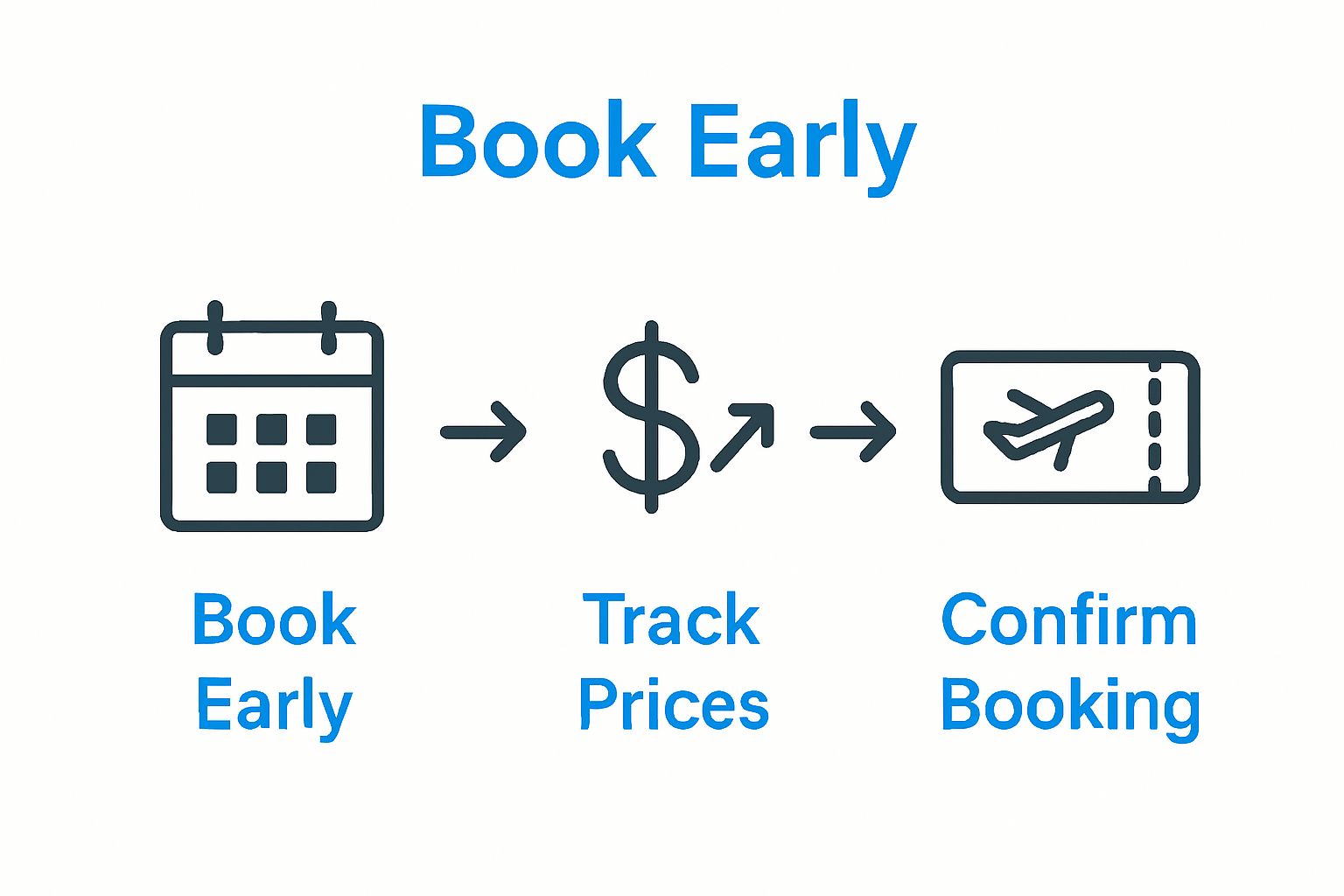
Advance booking is a strategic approach that separates smart travelers from impulsive spenders. Timing your flight purchase can save you hundreds of dollars, with most airlines offering their most competitive rates approximately 6-8 weeks before domestic flights and 3-4 months prior to international travel. Understanding these booking windows transforms flight purchasing from a last minute scramble into a calculated financial strategy.
Explore our essential tips for booking flights to refine your advanced booking technique. Sophisticated travelers recognize that advance booking isn’t just about selecting dates early, but about understanding pricing trends and airline inventory management. Airlines typically release their most competitive fares during specific periods, and those who plan strategically can capitalize on these pricing sweet spots.
The ideal booking window varies by destination and season, making flexibility crucial. Domestic flights tend to have the most stable pricing, with rates typically lowest between 1-3 months before departure. International flights require more advanced planning, with the best prices appearing 5-8 months prior to travel. Business travelers and frequent flyers often leverage this knowledge by setting calendar reminders and tracking prices well in advance of their intended travel dates.
Digital tools have revolutionized advance booking strategies. Price prediction algorithms from platforms like Hopper and Google Flights can help travelers understand when to book by analyzing historical pricing data. Some tools even provide recommendations on whether to purchase immediately or wait for potential price drops. Pro travelers recommend creating a dedicated spreadsheet to track price variations, comparing different dates and airlines to identify the most economical booking opportunities.
Beyond simple price considerations, advance booking offers additional advantages. Early bookings provide greater seat selection, more flight time options, and reduced stress associated with last minute travel planning. By approaching flight purchases as a strategic financial decision rather than a reactive purchase, travelers can transform their entire travel experience, balancing cost savings with optimal travel convenience.
This table summarizes the main steps featured in this guide, along with the purpose and key tools or techniques mentioned for each, to provide a clear at-a-glance overview.
| Step | Purpose | Key Tool/Technique |
|---|---|---|
| Set a Budget for Your Flight Travel | Control expenses and prepare for potential costs | Budget range, price tracking apps |
| Research and Compare Multiple Airlines | Find best overall value, not just lowest price | Comparison platforms, spreadsheets |
| Be Flexible with Your Travel Dates | Unlock lower prices by changing travel dates | Flexible date search, alerts |
| Use Fare Alerts and Track Prices | Monitor price changes and catch drops | Fare tracking tools, notifications |
| Book in Advance for the Best Rates | Secure best pricing windows and better availability | Price prediction, calendar reminders |
Take the Stress Out of Saving on Flights – Let Us Find Your Best Deals
Trying to save money on flights can feel overwhelming. You compare dozens of airlines and dates yet still worry about missing out on a better deal. You want to travel smart in 2025, but navigating fluctuating prices, limited-time discounts, and hidden fees can drain your excitement fast. That’s exactly why our Travel Tips were created. They help you avoid common mistakes and turn tedious planning into simple steps toward real savings.

Now imagine finding and comparing flight deals from dozens of providers with just a few clicks. That’s what PilotTravelDeals.com delivers. Unlock savings of up to 80 percent and discover exclusive offers on airline tickets, hotels, and more. Stop wasting hours searching in circles. Act now and let our travel comparison platform help you achieve your travel goals while staying within your budget. Start your smarter journey by visiting our Travel Tips or explore deals directly at PilotTravelDeals.com.
Frequently Asked Questions
How can I set a budget for my flights?
Setting a budget for your flights involves considering not just the ticket price but also additional expenses like baggage fees and travel insurance. Aim to allocate about 20-30% of your overall trip expenses for flights by assessing your total travel funds and related costs.
What factors should I compare when researching airlines?
When researching airlines, evaluate elements beyond ticket prices such as baggage allowances, in-flight amenities, and overall reputation. Use a comparison spreadsheet to track these metrics and assess the total trip cost, including any hidden fees.
How can I be flexible with my travel dates to save money?
Being flexible with your travel dates can lead to significant savings, as midweek flights are often cheaper than weekend departures. Use flexible date search features on flight comparison platforms to identify cheaper days, which can save you hundreds of dollars.
What are the best practices for tracking flight prices?
To track flight prices effectively, set up alerts on multiple platforms that notify you of price drops. Monitor prices for 4-6 weeks prior to your travel date to better understand typical fluctuations and recognize genuine deals.
Why is advance booking important for flight savings?
Booking flights in advance typically results in better rates, with the best prices appearing about 6-8 weeks before domestic flights and 3-4 months for international routes. Create a calendar reminder to check prices regularly during these windows to capitalize on potential savings.
How can I utilize fare alerts to find cheaper flights?
Utilizing fare alerts can help you discover lower ticket prices when monitoring specific routes. Set up alerts across various platforms to receive notifications about price changes, allowing you to book at the right moment and potentially save a significant amount.
Recommended
- Essential Tips for Booking Flights: Save Big Today – PilotTravelDeals.com
- 7 Smart Examples of Travel Booking Hacks You Need – PilotTravelDeals.com
- How to Find Cheap Flights for Your Next Adventure – PilotTravelDeals.com
- Travel Smart: Essential Tips for Affordable Adventures Around the Globe – PilotTravelDeals.com