TL;DR:
- Applying timing, loyalty stacking, negotiation, and location flexibility can cut hotel costs by over 30 percent. Travelers who follow a structured, layered approach maximize savings and avoid leaving money on the table.
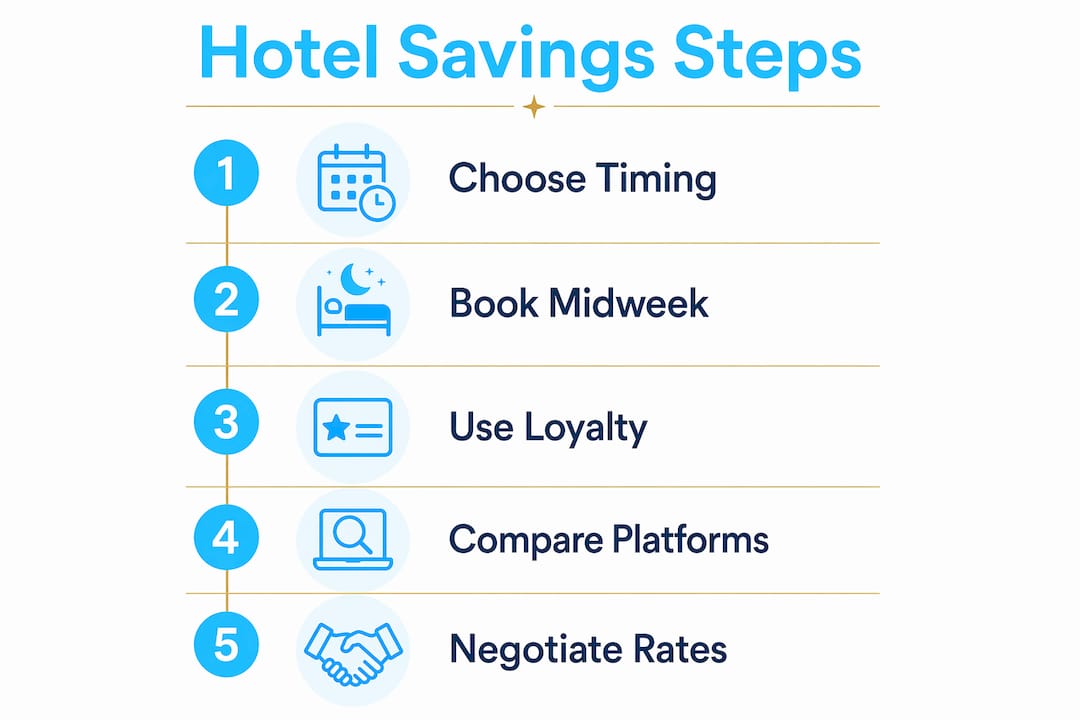
Hotel savings step by step is a methodical process of applying timed booking decisions, loyalty stacking, and negotiation tactics to cut accommodation costs by 30% or more on a single trip. Most travelers leave money on the table because they book on impulse rather than strategy. A structured approach, the kind Pilottraveldeals is built around, turns scattered discount tips into a repeatable system that works for families, solo travelers, and business individuals alike. The core insight is simple: stacking multiple tactics compounds your savings far beyond what any single trick can deliver.
What is the hotel savings step-by-step method?
The hotel savings step-by-step method is a sequenced booking process. You apply timing, platform selection, loyalty programs, and negotiation in a specific order to maximize every discount available. Each step builds on the last, so skipping one reduces the total savings you can stack. Think of it like a checklist before a flight. You would not skip the preflight check just because the engine looks fine.
Hotel rates are highly dynamic. That means proactive, informed booking regularly unlocks discounts that passive shoppers never see. The travelers who save the most are not lucky. They follow a system.
When should you book your hotel for the best price?
Timing is the single biggest lever in any budget hotel booking guide. Get it right, and you cut costs before you even open a comparison site.

Midweek stays vs. weekend stays
Midweek stays cost 20–30% less than Friday and Saturday nights. Hotels fill up on weekends with leisure travelers, which drives prices up. Tuesday through Thursday nights see lower demand, so rates drop. If your schedule allows any flexibility, shifting your stay by even one night can produce real savings.
The optimal booking window
Booking one week before travel saves about 35% on domestic stays and 25% on international stays. That window is the sweet spot between availability and price pressure. Booking months in advance often means paying full price because hotels have not yet discounted unsold inventory.
Last-minute app deals
Same-day bookings via last-minute apps deliver rates 40–60% below standard pricing when made after 3:00 PM. Hotels would rather fill a room at a steep discount than leave it empty overnight. This tactic works best for flexible travelers who can decide on the day.
| Booking timing | Typical savings | Best for |
|---|---|---|
| 6+ months ahead | Minimal | Peak season, popular destinations |
| 1–3 months ahead | 10–15% | International trips |
| 1 week before | 25–35% | Domestic trips |
| Same day (after 3 PM) | 40–60% | Flexible, last-minute travelers |
| Midweek nights | 20–30% | Anyone with schedule flexibility |
Pro Tip: Book a refundable rate at the one-week mark, then check prices again two days before arrival. If the rate dropped, rebook at the lower price and cancel the original.
How do hotel loyalty programs actually save you money?
Loyalty programs are free to join and deliver compounding value the more you use them. Member-exclusive rates run 5–10% lower than public rates, and members get perks like mobile check-in, room upgrades, and late checkout. That 5–10% sounds small, but it stacks on top of every other discount you apply.
Co-branded hotel credit cards take this further. Holding a co-branded hotel credit card often grants mid-tier elite status worth up to $40 per day in perks like free breakfast. A card fee of $95 per year pays for itself after three nights of included breakfast for two people.
Key loyalty program advantages:
- Member rates: 5–10% below the best available public rate
- Free breakfast: Common at mid-tier elite status and above
- Mobile check-in: Skip the front desk line entirely
- Room upgrades: Available at check-in when inventory allows
- Free night certificates: Earned through credit card spending, not just stays
- Points toward free stays: Accumulate across every booking
Pro Tip: Stack your loyalty member rate with a cashback portal. Book through the hotel’s own site to get the member rate, then access that site via a cashback portal to earn a percentage back on top.
Which booking platforms give you the best hotel deals?
No single platform wins every time. The best approach is to compare hotel prices across three channels before committing: the hotel’s direct website, online travel agencies (OTAs), and meta-search engines that aggregate both.
Direct booking vs. OTAs vs. meta-search
The hotel’s own site often offers the lowest rate for loyalty members and the most flexible cancellation terms. OTAs sometimes undercut the direct rate for non-members. Meta-search engines show both side by side, which saves time. Always check all three before booking.
Comparing only base room rates is a costly mistake. Taxes and resort fees can add 20–30% to the displayed price. Always evaluate the all-in price before deciding which platform wins.
Cashback portals and gift card discounts
Cashback portals pay you a percentage of your booking total, typically 3–10%, just for clicking through before you book. Gift card discounts add another layer. Many retailers sell hotel gift cards at 10–15% below face value. Buying a $100 gift card for $88 and using it on a discounted rate is a legal, repeatable savings tactic.
| Booking channel | Typical advantage | Watch out for |
|---|---|---|
| Hotel direct site | Loyalty rates, flexible cancellation | Not always cheapest for non-members |
| OTAs | Competitive base rates, bundled deals | Stricter cancellation, hidden fees |
| Meta-search engines | Side-by-side comparison | Redirects to OTAs, check final price |
| Cashback portals | 3–10% back on booking total | Must click through before booking |
| Gift cards | 10–15% below face value | Limited to specific hotel brands |
Pro Tip: Use a price tracking tool to monitor your booked hotel’s rate. If the price drops after you book a refundable rate, cancel and rebook immediately.
What negotiation tactics cut hotel costs the most?
Negotiation is the most underused tactic in any step-by-step hotel deals approach. Most travelers assume the listed price is fixed. It is not.
- Find a lower OTA rate first. Screenshot it before you call. You need a specific number to reference.
- Call the hotel directly. Ask for the reservations desk, not the front desk. Reservations staff have more authority to adjust rates.
- State the OTA rate clearly. Say: “I found your hotel listed at $X on [OTA name]. Can you match that rate if I book directly?”
- Ask for added value. Explicitly asking hotels to add value beyond matching the OTA rate often yields upgrades or perks not advertised. Try: “If you can match the rate, is there anything you can add, like breakfast or a room upgrade?”
- Use the BE-CALM strategy. Book refundable early and rebook when prices fall. This single tactic can save over $250 on a single stay.
Calling hotels with OTA rates for a price match regularly produces free breakfast, late checkout, or upgrades. Hotels prefer direct bookings because they avoid OTA commission fees, typically 15–25% of the room rate. That margin gives them room to offer you something extra.
Pro Tip: Always call in the late afternoon on a weekday. Managers are more available and more motivated to fill rooms before the evening.
How do location and travel dates affect what you pay?
Where you stay within a city matters as much as when you book. Staying outside tourist centers costs 20–40% less for comparable accommodations. A hotel two subway stops from the main attraction charges a fraction of what the property next to it charges. The room quality is often identical.
Shoulder season travel, the weeks just before or after peak season, delivers similar savings. Demand drops sharply, but the destination is still fully operational. Prices follow demand, not quality.
Key location and timing benefits:
- Neighborhood choice: Rooms outside tourist centers cost 20–40% less for the same tier
- Shoulder season: Rates drop significantly while destinations remain fully open
- Date shifting: Moving your stay by one day can drop the nightly rate by 15–20%
- Longer stays: Extended stays often qualify for discounts or perks like free nights and included meals
- Midweek arrivals: Arriving Tuesday instead of Friday can reset your entire rate for the stay
Understanding how to book a weekend stay strategically, by mixing midweek nights into a longer trip, is one of the fastest ways to reduce your average nightly cost without sacrificing comfort.
Key Takeaways
Stacking timing, loyalty programs, direct negotiation, and location flexibility delivers the deepest hotel savings available to any budget-conscious traveler.
| Point | Details |
|---|---|
| Timing drives the biggest savings | Midweek stays and one-week-out bookings cut costs by 20–35% before any other tactic. |
| Loyalty programs compound discounts | Free membership delivers 5–10% off plus perks worth up to $40 per day. |
| Always check the all-in price | Taxes and fees can add 20–30% to the displayed rate across all platforms. |
| Negotiation works consistently | Calling hotels directly with OTA rates regularly yields price matches plus free perks. |
| Location choice is underrated | Staying outside tourist centers saves 20–40% on comparable rooms. |
The mistake most travelers make when comparing hotel rates
Most travelers compare the wrong number. They look at the nightly rate on the first platform they open, feel satisfied it looks reasonable, and book. That single decision costs them more than any other mistake in the process.
The real comparison is the all-in total across at least three channels, factored against the cancellation terms. A $120 refundable rate beats a $105 non-refundable rate if there is any chance your plans shift. I have seen travelers lose $300 on a non-refundable booking because they saved $15 per night upfront.
The other mistake is treating these tactics as separate options rather than a layered system. Booking midweek is good. Booking midweek through a cashback portal with a loyalty member rate is three times better. The compounding effect is where the real savings live, and most travelers never get there because they stop after step one.
The digital reservations process has made dynamic pricing more aggressive than ever. Hotels adjust rates multiple times per day based on demand signals. That works against passive bookers and in favor of travelers who monitor prices and rebook when rates drop. The BE-CALM strategy is not a hack. It is the correct response to how hotel pricing actually works.
— Asher
Pilottraveldeals makes finding hotel deals straightforward
Applying every tactic in this guide manually takes time. Pilottraveldeals aggregates hotel offers from multiple providers so you can compare real all-in prices in one place, without opening five tabs and doing the math yourself.

The Pilottraveldeals hotel platform pulls together discounted rates, member pricing, and layered deals across hundreds of properties. Whether you are booking a family trip, a solo weekend, or a business stay, the platform surfaces the options that match your dates and budget. Pilottraveldeals also covers step-by-step hotel booking guides that walk you through each tactic in real time, so you apply the right strategy for every trip.
FAQ
How much can you save by booking midweek?
Midweek stays cost 20–30% less than Friday and Saturday nights. Shifting even one night of your stay to Tuesday through Thursday reduces your average nightly rate.
What is the BE-CALM hotel booking strategy?
The BE-CALM strategy means booking a refundable rate early, then monitoring prices and rebooking if the rate drops before arrival. This approach can save over $250 on a single stay.
Is it cheaper to book directly with the hotel?
Direct booking is often cheapest for loyalty members, who receive rates 5–10% below public prices. Non-members should compare the hotel’s direct rate against OTAs and meta-search results before committing.
Do last-minute hotel deals actually work?
Same-day bookings made after 3:00 PM through last-minute apps deliver discounts of 40–60% below standard pricing. This tactic works best for travelers with flexible plans and no fixed destination requirement.
How does staying outside the city center save money?
Hotels outside tourist centers charge 20–40% less for comparable room quality. The trade-off is a short transit ride, which rarely costs more than a few dollars and is almost always worth the savings.
Recommended
- 7 Proven Budget Travel Tips 2025 for Smart Savings – PilotTravelDeals.com
- Travel Budgeting Tips: Complete Guide for 2025 – PilotTravelDeals.com
- How to Maximize Travel Savings with Smart Deal Strategies – PilotTravelDeals.com
- How to Get Flight Discounts 2025: Step-by-Step Savings – PilotTravelDeals.com