
Most American travelers are surprised to learn that nearly half of people confuse direct flights with non-stop flights. This simple misunderstanding can lead to frustration when an expected quick journey turns into an unexpected stopover. As air travel continues to shape how Americans connect with the world, knowing the real difference between direct, non-stop, and connecting flights helps you avoid wasted time and extra costs. Get the facts that make booking your next trip much less stressful.
Table of Contents
- Direct Flights Defined And Common Misconceptions
- Types Of Flight Bookings And Key Differences
- Time Savings And Convenience Explained
- Risks And Hidden Costs Of Connecting Flights
- Comparing Direct Versus Layover Ticket Prices
Key Takeaways
| Point | Details |
|---|---|
| Direct Flights vs. Non-stop Flights | A direct flight can have intermediate stops but retains the same flight number, unlike a non-stop flight that travels straight to the destination without any landings. |
| Types of Flight Bookings | Understanding booking types, including non-stop, direct, and connecting flights, is crucial for optimizing travel experience and cost. |
| Risks of Connecting Flights | Connecting flights often involve greater travel complications, including potential missed connections, hidden costs, and increased stress. |
| Ticket Pricing Insights | Direct flights might have higher base prices but can save money in the long run by minimizing additional expenses associated with layovers. |
Direct Flights Defined and Common Misconceptions
Travelers often misunderstand what constitutes a direct flight, creating unnecessary confusion when planning trips. A direct flight technically means a journey from one airport to another using the same flight number, even if the aircraft makes intermediate stops along the way. This definition surprises many passengers who assume direct means traveling without landing.
Contrary to popular belief, a direct flight is not the same as a non-stop flight. While a non-stop flight travels directly from the origin to the destination without landing, a direct flight might include one or more stops where passengers can board or disembark, but the flight number remains unchanged. This nuance is critical for travelers seeking the most efficient route.
Misconceptions about direct flights can significantly impact travel planning. Passengers might expect a quicker journey, only to discover unexpected layovers. When booking, always confirm whether your flight is truly non-stop or simply a direct flight with intermediate stops. Understanding this difference helps set realistic expectations about travel time, potential connections, and overall journey complexity.
Key differences to remember include:
- Non-stop flight: Single journey without landing
- Direct flight: Same flight number with potential intermediate stops
- Connecting flight: Requires changing aircraft or flight numbers
Careful travelers will always verify flight details to avoid unexpected travel complications.
Types of Flight Bookings and Key Differences
Flight bookings involve numerous options that can significantly impact your travel experience. Airline tickets are classified based on multiple factors including travel destination, journey type, and specific passenger requirements. Understanding these variations helps travelers make informed decisions that balance convenience, cost, and travel preferences.
The primary flight booking types include non-stop, direct, and connecting flights. A direct flight maintains the same flight number despite potential intermediate stops, which distinguishes it from non-stop flights that travel directly between two points without landing. Connecting flights require passengers to change aircraft or flight numbers, often involving layovers in different airports.
Travelers can also choose from various ticket categories that offer different levels of flexibility. Refundable tickets provide maximum adaptability, allowing changes or cancellations with minimal penalties. Non-refundable tickets are typically cheaper but come with strict modification rules. Business travelers and frequent flyers often prefer flexible booking options that accommodate unpredictable schedules.
Key flight booking types include:
- Non-stop flights: Single journey without intermediate stops
- Direct flights: Same flight number with potential intermediate stops
- Connecting flights: Requires changing aircraft or flight numbers
- Refundable tickets: Flexible booking with change options
- Non-refundable tickets: Lower cost with strict modification rules
Careful consideration of these booking types can help travelers optimize their journey’s efficiency and budget.
Time Savings and Convenience Explained
Direct flights represent the pinnacle of travel efficiency, offering travelers a streamlined journey with minimal complications. Understanding actual airborne time behavior has become increasingly crucial as air travel demands continue to grow. The primary advantage of direct flights lies in their ability to reduce total travel time by minimizing unnecessary stops and potential delays associated with connecting routes.
Technology has significantly enhanced the booking experience, making flight selection more intuitive and efficient. Graphic-based interfaces have revolutionized how travelers choose their routes, improving booking accuracy and user satisfaction. These advanced booking tools help travelers quickly identify the most time-efficient flight options, allowing for smarter travel planning that maximizes convenience.
The convenience of direct flights extends beyond simple time savings. Travelers avoid the stress of potential missed connections, reduced baggage handling risks, and the mental fatigue of navigating multiple airports. Business professionals and frequent travelers particularly appreciate the simplified booking workflow that direct flights provide, enabling more predictable and reliable travel experiences.
Key time-saving benefits of direct flights include:
- Reduced total travel time
- Fewer airport transitions
- Minimized connection-related stress
- Lower risk of baggage mishandling
- More predictable arrival schedules
Careful route selection can transform your travel experience from a potential ordeal to a smooth, efficient journey.
Risks and Hidden Costs of Connecting Flights
Connecting flights introduce a complex web of potential complications that can dramatically increase travel stress and unexpected expenses. Short-haul flight restrictions have increasingly pushed travelers toward multi-leg journeys, amplifying the inherent risks associated with multiple airport transitions and interconnected travel routes.

The financial implications of connecting flights extend far beyond the initial ticket price. Travelers often encounter hidden expenses such as additional meal costs during long layovers, unexpected airport parking fees, potential hotel stays for missed connections, and increased baggage handling risks. Each airport transition multiplies the probability of luggage misplacement or delayed arrival, creating additional financial and emotional burdens for passengers.
Moreover, connecting flights significantly compromise travel predictability. Missed connections can trigger a domino effect of rescheduling challenges, potentially resulting in substantial rebooking fees and lost productivity. Business travelers and time-sensitive passengers face particularly acute risks, with flight comparison strategies becoming critical for minimizing these potential disruptions.
Key risks of connecting flights include:
- Increased total travel time
- Higher unexpected expenses
- Greater luggage mishandling probability
- Elevated stress and uncertainty
- Potential missed connection penalties
Careful route selection and understanding these potential pitfalls can help travelers make more informed and cost-effective flight decisions.
Comparing Direct Versus Layover Ticket Prices
Ticket pricing for air travel is a complex landscape where direct flights and layover routes compete for travelers’ attention. Non-stop direct flights between locations offer significant advantages, enabling faster travel and potentially reducing overall transportation costs by minimizing additional expenses associated with multiple airport transitions.
The pricing structure for direct and layover flights involves multiple economic considerations. Point-to-point transit models demonstrate that direct routes often provide more predictable pricing, whereas layover tickets introduce variable cost elements like additional fees for meals, potential hotel stays, and increased baggage handling expenses. Airlines typically price direct flights at a premium, reflecting the convenience and time savings they offer.
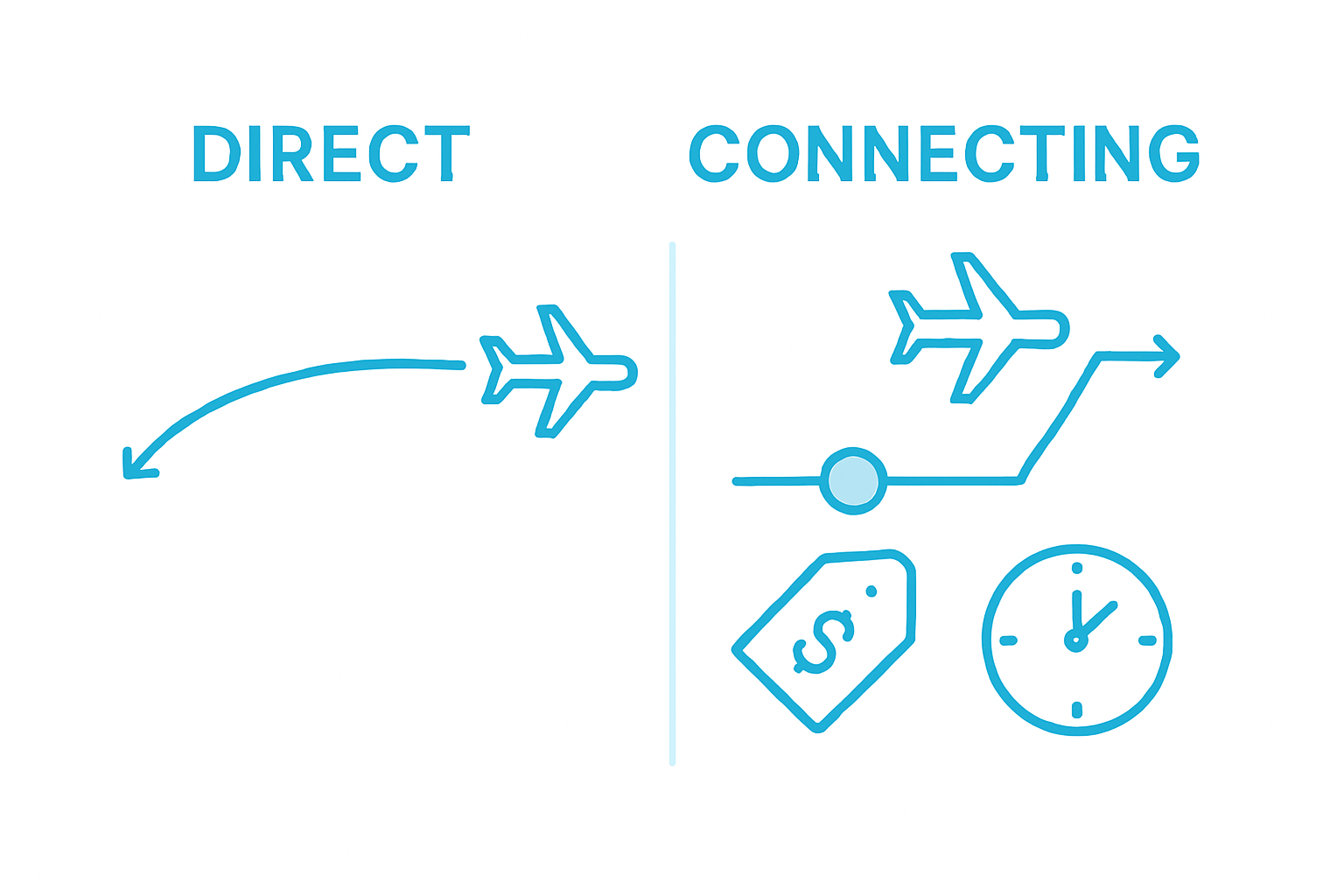
Travelers must carefully analyze the total cost of their journey, not just the initial ticket price. While layover flights might appear cheaper on the surface, hidden expenses can quickly erode any perceived savings. Understanding airline fare structures becomes crucial in making cost-effective travel decisions that balance budget constraints with travel efficiency.
Key pricing considerations include:
- Base ticket price differences
- Hidden layover expenses
- Time value of direct routes
- Potential productivity losses
- Baggage handling fees
Smart travelers look beyond the initial ticket price to understand the true economic impact of their chosen flight route.
Discover Stress-Free Travel with Direct Flights and Smart Booking
Booking direct flights can save you valuable time and prevent the stress of unexpected layovers and missed connections. Many travelers experience frustration navigating complex routes or facing hidden costs related to connecting flights. If your goal is a seamless journey with fewer airport transitions, faster travel, and predictable schedules, understanding the difference between direct and connecting flights is key. Terms like “direct flight” and “non-stop flight” are more than just airline jargon—they impact how much time you spend traveling and how smooth your trip will feel.

Ready to take control of your travel experience Now is the perfect moment to explore flight options that prioritize convenience and affordability Explore expert advice at Travel Tips and find unbeatable deals on flights and travel essentials at PilotTravelDeals.com. Don’t let confusing routes or hidden expenses hold you back Start planning your next trip today with confidence and ease by visiting our Miscellaneous category for more practical travel insights.
Frequently Asked Questions
What is a direct flight?
A direct flight is a journey from one airport to another using the same flight number, even if the aircraft makes intermediate stops along the way.
How does a direct flight differ from a non-stop flight?
A direct flight may include stops where passengers can board or disembark but maintains the same flight number, while a non-stop flight travels directly from the origin to the destination without any landings.
What are the benefits of booking direct flights?
Direct flights save time by reducing total travel time, minimizing the risk of missed connections, lowering baggage mishandling risks, and offering a more predictable travel schedule.
Are direct flights always more expensive than connecting flights?
While direct flights may appear more expensive at first glance, they can save money in hidden expenses associated with connecting flights, such as additional meals, hotel stays, and potential baggage fees.
Recommended
- 7 Best Sites for Cheapest Flight Tickets and Smart Savings – PilotTravelDeals.com
- Connecting Flights Explained: Complete Travel Guide – PilotTravelDeals.com
- Complete Guide to Why Book Travel Online – PilotTravelDeals.com
- Flight Booking Workflow: Complete Step-by-Step Guide – PilotTravelDeals.com
- Cómo funciona safari fly‑in: guía completa – Namibia Luxury Safaris | Book Your 2025/2026 Adventure Today