
Most American travelers believe snapping up last-minute deals is the ultimate travel hack, yet only about 25 percent actually score those steep discounts they hope for. This matters because chasing the lowest price often leads to missed opportunities or unexpected surprises. Sorting out truth from myth lets you discover when spontaneous travel rewards you and when it demands a smarter, more flexible approach to planning.
Table of Contents
- Defining Last-Minute Deals And Common Myths
- Types Of Last-Minute Deals: Flights, Hotels, More
- How Last-Minute Deals Actually Work
- Who Benefits Most From Last-Minute Savings
- Risks, Limitations, And How To Avoid Pitfalls
Key Takeaways
| Point | Details |
|---|---|
| Understanding Last-Minute Deals | Last-minute deals offer significant discounts on unsold travel inventory but are not guaranteed or predictable. Factors like demand and destination popularity influence availability. |
| Types of Deals Available | Last-minute opportunities span flights, hotels, and travel packages, often providing substantial savings for flexible travelers. Dynamic packaging enhances cost-effectiveness by combining services. |
| Target Audience for Savings | Cost-sensitive travelers with flexible plans, like solo travelers, freelancers, and retirees, benefit most from last-minute deals. Adaptability is key to maximizing savings. |
| Risks and Precautions | Last-minute bookings may involve risks like limited availability and non-negotiable terms. Travelers should read terms carefully and maintain flexibility to navigate potential complications effectively. |
Defining Last-Minute Deals and Common Myths
Last-minute deals represent travel opportunities where airlines, hotels, and travel services offer significantly discounted rates for unsold inventory close to the departure date. These deals are essentially a win-win strategy: travelers get affordable prices while businesses minimize potential revenue loss from empty seats or unoccupied rooms. Opaque travel inventory represents a sophisticated approach where specific supplier details remain hidden until after purchase, protecting full-price sales channels.
Contrary to popular misconceptions, last-minute deals aren’t always guaranteed or predictable. Many travelers assume these offers are consistently available, but the reality is more nuanced. Overselling practices in the travel industry demonstrate how complex booking strategies can impact availability. These deals depend on multiple factors like seasonal demand, destination popularity, and current booking rates.
Some common myths about last-minute deals include:
- All last-minute bookings guarantee significant savings
- These deals are always available for every destination
- Budget travelers can reliably plan entire trips around spontaneous discounts
- Last-minute deals work identically across all travel sectors
Successful last-minute deal hunting requires flexibility, research, and understanding that these opportunities are situational. Travelers must be prepared to adjust destinations, dates, and expectations. While not a guaranteed strategy, last-minute deals can provide substantial savings for those willing to embrace spontaneity and adapt quickly.
Types of Last-Minute Deals: Flights, Hotels, More
Last-minute travel deals span multiple sectors, offering budget-conscious travelers diverse opportunities for significant savings. Hotel consolidators play a critical role in this ecosystem, purchasing bulk room inventories at discounted rates and reselling them to travelers seeking spontaneous accommodations. These professionals create price structures that allow travelers to access substantial markdowns, especially when booking close to departure dates.

Flights represent one of the most popular last-minute deal categories. Airlines frequently reduce ticket prices to fill remaining seats, creating opportunities for flexible travelers. Strategies like booking midweek, selecting less popular flight times, and being open to multiple destinations can maximize savings potential. Some budget airlines specialize in offering steep discounts for seats that would otherwise remain unsold.
Beyond flights and hotels, last-minute deals extend to comprehensive travel packages. Dynamic packaging enables travelers to create customized experiences by combining multiple services like:
- Flights
- Hotel accommodations
- Car rentals
- Travel insurance
- Airport transfers
These integrated packages often provide more significant savings compared to individual bookings. Technology platforms now allow real-time price comparisons and instant bundle creation, giving travelers unprecedented flexibility and cost-effectiveness. Successful last-minute deal hunters understand that spontaneity combined with strategic research can unlock remarkable travel opportunities at fraction of standard prices.
How Last-Minute Deals Actually Work
Opaque travel inventory represents the core mechanism behind last-minute deals, enabling travel providers to sell unsold services without compromising their standard pricing structures. This sophisticated approach allows airlines, hotels, and travel companies to quietly dispose of excess inventory by offering reduced rates while maintaining the perception of their primary pricing models.
The process involves complex algorithmic systems that track real-time inventory and demand. When travel services like flights or hotel rooms remain unsold as departure dates approach, businesses activate dynamic pricing strategies. Pricing algorithms automatically adjust rates to maximize revenue, creating windows of opportunity for budget-conscious travelers who can be flexible with their plans.
Last-minute deal mechanics typically involve several key stages:
- Monitoring current inventory levels
- Identifying unsold services
- Calculating optimal discount percentages
- Broadcasting reduced-price options through specialized platforms
- Rapidly updating available inventory
Dynamic packaging further enhances these strategies by allowing travelers to customize travel packages in real-time. This approach enables instant price comparisons and bundle creation, giving consumers unprecedented control over their travel spending. Successful deal hunters understand that timing, flexibility, and quick decision-making are crucial in leveraging these sophisticated pricing mechanisms to secure significant savings.
Who Benefits Most From Last-Minute Savings
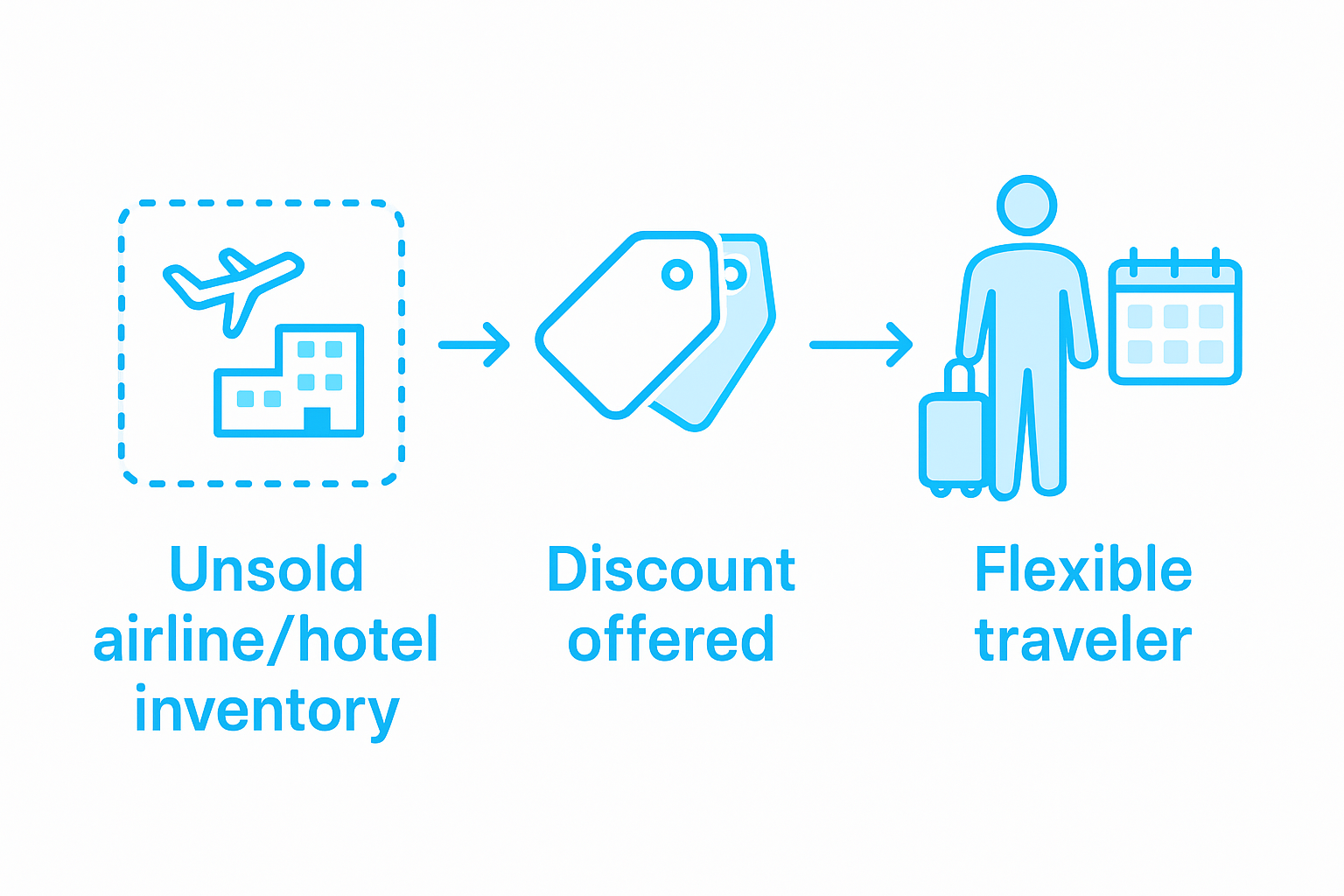
Opaque travel inventory creates unique opportunities for specific traveler profiles who prioritize cost savings over rigid travel preferences. Price-sensitive individuals with flexible schedules and adaptable expectations stand to gain the most from last-minute deals, transforming potential travel limitations into significant financial advantages.
Several traveler categories emerge as prime beneficiaries of spontaneous travel opportunities:
- Solo travelers with minimal planning requirements
- Freelancers and remote workers with location independence
- Retirees with unstructured schedules
- Students seeking budget-friendly adventure
- Professionals with flexible work arrangements
Overselling strategies introduce additional potential benefits for savvy travelers. When travel providers overbook services, flexible passengers can negotiate compensation, upgrades, or alternative arrangements. This scenario rewards travelers who maintain a relaxed approach to travel planning and demonstrate patience during unexpected circumstances.
Successful last-minute deal hunters share common characteristics: adaptability, quick decision-making skills, minimal destination constraints, and a willingness to embrace spontaneity. By remaining open to alternative travel dates, destinations, and accommodation types, these travelers transform potential travel obstacles into opportunities for extraordinary experiences at remarkable prices.
Risks, Limitations, and How to Avoid Pitfalls
Overselling risks represent a significant challenge for travelers pursuing last-minute deals, potentially creating unexpected complications in travel plans. While these opportunities offer attractive pricing, they simultaneously introduce complex scenarios that require careful navigation and proactive strategic planning.
Key risks associated with last-minute travel deals include:
- Potential service denial
- Limited seat or room availability
- Non-negotiable booking conditions
- Restricted refund possibilities
- Minimal customer support options
Strategic precautions can help mitigate potential problems. Travelers should maintain flexible schedules, maintain multiple backup options, and thoroughly understand booking terms. Opaque travel inventory demands extra vigilance, as booking details remain partially concealed until after purchase. Recommended protective measures include:
- Reading fine print meticulously
- Maintaining travel insurance
- Keeping documentation of all transactions
- Understanding cancellation policies
- Having alternative travel arrangements prepared
Successful last-minute deal hunters recognize that risk management is as crucial as finding attractive pricing. By approaching these opportunities with informed caution and comprehensive preparation, travelers can transform potential pitfalls into manageable challenges, ensuring a smoother, more predictable travel experience despite the inherent uncertainties of spontaneous bookings.
Unlock Last-Minute Travel Savings with Confidence
Navigating the world of last-minute deals can feel overwhelming with challenges like opaque travel inventory and unpredictable overselling practices. If you want to save big but worry about hidden conditions or limited availability, you are not alone. Understanding these complexities is the first step toward turning spontaneity into an unbeatable advantage. At PilotTravelDeals.com, we specialize in helping travelers like you cut through the confusion by aggregating the best flight and hotel offers, so you can find those elusive last-minute bargains without sacrificing peace of mind.

Take control of your travel plans today by exploring discounted options on our Miscellaneous category page where valuable tips and diverse deals meet. With our user-friendly platform, monitor dynamic pricing and customize your travel packages with confidence. Don’t wait until prices rise or availability disappears – start comparing last-minute deals now at PilotTravelDeals.com and secure your next adventure while maximizing savings.
Frequently Asked Questions
What are last-minute deals in travel?
Last-minute deals refer to discounted travel opportunities offered by airlines, hotels, and travel services for unsold inventory close to the departure date, allowing travelers to save money while helping businesses minimize revenue loss.
How do last-minute deals work?
Last-minute deals utilize dynamic pricing algorithms to adjust rates based on real-time inventory and demand. When services like flights or hotel rooms go unsold, these algorithms activate to offer reduced prices, often through specialized platforms.
What types of services offer last-minute deals?
Last-minute deals are available for various travel services including flights, hotel accommodations, car rentals, and comprehensive travel packages that can be customized using dynamic packaging options.
Who benefits most from last-minute deals?
Travelers who are price-sensitive and flexible, such as solo travelers, remote workers, retirees, students, and professionals with adaptable schedules, are the primary beneficiaries of last-minute deals, allowing them to take advantage of significant savings.