

Over fifty percent of American professionals experience unexpected disruptions or safety concerns during work trips. Business travel is filled with hidden risks that can catch even seasoned travelers off guard, from health emergencies to digital security threats. Understanding the real essentials of business travel safety means protecting yourself and your organization with preparation that goes far beyond booking flights or hotels. This guide uncovers the practical strategies every American business traveler should know to reduce risks and stay secure.
Table of Contents
- Defining Business Travel Safety Essentials
- Common Risks And Misconceptions In Business Trips
- Pre-Trip Preparation And Research Steps
- Digital Security And Protecting Sensitive Data
- Insurance, Health, And Emergency Protocols
- Avoiding Scams And Mitigating Local Threats
Key Takeaways
| Point | Details |
|---|---|
| Employ Comprehensive Risk Assessment | Conduct thorough destination-specific research to identify potential risks and develop tailored mitigation strategies before business travel. |
| Ensure Robust Health and Emergency Protocols | Maintain detailed health insurance coverage and emergency contact documentation to safeguard against unforeseen medical challenges. |
| Prioritize Digital Security | Implement strong cybersecurity measures such as VPNs and encrypted communications to protect sensitive information during travel. |
| Cultivate Personal Safety Awareness | Remain vigilant and adapt to local environments by minimizing visible displays of wealth and adhering to local laws and cultural practices. |
Defining Business Travel Safety Essentials
Business travel safety represents a comprehensive approach to mitigating risks and protecting travelers during professional journeys. At its core, business travel safety involves strategic planning, awareness, and proactive risk management techniques designed to safeguard individuals across diverse travel environments. Understanding essential travel safety principles requires recognizing potential threats and developing systematic strategies to address them effectively.
Comprehensive business travel safety encompasses multiple critical dimensions, including personal security, health protection, communication protocols, and emergency preparedness. Travelers must evaluate risks associated with destination-specific challenges, transportation methods, accommodation standards, and potential geopolitical or health-related disruptions. Detailed travel safety guidance suggests implementing a multilayered approach that integrates preventative measures, real-time monitoring, and rapid response capabilities.
Key components of business travel safety strategies include:
- Comprehensive pre-travel risk assessments
- Emergency contact documentation
- Secure communication protocols
- Health and medical preparation
- Personal security awareness training
- Travel insurance with robust medical and evacuation coverage
Pro Tip – Safety Preparation: Always conduct thorough destination research and register with your country’s travel advisory service at least one week before international business trips, ensuring you have immediate access to official support networks if unexpected situations arise.
Pro Emergency Protocol: Maintain digital and physical copies of critical documents like passport, visa, insurance cards, and emergency contact information, storing them separately to ensure backup access during unexpected events.
Common Risks and Misconceptions in Business Trips
Business travel encompasses numerous potential risks that many professionals underestimate or misunderstand. Comprehensive risk assessments reveal multiple challenges facing modern business travelers, ranging from geopolitical uncertainties to complex health and safety considerations. Travel risks are not uniform and require nuanced understanding beyond simplistic assumptions about professional journeys.
Common misconceptions about business travel safety can create significant vulnerabilities for travelers. Many professionals mistakenly believe that corporate travel automatically ensures comprehensive protection, overlooking critical personal responsibility factors. These misconceptions include assuming all destinations are equally safe, believing travel insurance provides complete coverage, and underestimating the importance of personal situational awareness. Geopolitical instability, economic fluctuations, and rapidly changing global health environments demand sophisticated risk management strategies.
Key risks business travelers frequently encounter include:
- Cybersecurity threats during international travel
- Potential health exposure in different environmental contexts
- Financial risks related to currency fluctuations
- Communication infrastructure challenges
- Unexpected legal and regulatory complications
- Personal safety concerns in unfamiliar territories
Pro Tip – Risk Awareness: Always conduct comprehensive destination-specific research and develop a personalized risk mitigation strategy at least two weeks before international business travel, focusing on understanding local conditions and potential challenges.
Pro Emergency Preparedness: Maintain a digital emergency kit with encrypted copies of essential documents, emergency contact information, and contingency plans accessible from multiple secure platforms.
Below is a summary of how different business travel risk areas impact both the traveler and the organization:
| Risk Area | Traveler Impact | Organizational Impact |
|---|---|---|
| Health and Medical | Exposure to illness, stress, fatigue | Productivity loss, liability |
| Cybersecurity | Data theft, privacy breaches | Reputational damage, fines |
| Legal/Regulatory | Fines, arrest, delayed movement | Legal exposure, disrupted ops |
| Geopolitical Instability | Personal safety, trip delays | Project disruption, extra cost |
| Financial (Currency) | Unexpected expenses, budgeting issues | Policy violations, overspend |
| Communication Failures | Isolation, lost support | Reduced oversight, data gaps |
| Scams/Local Threats | Personal loss or endangerment | Security breaches, litigation |
Pre-Trip Preparation and Research Steps
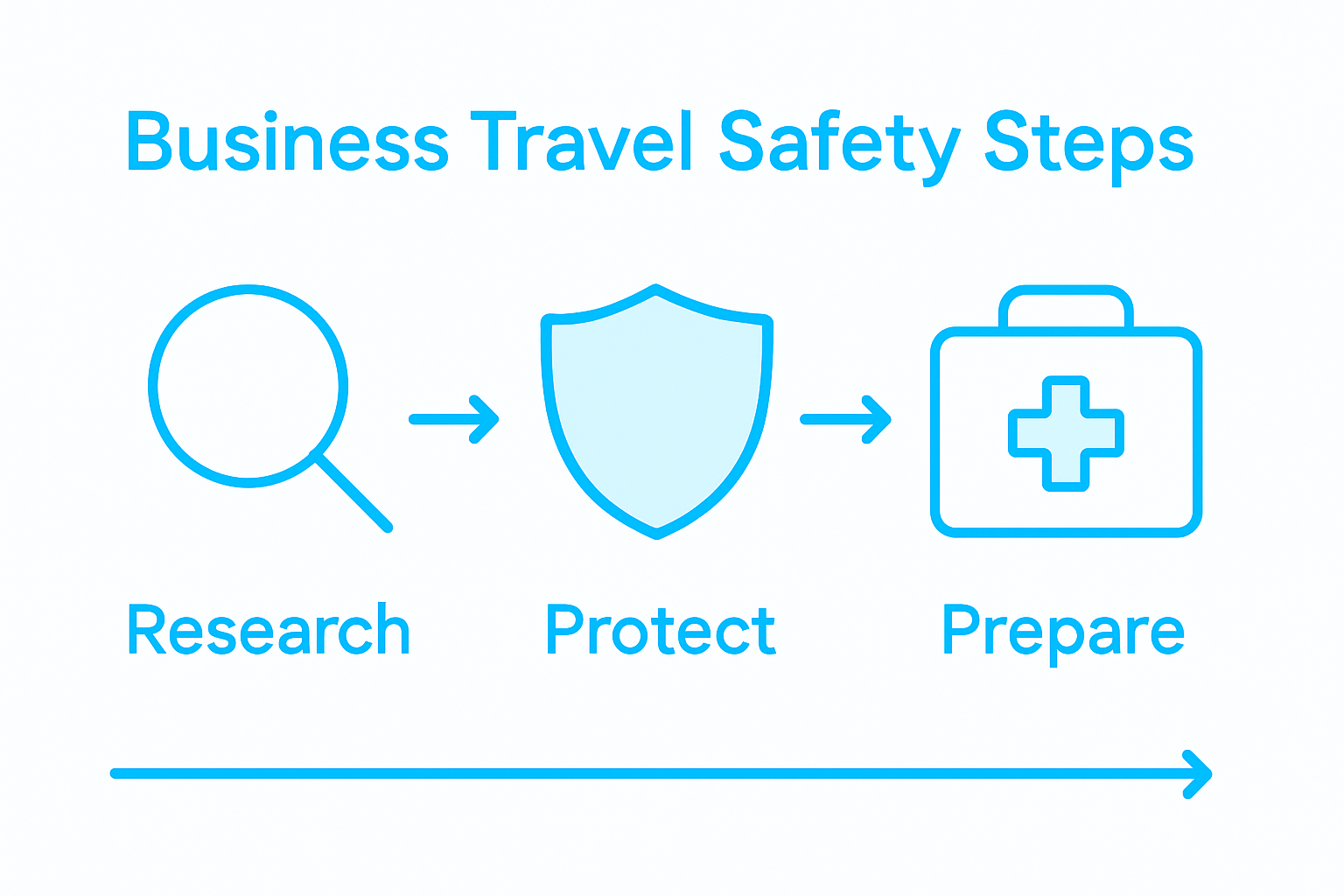
Business travel preparation demands comprehensive research and strategic planning to ensure traveler safety and operational effectiveness. Establishing robust corporate travel risk management protocols involves a multifaceted approach that goes far beyond basic logistical arrangements. Successful preparation requires systematic evaluation of potential risks, understanding destination-specific challenges, and developing adaptive strategies that protect both individual travelers and organizational interests.

Effective pre-trip research encompasses several critical dimensions. Business travelers must conduct thorough investigations into local legal frameworks, cultural norms, healthcare infrastructure, and potential security threats. Comprehensive international travel preparation involves understanding intricate details about destination-specific regulations, communication protocols, and potential data security vulnerabilities that could compromise personal and organizational information.
Key pre-trip preparation steps include:
- Comprehensive destination risk assessment
- Detailed itinerary documentation
- Emergency contact verification
- Health and medical insurance validation
- Communication strategy development
- Technology and data security protocols
- Cultural and legal research for specific regions
- Backup documentation preparation
Pro Tip – Destination Intelligence: Allocate minimum two hours for thorough destination research, focusing on recent geopolitical developments, health advisories, and local security conditions before finalizing your travel arrangements.
Pro Digital Security: Create encrypted digital backups of critical documents and implement two-factor authentication on all professional communication platforms before international travel.
Digital Security and Protecting Sensitive Data
Digital security during business travel represents a critical defense against increasingly sophisticated cybersecurity threats. Comprehensive strategies for protecting sensitive information have become essential for professionals navigating complex technological landscapes. Modern business travelers must implement robust digital protection protocols that safeguard both personal and organizational data across multiple potential vulnerability points.
Cybercriminals frequently target business travelers through sophisticated digital infiltration techniques, exploiting public networks, unsecured devices, and communication vulnerabilities. Professionals must develop multilayered security approaches that include advanced encryption methods, secure communication channels, and proactive risk mitigation strategies. Understanding potential digital threats requires continuous education and adaptive technological practices that anticipate emerging security challenges.
Key digital security practices for business travelers include:
- Using virtual private network (VPN) connections
- Disabling automatic Wi-Fi connections
- Implementing strong, unique passwords
- Utilizing multi-factor authentication
- Encrypting sensitive digital documents
- Avoiding public charging stations
- Maintaining updated security software
- Minimizing data transmission in unsecured environments
Pro Tip – Digital Defense: Always treat public internet connections as potentially compromised networks, using dedicated secure communication channels and encrypted connections for all professional communications.
Pro Cybersecurity Protocol: Activate complete device encryption and remote wipe capabilities before international travel, ensuring comprehensive protection against potential unauthorized access.
Here is a reference table highlighting common digital security threats and practical preventive measures for business travelers:
| Digital Threat | Example Situation | Key Prevention Step |
|---|---|---|
| Unsecured Wi-Fi Attacks | Connecting at airports or hotels | Always use a VPN connection |
| Phishing Attempts | Fake emails requesting credentials | Verify sender identity and links |
| Device Theft | Laptop stolen in public place | Enable password protection and remote wipe |
| Shoulder Surfing | Viewing sensitive data in public | Use privacy screen and caution |
Insurance, Health, and Emergency Protocols
Business travel health management requires a comprehensive approach that addresses the complex intersection of physical, psychological, and logistical challenges. Global risk mitigation strategies have become increasingly sophisticated, recognizing the multifaceted nature of traveler well-being beyond traditional medical considerations. Professionals must develop holistic protocols that protect their health, financial interests, and personal security across diverse and unpredictable travel environments.
Frequent business travel significantly impacts individual health, extending far beyond immediate medical concerns. Comprehensive health research reveals the profound physiological and psychological consequences of repeated travel, highlighting the critical need for proactive health management strategies. Business travelers must consider long-term wellness implications, including stress management, sleep disruption, nutritional challenges, and potential exposure to varied environmental and health risks.
Key insurance, health, and emergency protocol components include:
- Comprehensive international health insurance coverage
- Detailed medical evacuation provisions
- Robust emergency contact documentation
- Destination-specific health risk assessments
- Vaccination and medical preparation strategies
- Mental health support resources
- Emergency communication protocols
- Financial protection mechanisms
Pro Tip – Health Preparedness: Develop a personalized travel health kit that includes essential medications, digital copies of medical records, and emergency contact information, ensuring comprehensive health protection before departure.
Pro Emergency Planning: Create a digital emergency folder with encrypted access containing comprehensive medical information, insurance details, and emergency contact protocols, accessible from multiple secure platforms.
Avoiding Scams and Mitigating Local Threats
Local threat management represents a critical component of comprehensive business travel safety strategies. Understanding international travel risk landscapes requires sophisticated awareness and proactive defensive approaches that extend beyond traditional safety considerations. Business travelers must develop nuanced strategies that anticipate and neutralize potential threats across diverse cultural and geographical contexts.
Global travel risk assessments reveal increasingly complex threat environments that demand strategic, multidimensional protection protocols. Scammers and local criminal networks frequently target business travelers through sophisticated psychological manipulation techniques, exploiting communication gaps, cultural misunderstandings, and technological vulnerabilities. Professionals must cultivate situational awareness, recognizing potential threat indicators and developing adaptive response mechanisms.
Key strategies for avoiding scams and mitigating local threats include:
- Conducting comprehensive destination research
- Understanding local legal frameworks
- Maintaining situational awareness
- Minimizing visible displays of wealth
- Using secure transportation options
- Verifying professional credentials independently
- Establishing communication protocols with home office
- Developing emergency response strategies
- Utilizing trusted local contacts
- Practicing conservative communication practices
Pro Tip – Threat Awareness: Always maintain a low profile in unfamiliar environments, avoiding unnecessary attention and preserving personal safety through strategic, measured interactions.
Pro Safety Protocol: Create a dynamic risk assessment checklist specific to each travel destination, updating it regularly with current intelligence and local safety recommendations.
Stay Safe and Save on Your Next Business Trip with PilotTravelDeals.com
Navigating the challenges of business travel safety requires more than just awareness it demands smart planning and secure travel options that protect both your well-being and your budget. With concerns ranging from cybersecurity threats to emergency preparedness, finding trusted travel deals paired with reliable resources makes a significant difference. Our site offers a seamless way to access multiple flight and hotel deals while providing valuable insights on safety and smart travel choices in our Travel Tips section.

Take control of your next professional journey by securing top discounts at PilotTravelDeals.com. Explore carefully curated offers on airline tickets, hotels, and more so you can focus on staying secure and productive. Start planning today with our comprehensive travel resources and discover how easy it can be to travel smarter and safer. Visit Miscellaneous for additional tips that complement your safety strategies.
Frequently Asked Questions
What are the essential pre-travel safety preparations for business trips?
Conduct thorough research on your destination, including legal frameworks, healthcare infrastructure, cultural norms, and potential security threats. Additionally, prepare an emergency contact list, validate your health insurance, and develop a communication strategy.
How can I ensure my digital security while traveling for business?
To protect sensitive information, use a virtual private network (VPN) when connecting to public Wi-Fi, implement multi-factor authentication, and avoid public charging stations. Regularly update security software and encrypt sensitive documents.
What should I do in case of an emergency during a business trip?
Maintain a digital emergency kit that includes copies of critical documents, insurance details, and emergency contact information. Familiarize yourself with local emergency services and establish a communication protocol with your home office before traveling.
How can I mitigate the risks of scams and local threats while traveling?
Practicing situational awareness is crucial. Conduct comprehensive research on your destination, minimize displays of wealth, and use secure transportation options. Establish communication protocols with trusted local contacts and remain cautious in unfamiliar environments.
Recommended
- Understanding the Essentials of Business Travel Booking Guide – PilotTravelDeals.com
- Understanding International Travel Tips for Savvy Explorers – PilotTravelDeals.com
- 7 Essential Steps for Your Travel Planning Checklist – PilotTravelDeals.com
- Solo Traveler Booking Guide: Everything You Need to Know – PilotTravelDeals.com


