Over 60 percent of American families report that trip cancellations or changes have cost them hundreds of dollars. When travel plans shift without warning, being locked into strict reservation policies can turn excitement into financial stress. Flexible booking options are changing the game for solo adventurers and families by offering the power to adapt schedules with less risk and more confidence. This guide clears up myths and reveals practical ways budget-focused travelers can protect their savings while keeping adventures within reach.
Table of Contents
- Flexible Booking Defined And Common Myths
- Major Types Of Flexible Booking Options
- How Flexible Booking Works For Travelers
- Benefits And Drawbacks For Budget Travelers
- Comparing Flexible Booking To Traditional Reservations
Key Takeaways
| Point | Details |
|---|---|
| Flexible Booking Offers Greater Control | Travelers can modify travel arrangements with minimal financial penalties, unlike traditional reservations. |
| Different Flexible Booking Options Available | Options include free cancellation, Cancel for Any Reason (CFAR), and no-penalty rescheduling, catering to various traveler needs. |
| Technological Innovations Enhance Flexibility | Advanced booking systems allow real-time modifications, making travel planning more efficient and responsive. |
| Budget Travelers Should Assess Costs | Flexible bookings may have higher upfront costs, requiring careful cost-benefit analysis to avoid unexpected expenses. |
Flexible Booking Defined and Common Myths
Flexible booking represents a transformative approach to travel reservations that empowers travelers with unprecedented control and adaptability. At its core, flexible booking allows travelers to modify their travel plans with minimal financial penalties, addressing the unpredictability of modern travel schedules. Unlike traditional rigid reservations, this approach provides travelers with the freedom to adjust dates, cancel trips, or change arrangements without facing substantial economic consequences.
The emergence of flexible booking policies has been driven by increasing global uncertainties and travelers’ evolving needs. Flexible booking policies typically include features like free cancellation windows and Cancel for Any Reason (CFAR) options. These provisions offer peace of mind by reducing financial risks associated with last-minute changes. While such flexible options might initially cost slightly more, they ultimately provide significant value by protecting travelers from unexpected disruptions.
Common myths about flexible booking often prevent travelers from taking advantage of these beneficial arrangements. Many people mistakenly believe that flexible bookings are prohibitively expensive or complicated. In reality, modern flexible booking approaches support sustainable tourism and enhance customer experiences through technological integration. These policies balance the needs of both travelers and service providers, creating a more responsive and user-friendly travel ecosystem.
Pro tip: Always carefully read the specific terms of flexible booking policies, as each provider may have unique conditions and limitations.
Major Types of Flexible Booking Options
Flexible booking offers travelers multiple strategic options designed to provide financial protection and travel adaptability. Major booking policies typically include three primary categories that cater to different traveler needs and risk tolerances: free cancellation, Cancel for Any Reason (CFAR), and no-penalty rescheduling.
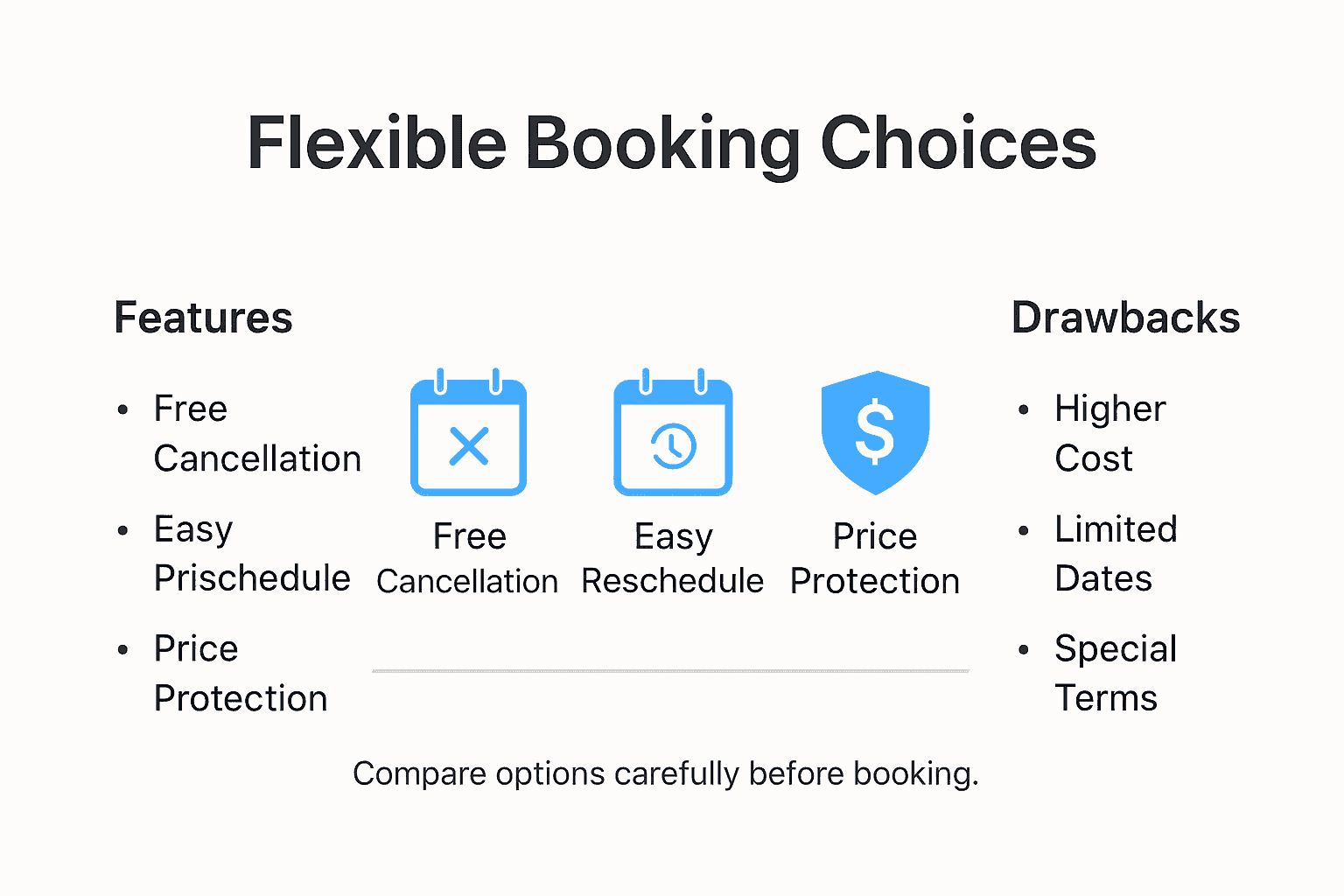
The free cancellation option allows travelers to cancel their reservations within a specific timeframe without incurring financial penalties. This approach provides a safety net for travelers who might need to adjust plans due to unexpected circumstances. Cancel for Any Reason (CFAR) takes flexibility a step further, enabling travelers to cancel trips for any reason and receive partial or full refunds. Flexible booking technologies have made these options increasingly sophisticated, supporting real-time modifications and enhancing overall traveler convenience.
No-penalty rescheduling represents another critical flexible booking option, permitting travelers to change travel dates without additional fees. This approach is particularly valuable for individuals with unpredictable schedules or those facing potential work or personal life disruptions. Different providers offer varying levels of flexibility, with some allowing date changes within a specific window and others providing more extensive modification options.
Pro tip: Always carefully document the specific terms of your flexible booking policy, as conditions can vary significantly between different travel providers and reservation types.
Here’s a concise look at the main flexible booking options and whom they best serve:
| Option Type | Typical Benefits | Common Limitations | Best For |
|---|---|---|---|
| Free Cancellation | Full refund within time window | Short cancellation period | Solo & family travelers |
| Cancel for Any Reason | Refund for any reason | Partial refund may apply | High-risk trips |
| No-Penalty Rescheduling | Date change without fees | Limited rescheduling window | Business travelers |
How Flexible Booking Works for Travelers
Flexible booking technologies have revolutionized travel planning by empowering travelers with unprecedented control over their reservations. At its core, this system allows individuals to modify, reschedule, or cancel travel arrangements with minimal financial consequences. Unlike traditional booking models that penalize changes, flexible booking creates a more adaptive approach that responds to the unpredictable nature of modern travel.
The mechanism of flexible booking operates through sophisticated digital platforms that use advanced analytics and real-time data processing. Reservation modification typically involves several key steps: checking the specific policy terms, identifying available change windows, and executing modifications through online interfaces or customer service channels. Business travelers especially benefit from these systems, as corporate travel policies increasingly prioritize adaptability and cost management.
Technological innovations have transformed flexible booking from a niche service to a standard expectation for travelers. Modern booking systems integrate complex algorithms that assess risk, calculate potential refund amounts, and provide instantaneous modification options. These platforms consider factors like booking time, travel dates, and specific provider policies to create personalized flexibility frameworks that protect both travelers and service providers.
Pro tip: Always screenshot or save digital confirmation of your flexible booking policy details to ensure you have proof of the specific terms and conditions.
Benefits and Drawbacks for Budget Travelers
Flexible booking strategies offer budget travelers a nuanced approach to managing travel expenses and minimizing financial risks. The primary advantage lies in the ability to adapt travel plans without incurring substantial penalties, providing a safety net for travelers with unpredictable schedules or limited financial resources. By reducing the potential for significant monetary losses, these booking methods transform how budget-conscious individuals plan and execute their travel experiences.
However, the flexibility comes with notable trade-offs that budget travelers must carefully evaluate. Upfront costs for flexible booking options are typically higher compared to standard reservations, which can strain tight travel budgets. Budget travel financial strategies suggest that travelers must perform a careful cost-benefit analysis, weighing the potential savings from avoiding change or cancellation fees against the initial price premium. Some flexible booking options might include partial refund clauses or restrictions that could limit their perceived value.

The complexity of flexible booking policies requires budget travelers to become savvy consumers. Different providers offer varying levels of flexibility, with some presenting more restrictive terms than others. Travelers must scrutinize the fine print, understanding specific conditions like blackout dates, refund percentages, and modification windows. This careful approach allows budget travelers to maximize the benefits while mitigating potential financial risks associated with travel planning.
Pro tip: Create a detailed spreadsheet comparing flexible booking costs and potential change fees to determine the most economical option for your specific travel scenario.
Comparing Flexible Booking to Traditional Reservations
Online booking systems have fundamentally transformed travel reservations, creating a stark contrast with traditional booking methods. Unlike conventional approaches that require phone calls or in-person interactions, modern flexible booking provides travelers with unprecedented control, transparency, and convenience. Reservation flexibility now means instant access, real-time modifications, and the ability to adjust travel plans with minimal financial penalties.
Traditional reservations typically enforced rigid rules with strict cancellation policies and hefty change fees. In contrast, flexible booking strategies offer a more traveler-centric approach. The key differences emerge in several critical areas: booking accessibility, modification options, and financial risk management. While traditional methods often required direct human interaction and limited changes, modern booking platforms enable 24/7 modifications, instant confirmations, and more forgiving adjustment policies.
Technological advancements have been instrumental in reshaping reservation dynamics. Modern booking systems leverage sophisticated algorithms and real-time data processing to provide travelers with more intelligent, responsive booking experiences. These platforms not only offer greater flexibility but also improve overall transparency, allowing travelers to make more informed decisions. The shift represents more than a technological upgrade; it signifies a fundamental reimagining of how travel reservations can serve customer needs.
This table highlights key differences between flexible and traditional booking approaches:
| Aspect | Flexible Booking | Traditional Booking | Impact on Traveler |
|---|---|---|---|
| Modification Process | Online, instant | Manual, often delayed | Faster changes, less hassle |
| Financial Risk | Reduced, protected | Higher, strict penalties | Lower unexpected expenses |
| Transparency | Clear, detailed terms | Often complex or unclear | Easier decision-making |
| Accessibility | 24/7 digital access | Limited hours, phone only | Global ease of management |
Pro tip: Compare the specific modification and cancellation policies of different booking platforms before making your final reservation to understand the true extent of their flexibility.
Unlock Travel Freedom with Flexible Booking and Smart Savings
Planning a trip is exciting but can become stressful when plans change unexpectedly. This article highlights the importance of flexible booking options that give you control to modify or cancel reservations with minimal fees. If you want to avoid costly penalties and maximize your travel freedom while staying on budget explore how the right deals and policies can protect your savings.
At PilotTravelDeals.com, we understand that flexibility and affordability are key. Our platform aggregates the best offers on flights, hotels, and travel essentials so you can compare and choose options that come with flexible cancellation, no-penalty rescheduling, or other traveler-friendly policies. Don’t let complicated booking terms or hidden fees ruin your plans. Discover how easy it is to find travel deals designed for adaptability in our Miscellaneous section and take advantage of options that fit your lifestyle.

Ready to experience unmatched travel freedom and savings? Visit PilotTravelDeals.com now to explore flexible booking deals and enjoy peace of mind on your next adventure. Start planning smarter today and book with confidence knowing you have the power to adjust your trip without the worry of losing your investment.
Frequently Asked Questions
What is flexible booking?
Flexible booking is a travel reservation approach that allows travelers to modify their plans with minimal financial penalties, enabling adjustments such as cancellations or date changes without substantial costs.
How do I know if a booking option is flexible?
To determine if a booking option is flexible, carefully review the specific terms provided by the travel provider, including features like free cancellation, Cancel for Any Reason (CFAR), and no-penalty rescheduling.
What are the benefits of using flexible booking for budget travelers?
For budget travelers, flexible booking offers the advantage of adapting travel plans without incurring heavy penalties, thereby reducing financial risks and allowing for better management of unpredictable schedules.
Are there any drawbacks to flexible booking?
Yes, while flexible booking offers advantages, it typically comes with higher upfront costs compared to traditional reservations, which may strain a tight travel budget. Additionally, specific terms and conditions can vary significantly by provider, requiring careful scrutiny.