Most American solo travelers discover quickly that budgeting isn’t just about pinching pennies. Planning a cost-effective trip means knowing exactly where every dollar goes, especially when unexpected costs add up faster than you think. With over 45% of travelers citing financial stress as their top concern, understanding the essentials of smart travel budgeting can make every journey smoother. Find practical strategies and proven advice for making your money last from Southeast Asia to European cities.
Table of Contents
- Travel Budgeting Fundamentals For Solo Trips
- Types Of Travel Expenses To Consider
- Creating And Adjusting Your Trip Budget
- Finding And Comparing Travel Deals Online
- Avoiding Hidden Costs And Common Mistakes
Key Takeaways
| Point | Details |
|---|---|
| Effective Budgeting is Essential | Solo travelers must strategically manage expenses across categories like accommodation, meals, and transportation to avoid financial strain. |
| Adaptability is Key | Regularly adjust your budget and track spending using mobile apps to maintain financial control during your trip. |
| Research for Hidden Costs | Anticipate potential hidden expenses such as roaming charges and foreign transaction fees to protect your budget. |
| Leverage Technology for Savings | Use travel reward credit cards, comparison websites, and budget tracking tools to maximize savings and manage expenses effectively. |
Travel budgeting fundamentals for solo trips
Solo travel demands precise financial planning, especially when you’re responsible for managing every expense independently. Understanding your financial baseline becomes crucial for successful independent trips, requiring strategic preparation and smart money management techniques.
Building an effective solo travel budget involves several key components. First, assess your total available funds and break them down into essential categories like transportation, accommodation, food, activities, and emergency reserves. Consider creating separate digital or physical envelopes for each expense type, helping you track spending more accurately. Research suggests allocating approximately 40% of your budget to accommodations and transportation, 30% to meals and daily expenses, and reserving 20% as a flexible emergency fund.
Destination selection plays a significant role in budget management. Some locations offer dramatically different cost structures for solo travelers. Southeast Asian countries like Thailand and Vietnam provide incredible experiences at lower prices, while European destinations might require more substantial financial planning. Look for budget-friendly destinations that offer affordable hostels, cheap street food, and free walking tours. Always factor in local transportation costs, which can vary widely between urban and rural regions.

Budget Pro Tip: Use travel reward credit cards and track your spending through mobile apps to maximize savings and get real-time insights into your travel expenses.
Types of travel expenses to consider
Travel expenses encompass multiple critical categories that solo travelers must carefully plan and budget for. Understanding the comprehensive breakdown of travel costs is essential for effective financial management and preventing unexpected financial strain during your journey.
The primary expense categories typically include transportation, accommodation, meals, and miscellaneous costs. Transportation expenses range from international airfare to local transit options like buses, trains, and ride-sharing services. Accommodation costs vary widely depending on your travel style, from budget hostels to mid-range hotels or vacation rentals. Meal expenses can represent a significant portion of your budget, with options ranging from street food and local markets to restaurant dining.
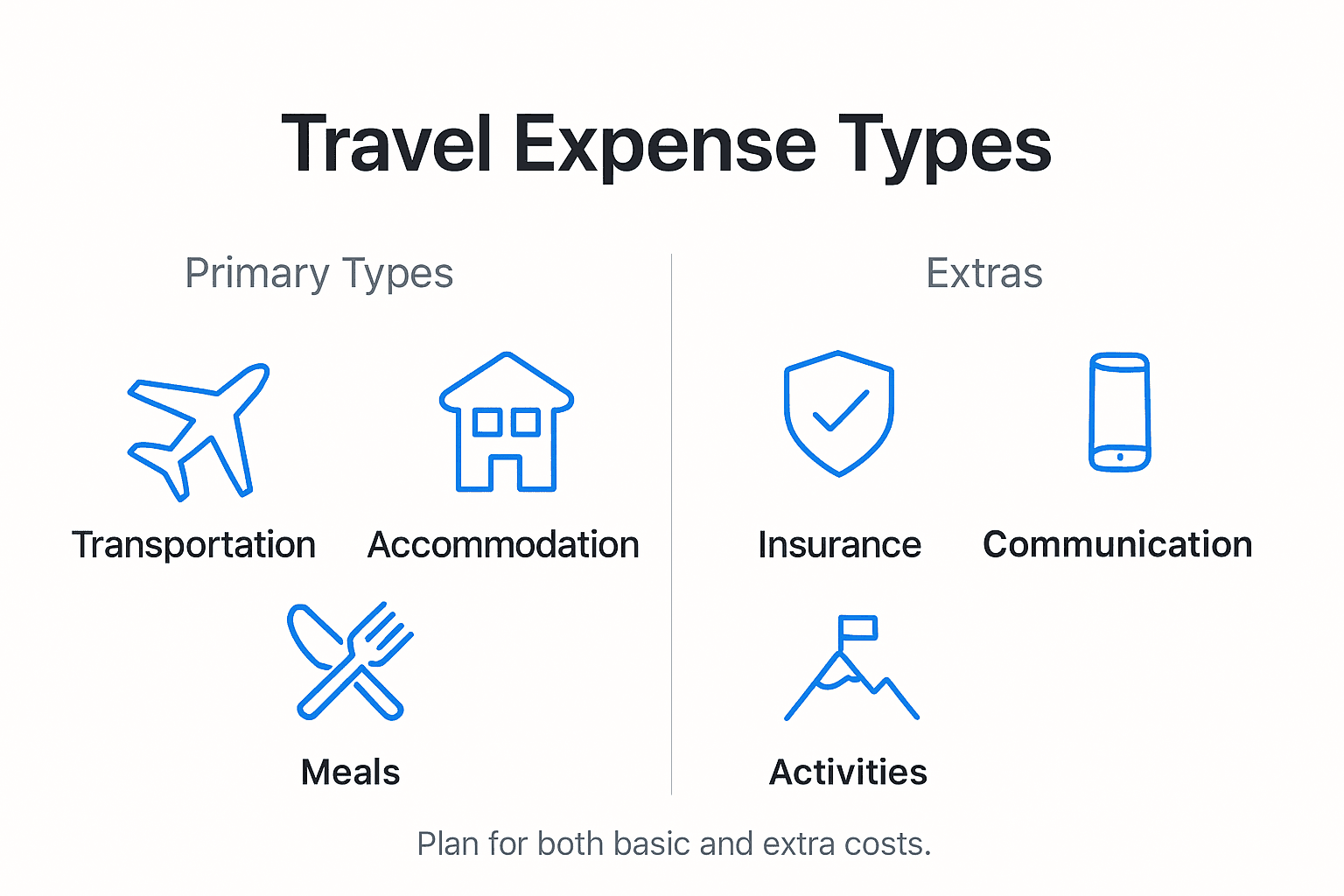
Beyond these primary categories, travelers should also account for additional expenses such as travel insurance, communication costs (international SIM cards or roaming charges), entertainment and activity fees, emergency funds, and potential visa or entry permit expenses. Some often-overlooked costs include local transportation within destinations, currency exchange fees, baggage charges, and personal care items that might be more expensive in foreign locations.
Budget Pro Tip: Create a digital spreadsheet with estimated costs for each expense category and track your actual spending in real-time to maintain financial discipline during your trip.
Here’s a quick comparison of common solo travel expense categories and budgeting strategies:
| Expense Category | Typical Budgeting Method | Major Cost Factors | Savings Strategy |
|---|---|---|---|
| Transportation | Fixed & variable | Flight routes, local transit | Use points, book early |
| Accommodation | Fixed | Location, season, type | Choose hostels, book online |
| Meals | Variable | Eating habits, location | Favor local food markets |
| Activities | Variable | Entry fees, experiences | Seek free tours/events |
| Emergency/Unexpected | Flexible reserve | Medical, lost items | Maintain contingency fund |
Creating and adjusting your trip budget
Developing an effective travel budget requires a strategic approach to financial planning that balances your travel aspirations with fiscal responsibility. The process begins with a comprehensive assessment of your total available funds and a realistic breakdown of potential expenses across different categories.
The initial budgeting process should involve creating detailed fixed and variable cost categories. Fixed costs typically include non-negotiable expenses like international airfare, travel insurance, and essential accommodations. Variable costs encompass daily expenses such as meals, local transportation, activities, and discretionary spending. Experts recommend allocating approximately 50-60% of your total budget to fixed expenses and maintaining 40-50% flexibility for day-to-day spending and unexpected opportunities.
Budget adjustment is a continuous process that requires regular monitoring and strategic modifications. Track your daily expenses using mobile apps or spreadsheets, comparing actual spending against your initial projections. Be prepared to reallocate funds between categories as you travel, cutting back on non-essential expenses to accommodate unexpected costs or exciting opportunities. Some travelers use the 50/30/20 rule: 50% for essential expenses, 30% for experiences and activities, and 20% as a buffer for emergencies or spontaneous adventures.
Budget Pro Tip: Create a digital travel budget spreadsheet with color-coded expense categories and set up daily spending alerts to maintain real-time financial awareness during your trip.
Compare budgeting approaches for flexible, long-term solo travel:
| Approach | Budget Control Level | Adaptability | Best For |
|---|---|---|---|
| Pre-set Categories | High | Moderate | Short, predictable trips |
| Fixed/Variable Split | Moderate | High | Extended travels, uncertainty |
| Daily Tracking | Highest | Very High | Trips with frequent changes |
Finding and comparing travel deals online
Navigating the complex landscape of online travel deals requires strategic research and comparison skills that can potentially save travelers significant amounts of money. Modern travelers have access to numerous digital platforms designed to streamline the deal hunting process, making comprehensive price comparisons more accessible than ever before.
The most effective approach involves using multiple comparison websites and aggregator platforms simultaneously. Different sites often have unique partnerships and algorithms that can yield varying prices for the same travel services. Experienced travelers typically cross-reference at least three to four platforms, including dedicated flight comparison sites, hotel booking platforms, and comprehensive travel deal websites. Pay special attention to sites that offer flexible date searching, price tracking features, and transparent fee structures.
Advanced deal hunters utilize additional strategies beyond simple price comparison. This includes setting up price alerts, being flexible with travel dates, considering alternative airports, and understanding the nuanced pricing structures of different booking platforms. Some travelers leverage meta-search engines that scan multiple booking sites simultaneously, providing a broader view of available pricing options. Timing is also crucial simple price fluctuations can mean hundreds of dollars in savings, so monitoring prices over weeks or months can reveal optimal booking windows.
Budget Pro Tip: Install browser extensions from multiple travel comparison sites to receive instant price notifications and track fare changes in real-time without manually checking multiple websites.
Avoiding hidden costs and common mistakes
Travelers often encounter unexpected expenses that can significantly disrupt their budget planning, making it critical to anticipate and strategically manage potential financial pitfalls. Understanding these hidden costs represents a fundamental skill for budget-conscious travelers seeking to maximize their travel experience while maintaining financial control.
The most prevalent hidden expenses typically fall into several key categories. Mobile data and communication costs can quickly escalate through international roaming charges, with many travelers unknowingly incurring hundreds of dollars in unexpected fees. Foreign transaction fees from credit cards and ATM withdrawals represent another significant hidden expense, often ranging from 3% to 5% per transaction. Many travelers also underestimate local taxes, mandatory service charges, and tipping expectations that vary dramatically between destinations.
Preventing these financial surprises requires meticulous research and proactive planning. Consider purchasing local SIM cards or eSIMs before traveling, selecting bank accounts with zero foreign transaction fees, and thoroughly researching destination-specific financial expectations. Some travelers create a contingency fund specifically designed to absorb unexpected expenses, typically allocating 10-15% of their total travel budget as a buffer against unforeseen costs. Carefully reading the fine print on bookings, understanding cancellation policies, and maintaining flexibility can also help mitigate potential financial risks.
Budget Pro Tip: Create a digital spreadsheet with a dedicated column for potential hidden expenses, updating it continuously during your trip to track and anticipate unexpected financial challenges.
Take Control of Your Travel Budget with Smart Deal Hunting
Managing a travel budget can feel overwhelming when you face unpredictable costs and the challenge of balancing fixed and variable expenses. This article highlights common pitfalls like hidden fees and the need for ongoing budget adjustments — problems that many travelers encounter. If you want to ease those financial worries and maximize your savings, discovering the right deals is essential.
Explore budget-friendly options and time-saving tricks by visiting Travel Tips – PilotTravelDeals.com. Find incredible discounts on flights, hotels, and travel essentials at PilotTravelDeals.com. Ready to book your next adventure without breaking the bank Visit Adventure – PilotTravelDeals.com to unlock the best deals for every travel style. Start saving today and transform your travel dreams into affordable realities.
Frequently Asked Questions
How can I create an effective budget for solo travel?
To create an effective budget for solo travel, assess your total available funds and break them down into categories such as transportation, accommodation, meals, activities, and emergency reserves. It’s advisable to allocate approximately 40% to accommodations and transportation, 30% to meals and daily expenses, and reserve 20% for unforeseen circumstances.
What are some hidden costs to consider when budgeting for travel?
When budgeting for travel, be mindful of hidden costs such as mobile data charges, foreign transaction fees from credit cards, local taxes, and mandatory service charges. It’s important to research these costs before traveling to better prepare your budget.
How can I track my travel expenses while on the road?
You can track your travel expenses using mobile apps or digital spreadsheets. These tools allow you to categorize your spending in real-time, helping you stay within your budget while also making it easy to adjust if unexpected expenses arise.
What budgeting strategies can help me save money on my trip?
Utilizing budgeting strategies such as setting fixed and variable cost categories, maintaining a contingency fund, and continuously tracking your spending can help save money on your trip. Additionally, using travel reward credit cards and taking advantage of travel deals can maximize your savings.
Recommended
- 7 Proven Budget Travel Tips 2025 for Smart Savings – PilotTravelDeals.com
- Understanding the Budget Travel Planning Guide – PilotTravelDeals.com
- Travel Smart: Essential Tips for Affordable Adventures Around the Globe – PilotTravelDeals.com
- Complete Guide to Saving on Travel Costs – PilotTravelDeals.com
- Packing Light for Women: Your Ultimate Travel Guide – Be Juliet
- 5 Simple Tips to Help You Pack Light on Your Next Vacation – Troop London