Booking a trip on a limited budget can feel overwhelming when prices vary so much across destinations and travel dates. For solo travelers aiming to stretch every dollar, knowing where to look and how to compare options makes all the difference. Strategies like leveraging comparison sites that track price history and show the cheapest months to book can lead to significant savings and a richer travel experience in places such as Vietnam, Portugal, or Guatemala. Discover practical ways to identify affordable destinations, research deals, and use timing for the best prices.
Table of Contents
- Step 1: Identify Affordable Travel Destinations
- Step 2: Research and Compare Flight and Hotel Deals
- Step 3: Optimize Booking Strategies for Lowest Prices
- Step 4: Utilize Local Transport and Budget-Friendly Services
- Step 5: Verify Total Costs and Confirm Your Savings
Quick Summary
| Key Insight | Explanation |
|---|---|
| 1. Choose Budget-Friendly Destinations | Focus on regions with low local costs, like Southeast Asia or Eastern Europe, to stretch your travel budget. |
| 2. Use Travel Comparison Platforms | Utilize travel comparison websites for price tracking and alerts to find the best flight and hotel deals. |
| 3. Optimize Booking Timing | Book international flights 47 days in advance and observe trends to secure the lowest fares possible. |
| 4. Utilize Public Transit Options | Leverage local transportation like buses and metros to save money and enhance your travel experience. |
| 5. Track All Travel Expenses | Maintain precise records of all costs to ensure your spending aligns with your budget goals when traveling. |
Step 1: Identify Affordable Travel Destinations
Learning how to identify budget-friendly travel destinations is crucial for maximizing your travel experiences while minimizing expenses. By understanding key factors that influence destination affordability, you can strategically plan trips that offer incredible experiences without breaking the bank.
Research plays a critical role in finding affordable destinations. Global destination affordability research highlights several essential attributes travelers should consider when selecting budget-friendly locations:
- Price level: Compare overall destination costs including accommodations, food, and transportation
- Accessibility: Evaluate flight and transportation expenses to reach the destination
- Local living costs: Examine daily expenses like meals, local transportation, and activities
- Currency exchange rates: Target countries where your money goes further
Some consistently affordable global destinations include Southeast Asian countries like Vietnam, parts of Eastern Europe like Portugal, and Central American nations such as Guatemala. These regions often provide rich cultural experiences with significantly lower daily expenses compared to Western European or North American destinations.
Here’s a summary of how top affordable travel regions compare:
| Region | Typical Daily Budget | Unique Value | Example Countries |
|---|---|---|---|
| Southeast Asia | $25–$40 | Vibrant street food culture | Vietnam, Thailand |
| Eastern Europe | $35–$55 | Historic cities, low lodging | Portugal, Hungary |
| Central America | $30–$50 | Diverse nature opportunities | Guatemala, Nicaragua |
| Western Europe/USA | $70+ | Higher living costs | France, USA |
Budget travelers should prioritize destinations where local costs remain low and travel infrastructure supports economical exploration.
When researching potential destinations, use multiple resources like travel blogs, budget travel websites, and cost-of-living databases to cross-reference pricing information. Look for locations offering:
- Free walking tours
- Affordable public transportation
- Cheap street food options
- Low-cost hostels and budget accommodations
- Destinations with favorable currency exchange rates
Pro tip: Create a spreadsheet comparing potential destinations by tracking average daily costs, accommodation prices, and local transportation expenses to make data-driven travel decisions.
Step 2: Research and Compare Flight and Hotel Deals
Successfully finding budget-friendly travel options requires strategic research and smart comparison techniques. Learning how to efficiently navigate travel deals can save you significant money on your next adventure.
Comparison site experts recommend utilizing comprehensive travel comparison platforms that aggregate prices from multiple airlines and hotels. These platforms offer powerful features to help travelers make informed decisions:
- Price tracking: Monitor historical price trends
- Flexible date searches: Find cheapest travel periods
- Price alerts: Get notifications about significant price drops
- Comprehensive comparisons: View options across multiple providers
Start by creating accounts on reputable travel comparison websites. Focus on platforms that offer comprehensive search capabilities and allow you to filter results based on your specific budget constraints. Look for sites that provide:
- Detailed price breakdowns
- User reviews and ratings
- Transparent fee structures
- Multiple booking options
Smart travelers understand that timing and research are key to unlocking the best travel deals.
When comparing flights and hotels, consider additional factors beyond raw price. Evaluate total trip costs by examining:
- Baggage fees
- Cancellation policies
- Included amenities
- Transportation costs to and from accommodations
- Potential hidden charges
Pro tip: Set up price tracking alerts on multiple comparison sites and create browser notifications to catch unexpected discount windows for your preferred destinations.

Step 3: Optimize Booking Strategies for Lowest Prices
Maximizing travel savings requires strategic booking techniques that go beyond simple price comparison. Understanding the nuanced world of travel pricing can help you secure significant discounts on your next trip.
Optimal booking strategies reveal that timing is everything when hunting for the best travel deals. Research shows that booking windows and specific days can dramatically impact your total trip expenses:
- International flights: Book approximately 47 days in advance
- Domestic flights: Look for deals 3-6 weeks before departure
- Peak season travel: Book earlier to secure better rates
- Off-season destinations: Explore last-minute deals
Develop a strategic booking approach by implementing these advanced techniques:
- Use price tracking tools
- Set up fare alerts
- Compare multiple booking platforms
- Check for promotional codes
- Consider flexible date searches
Savvy travelers understand that booking strategy is as important as the destination itself.
Additional factors to consider when optimizing your booking strategy include:
- Midweek flight departures
- Early morning or late-night flight times
- Avoiding peak travel periods
- Checking alternative nearby airports
- Using incognito browser modes
Pro tip: Create a dedicated email address for travel deals and sign up for multiple airline and travel website newsletters to receive exclusive discount notifications.
Step 4: Utilize Local Transport and Budget-Friendly Services
Transforming your travel experience often starts with smart local transportation choices. Understanding how to navigate public transit and budget services can dramatically reduce your overall trip expenses.
Public transport research reveals critical insights about choosing affordable travel options that maximize both savings and convenience. Successful budget travelers focus on these key strategies:
- Local buses: Often cheapest transportation method
- Metro/subway systems: Faster and more economical than taxis
- Shared ride services: Split costs with other travelers
- City transit passes: Unlimited rides for flat rates
Develop a transportation strategy that prioritizes cost-effectiveness:
- Research local transit apps
- Download offline maps
- Identify multi-ride discount tickets
- Check student or senior discounts
- Compare transportation costs before arriving
Budget travel isn’t about spending less – it’s about spending smarter.
Additional money-saving transportation tips include:
- Walking for short distances
- Renting bicycles for day trips
- Using public transportation during off-peak hours
- Avoiding tourist-targeted transportation services
- Negotiating prices for longer rides
Pro tip: Create a digital folder with screenshots of local transportation routes and pricing to quickly reference offline and avoid roaming charges.
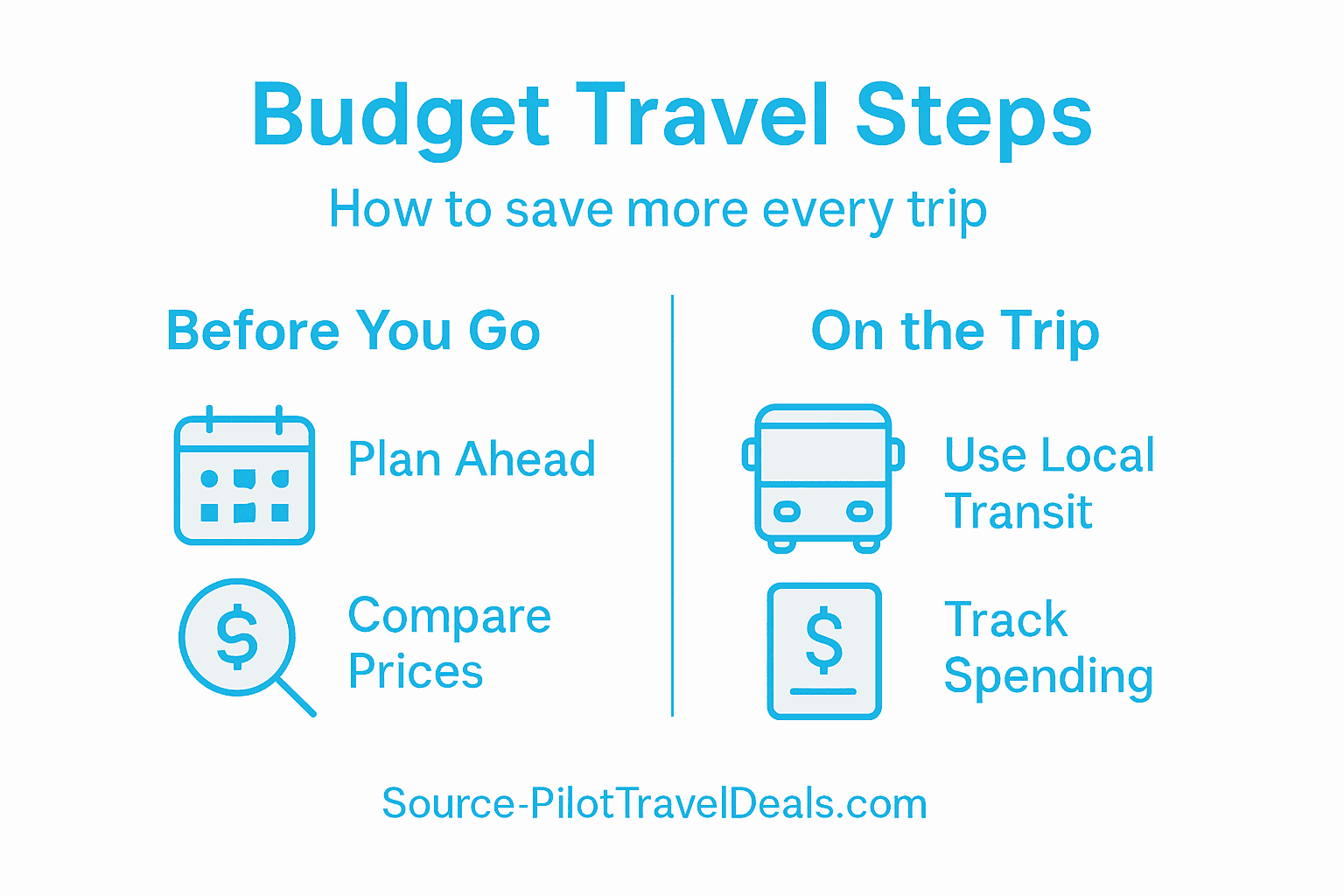
Step 5: Verify Total Costs and Confirm Your Savings
Ensuring you’ve truly saved money requires more than just initial calculations. Comprehensive cost verification is the final critical step in maintaining your travel budget and avoiding unexpected expenses.
Travel cost budgeting research emphasizes the importance of itemizing and tracking every expense carefully. Smart travelers break down their total trip costs into clear, manageable categories:
- Airfare: Total ticket prices including taxes and fees
- Accommodation: Nightly rates plus any additional charges
- Local transportation: Public transit, ride shares, rental costs
- Food and dining: Daily meal expenses
- Activity and entry fees: Tours, attractions, entertainment
Develop a comprehensive cost tracking strategy:
- Create a digital spreadsheet
- Record every expense immediately
- Save all digital and physical receipts
- Compare actual spending against initial budget
- Calculate total trip cost versus initial estimate
Successful budget travel is about precision, not perfection.
Additional verification techniques include:
The table below highlights popular travel expense-tracking tools for budget-conscious travelers:
| Tool Type | Main Advantage | Sample Apps/Services |
|---|---|---|
| Spreadsheet | Full customization | Google Sheets, Excel |
| Budget App | Automatic categorization | Trail Wallet, TravelSpend |
| Receipt Scanner | Tracks physical receipts | Expensify, CamScanner |
| Cloud Folder | Centralizes documents | Google Drive, Dropbox |
- Using budget tracking apps
- Setting up spending alerts
- Reviewing exchange rate impacts
- Checking for unexpected fees
- Documenting all cash transactions
Pro tip: Photograph your receipts and store them in a cloud service with date and location tags to create a permanent, searchable expense record for future travel planning.
Unlock Greater Savings on Budget Travel with PilotTravelDeals.com
Traveling on a budget means facing challenges like finding low-cost flights, affordable accommodations, and smart booking strategies. This article highlights key struggles travelers face such as tracking flight deals, comparing prices, and managing total trip expenses. If your goal is to save more on every trip while enjoying diverse travel options, you need a trusted platform that simplifies these pain points with powerful tools.
Discover how Travel Tips – PilotTravelDeals.com can guide you through proven money-saving strategies.
Take control of your travel spending now by using PilotTravelDeals.com to access expansive deal comparisons across flights, hotels, and more all in one place. Benefit from savings up to 80 percent and make smarter choices with user-friendly navigation designed for budget travelers like you. Start planning today with helpful resources found in our Miscellaneous – PilotTravelDeals.com section and transform your travel dreams into affordable adventures.
Frequently Asked Questions
How can I identify affordable travel destinations?
To identify affordable travel destinations, research key factors such as price levels, accessibility, local living costs, and currency exchange rates. Use travel blogs and cost-of-living databases to compare various options and focus on regions known for low daily expenses.
What are some tips for comparing flight and hotel deals?
To compare flight and hotel deals effectively, utilize comprehensive travel comparison platforms that aggregate prices from various airlines and hotels. Create accounts on these sites to set up fare alerts and monitor price trends, enabling you to identify the best deals quickly.
When is the best time to book flights for maximum savings?
The best time to book flights for maximum savings typically ranges between 47 days in advance for international flights and 3-6 weeks for domestic flights. Aim to book during off-peak seasons to secure lower rates and consider setting up price tracking alerts for additional savings.
How can I reduce local transportation costs while traveling?
To reduce local transportation costs, use public transit options like local buses and metros instead of taxis. Research local transit passes that offer unlimited rides for a flat rate, allowing you to explore more economically throughout your trip.
What strategies can I use to ensure I stay within my travel budget?
To stay within your travel budget, create a digital spreadsheet to track every expense during your trip. Record expenses immediately, compare actual spending against your initial budget, and keep all receipts to maintain accurate financial records.
How can I verify that I’ve saved money on my trip?
To verify your savings, break down your total trip costs into categories such as airfare, accommodation, and daily expenses. Compare these totals with your initial budget and adjust your future planning based on what worked and what didn’t to enhance your budgeting strategy.
Recommended
- 7 Proven Budget Travel Tips 2025 for Smart Savings – PilotTravelDeals.com
- Travel Budgeting – Smart Choices for Affordable Trips – PilotTravelDeals.com
- 8 Smart Ways to Travel for Cheap and Save Big Money – PilotTravelDeals.com
- 7 Smart Steps for an Effective Cheap Travel Checklist – PilotTravelDeals.com