
TL;DR:
- Flexibility, especially with dates and airports, leads to significant flight savings.
- Proper documentation and smart packing prevent costly travel issues and fees.
- Using routing strategies like positioning flights and shoulder seasons maximizes travel affordability.
Cheap overseas flights aren’t a myth. Travelers who use secondary airports save up to 50% compared to those who lock in on one departure city and stick to peak dates. The real barrier isn’t budget, it’s a lack of flexibility and the right tools. This guide walks you through the proven strategies that frequent flyers and deal hunters use every time they book international airfare. From flexible search tools and essential travel documents to packing light and building smarter routes, you’ll find practical, actionable advice that works whether this is your first overseas trip or your fifteenth.
Table of Contents
- Master flexible booking strategies
- Essential travel prep: documents and security
- Pack light and beat baggage fees
- Optimize your route: positioning and shoulder seasons
- The reality: why most budget travelers miss big savings
- Ready to make your next overseas flight cheaper?
- Frequently asked questions
Key Takeaways
| Point | Details |
|---|---|
| Be flexible for lower fares | Changing your dates and using secondary airports can cut overseas flight costs by up to 50%. |
| Prep documents early | Verify passport and visa requirements well before departure to avoid costly errors. |
| Pack light for savings | Traveling with carry-on only on budget carriers prevents surprise baggage fees. |
| Use positioning flights | Routing through cheap domestic flights to international hubs often results in lower total prices. |
| Shoulder season travel | Traveling in low-demand months means better deals and fewer crowds for overseas trips. |
Master flexible booking strategies
The single biggest thing separating budget travelers who score great overseas deals from those who overpay is flexibility. Not just the willingness to be flexible, but knowing exactly where to apply it. Start with searching cheap international flights on tools that show you a full picture of price variation across dates and destinations.
Using Google Flights’ Explore Map, price alerts, and staying flexible with your travel dates and departure airports can dramatically cut what you pay for airfare. The Explore Map lets you set your home airport and a rough budget, then see the world’s cheapest options on an actual map. It’s one of the most underused free tools available to budget travelers.
Airport choice matters more than most people realize. Smaller, secondary airports often have lower landing fees, which carriers pass on to passengers. Here’s a side-by-side look at how major and secondary airports typically compare:
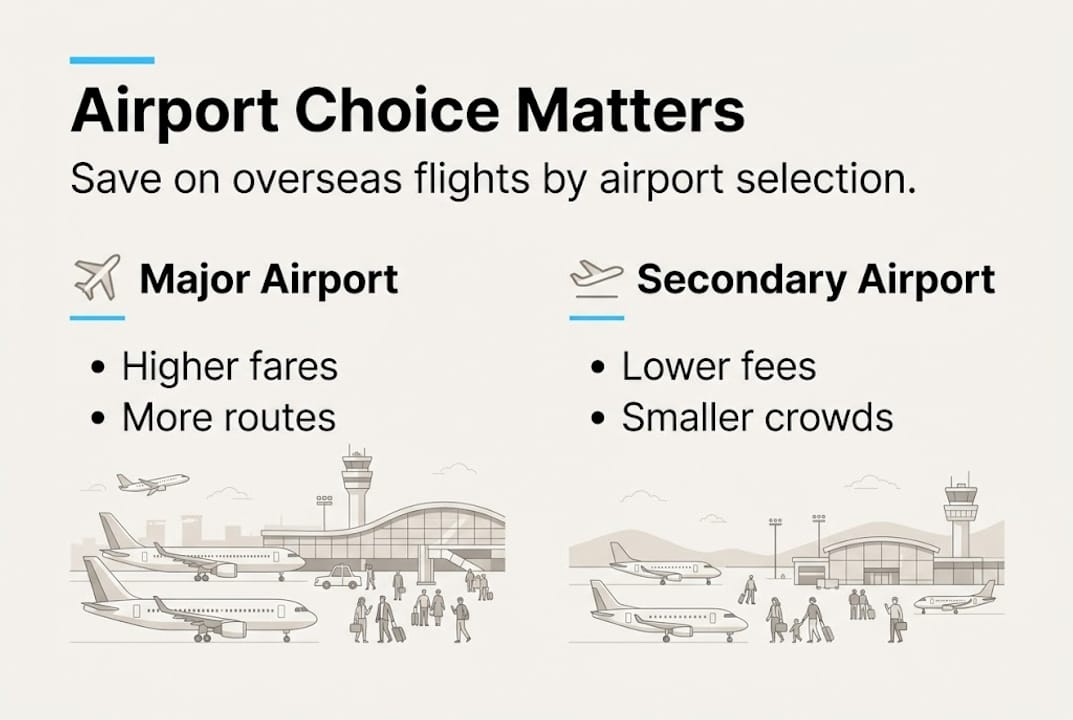
| Factor | Major airport | Secondary airport |
|---|---|---|
| Ticket price | Higher average fare | Up to 50% cheaper |
| Airline variety | More carriers | Fewer but cheaper options |
| Ground transport | Extensive | May require extra planning |
| Parking and fees | Expensive | Often cheaper |
Before you set your dates, search flights first. This is called the Flight First Rule: never lock in your hotel or vacation dates before you’ve confirmed what flights actually cost and when the cheapest windows are. It sounds simple, but most travelers do it backwards. They pick dates, book hotels, then find flights, which eliminates their pricing power.
Here’s a practical booking approach to follow:
- Open Google Flights or a comparison platform and leave your travel dates flexible.
- Set a price alert for your top 2 to 3 destination options.
- Check fares for a 3-day window around your preferred departure.
- Look up secondary airports within 2 hours of your home city.
- Compare total cost including ground transport from secondary airports.
- Book the flight first, then lock in accommodation.
For a deeper breakdown of strategies that consistently work, check out this cheap international flights guide covering everything from search timing to carrier selection.
Pro Tip: Consider using a cheap domestic flight to reach a major international hub with more route options and lower international fares. Flying from a smaller city to a hub like Chicago or Miami before catching an international flight can cut your total cost significantly. These are called positioning flights, and they’re a staple move for deal hunters. You’ll find more examples in our cheap flight expert tips resource.
Essential travel prep: documents and security
After securing a great deal, ensuring you’re fully prepared for international travel is the next crucial step. Nothing kills the excitement of a cheap overseas ticket faster than arriving at the airport with paperwork problems.
The US State Department recommends that your passport be valid for at least 6 months beyond your planned return date, and that you verify visa requirements early, ideally weeks or months before departure. Many countries enforce this 6-month rule strictly, and airlines will deny boarding if your passport doesn’t meet it.
Here’s a documentation checklist every overseas traveler should run through:
- Passport validity: Confirm it won’t expire within 6 months of your return date.
- Visa requirements: Look up the entry rules for your destination country well in advance.
- STEP enrollment: Register with the Smart Traveler Enrollment Program (STEP), a free US State Department service that alerts the nearest embassy if you run into trouble abroad.
- Travel insurance documents: Carry proof of your policy and emergency contact numbers.
- Copies of key documents: Store digital copies in your email and leave physical copies with a trusted contact at home.
- Vaccination or health records: Some countries require proof of vaccination for entry.
The STEP program is one of the most overlooked safety tools for American travelers abroad. It’s free, takes under 10 minutes to register, and gives the US embassy or consulate your itinerary so they can reach you in emergencies like natural disasters, civil unrest, or medical situations.
Documentation mistakes are also surprisingly expensive. A missing visa means a denied boarding, and rebooking a last-minute international flight can cost three to five times what you originally paid. This is why the travel planning checklist on our site prioritizes documents before everything else.
Pro Tip: Double-check entry requirements for your specific destination, not just the country in general. Some regions within a country, or certain nationalities entering that country, face different visa rules. The state department checklist is the most reliable starting point.
Pack light and beat baggage fees
Once your paperwork is sorted, packing is the next area where budget travelers can make or break their savings. Baggage fees on budget international carriers can easily exceed $50 to $100 per bag each way, turning a cheap ticket into an expensive trip before you even land.

Strict baggage policies are a hallmark of budget carriers, and the rules vary widely. Here’s how major and budget airlines typically compare:
| Policy detail | Major carrier | Budget carrier |
|---|---|---|
| Free checked bags | Often 1 to 2 included | Rarely included |
| Carry-on allowance | Up to 22 x 14 x 9 inches | Stricter, often smaller |
| Weight limit (checked) | 50 lbs standard | 44 lbs or less |
| Fee for overweight bags | $50 to $100 | Up to $150 at the gate |
The key to avoiding these fees is packing intentionally. Every item you pack should earn its place in your bag. Experienced budget travelers follow a simple system:
- Lay everything out first: Spread out everything you plan to bring, then eliminate one third of it.
- Choose versatile clothing: Neutral colors that mix and match reduce how many items you actually need.
- Use compression bags: These can cut clothing volume by up to 50%, leaving room for essentials.
- Wear your bulkiest items: Put on your heaviest shoes and thickest layer on travel day.
- Weigh your bag at home: A digital luggage scale costs about $10 and pays for itself on the first trip.
- Check the airline’s specific policy: Do this before you book, not after, since policies differ even between routes on the same carrier.
For a full breakdown of how to avoid baggage fees with smart packing, we’ve mapped out exactly which carriers are strictest and what fits where.
Pro Tip: Use a personal item bag (like a slim backpack) alongside your carry-on to maximize your free luggage allowance. Most airlines allow both, and a well-organized personal item can hold electronics, a change of clothes, and documents, everything you need if your main bag gets gate-checked.
Optimize your route: positioning and shoulder seasons
With your bags packed and passport ready, it’s time to optimize your itinerary for maximum savings and flexibility. Two underused levers here are positioning flights and shoulder season travel.
A positioning flight is a short, cheap domestic or regional flight that gets you to a major international hub with more departure options and lower fares. For example, flying from a smaller city to JFK or LAX before catching a transatlantic flight can cost far less in total than flying direct from a regional airport. Combine this with cheap domestic flight strategies and you can often build a smarter, cheaper two-leg journey.
Shoulder season is the period just before or just after a destination’s peak travel window. It’s when prices drop, crowds thin out, and hotels get more flexible on rates. Think visiting Europe in late April instead of July, or Southeast Asia in October instead of December.
Here’s a step-by-step route optimization plan:
- Identify your destination’s peak season and shift your dates 3 to 6 weeks earlier or later.
- Research budget carriers that serve major hubs near you for the positioning leg.
- Compare total cost of a two-leg itinerary versus a direct flight from your home city.
- Use price alerts on your target international route to track drops.
- Book the international leg first, then the positioning domestic flight.
“Combining alerts, flexibility, budget carriers and shoulder season travel can yield savings of 20 to 50% on overseas flights.”
For even more specific tactics on saving on international tickets, we’ve covered route-by-route strategies that show exactly which combinations work best for US-based travelers.
The reality: why most budget travelers miss big savings
Here’s the uncomfortable truth: most people searching for cheap overseas flights spend 90% of their energy looking at the fare and almost none of it thinking about flexibility. They want a deal on the trip they’ve already mentally booked, and that’s exactly why they miss the real opportunities.
Veteran deal hunters think differently. They start with openness and let the data shape the trip. They’re not looking for a cheap flight to Paris in August; they’re looking for the cheapest flight to Europe in a six-week window. That one mindset shift changes everything.
Budget travelers who combine flexible tools, price alerts, and optimized routes routinely save 20 to 50% compared to those who search with fixed dates and one departure city. The tools are free. The strategies are learnable. What’s missing for most people is the willingness to let the deal lead.
Our recommendation: the next time you’re planning an overseas trip, open your search with no dates set, no hotel booked, and no airport locked in. Let the prices tell you when and where to go. Use expert tips for cheap flights as your guide and you’ll come away with a trip that feels like a score, not a compromise.
Ready to make your next overseas flight cheaper?
You now have the framework: flexible booking, solid documentation, smart packing, and optimized routing. The next step is putting it all in one place where deals, tools, and travel essentials meet.

At PilotTravelDeals.com, you can search and compare flight discount savings across dozens of carriers to find prices that match your real budget. Planning to stay connected abroad? Browse discounted travel SIM cards and avoid paying roaming charges that can quietly double your trip cost. Need accommodation? Check out affordable hotel deals sorted by destination and price so you can book confidently once your flights are set. Everything you need to plan a smarter, cheaper overseas trip is here.
Frequently asked questions
How can I save the most money on overseas flights?
Use price alerts, flexible travel dates, secondary airports, and travel during shoulder season. Travelers who combine all four tactics can save up to 50% compared to rigid, peak-season booking.
What is the Flight First Rule and why is it important?
The Flight First Rule means you search and book flights before setting your dates or accommodation. This approach keeps your options open and helps flexible travelers find the lowest available prices.
Which documents do I need for overseas travel?
You need a passport valid for at least 6 months past your return date, a visa if required, and enrollment in STEP for added safety. The US State Department recommends verifying all entry requirements well before your departure date.
What packing tips help avoid baggage fees?
Pack only what fits in a carry-on, use compression bags, weigh your luggage at home, and review your airline’s specific policy before booking. Strict baggage policies on budget carriers make pre-trip preparation essential.
How do positioning flights work?
Positioning flights are inexpensive domestic flights that get you to a major international hub with cheaper or more direct overseas routes. Cheap domestic flights to international hubs can significantly reduce your total overseas travel cost.
Recommended
- Top Tips for Saving on Flights: Travel Smart in 2025 – PilotTravelDeals.com
- Best Tips for Cheap Flights: Save More on Airfare – PilotTravelDeals.com
- Essential Tips for Booking Flights: Save Big Today – PilotTravelDeals.com
- 8 Smart Ways to Travel for Cheap and Save Big Money – PilotTravelDeals.com
- Step-by-step sailing holiday guide for families and friends