Unexpected baggage fees can easily add $50 to $200 to your travel costs, turning an affordable flight into an expensive journey. Most travelers don’t realize that mastering airline baggage rules and applying efficient packing strategies can eliminate these fees entirely. This guide will walk you through understanding fee structures, proven packing techniques, airline policy differences, and gear recommendations that help you travel smarter and keep more money in your pocket.
Table of Contents
- Selection Criteria For Airline Baggage Tips
- Understanding Airline Fee Structures And Limits
- Effective Packing Techniques To Maximize Carry-on Use
- Airline Baggage Policy Comparison For Budget Airlines
- Selecting The Right Baggage Type For Budget Travel
- Avoiding Fees Through Weight Management And Pre-Travel Preparation
- Summary Comparison And Situational Recommendations
Key Takeaways
| Point | Details |
|---|---|
| Fee Variation | Baggage fees and size limits differ dramatically between airlines, ranging from free to over $70 per bag. |
| Packing Efficiency | Using compression tools like packing cubes reduces volume by 30%, maximizing carry-on capacity. |
| Airline Differences | Budget carriers enforce strict limits while some traditional airlines offer free checked bags. |
| Weight Management | Pre-travel weighing and strategic packing prevent costly overweight fees starting at $75. |
| Total Savings | Combining knowledge with efficient packing can save $200 or more per roundtrip flight. |
Selection Criteria for Airline Baggage Tips
Understanding what drives baggage costs helps you make smarter decisions before booking and packing. Airline fee structures, size restrictions, and weight limits vary widely, creating opportunities for travelers who know where to look. Packing efficiency directly impacts whether you need checked bags at all, often the single biggest cost saver.
Carry-on versus checked baggage rules differ significantly between airlines. Some budget carriers charge for both, while others include a personal item but restrict overhead bin access unless you pay extra. Knowing these differences before purchasing tickets prevents unwanted surprises at the gate.
The type of baggage you choose affects both fees and convenience. Consider these factors when evaluating your options:
- Material weight and durability impact how much you can pack without exceeding limits
- Size compliance with airline maximums determines whether bags qualify as carry-ons
- Organizational features like compartments help maximize usable space
- Mobility options affect ease of transport through airports
Mastering these criteria creates a foundation for implementing travel budgeting tips that reduce overall trip expenses.
Understanding Airline Fee Structures and Limits
Most budget airlines charge between $50 and $70 for the first checked bag, with second bags costing even more. These fees apply per direction, meaning roundtrip travelers pay double. International routes often enforce stricter rules with higher costs, sometimes exceeding $100 per bag.
Carry-on size limits typically restrict bags to 22x14x9 inches or similar dimensions. Airlines measure these strictly at gates, and oversized bags get forced into checked baggage with immediate fees. Personal items like purses or laptop bags usually allow smaller dimensions, often around 18x14x8 inches.
Overweight fees kick in around $75 per bag when you exceed the standard 50-pound limit for economy tickets. Some carriers start charging at 40 pounds, making it essential to verify specific policies. Premium cabin passengers often receive higher weight allowances, sometimes up to 70 pounds per bag.
Understanding budget airline baggage policies helps you compare true travel costs. Key points to remember:
- Fees accumulate quickly across multiple bags and trip segments
- Size violations trigger immediate gate charges without negotiation
- Weight penalties stack on top of standard checked bag fees
- Purchasing baggage allowances during booking costs less than airport additions
Effective Packing Techniques to Maximize Carry-on Use
Packing cubes revolutionize luggage organization by reducing volume up to 30%, allowing significantly more items in carry-ons. These fabric containers compress clothing while keeping categories separated, making unpacking and repacking faster. Compression bags work similarly but squeeze air out more aggressively, perfect for bulky items like jackets.
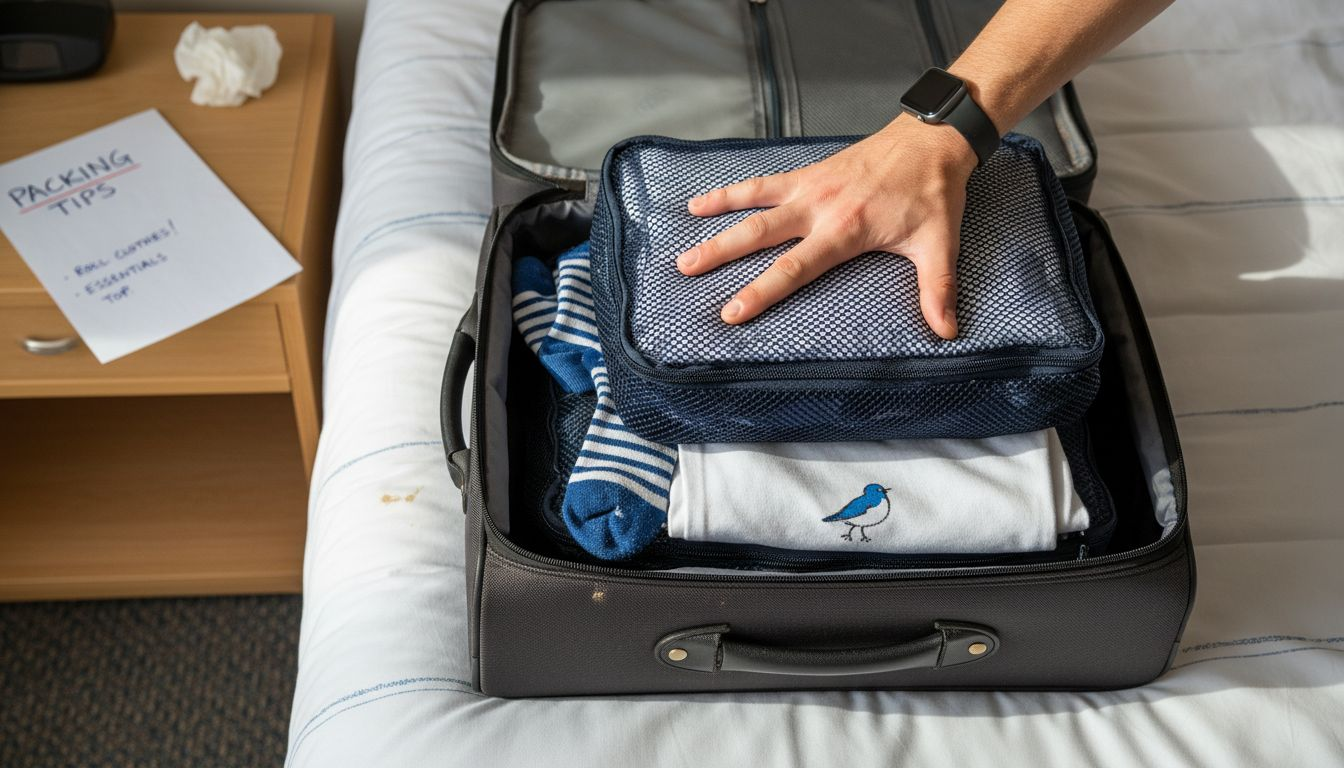
Wearing your heaviest items during travel shifts weight from bags to your body without counting against limits. Put on boots instead of packing them, wear your jacket, and layer clothing strategically. This simple trick can save five to ten pounds of bag weight immediately.
Choosing lightweight luggage materials prevents wasting allowance on the bag itself. Soft-sided bags typically weigh three to five pounds less than hard-shell alternatives with similar capacity. Every pound of bag weight is a pound less you can pack.
Organizing strategically optimizes every inch of space. Try these proven methods:
- Roll clothing instead of folding to reduce wrinkles and maximize density
- Fill shoes with socks, chargers, or small items to eliminate dead space
- Place heavier items near wheels for better bag balance and maneuverability
- Use garment bags only when absolutely necessary as they waste significant space
- Pack multi-purpose items like sarongs that work as towels, blankets, or cover-ups
Pro Tip: Create a packing tips checklist for each trip type you take regularly. This eliminates guesswork and ensures you never forget essentials while avoiding overpacking.
Explore more about benefits of packing cubes to understand how they transform luggage efficiency.
Airline Baggage Policy Comparison for Budget Airlines
Southwest stands apart by including two free checked bags per passenger with a 50-pound weight limit each. Their carry-on limit allows 24x16x10 inches, slightly more generous than competitors. This policy makes Southwest ideal for families or travelers with bulky gear.
Ryanair charges approximately $60 for the first checked bag and enforces a strict 22x14x9 inch carry-on limit. They recently introduced a smaller personal item allowance that fits under the seat, while overhead bin access requires purchasing priority boarding. Their aggressive fee structure demands careful planning.
EasyJet fees range from $50 to $65 for checked bags depending on route and booking time. They often charge separately for a second carry-on item, limiting free allowances to one small bag. Maximum carry-on dimensions of 22x18x10 inches provide slightly more flexibility than Ryanair but still require precise packing.
| Airline | Free Checked Bags | Checked Bag Fee | Carry-on Size Limit | Notable Restrictions |
|---|---|---|---|---|
| Southwest | 2 bags | $0 | 24x16x10 inches | 50 lb weight limit per bag |
| Ryanair | 0 bags | ~$60 | 22x14x9 inches | Priority boarding required for overhead bins |
| EasyJet | 0 bags | $50-$65 | 22x18x10 inches | Second carry-on often costs extra |
Policy differences create substantial cost variations. A family of four traveling with Ryanair could pay $240 just for first checked bags, while the same family flies free on Southwest. Understanding these distinctions helps you select airlines that match your baggage needs.
Review comprehensive budget airline baggage comparison details before booking to calculate true trip costs.
Selecting the Right Baggage Type for Budget Travel
Soft-sided carry-ons offer lightweight construction and compressible exteriors that squeeze into tight overhead bins. They typically weigh four to six pounds empty, leaving maximum allowance for contents. Best suited for short trips where packing cubes keep everything organized, these bags adapt to various spaces easily.
Rolling duffels provide flexible capacity that expands for irregular items like sports equipment or souvenirs. Their moderate weight falls between soft and hard luggage, usually around seven pounds empty. The duffel design accommodates bulky objects that won’t fit in structured cases, though organization requires more effort.
Hybrid backpack-roller combinations deliver mobility options for different situations. Wear them as backpacks through crowded terminals or roll them on smooth surfaces. These versatile designs work well for longer trips requiring more capacity, typically offering 40 to 50 liters of space while maintaining carry-on dimensions.
Choosing appropriate baggage prevents fees while matching your travel style:
- Weekend trips: Soft-sided carry-ons around 22 inches with compression features
- Adventure travel: Rolling duffels that handle irregular gear shapes
- Extended journeys: Hybrid backpack-rollers maximizing legal carry-on capacity
- Business travel: Structured carry-ons with laptop compartments and garment sections
Pro Tip: Measure your most commonly used airline’s carry-on sizer at the airport, then shop for bags that fit with room to spare. Size enforcement varies, and bags marketed as “carry-on size” sometimes exceed specific airline limits.
Find guidance on best baggage types for budget travel based on trip duration and destination.
Avoiding Fees Through Weight Management and Pre-Travel Preparation
Investing in a digital luggage scale provides accurate weight readings at home before heading to the airport. These devices cost $10 to $20 and prevent $75 overweight fees that start when bags exceed limits. Weigh packed bags multiple times during packing to track progress and make adjustments early.
Wearing heavier clothing on flight day strategically shifts weight from checked bags to your body. Put on boots, jeans, and jackets during travel, then change into comfortable clothes after security. This approach can reduce bag weight by five to eight pounds without leaving items behind.
Weighing bags after initial packing reveals exactly how much margin remains before hitting limits. If you’re over, remove items or redistribute weight between bags and carry-ons. Many travelers pack to 48 pounds for 50-pound limits, leaving buffer room for souvenirs on return trips.
Knowing that overweight penalties begin around $75 helps you budget accordingly if avoiding them proves impossible. Sometimes paying one overweight fee costs less than shipping items separately or buying a second checked bag. Calculate options before making airport decisions under pressure.
Key preparation steps include:
- Purchase and test your luggage scale before the first trip
- Weigh bags the night before departure when you can still adjust
- Keep a small separate bag ready for redistributing weight if needed
- Research your airline’s exact weight limits as they vary between carriers
Implement overweight baggage fee prevention strategies consistently to avoid unnecessary charges.
Summary Comparison and Situational Recommendations
Comparing airline policies, baggage types, and packing strategies together reveals patterns that guide smart decisions. The table below synthesizes key differences for quick reference:
| Scenario | Best Airline Choice | Recommended Baggage | Key Packing Strategy |
|---|---|---|---|
| Short weekend trip | Any with free carry-on | Soft-sided 22-inch | Packing cubes, minimal items |
| Family vacation | Southwest | Mix of checked + carry-ons | Distribute weight, wear heavy items |
| Adventure with gear | Traditional carrier | Rolling duffel | Compression bags for bulky items |
| Extended travel | Budget carrier + paid bag | Hybrid backpack-roller | Maximize legal carry-on, one checked |
| Business trip | Flexible airline | Structured carry-on | Garment folder, electronics organization |
Short trips under five days rarely need checked bags when you apply compression techniques and packing cubes. Focus on versatile clothing that layers and washes easily. A single carry-on handles most situations while avoiding all baggage fees.
Bulky gear situations like ski trips or diving vacations make checked bags nearly unavoidable. Choose airlines with reasonable checked bag fees or included allowances. Rolling duffels accommodate irregular equipment shapes better than structured luggage.
Longer travels exceeding two weeks often justify one checked bag for practical reasons. Maximize your free carry-on completely, then pay for a single checked bag rather than trying to cram everything into overhead space. Calculate whether airline fees or shipping costs less for your specific situation.
Tailored recommendations by traveler type:
- Solo travelers: Master carry-on-only travel to eliminate all baggage fees
- Couples: Share one checked bag between two people when necessary
- Families: Utilize Southwest’s free checked bags or distribute items across multiple carry-ons
- Frequent flyers: Invest in quality lightweight luggage that lasts and stays within limits
Save More on Travel with PilotTravelDeals.com
Mastering baggage strategies is just one way to reduce travel expenses dramatically. PilotTravelDeals.com helps you find the cheap airfare tips and affordable hotels that complement your newfound baggage savings. Our comparison tools aggregate deals from multiple providers, often revealing discounts up to 80% on flights, accommodations, and travel essentials.
Why stop at saving on baggage fees when you can reduce costs across your entire trip? Explore our guides to discover budget-friendly destinations, timing strategies for booking flights, and insider tips for stretching travel dollars further. Whether you need travel sim cards for staying connected abroad or want to compare hotel options, we simplify the planning process so you spend less time researching and more time exploring.
Frequently Asked Questions
How can I avoid surprise baggage fees at the airport?
Use a luggage scale at home before traveling to verify your bags meet weight limits exactly. Check your specific airline’s baggage size and weight policies during booking, as rules vary significantly between carriers. Arriving prepared with compliant bags eliminates surprise fees at check-in counters or gates.
What are the best types of luggage for budget travel?
Soft-sided carry-ons work best for most budget travelers due to lightweight construction and compressible designs. Rolling duffels suit those carrying bulky or irregular items that won’t fit structured cases. Choose bags weighing under six pounds empty to maximize your packing allowance.
How much can packing cubes really save me in space?
Packing cubes reduce luggage volume approximately 30% by compressing clothing and eliminating air pockets between items. This efficiency allows significantly more items to fit in carry-ons, helping you avoid checked bag fees entirely. They also keep contents organized for faster packing and unpacking throughout your trip.
Why is it important to know carry-on size limits?
Knowing carry-on size limits prevents forced check-in at the gate with immediate surprise fees. Airlines strictly enforce dimensional restrictions, and oversized bags get tagged for checking even if they’re only slightly over. Measuring your bag and confirming it meets your airline’s specific requirements saves money and hassle during boarding.
Recommended
- 7 Smart Steps for an Effective Cheap Travel Checklist – PilotTravelDeals.com
- Top Tips for Saving on Flights: Travel Smart in 2025 – PilotTravelDeals.com
- 8 Smart Ways to Travel for Cheap and Save Big Money – PilotTravelDeals.com
- 7 Proven Budget Travel Tips 2025 for Smart Savings – PilotTravelDeals.com