
TL;DR:
- Most travelers skip a structured budget travel workflow, leading to overspending or financial stress.
- Using category allocations, daily tracking, and a 10-20% emergency buffer helps stay within budget without sacrificing experiences.
A budget travel workflow is a systematic process for planning, allocating, and tracking travel expenses so you stay within your means without sacrificing the trip itself. Most travelers skip this system entirely. 68% of travelers exceed their budget by 25% because they pick a destination first and figure out costs later. The fix is a repeatable workflow built around category allocations, real-time tracking, and a financial buffer. Tools like Google Sheets, BudgetYourTrip.com, and apps such as Trail Wallet make this process concrete and manageable. Follow this guide and you will know exactly where your money goes before you board the plane.
What are the essential components of a budget travel workflow?
A complete budget travel workflow covers seven core categories: transport, accommodation, food, activities, insurance and health, miscellaneous, and an emergency buffer. Skipping any one of these creates a blind spot that quietly drains your funds. Hidden fees add 15–30% to initial cost estimates, which means a trip that looks affordable on paper can blow past your limit before day five.
Recommended percentage allocations
Recommended allocations break down as follows: transport at 30–45%, accommodation at 20–35%, food at 15–30%, and activities at 10–20%. These ranges give you a framework, not a rigid rule. A road trip through the American Southwest shifts more weight toward transport. A beach week in Bali shifts it toward accommodation and food.
| Budget category | Typical % range | Common mistake |
|---|---|---|
| Transport | 30–45% | Ignoring baggage fees and airport transfers |
| Accommodation | 20–35% | Forgetting resort fees and city taxes |
| Food | 15–30% | Underestimating dining out vs. cooking |
| Activities | 10–20% | Booking everything at full price |
| Emergency buffer | 10–20% | Treating it as optional |
The buffer column is the one most travelers delete first. That is a mistake. An emergency buffer of 10–20% protects you from exchange rate swings, medical costs, and the unexpected price hike that hits every trip at least once.
Pro Tip: *Set up a Google Sheets template with a dedicated “buffer” row that auto-calculates as a percentage of your total estimate using a simple formula like =SUM(B2:B8)0.15. You will see your true trip cost in real time without doing any mental math.
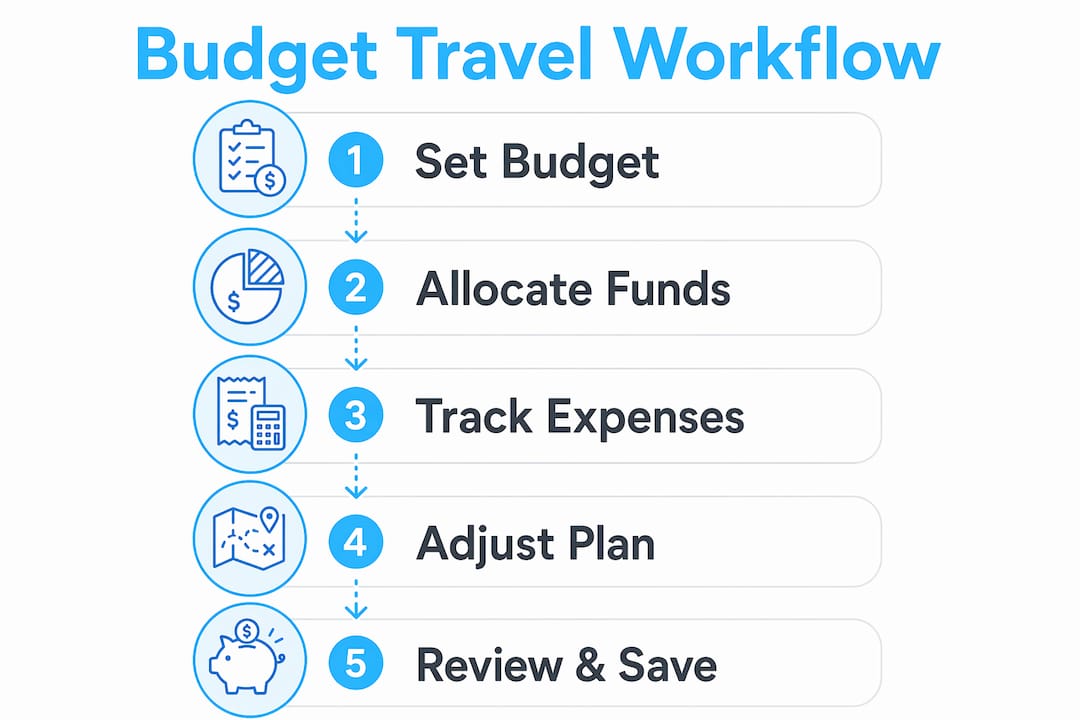
How to create a step-by-step budget travel workflow
The most common affordable travel planning mistake is starting with a dream destination and reverse-engineering a budget to match. Planning from your budget first leads to far better adherence and less overspending. Start with what you can actually afford, then find destinations that fit.
Here is the full workflow:
- Set your total trip budget. Decide the maximum you can spend before you search for flights. This number drives every decision that follows.
- Research destination costs. Use BudgetYourTrip.com for daily cost averages by city. Cross-reference with Airbnb for accommodation and Google Maps for restaurant price tiers.
- Enter granular estimates by category. Break food into breakfast, lunch, and dinner lines. Break transport into flights, local transit, and taxis. Granularity catches the gaps that lump-sum estimates miss.
- Add your emergency buffer. Multiply your total estimate by 10–15% and add it as a separate line. Stress-test your budget by simulating a 15% price increase in your two biggest categories. If the result still fits your total, your plan is solid.
- Log actual expenses daily. A 5-minute daily logging routine prevents budget drift. Travelers who check weekly instead of daily often discover they are over budget by day three or four, when it is too late to adjust.
- Compare actual vs. estimated costs in real time. Track variance, the difference between what you planned and what you spent. A positive variance means you are ahead. A negative one means you need to cut somewhere today, not tomorrow.
Pro Tip: Log your arrival day costs in a completely separate “startup” category. Airport transfers, a SIM card, and your first meal are one-time costs that will skew your daily average if you fold them into day one.
What tools and templates work best for budget tracking?
The right tools turn a budget travel checklist from a static document into a live financial dashboard. Google Sheets and Microsoft Excel both support templates with columns for estimated cost, actual cost, and variance. The variance column is the one that matters most. Tracking estimated versus actual costs in real time gives you immediate feedback and prevents overspending before it compounds.

| Tool | Best for | Key feature | Cost |
|---|---|---|---|
| Google Sheets | Full trip planning | Cloud sync, shareable, formula support | Free |
| Trail Wallet | Daily mobile logging | Simple daily budget view | Paid |
| BudgetYourTrip.com | Pre-trip research | City-level daily cost averages | Free |
| TravelSpend | Real-time tracking | Multi-currency support | Free/Paid |
| Google Flights | Flight price monitoring | Price history and alerts | Free |
For pre-trip savings on flights, Google Flights and Skyscanner both offer price alert features that notify you when fares drop on a specific route. Setting alerts three to six months out on a long-haul route can save hundreds of dollars compared to booking on impulse. You can find more cheap airfare tips at Pilottraveldeals to pair with your tracking setup.
Cloud-based files solve the on-the-go problem. A Google Sheets file shared between travel partners means both people can log expenses from their phones in real time. No more end-of-day reconciliation arguments over who spent what on lunch.
Pro Tip: Add a formula in your Google Sheets template that auto-calculates your remaining daily budget: =(Total Budget – Sum of Actuals) / Remaining Days. This single cell tells you exactly how much you can spend each day going forward.
How to adjust your budget plan during the trip
Real-time adjustment separates travelers who finish a trip on budget from those who arrive home with credit card regret. The key skill is distinguishing essential expenses from discretionary ones. Essential costs cover transport, accommodation, food, and health. Discretionary costs cover optional tours, souvenirs, and upgraded experiences.
Arrival day costs are the most commonly underestimated line item. Airport transfers, a local SIM or eSIM card, and your first full meal are all startup costs that hit before your daily rhythm begins. Budget them separately so they do not make day one look catastrophically over budget.
When a category overruns, the fix is reallocation, not panic. If you spend 20% more than planned on accommodation in one city, cut one paid activity and eat at local markets for two days. The budget travel guide at Pilottraveldeals covers specific reallocation tactics worth bookmarking before you leave.
Common pitfalls to watch for mid-trip:
- Rounding down estimates. Always round up when in doubt. A $12 meal becomes $16 with a drink and tip.
- Ignoring small daily purchases. Coffee, water, and transit top-ups add up to $10–$20 per day in most cities.
- Skipping the daily log. One missed day creates two days of guesswork.
- Using mental math instead of a tracker. Mental math always underestimates. A tracker always tells the truth.
- Treating the buffer as spending money. The buffer exists for genuine surprises, not for a nicer hotel on the last night.
Budget travel is about intentional spending, not deprivation. Redirecting funds from things you do not care about toward experiences you genuinely value is the entire point. A traveler who skips three tourist traps and uses that money for one extraordinary local meal has made a better financial and experiential decision.
Travel insurance is one budget line that should never get cut. A single medical evacuation can cost more than the entire trip. Reviewing travel insurance options before you finalize your budget protects the whole plan from a single catastrophic event.
Key takeaways
A budget travel workflow built on category allocations, a 10–20% emergency buffer, and daily expense tracking is the most reliable way to travel affordably without cutting the experiences that matter.
| Point | Details |
|---|---|
| Start with your budget, not the destination | Set a total spending limit first, then find destinations that fit within it. |
| Use percentage allocations | Assign transport 30–45%, accommodation 20–35%, food 15–30%, and activities 10–20%. |
| Add a 10–20% emergency buffer | Hidden fees and surprises add 15–30% to initial estimates, so the buffer is non-negotiable. |
| Log expenses daily, not weekly | A 5-minute daily routine prevents budget drift before it becomes unrecoverable. |
| Track variance in real time | Comparing actual vs. estimated costs immediately tells you where to cut before it is too late. |
Why I think most budget travel advice misses the real problem
Most low-cost travel strategies focus on finding cheap flights or discount hotels. Those tactics matter, but they address the symptom, not the cause. The real problem is that most travelers have no system at all. They have a rough number in their head and a vague intention to “be careful.” That is not a workflow. That is a wish.
I have seen travelers with tight budgets finish trips comfortably under their limit because they tracked every expense in a simple Google Sheets file. I have also seen travelers with generous budgets blow through their funds by day eight because they relied on memory and optimism. The difference was never the destination or the budget size. It was the presence or absence of a daily tracking habit.
The stress-testing step is the one most people skip because it feels pessimistic. Assuming a 15% price increase in your biggest categories before you leave is not pessimism. It is the same logic a good investor uses when stress-testing a portfolio against a market downturn. Professional travel budgeting includes this step for exactly that reason. If your plan survives the stress test, you travel with confidence. If it does not, you adjust before you leave, not while you are standing at a foreign ATM doing the math in your head.
The mindset shift that makes all of this work is understanding that a budget is not a restriction. It is a permission structure. When you know exactly how much you have allocated for food, you can spend every dollar of it without guilt. That is freedom, not deprivation.
— Asher
Plan your next trip smarter with Pilottraveldeals
Pilottraveldeals brings together flight deals, hotel comparisons, and SIM card options in one place so you can fill in your budget template with real numbers, not guesses. Whether you are locking in your transport allocation or hunting for accommodation that fits your 20–35% range, the tools are already there.
Start with the hotel deals section to compare rates across providers and find options that fit your accommodation budget without the resort fee surprises. For the transport side, the cheap airfare tips page walks you through exactly when and how to book for the lowest fares. Pilottraveldeals also covers SIM card options so your arrival day startup costs stay predictable. Build your workflow, then use Pilottraveldeals to populate it with the best available prices.
FAQ
What is a budget travel workflow?
A budget travel workflow is a structured system for allocating, tracking, and adjusting travel expenses by category before and during a trip. It typically includes percentage-based allocations, a 10–20% emergency buffer, and daily expense logging.
How much should I budget for each travel category?
Transport should take 30–45% of your total budget, accommodation 20–35%, food 15–30%, and activities 10–20%. These ranges shift based on destination and travel style, but they give you a reliable starting framework.
Why do so many travelers go over budget?
68% of travelers exceed their budget by 25% because they choose a destination first and estimate costs backward. Starting with a fixed total budget and researching costs before committing to a destination reverses this pattern.
What is the best free tool for tracking travel expenses?
Google Sheets is the most flexible free option for a full budget travel checklist. It supports cloud sync, formula-based variance tracking, and real-time sharing with travel partners. BudgetYourTrip.com is the best free resource for pre-trip cost research by city.
Should I include travel insurance in my budget?
Yes. Travel insurance belongs in the insurance and health category and should never be treated as optional. A single medical emergency abroad can cost more than the entire trip, making insurance one of the highest-return line items in any affordable travel planning budget.
Recommended
- Budget travel guide: Proven strategies to save on every trip – PilotTravelDeals.com
- 10 Essential Budget Travel Tips for Smart Travelers – PilotTravelDeals.com
- 7 Proven Budget Travel Tips 2025 for Smart Savings – PilotTravelDeals.com
- How to plan affordable business trips and maximize savings – PilotTravelDeals.com
