
TL;DR:
- Comparing travel deals across multiple platforms helps travelers find consistently lower prices.
- Using tools like fare alerts and flexible dates maximizes savings on flights and hotels.
- Focused comparison and negotiation can significantly reduce overall trip costs and avoid hidden fees.
Two travelers book the same flight, the same hotel, and the same dates. One pays $400 more than the other. The difference? One compared deals across multiple platforms, and one didn’t. This isn’t a rare scenario. It happens every day to millions of people who trust the first price they see. The good news is that comparing travel deals isn’t complicated once you know the right process. This guide walks you through every step, from gathering the right tools to spotting hidden costs in packages, so you consistently pay less for the same quality of trip.
Table of Contents
- Essential tools and information needed to compare travel deals
- Step-by-step process to compare flight deals efficiently
- Comparing hotel deals: criteria, tricks, and red flags
- Optimize results: cross-comparing travel packages and extras
- The uncomfortable truth about travel deal comparison
- Level up your travel savings with expert tools
- Frequently asked questions
Key Takeaways
| Point | Details |
|---|---|
| Use the right tools | Comparison sites, travel apps, and incognito browsing are essential for deal hunting success. |
| Follow a methodical process | Step-by-step comparison of flights, hotels, and packages prevents costly mistakes or missed perks. |
| Verify the fine print | Check all taxes, cancellation terms, and included extras to avoid expensive surprises. |
| Be patient, not impulsive | Taking a disciplined approach saves more than rushing when searching for travel deals. |
Essential tools and information needed to compare travel deals
Before you search for a single flight or hotel room, you need the right setup. Think of it like cooking: even the best recipe fails without the right ingredients. Access to the right comparison tools, like travel aggregators and reputable booking sites, empowers travelers to secure lower prices before they even start clicking.
Here’s what to have ready before you begin:
- Your travel dates (and a flexible window of at least 3 days on either side)
- Passenger count and any special requirements (kids, extra baggage, accessibility)
- Loyalty or rewards numbers for airlines, hotels, and credit cards
- A dedicated email address for travel deal alerts so your inbox stays organized
- Browser extensions like Honey or Capital One Shopping for automatic coupon detection
The best discount travel websites each specialize in different areas, so using just one limits your results significantly.
| Tool | What it compares | Free signup needed |
|---|---|---|
| Google Flights | Flights, date grids | No |
| Kayak | Flights, hotels, cars | Optional |
| Booking.com | Hotels, apartments | Optional |
| Skyscanner | Flights, hotels | Optional |
| Hopper | Flights (price prediction) | Yes |
| TripAdvisor | Hotels, experiences | Optional |
For hotels specifically, the top hotel booking platforms vary in how they display taxes and fees, which makes side-by-side comparison essential rather than optional.
Pro Tip: Always search in a private or incognito browser window. Many booking sites use dynamic pricing, which means repeated searches for the same route can push prices up artificially. A fresh session shows you the baseline price without manipulation.
Set up price alerts on at least two platforms for your target route. These alerts notify you when fares drop, removing the need to check manually every day. Patience, paired with the right alerts, does a lot of the work for you.
Step-by-step process to compare flight deals efficiently
Now that you’re equipped with the right tools, let’s get into comparing flight deals step by step. A structured approach saves time and prevents the common mistake of grabbing the first deal that looks reasonable.
- Search at least three aggregators. Start with Google Flights for its date grid, then check Kayak and Skyscanner. Each pulls from different sources, and prices vary more than most people expect.
- Use the flexible dates feature. Flying on a Tuesday or Wednesday instead of a Friday can save 10 to 20 percent on many routes. Flexible travel dates and comparing results across multiple airline and aggregator platforms lead to significant airfare savings.
- Check the airline directly. Once an aggregator shows you the lowest fare, visit the airline’s own website. Sometimes the price matches, and you avoid third-party booking fees.
- Set price alerts. If your trip is more than three weeks out, set alerts and wait. Fares fluctuate, and a two-day wait often yields a better price.
- Review the full cost. Add baggage fees, seat selection costs, and change or cancellation fees before declaring a winner. A $180 base fare with $60 in fees beats nothing.
- Check a flight comparison checklist to make sure you haven’t missed any cost factors before booking.
Watch out: Many budget airlines advertise fares that look unbeatable, but mandatory fees for carry-on bags, seat assignments, and airport check-in can double the displayed price. Always calculate the all-in cost before comparing.
For smart ways to find cheap tickets to any destination, the key is consistency. Use the same method every time, and you’ll get faster and sharper at spotting real deals versus marketing noise. Consumer Reports also recommends comparing across multiple platforms before committing to any single booking.
Pro Tip: If an aggregator finds a lower fare than the airline’s website, call the airline directly and ask them to match it. Many will, especially for loyal customers, and you’ll book directly without third-party risk.
Comparing hotel deals: criteria, tricks, and red flags
After mastering flights, the search for great accommodations should follow an equally methodical approach. Hotels have more variables than flights, which means more opportunities to save and more traps to avoid.
| Platform | Loyalty points | Free cancellation | Taxes included | Price match |
|---|---|---|---|---|
| Booking.com | No | Often | Sometimes | Yes |
| Hotels.com | Yes (10th night free) | Often | Sometimes | Yes |
| Expedia | Yes | Often | Sometimes | Yes |
| Marriott Direct | Yes | Yes | Yes | Yes |
| Airbnb | No | Varies | Yes | No |
As reading the fine print and understanding cancellation policies, taxes, and fees is crucial when comparing hotel deals, never judge a hotel offer by the headline price alone.
Here are the red flags to watch for:
- Nonrefundable rates that save $20 but cost $200 if plans change
- Resort fees charged at check-in, not shown in the comparison price
- Mandatory taxes listed separately that inflate the real cost by 15 to 25 percent
- Vague cancellation windows that require notice 7 to 14 days in advance
For tactics that actually work, try stacking cashback portals with your hotel booking. Sites like Rakuten often offer 2 to 5 percent back on hotel bookings made through their links. Combine that with a travel credit card and a loyalty membership, and you’re layering savings on top of savings. You can also compare hotel prices across platforms to find the baseline before negotiating.

NerdWallet’s tips for booking hotel rooms highlight that calling the hotel directly with a competitor’s quote often results in a matched price plus extras like room upgrades or complimentary breakfast. Knowing how to choose the best travel deals means treating every booking as a negotiation, not a fixed transaction.
Pro Tip: Book directly with the hotel after finding the lowest price on a comparison site. Show them the aggregator rate and ask for a price match. Many hotel chains have formal price match guarantees, and front desk staff often add perks to close the deal.
Optimize results: cross-comparing travel packages and extras
While flights and hotels are big-ticket items, don’t overlook package deals and extras that can contribute to overall travel savings. Packages look attractive, but they aren’t always the bargain they appear to be.
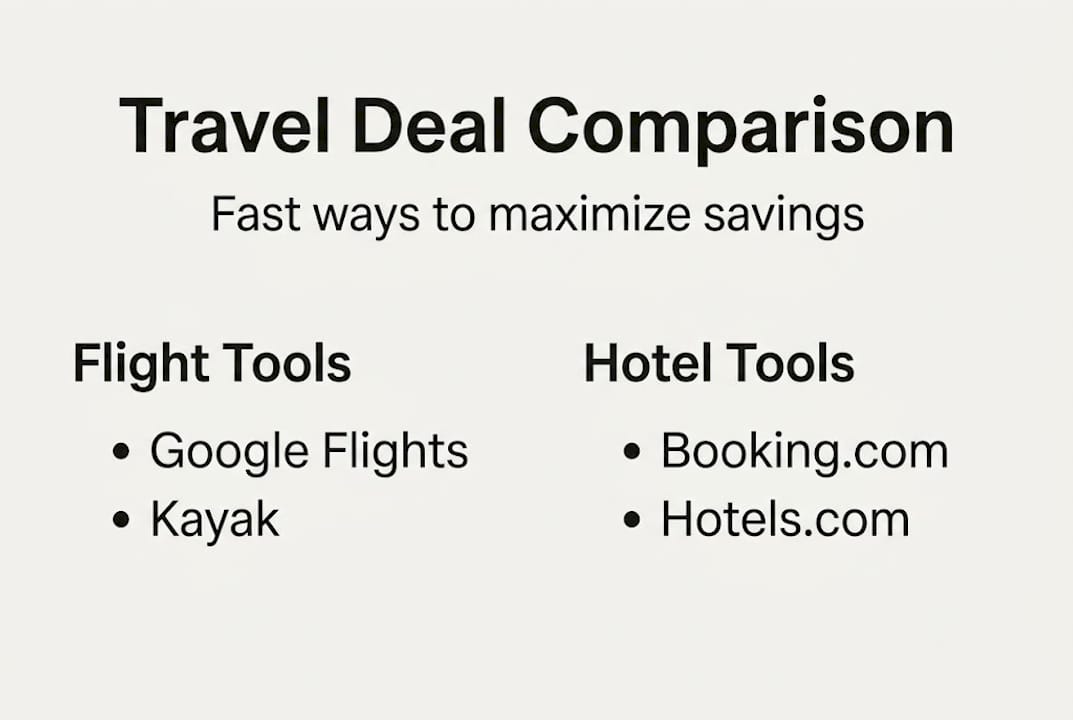
Not all travel packages are created equal; verifying the real value of each component can reveal unexpected costs or savings hiding inside the bundle.
Here’s how to evaluate a package properly:
- List every included component: flight, hotel nights, transfers, meals, tours
- Price each item separately using the tools from Section 1
- Add the individual prices and compare to the package total
- Check what’s excluded: travel insurance, baggage, airport transfers, and Wi-Fi are often missing
- Read the cancellation terms for the package as a whole, not just individual parts
| Package | Package price | Sum of parts | Difference |
|---|---|---|---|
| Flight + 5 nights hotel | $1,200 | $1,050 | You lose $150 |
| Flight + hotel + transfers | $950 | $1,100 | You save $150 |
| Flight + hotel + travel insurance | $1,400 | $1,250 | You lose $150 |
The table above shows why itemizing matters. Some bundles genuinely save money. Others charge a premium for convenience. The only way to know is to do the math.
For extras like SIM cards, travel insurance, and baggage, always compare standalone prices. A SIM card sold through a tour package might cost three times what you’d pay booking it through a dedicated provider. The best travel sites for budget deals let you compare these add-ons individually, and the travel deal comparison process works just as well for extras as it does for flights. US News also maintains a list of best travel deal websites that’s worth bookmarking for package research.
The uncomfortable truth about travel deal comparison
Here’s what most deal-hunting guides won’t tell you: the biggest enemy of a good deal isn’t a lack of tools. It’s your own decision fatigue.
The more platforms you check, the more options you see, and the harder it becomes to commit. At some point, the brain stops processing value and starts craving certainty. That’s when travelers make fast decisions that cost more, not because they ran out of options, but because they ran out of patience.
Most people quit the thorough comparison process too early. They check one or two sites, feel overwhelmed by variables, and book whatever looks reasonable. Marketing language like “only 2 rooms left” or “price increases in 10 minutes” accelerates that surrender.
The fix isn’t more discipline. It’s a simpler system. Pick three platforms maximum. Define your criteria before you search: price ceiling, cancellation flexibility, and minimum review score. Stick to those criteria no matter what a deal page tells you. And remember: saying no to a deal that doesn’t fully meet your criteria is itself a savings strategy. The best deal you’ll ever find is the one you didn’t rush into.
Level up your travel savings with expert tools
If you want to put these deal-hunting strategies into practice right away, here’s how to get started using expert-backed resources.

At PilotTravelDeals.com, we’ve built a set of tools specifically for travelers who want to stop guessing and start saving. Our hotel deal finder aggregates options from top platforms so you can compare prices, cancellation policies, and perks in one place. Traveling internationally? Our discount SIM cards page helps you avoid expensive roaming fees before you even land. And if you want to understand why a structured approach to airfare pays off, our guide on the advantages of flight comparison breaks it down clearly. Smarter comparison starts here.
Frequently asked questions
What’s the best way to compare flight prices quickly?
Use at least two or three comparison websites with flexible date settings and activate fare alerts for your target route. Flexible travel dates and using several aggregator sites can yield the lowest airfare without hours of manual searching.
How do I know if a hotel deal is truly a bargain?
Itemize every benefit, verify the cancellation policy, and check the total price including taxes on at least two platforms before deciding. Comparing hotel deals means looking at total price, perks, and the fine print, not just the headline number.
Are package travel deals always cheaper than booking separately?
Not always. Price each component individually and add them up to see if the package actually saves money. Packages can hide higher costs, so verify each component for real savings before committing.
Can I get better travel deals by booking directly with the airline or hotel?
Yes, sometimes direct booking gets you upgrades, perks, or matched prices found on comparison sites. Direct bookings may unlock extra value if hotels or airlines match online aggregator prices when you ask.
What’s the biggest mistake travelers make when comparing deals?
Rushing the process and only checking one site, which often leads to higher prices and missed perks. Thorough comparison across websites avoids pitfalls and uncovers the best deals available for your specific trip.
Recommended
- How to Maximize Travel Savings with Smart Deal Strategies – PilotTravelDeals.com
- How to choose the best travel deals: save on flights & hotels – PilotTravelDeals.com
- How to Use Travel Comparison Sites for Smart Savings – PilotTravelDeals.com
- How to choose the best travel sites for budget deals – PilotTravelDeals.com
- Disney Schnäppchenangebote 2026: So sparst du bis 30% – 2000-reisen – Ihre Spezialisten für Urlaub mit Disney-Magie
