

Most American millennial travelers discover that hotel rates can vary by as much as 40 percent depending on where and how you book. Sorting through endless pricing options often feels overwhelming when your goal is simply to find great value and make your money go further. If you want to stretch your vacation budget while still landing that perfect room, understanding how price comparison tools work is key to snagging the best hotel deals.
Table of Contents
- Defining Hotel Price Comparison Tools
- Key Types of Price Comparison Platforms
- How Price Comparison Sites Operate
- Major Benefits For Budget Travelers
- Hidden Risks And Common Mistakes
- Strategies For Getting The Best Rates
Key Takeaways
| Point | Details |
|---|---|
| Utilize Price Comparison Tools | Leverage digital platforms to compare hotel rates across multiple sources, helping make informed booking decisions. |
| Understand Hidden Costs | Be aware of additional fees such as resort fees and local taxes which may affect the total cost of your stay. |
| Set Up Price Alerts | Use automated notifications to track price fluctuations and identify the best time to book hotel accommodations. |
| Research Booking Strategies | Take advantage of off-peak booking, flexible travel dates, and length-of-stay discounts to optimize rates. |
Defining Hotel Price Comparison Tools
Hotel price comparison tools are sophisticated digital platforms designed to help travelers find the most cost-effective accommodation options by aggregating pricing information from multiple booking sources. These innovative platforms utilize advanced algorithmic techniques to analyze complex pricing models and present users with comprehensive pricing data across various hotels and travel websites.
At their core, these tools function like digital price detectives, crawling through numerous hotel booking platforms and collecting real-time pricing information. They enable travelers to quickly compare rates, amenities, and availability without manually searching multiple websites. By presenting a consolidated view, these tools help users make informed decisions based on factors beyond just price – including location, user reviews, star ratings, and additional perks.
Modern hotel price comparison platforms often incorporate advanced features such as price trend analysis, predictive pricing models, and personalized recommendations. They consider multiple variables that influence hotel pricing, including seasonal demand, local events, travel seasons, and market dynamics. Advanced algorithms can even forecast potential price fluctuations, helping budget-conscious travelers identify the most opportune moments to book their accommodations.
Pro tip: Always enable price alerts on hotel comparison tools to automatically track and notify you about the best available rates for your desired destination.
Key Types of Price Comparison Platforms
Hotel price comparison platforms come in several distinct categories, each offering unique approaches to helping travelers find the best accommodation deals. Dynamic pricing strategies play a crucial role in how these platforms operate, with three primary types emerging as dominant in the travel booking landscape: Online Travel Agencies (OTAs), direct hotel booking sites, and metasearch aggregators.
Online Travel Agencies (OTAs) like Expedia and Booking.com represent the most comprehensive platform type, offering extensive hotel inventories with competitive pricing. These platforms negotiate bulk rates with hotels, allowing them to offer discounted prices and package deals. Direct hotel booking sites, in contrast, provide pricing information straight from the hotel’s own system, often featuring exclusive promotions and loyalty program benefits that might not be available through third-party platforms.
Metasearch aggregators represent a sophisticated hybrid model, scanning multiple booking platforms simultaneously to present users with the most comprehensive price comparisons. These platforms excel at providing transparent, side-by-side pricing information from various sources, enabling travelers to quickly identify the most cost-effective booking option. Advanced aggregation technologies enable these platforms to collect and display real-time pricing data, giving users unprecedented insight into available hotel rates across different booking channels.
Here’s how the main types of hotel price comparison platforms differ:
| Platform Type | How It Works | Key Benefit |
|---|---|---|
| Online Travel Agency | Aggregates inventory, negotiates discounts | Access to bundled deals and promotions |
| Direct Booking Site | Displays hotel-managed rates and offers | Loyalty perks and exclusive incentives |
| Metasearch Aggregator | Scans multiple sites in real time | Transparent multi-source price checks |
Pro tip: Cross-reference pricing across multiple platform types to ensure you’re getting the absolute best deal for your specific travel dates and preferences.
How Price Comparison Sites Operate
Price comparison sites leverage sophisticated technological systems to help travelers navigate the complex world of hotel bookings. Automated data collection processes enable these platforms to gather real-time pricing information from multiple booking websites, creating a comprehensive database of hotel rates and availability. By scanning hundreds of sources simultaneously, these sites provide users with an instant overview of pricing options that would be impossible to compile manually.
The core functionality of these platforms involves advanced algorithmic filtering that allows users to customize their search based on specific preferences. Travelers can input criteria such as destination, travel dates, budget constraints, and desired amenities, and the site’s backend system will instantly cross-reference these parameters with available hotel listings. This approach not only simplifies the booking process but also reveals price variations that might otherwise go unnoticed, potentially saving travelers significant amounts of money.
Interestingly, these platforms reveal complex pricing dynamics in the hotel market. While prices might initially seem disparate across different booking channels, they tend to converge as the booking date approaches. Sophisticated algorithms account for factors like aggregate demand uncertainty, capacity constraints, and real-time market fluctuations. This means that price comparison sites do more than just list prices – they provide a dynamic, intelligent snapshot of the current hotel booking landscape, helping travelers make informed decisions.
Pro tip: Always use the advanced filtering options on price comparison sites to uncover hidden deals that match your exact travel requirements.
Major Benefits for Budget Travelers
Budget travelers stand to gain significant advantages by leveraging comprehensive price comparison strategies. These platforms offer more than just basic price listings – they provide a strategic approach to travel planning that can dramatically reduce accommodation expenses while maintaining quality and comfort. By systematically analyzing pricing variations across different booking platforms, travelers can unlock substantial savings that might otherwise remain hidden.
The most compelling benefit for budget-conscious travelers is the ability to make data-driven booking decisions. Price comparison sites break down complex pricing structures, revealing nuanced differences that go beyond simple numeric comparisons. They help travelers understand how factors like location, seasonal demand, amenities, and booking timing impact hotel rates. This transparency allows individuals to make informed choices that balance cost-effectiveness with personal travel preferences, ensuring they don’t compromise comfort for savings.

Beyond immediate financial benefits, these platforms offer strategic insights into travel spending. By providing real-time price tracking, predictive pricing models, and comprehensive market overviews, budget travelers can develop more sophisticated approaches to trip planning. The tools enable users to identify optimal booking windows, understand price trends, and even predict potential future rate changes. This level of market intelligence transforms price comparison from a simple cost-saving technique into a comprehensive travel planning strategy.
Pro tip: Set up price alerts and track hotel rates over several weeks to identify the most opportune moment for booking your ideal accommodation.
Hidden Risks and Common Mistakes
Travelers often fall into predictable traps when using hotel price comparison platforms, particularly when they fail to understand the complexities of dynamic pricing mechanisms. Price comparison sites can create a false sense of transparency, leading users to make hasty decisions without fully comprehending the nuanced factors that influence hotel rates. The illusion of finding the absolute best deal can sometimes blind travelers to critical details that significantly impact their overall travel experience.
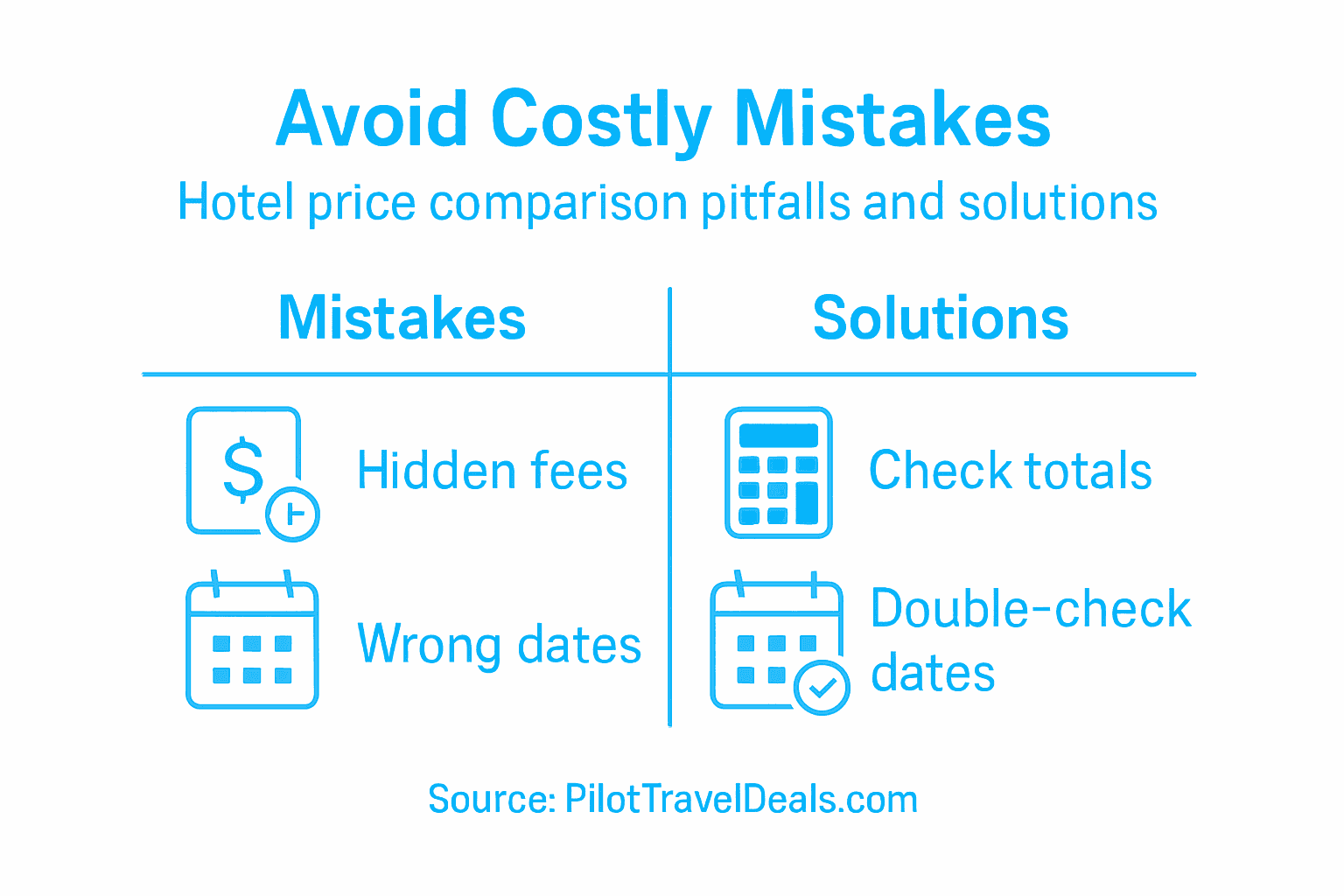
One of the most significant risks emerges from overlooking hidden fees and subtle pricing variations. While comparison platforms display headline rates, they frequently do not highlight additional charges such as resort fees, parking costs, local taxes, or mandatory service charges. Sophisticated travelers recognize that the lowest displayed price might not represent the true total cost of accommodation. Some platforms intentionally display base rates that appear attractively low but balloon once all mandatory charges are added during the final booking stage.
Moreover, travelers frequently misunderstand the impact of location-specific and seasonal pricing dynamics. Contextual pricing strategies can dramatically alter hotel rates based on factors like local events, tourism seasons, and regional economic conditions. What appears to be a competitive rate in one moment might represent a suboptimal choice when considering broader market trends. Budget-conscious travelers must develop a more sophisticated approach that goes beyond simply selecting the cheapest option and instead considers comprehensive value propositions.
Common mistakes and how to avoid them when booking hotels online:
| Mistake | Why It Happens | How to Avoid |
|---|---|---|
| Ignoring hidden fees | Only base rates are highlighted initially | Review all charges before booking |
| Relying on a single platform | Limited view of market prices and deals | Cross-check across multiple sites |
| Overlooking seasonal changes | Prices shift significantly with local events | Check for local events and holidays |
Pro tip: Always calculate the total final price, including all potential fees, and screenshot the full booking details before confirming your reservation.
Strategies for Getting the Best Rates
Savvy travelers can leverage advanced pricing strategies to secure the most competitive hotel rates available. These strategies go far beyond simply comparing prices, requiring a sophisticated approach that involves understanding dynamic market conditions, timing, and strategic booking techniques. Successful rate optimization demands a multi-layered approach that considers factors ranging from seasonal demand to local events and competitive market positioning.
The most effective rate-finding strategies involve utilizing technology and timing to your advantage. Automated price tracking tools can help monitor rate fluctuations across multiple platforms, allowing travelers to identify optimal booking windows. Some advanced techniques include booking during off-peak seasons, being flexible with travel dates, and taking advantage of length-of-stay discounts. Strategic booking windows typically emerge 4-6 weeks before travel dates, when hotels begin adjusting rates to manage projected occupancy.
Technology plays a crucial role in modern rate optimization strategies. Sophisticated travelers now use price prediction algorithms, set up price alerts, and leverage multiple comparison platforms to cross-reference rates. Some advanced strategies include booking refundable rates that can be changed if prices drop, using membership discounts, and understanding how factors like local conferences or events can impact hotel pricing. The key is developing a proactive approach that views hotel booking as a strategic decision rather than a simple transactional process.
Pro tip: Create price alerts on multiple platforms and track rates for at least two weeks before booking to identify the most competitive pricing trends.
Unlock Maximum Hotel Savings by Comparing Prices the Smart Way
Struggling to navigate the complex world of hotel pricing and worried about hidden fees or missing the perfect deal? This article highlights how dynamic pricing and hidden costs can turn a seemingly great hotel rate into a costly mistake. The key to unlocking the best savings lies in using advanced price comparison strategies that consider more than just the sticker price. If you want to take control of your travel budget and avoid common booking pitfalls, learning to compare prices effectively is essential.

Ready to save up to 80% on your next hotel stay and secure deals that match your exact travel needs? Visit PilotTravelDeals.com today and explore our Travel Tips – PilotTravelDeals.com section to discover insider advice. Combine expert insights with hassle-free price comparisons on our platform to turn every booking into a smart, money-saving decision. Make your travel planning effortless and affordable by starting now at PilotTravelDeals.com and browsing through our Miscellaneous – PilotTravelDeals.com category for even more travel inspiration.
Frequently Asked Questions
What are hotel price comparison tools?
Hotel price comparison tools are platforms that aggregate pricing information from various booking websites to help travelers find the best deals on accommodations. They simplify the process of comparing rates, amenities, and availability.
How do price comparison sites work?
Price comparison sites use automated data collection to gather real-time pricing from multiple sources. Users can enter specific criteria like destination and travel dates, and the site presents a comprehensive overview of hotel rates, enabling informed decisions.
What are the benefits of using hotel price comparison tools for budget travelers?
Budget travelers can save money by using hotel price comparison tools, which reveal hidden pricing nuances and help identify the best available rates. They also provide market insights, allowing travelers to plan trips strategically based on price trends and seasonal factors.
What common mistakes should travelers avoid when using hotel price comparison platforms?
Travelers often overlook hidden fees, rely on a single pricing platform, or disregard local events that affect pricing. It’s important to review all potential charges, cross-check multiple sites, and consider external factors that may impact hotel rates.


