

Booking the perfect flight from any American city can quickly become a maze of fluctuating prices and hidden fees. With airfare costs soaring for many families, flexible planning is no longer optional. In fact, travelers who master a few strategic habits can slash their ticket expenses by as much as 9.7 percent. This practical guide reveals proven tactics to help you outsmart unpredictable airline pricing and secure the most wallet-friendly deals on your next adventure.
Table of Contents
- Step 1: Identify Flexible Travel Dates For Savings
- Step 2: Search Multiple Sites For Cheap Flight Deals
- Step 3: Compare Alternative Airports And Routes
- Step 4: Set Airfare Alerts For Price Drops
- Step 5: Book At The Right Time To Maximize Savings
- Step 6: Verify Final Costs Before Purchase
Quick Summary
| Important Insight | Explanation |
|---|---|
| 1. Be Flexible with Travel Dates | Adjusting your travel dates can save up to 9.7% on fares, especially during off-peak months. |
| 2. Use Multiple Flight Search Engines | Compare prices across platforms like Google Flights and Skyscanner to find the best deals. |
| 3. Explore Alternative Airports | Flying into nearby airports can significantly reduce costs; always check options within your range. |
| 4. Set Up Fare Alerts | Create alerts on various sites to monitor price drops and book at the right time for maximum savings. |
| 5. Verify Total Costs Before Booking | Always check the full cost breakdown, including fees, to avoid unexpected expenses when purchasing tickets. |
Step 1: Identify flexible travel dates for savings
Unlocking significant airfare discounts starts with mastering the art of flexible travel dates. Strategic timing can potentially save up to 9.7% on your flight costs by understanding how airlines price tickets based on demand and seasonality.
The key is approaching your travel planning with adaptability. Travelers who can shift their departure and return dates by just a few days often discover substantial savings. Traveling during off-peak months like January, November, and February can dramatically reduce airfare, as airlines lower prices during periods of decreased demand. Try using flexible date search tools on booking websites that show price variations across different dates, allowing you to visually compare and select the most economical travel windows.
Pro tip: If your schedule allows, aim to book approximately seven weeks before your intended travel date. This sweet spot often provides the best balance between price and availability, helping you secure tickets without last minute premium pricing or the uncertainty of extremely early bookings. Your wallet will thank you for the strategic planning.
Step 2: Search multiple sites for cheap flight deals
Unlocking the best flight deals requires a strategic approach to searching multiple platforms. Flight aggregators like Google Flights, Skyscanner, and Kayak enable comprehensive comparisons that can help you discover the most affordable travel options across various airlines and routes.
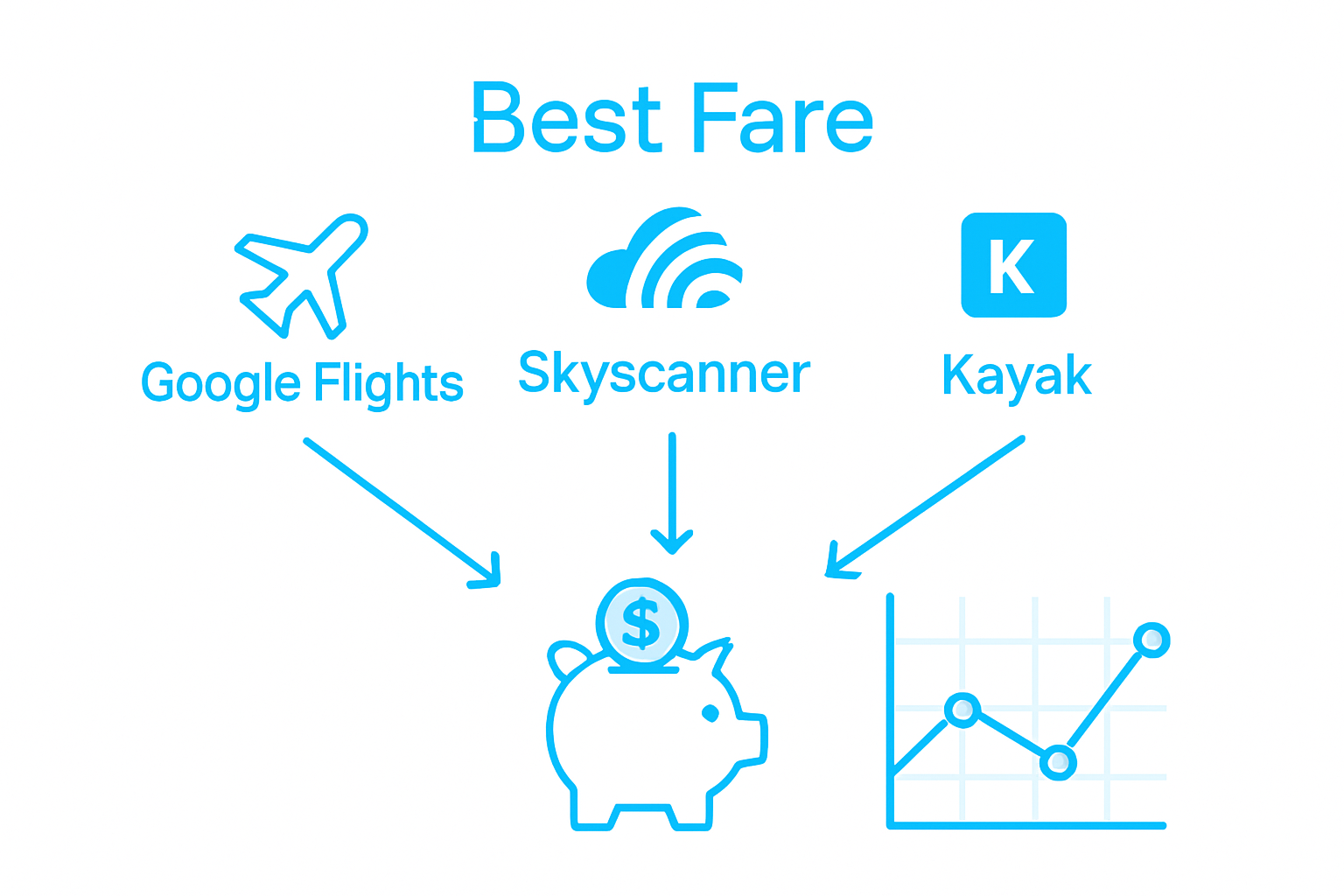
To maximize your savings, develop a systematic search strategy. Set up fare alerts on different platforms to monitor price changes over time which can help you identify the optimal moment to book. Most flight search engines offer tools that allow you to view prices across multiple dates, making it easier to find the most economical travel windows. Start by opening several comparison websites simultaneously and cross-reference their prices, keeping an eye out for any promotions or special discounts that might not appear on every platform.
Pro tip: Dont limit yourself to a single search engine. Each platform has unique partnerships and algorithms that can reveal different pricing, so casting a wide net increases your chances of finding unexpected bargains. Your persistence in comparing multiple sites could potentially save you hundreds of dollars on your next flight booking.
Step 3: Compare alternative airports and routes
Comparing alternative airports and routes can unlock significant savings that many travelers overlook. Smart travelers understand that flexibility with departure and arrival locations can dramatically reduce travel expenses, potentially saving hundreds of dollars on a single trip.

To maximize your savings, explore multiple airport options within a reasonable distance from your intended destination. Flying into nearby alternative airports like Milan instead of Florence or Brussels instead of Paris can result in substantial cost reductions. Most flight search engines allow you to expand your search radius and compare prices across different airports. Consider routes with strategic layovers, as direct flights often command premium prices. Some travelers find that a slightly longer journey with one or more stops can translate into meaningful financial savings.
Pro tip: When searching for flights, always select the option to view nearby airports. This simple step can reveal unexpected pricing opportunities that might not be immediately apparent. Your willingness to be flexible with travel logistics could be the key to unlocking significant airfare discounts.
Step 4: Set airfare alerts for price drops
Setting up flight price alerts can transform your travel planning strategy, giving you a strategic advantage in capturing the best possible airfare deals. These digital watchdogs work tirelessly in the background, monitoring price fluctuations so you do not have to.
Price tracking tools like Google Flights, Skyscanner, and Hopper provide real time monitoring of fare changes, enabling travelers to pinpoint the most opportune moment for booking. Most travel platforms allow you to set alerts for specific routes, dates, and price thresholds. Create alerts for multiple potential travel scenarios to increase your chances of catching a significant price drop. Consider setting up notifications for alternative dates and nearby airports to maximize your savings potential.
Pro tip: Configure alerts on multiple platforms and compare their recommendations. Some apps specialize in predictive pricing, offering insights into whether current fares are likely to increase or decrease. Your diligence in tracking these alerts could translate into substantial savings on your next adventure.
Step 5: Book at the right time to maximize savings
Booking flights approximately seven weeks in advance can unlock significant cost savings, potentially reducing your airfare expenses by nearly 10%. Understanding the strategic timing of flight purchases can transform your travel budget and help you stretch your dollars further.
To maximize your savings, focus on timing and seasonal variations in airline pricing. Research indicates that traveling during off-peak months like January, November, and February often provides substantially lower fares due to decreased travel demand. Most airlines adjust their pricing based on seasonal travel patterns, which means being flexible with your travel dates can lead to substantial discounts. Avoid booking during peak holiday seasons or major events when prices surge, and instead target periods with historically lower traveler volumes.
Pro tip: Create a price tracking spreadsheet to monitor fare trends for your preferred routes. By documenting price fluctuations over several weeks, you will develop a more intuitive understanding of when to book for optimal savings. Your analytical approach could potentially save you hundreds of dollars on your next flight purchase.
Step 6: Verify final costs before purchase
Before finalizing your flight purchase, it is crucial to scrutinize the total cost breakdown, ensuring that the seemingly attractive deal does not hide unexpected financial surprises. What initially appears to be a bargain can quickly transform into an expensive journey if you do not carefully examine all associated expenses.
Always review the comprehensive price breakdown before completing your booking, paying close attention to additional fees that might include baggage charges, seat selection costs, and other supplementary expenses. Different airlines have varying pricing structures, with some offering seemingly low base fares that balloon significantly once all extra charges are included. Take time to calculate the complete cost, comparing not just the ticket price but the total financial commitment required for your specific travel needs.
Pro tip: Create a personal checklist of potential hidden fees before booking. This might include charges for carry on bags, checked luggage, seat upgrades, priority boarding, and other seemingly minor add ons that can substantially increase your total travel expense. Your methodical approach can prevent unexpected financial strain and help you make truly informed purchasing decisions.
Save More on Airfare with Smart Tools and Tips
Finding cheap flights can be frustrating when prices fluctuate and unexpected fees increase your total travel cost. This article highlights the challenge of securing the best airfare by mastering flexible travel dates, comparing alternative airports, and tracking price alerts. If you want to avoid wasting time and money while maximizing savings, you need a reliable platform that streamlines your search and offers diverse travel options.

Discover how PilotTravelDeals.com helps you overcome these obstacles by aggregating deals from multiple providers in one easy-to-navigate site. Benefit from tools designed to check flexible dates, alternative routes, and real-time alerts so you never miss a great bargain. Take control of your travel budget today by exploring our Travel Tips for expert advice and instant access to unbeatable offers. Start planning your next adventure now at PilotTravelDeals.com and turn airfare frustrations into savings success.
Frequently Asked Questions
How can I find the cheapest flights if I have flexible travel dates?
To find the cheapest flights with flexible travel dates, consider shifting your departure and return dates by a few days. Using flexible date search tools on booking websites can help you compare prices across different dates and potentially save up to 9.7% on airfare.
What tools can I use to compare flight prices effectively?
You can use flight aggregators to compare prices across various airlines and routes. Open multiple comparison websites at the same time and cross-reference their prices to ensure you capture the best deals available.
Is it worth it to check alternative airports for cheaper flights?
Yes, checking alternative airports can lead to significant savings on your flight costs. Utilize flight search engines to expand your search radius and explore prices at nearby airports, which may offer more affordable options than your initial choice.
How do airfare alerts work, and how can I set them up?
Airfare alerts monitor price changes for specific routes and notify you when prices drop. Set up alerts for your preferred travel scenarios, including different dates and nearby airports, to maximize your chances of catching the best deals.
When is the best time to book flights for optimal savings?
The best time to book flights for optimal savings is approximately seven weeks before your intended travel date. Focus on traveling during off-peak months and avoid booking during peak holiday seasons to take advantage of lower airfare prices.
What should I look for in the final cost breakdown before purchasing a flight?
Before completing your flight purchase, review the total cost breakdown to ensure there are no hidden fees. Pay close attention to additional charges, such as baggage fees and seat selection costs, to avoid unexpected expenses.
Recommended
- 7 Best Sites for Cheapest Flight Tickets and Smart Savings – PilotTravelDeals.com
- How to Get Flight Discounts 2025: Step-by-Step Savings – PilotTravelDeals.com
- Complete Guide to Cheap International Flights – PilotTravelDeals.com
- 7 Best Websites to Find Cheap Flights for Smart Travelers – PilotTravelDeals.com
- 7 Smart Ways to Find Cheap Luxury Perfumes in the UK

