Travel vouchers often confuse budget travelers who receive them after flight disruptions or as promotional incentives. Are they actually valuable, or just a way for companies to delay refunds? Understanding what these prepaid credits truly offer and how new 2026 regulations change the game can help you turn vouchers into genuine savings. This guide will clarify the different types of travel vouchers, reveal critical terms to watch, and show you how to maximize their value without leaving money on the table.
Table of Contents
- What Is A Travel Voucher? Understanding The Basics
- Types Of Travel Vouchers And Their Common Uses
- Crucial Terms, Expiration, And Restrictions To Watch For
- How Recent Laws Affect Vouchers And Refunds In 2026
- Tips To Redeem And Maximize Your Travel Voucher Value
- Save More On Your Next Trip With PilotTravelDeals
- Frequently Asked Questions
Key takeaways
| Point | Details |
|---|---|
| What vouchers are | Travel vouchers are prepaid credits from airlines, agencies, or travel platforms usable for future travel services. |
| Terms matter critically | Expiration dates, blackout periods, and transferability rules determine whether you keep or lose your voucher’s value. |
| 2026 laws favor refunds | New regulations require automatic cash refunds for canceled or significantly changed flights, making vouchers optional in many cases. |
| Smart redemption saves money | Tracking expiration dates, combining vouchers with deals, and understanding restrictions help budget travelers maximize savings. |
What is a travel voucher? Understanding the basics
Travel vouchers represent prepaid credits you can apply toward future travel purchases. Think of them as store credit specifically for flights, hotel stays, rental cars, or tour packages. Instead of paying full price upfront, these credits reduce your immediate cash outlay when booking your next adventure.
Airlines, travel agencies, hotel chains, and online booking platforms all issue vouchers. They serve as compensation after service disruptions or as promotional incentives to encourage future bookings. When an airline cancels your flight or a hotel overbooks your room, you might receive a voucher as part of the resolution. Travel companies also distribute vouchers during sales campaigns or loyalty programs to drive repeat business.
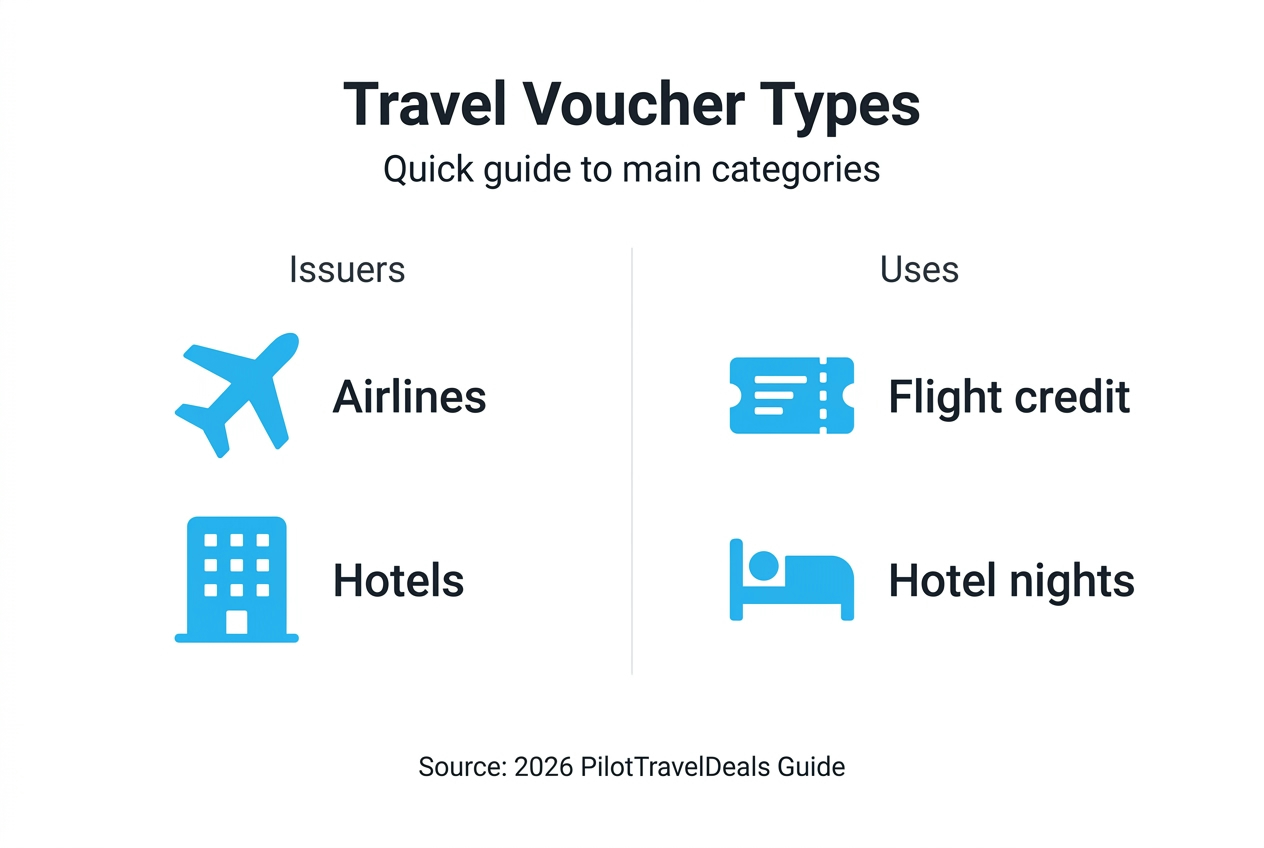
Different issuers create distinct voucher types with varying flexibility:
- Airline vouchers typically apply only to flights with the same carrier that issued them
- Hotel vouchers cover future stays at specific hotel brands or properties
- Travel agency vouchers work across multiple travel products booked through that agency
- Online platform vouchers provide discounts on bookings made through their websites
Each type comes with its own restrictions and benefits. Travel vouchers function as prepaid credits, helping you reduce out-of-pocket expenses for travel services. The key advantage for budget travelers is strategic timing. You can bank these credits and apply them when you find the best deals, potentially stacking savings for maximum value.
Types of travel vouchers and their common uses
Understanding the four main voucher categories helps you predict their limitations and opportunities. Each type serves different purposes and comes with distinct restrictions that impact how you can use them.
Airline vouchers emerge most commonly after flight disruptions. When your flight gets canceled, significantly delayed, or overbooked, carriers often offer these as compensation. Airline vouchers compensate for flight disruptions and remain valid only for future flights with the same airline. You cannot transfer them to other carriers or use them for hotels or rental cars. Most airline vouchers expire within 12 months and restrict usage to specific fare classes.
Hotel vouchers come as promotions or compensation for unsatisfactory stays. Properties issue them when rooms aren’t ready, amenities malfunction, or service falls short. Marketing campaigns also distribute hotel vouchers to attract new guests during slower seasons. These vouchers typically apply to future bookings at the same hotel chain, though premium brands sometimes allow wider redemption across their portfolio.

Travel agency vouchers incentivize bookings through their services, offering the most flexibility among voucher types. You can apply them to flights, hotels, tours, and packages booked through the agency. This versatility makes them particularly valuable for budget travelers planning multi-component trips. Agencies use these vouchers to build customer loyalty and encourage repeat business.
Online travel platform vouchers offer discounts for bookings on their websites. Sites like Expedia, Booking.com, or Priceline distribute these during promotional periods or after booking issues. They work across multiple travel categories, giving you options to apply credits where you need them most.
Here’s how these voucher types compare:
| Voucher Type | Typical Use | Restrictions | Transferable | Average Value |
|---|---|---|---|---|
| Airline | Flight disruptions | Same carrier only | Usually no | $100-$500 |
| Hotel | Service recovery/promos | Same chain/property | Sometimes | $50-$200 |
| Travel Agency | Loyalty incentive | Agency bookings only | Rarely | $75-$300 |
| Online Platform | Promotional discount | Platform bookings only | No | $25-$150 |
Knowing these distinctions helps you evaluate voucher offers realistically. You can maximize business travel benefits by choosing vouchers that align with your travel patterns. Understanding voucher types also guides your travel savings strategies by revealing which credits offer genuine flexibility versus limited utility.
Crucial terms, expiration, and restrictions to watch for
Voucher fine print determines whether your credit retains value or evaporates unused. Savvy budget travelers scrutinize these conditions before accepting vouchers over cash refunds.
Expiration dates create the most common pitfall. Most vouchers expire within 12 to 24 months, with airlines typically offering shorter windows than hotels or agencies. Mark your calendar immediately when you receive a voucher, as issuers rarely send reminders. Miss the deadline by even one day and your credit disappears completely.
Blackout dates restrict when you can redeem vouchers. Peak travel periods like holidays, school breaks, and summer vacations often fall under these restrictions. Airlines also limit vouchers to specific fare classes, excluding discounted or promotional rates. You might find yourself unable to use a voucher on the exact dates you need, forcing you to pay cash instead.
Transferability policies vary widely across issuers. Some vouchers lock to the original recipient’s name, making them worthless if your plans change. Others allow transfers to family members or friends, adding flexibility. A few vouchers even permit resale, though this violates terms with most major carriers. Always verify whether you can share vouchers with travel companions before assuming flexibility.
Partial value redemption creates another frustration. If your voucher holds $300 in credit but your booking costs $250, you typically lose the remaining $50. Travel vouchers often have expiration dates and specific terms that prevent refunding unused portions. This all or nothing structure pressures you to find bookings that consume your full voucher amount.
Key restrictions to verify immediately:
- Expiration date and any extension policies
- Blackout dates or restricted travel periods
- Fare class limitations or minimum purchase requirements
- Name change or transfer permissions
- Partial redemption or remaining balance policies
- Combination rules with other discounts or vouchers
Pro Tip: Set calendar reminders for 60 days and 30 days before voucher expiration to give yourself ample time to find suitable bookings without last minute pressure.
Understanding these terms prevents you from accepting vouchers that don’t match your travel flexibility. Sometimes a smaller cash refund beats a larger voucher hampered by restrictive conditions. Smart travel savings strategies include evaluating voucher terms against your actual travel patterns before committing.
How recent laws affect vouchers and refunds in 2026
Regulatory changes in 2024 and 2025 fundamentally shifted the balance between vouchers and cash refunds. Understanding these rules helps you claim what you deserve when flights get disrupted.
New regulations require automatic cash refunds for canceled or significantly changed flights when you decline alternatives. Airlines must now process these refunds within seven business days for credit card purchases and 20 days for other payment methods. This represents a major upgrade from the previous system where carriers could push vouchers as the default option.
The definition of “significant change” now includes specific criteria that trigger mandatory refunds. The U.S. Department of Transportation’s airline refund law requires refunds when flights experience departure or arrival time changes exceeding three hours domestically or six hours internationally. Changes to departure or arrival airports, increases in connection points, downgrades in service class, or switches to less accessible aircraft also qualify.
These regulations distinguish between three types of passenger protections:
- Refunds return your money when airlines cancel or significantly change flights
- Care provides meals, accommodation, and transportation during extended delays
- Compensation offers additional payment for specific disruptions like denied boarding
Vouchers now function as optional compensation rather than mandatory replacement for refunds. Airlines can still offer vouchers, but they cannot force you to accept them instead of cash when you qualify for refunds under the new rules.
“The 2024-2025 airline refund regulations mark the strongest consumer protection upgrade in decades, ensuring passengers receive automatic cash refunds instead of being pressured into accepting restrictive vouchers for canceled or significantly altered flights.”
These changes particularly benefit budget travelers who need immediate cash flow rather than credits locked to specific carriers. You can now refuse vouchers without losing your refund rights, giving you leverage to negotiate better compensation.
Knowing when you qualify for refunds versus when vouchers make sense helps you make informed decisions. If you frequently fly with a particular airline and the voucher offers more value than the refund amount, accepting it might align with your travel compensation strategy. However, cash refunds provide maximum flexibility to rebook with any carrier or apply funds elsewhere.
Stay informed about your rights by checking official airline refund policies and understanding how new airline refund laws apply to your specific situation.
Tips to redeem and maximize your travel voucher value
Redeeming vouchers effectively requires organization and strategic planning. Follow these steps to extract maximum value without leaving money on the table.
Start by documenting all voucher details immediately upon receipt. Record the voucher code, expiration date, issuing company, and any restrictions in a dedicated travel file or app. Many travelers lose travel credits because they forget about them or misplace confirmation emails.
When ready to book, verify your voucher’s current status and remaining balance. Log into your account with the issuer or contact customer service to confirm the credit is active and check exact terms. This prevents surprises at checkout when you discover unexpected restrictions.
The redemption process typically follows these steps:
- Search for travel options that meet your needs on the issuer’s website or platform
- Select your preferred flight, hotel, or package and proceed to payment
- Enter your voucher code during booking payment in the designated promo or credit field
- Verify that the discount applies correctly before finalizing your purchase
- If online redemption fails, contact customer service with your voucher details for manual application
- Save confirmation showing the voucher was successfully applied
Maximize savings by combining vouchers with other deals strategically. Stack your travel credit with seasonal sales, loyalty program discounts, or cashback offers when issuers permit multiple promotions. Check whether your voucher can apply to already discounted fares or if it requires full price bookings.
Timing your redemption around major sales events amplifies value. Wait for Black Friday travel deals, Cyber Monday promotions, or off season discounts to book using your voucher. This approach lets you apply credit against already reduced prices, compounding your savings.
Pro Tip: Set three calendar reminders at 90 days, 60 days, and 30 days before voucher expiration, giving yourself multiple opportunities to find ideal bookings without last minute panic.
Plan bookings that consume your full voucher amount to avoid forfeiting remaining value. If your voucher holds $400, search for trips costing $400 to $450 rather than $200 bookings that waste half your credit. Consider upgrading seat class, adding extra nights, or including additional travelers to maximize usage.
Explore creative applications if standard bookings don’t match your voucher value. Some issuers allow applying flight vouchers toward baggage fees, seat selections, or onboard purchases. Hotel vouchers might cover resort fees, parking, or dining credits. Ask customer service about alternative redemption options.
Combine voucher strategies with proven travel booking hacks and hotel booking tips to compound your savings. Understanding how to layer multiple discount methods creates opportunities to travel better for less.
Track all voucher activity through spreadsheets or travel apps that send automatic expiration alerts. This systematic approach ensures you never lose value through oversight or confusion. Remember, vouchers only benefit you when actually redeemed, so proactive management is essential for maximizing travel savings.
Save more on your next trip with PilotTravelDeals
Understanding travel vouchers represents just one piece of budget travel mastery. Combining that knowledge with expert deal finding creates truly significant savings on every trip you take.
PilotTravelDeals specializes in helping budget conscious travelers discover the best airfare, hotel, and package deals available. Our platform aggregates offers from multiple providers, letting you compare prices quickly and find genuine discounts rather than marketing gimmicks.

When you have travel vouchers ready to redeem, our deal alerts help you identify perfect opportunities to maximize their value. Stack your voucher credits with our curated promotions to achieve savings you won’t find booking directly. We track seasonal patterns, price drops, and limited time offers so you can apply credits strategically.
Explore our cheap airfare tips to master flight booking timing and pricing strategies. Browse our hotel deals to find accommodations that complement your voucher redemption plans. Learn smart ways to find cheap tickets to any destination while making your travel credits stretch further.
Frequently asked questions
What exactly is a travel voucher?
A travel voucher is a prepaid credit issued by airlines, hotels, travel agencies, or booking platforms that you apply toward future travel purchases instead of paying full cash price. They function like store credit specifically for travel services.
Can I transfer my travel voucher to someone else?
Transferability depends entirely on the issuer’s policy. Most airline vouchers lock to the original passenger’s name and cannot be transferred, while some hotel and agency vouchers allow transfers to family or friends. Always check specific terms before assuming you can share credits.
How long do travel vouchers typically last before expiring?
Most travel vouchers expire between 12 and 24 months from the issue date, with airlines generally offering shorter validity periods than hotels or agencies. Some promotional vouchers expire in as little as six months, so verify expiration dates immediately upon receipt.
Should I accept a voucher or demand a cash refund in 2026?
Under current 2026 regulations, you have the right to automatic cash refunds for canceled or significantly changed flights when you decline alternatives. Accept vouchers only if they offer greater value than the refund amount and you plan to travel with that specific provider before expiration.
What happens to unused voucher value if my booking costs less?
Most issuers forfeit any remaining voucher balance after redemption, meaning you lose the difference if your booking costs less than the voucher amount. Plan bookings that consume the full voucher value or slightly exceed it to avoid wasting credits.
Can I combine multiple vouchers or stack them with other discounts?
Combination policies vary by issuer. Some allow stacking multiple vouchers or applying them alongside promotional codes, while others restrict usage to one discount per booking. Contact customer service to clarify stacking rules before planning your redemption strategy.
Recommended
- Travel Budgeting Tips: Complete Guide for 2025 – PilotTravelDeals.com
- Understanding the Budget Travel Planning Guide – PilotTravelDeals.com
- 7 Proven Budget Travel Tips 2025 for Smart Savings – PilotTravelDeals.com
- Types of travel passes to save big in 2026 – PilotTravelDeals.com
- What is one-way car rental? Flexible travel guide 2026
- 7 Essential Tips for Weekend Getaways Ontario Locals Need – The Online Notary