

TL;DR:
- Airline group booking programs offer flexible terms, perks, and discounted rates unavailable on typical search engines.
- Booking directly with airlines is essential as third-party platforms often do not provide the full benefits of group fares.
- Proactive, detailed communication and negotiation with airline reps can significantly maximize savings and logistics management.
Most groups planning a trip together leave serious money on the table, not because the deals don’t exist, but because they never think to look beyond a standard flight search. The assumption that booking 12 or 20 tickets through a regular travel site is the smartest approach is one of the most costly myths in group travel. Airlines have dedicated group booking programs with flexible payment terms, complimentary name changes, and rates that simply don’t appear on comparison engines. This guide breaks down exactly how these programs work, which airlines offer the best options, and how your group can walk away paying far less than you’d expect.
Table of Contents
- How do airline group discounts work?
- Which major airlines offer group discounts?
- Steps to secure the best group airfare deals
- Tips for maximizing group travel savings
- Why most travelers miss out on group airfare deals
- Find even more travel deals for your group
- Frequently asked questions
Key Takeaways
| Point | Details |
|---|---|
| Airline group discounts defined | Most airlines offer special rates and perks to groups of 10 or more travelers. |
| Major airline programs | Top U.S. and international airlines each have unique group booking policies and benefits. |
| Step-by-step booking | Start early, get multiple quotes, and compare offers for the best group fare deal. |
| Extra savings strategies | Combine airfare with hotels, use comparison tools, and look for limited-time promotions. |
| Why people miss deals | Most group organizers miss out by not asking airlines directly or exploring group programs. |
How do airline group discounts work?
Before diving into which airlines offer deals, it’s crucial to understand how airline group discounts work. The core concept is straightforward: airlines set aside a block of seats at a negotiated rate for groups traveling together on the same flight. But the details matter a lot, and understanding them puts you in a much stronger position when it’s time to book.
Most airlines define a group as 10 or more people traveling together on the same itinerary. A few carriers lower that threshold to 8, while some international carriers set it at 15. The exact number matters because it determines whether you qualify for special pricing at all.
Here’s what group booking programs typically include:
- Blocked seat inventory: The airline holds a set number of seats at an agreed fare, giving your group time to confirm final headcount without losing availability.
- Flexible payment terms: Many programs allow a deposit upfront with the balance due closer to departure, which is a real advantage when collecting money from a large group.
- Free name changes: Because group rosters often shift, airlines commonly allow one or more name substitutions before ticketing deadlines, sometimes at no charge.
- One free ticket for large groups: Several carriers offer one complimentary ticket for every set number of paying passengers, such as one free seat per 20 or 25 paid fares.
- Dedicated group coordinators: Airlines assign a group desk or agent to manage your booking, answer questions, and help navigate changes. This level of service doesn’t exist with standard online bookings.
One thing many group organizers miss is that these rates are almost never available on third-party booking platforms. The full picture of how group airfare works requires going directly to the airline’s group booking desk or website section, not a consumer-facing search engine.
Pro Tip: When contacting an airline’s group desk, always ask about the ticketing deadline separately from the travel date. Missing that ticketing deadline often means losing your blocked seats or paying penalty fees, even if your trip is months away.
Another common misconception is that group rates are automatically cheaper per person than individual tickets. That’s not always true. The real value in group programs is the combination of flexibility, perks, and predictable pricing, not just a lower number. A step-by-step group booking process can help you weigh those trade-offs clearly before committing.
Which major airlines offer group discounts?
With a clear understanding of group fare basics, let’s review which airlines lead in group discount offerings. Both U.S. carriers and major international airlines have formal group booking programs, though they differ significantly in structure, flexibility, and added benefits.
Each major airline has its own group program with differing benefits and requirements. Here’s a comparison of how the leading carriers stack up:
| Airline | Min. group size | Name changes | Payment flexibility | Free tickets | Booking method |
|---|---|---|---|---|---|
| American Airlines | 10 | Yes, before deadline | Deposit + balance | Varies by route | Phone or online form |
| Delta Air Lines | 10 | Yes, limited | Deposit option | Select fares only | Phone or online |
| United Airlines | 10 | Yes | Deposit available | Yes, on some routes | Group desk or online |
| Southwest Airlines | 10 | Yes | Full flexibility | No formal policy | Phone only |
| British Airways | 10 | Yes | Deposit option | 1 free per 20 paid | Phone or agent |
| Air Canada | 10 | Yes | Installment options | Route dependent | Online or phone |
What’s worth noting beyond the table is that not all programs are created equal in practice. Southwest, for example, is well known for its no-change-fee culture, which extends into its group program. That flexibility can be invaluable when you’re coordinating travel for a school group or family reunion where plans shift frequently.

Delta and United have invested in online group booking portals, which makes starting a quote faster. American Airlines, by contrast, often routes groups through its group desk for personalized service, which takes longer but can result in better-negotiated terms for larger parties.
A few other valuable group airfare perks worth knowing about include:
- Priority boarding for groups on select airlines, which reduces the logistical chaos of boarding 15 or 20 people together.
- Waived baggage fees on some international routes when booking through the group desk.
- Seat blocking in adjacent rows, which is nearly impossible to guarantee through a standard booking but often arranged as part of a group contract.
- Single invoice billing, which simplifies accounting for organizations, schools, and businesses booking travel for teams.
International carriers such as Lufthansa, Emirates, and Singapore Airlines also have formal group desks and often offer strong rates on transatlantic and transpacific routes where seat inventory is higher and competition for group business is significant.
Steps to secure the best group airfare deals
Now that you know which airlines offer discounts, here’s a practical process to lock in the best rates for your group. Following a clear process can help groups secure lower fares and better terms, and skipping steps early in the process is usually where things go wrong.
-
Gather your group details before making contact. Know your approximate headcount, travel dates, departure city, destination, and any flexibility you have on timing. Airlines quote better rates when you come prepared. Vague requests like “sometime in summer for about 15 people” result in higher quotes and slower turnaround.
-
Request quotes from at least three airlines. Don’t settle for the first quote you receive. Contact the group desks of two or three airlines serving your route and ask for written quotes. This gives you leverage when negotiating and often reveals significant price differences for the same route and dates.
-
Compare the full picture, not just the base fare. Look at payment deadlines, name change policies, cancellation terms, and what extras are included. A fare that looks $30 cheaper per person but has strict no-change terms may cost your group far more if any adjustments come up later.
-
Negotiate payment terms if the deposit is too high. Group coordinators have some flexibility on initial deposit requirements and ticketing deadlines, especially for larger groups. Don’t be afraid to ask for a smaller holding deposit or an extended deadline to confirm names.
-
Confirm the booking in writing and set internal deadlines. Once you accept a quote, get every term documented. Then set your own internal deadline at least two weeks before the airline’s ticketing deadline so you have a buffer to collect final payments and confirm passenger names.
Pro Tip: Ask the airline’s group desk if your travel dates have any blackout restrictions or if the quoted fare is capacity-controlled. Some group rates only apply to a limited number of seats, and a small increase in group size might bump you into a higher fare tier.
When you’re ready to plan group travel in full detail, mapping out each of these steps with your organizing committee prevents last-minute scrambles and missed deadlines that can turn a good deal into an expensive headache.
Tips for maximizing group travel savings
After learning the steps, here’s how smart strategies can stretch your group travel budget even further. Getting the group rate is just the beginning. How you layer other savings tactics on top of it is where the real budget impact happens.
Booking hotels and airfare together, or using comparison tools, can unlock deeper discounts that individual bookings simply don’t offer. Here’s a breakdown of potential savings by approach:
| Strategy | Estimated savings vs. standard booking | Best for |
|---|---|---|
| Direct airline group rate | 5 to 15% per person | All group sizes |
| Air and hotel bundle | 10 to 25% on combined cost | Trips of 3+ nights |
| Off-peak travel dates | 15 to 40% depending on route | Flexible groups |
| Comparison site research | Varies, often 10 to 20% | Initial price research |
| Promo code or loyalty offer | 5 to 20% situational | Groups with loyalty status |
Beyond the numbers, here are the most impactful savings strategies in practice:
- Travel on Tuesdays or Wednesdays. Mid-week departures consistently show lower fares than Friday or Sunday travel, sometimes by a meaningful margin on popular routes.
- Adjust your group size to hit pricing thresholds. Some airlines offer a better per-person rate at 15 passengers than at 10. If you’re hovering near a threshold, it may actually cost less per head to add a seat or two.
- Watch airline promotional windows. Most carriers run group promotions tied to the travel calendar. Spring break and holiday travel announcements often come with group-specific deals if you contact the group desk directly rather than waiting for public sales.
- Use a travel comparison tool for initial research, then take that data directly to the airline. Knowing what individual fares look like gives you a realistic baseline before you enter group negotiations.
- Consider charter options for very large groups. For groups of 50 or more, charter pricing through specialist operators sometimes beats scheduled airline group rates, especially for domestic travel.
Pro Tip: Sign up for airline newsletters and fare alert services before your booking window opens. Airlines occasionally release group-specific promotions through email that never appear on their main websites.
When you use comparison sites effectively as research rather than your final booking tool, you arrive at the group desk with real data and a stronger negotiating position. That combination of preparation and direct contact is consistently what separates groups that save significantly from those who pay full price.
Why most travelers miss out on group airfare deals
Here’s something that surprises even experienced travelers: the biggest barrier to group airfare savings isn’t price, it’s assumption. Most group organizers assume that a search engine has already surfaced the lowest possible fare, so they never pick up the phone or fill out a group inquiry form. That assumption costs real money.
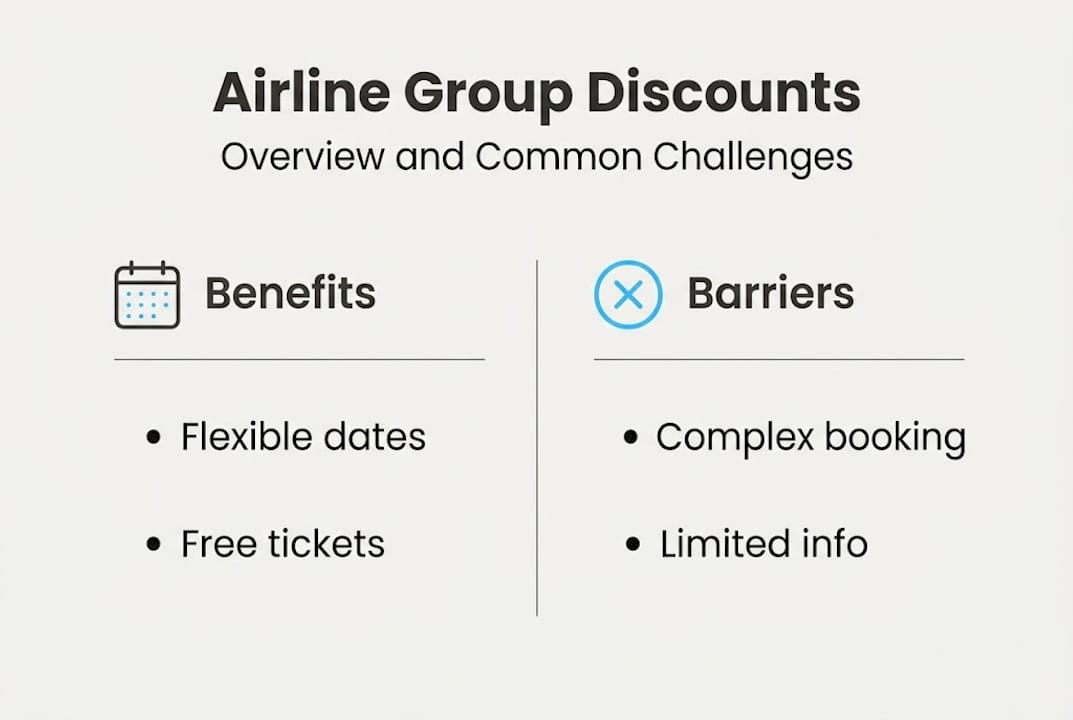
Group fares, as explained through group airfare demystified, are not always the absolute cheapest fare in the market. But that framing misses the point entirely. The value in a group booking isn’t just the per-ticket price. It’s the payment flexibility, the ability to hold seats without full payment, the name-change options, and the single-point-of-contact service that makes managing 15 or 25 travelers actually manageable.
We’ve seen group organizers find individual fares that look cheaper per ticket, only to discover that booking 18 separate tickets with 18 separate travel insurance policies, 18 name-change fees when plans shift, and no seat coordination turned their “savings” into a logistical nightmare that cost more in the end. The group program isn’t just a discount. It’s a structure that protects your whole trip.
The organizers who consistently get the best outcomes are the ones who are proactive, specific, and persistent. They contact multiple airlines. They ask questions that most people don’t think to ask. They negotiate payment terms. Most groups miss out simply because they don’t ask.
Find even more travel deals for your group
Ready to put your group travel plan into action? Here’s how you can get even more out of your next adventure.
PilotTravelDeals.com brings together curated group booking resources, group booking family savings comparisons, and practical guides designed specifically for families, friend groups, and organizations planning trips together. Whether you’re coordinating a reunion, a school trip, or a corporate retreat, the tools on the site help you research multiple providers, compare rates, and identify where the real savings are. From flights and hotels to extras like car rentals and SIM cards, explore cheap airfare tips that cover both individual and group bookings so you can make every travel dollar count.
Frequently asked questions
What is the minimum number of people needed for an airline group discount?
Most airlines require at least 10 people traveling together to qualify for a group discount, though some carriers adjust this threshold based on route or cabin class.
Do group discounts always guarantee the cheapest fares?
Not always. Group fares focus on flexibility and perks rather than the absolute lowest price, so individual tickets might occasionally appear cheaper on a per-seat basis.
Can I book group airfare online or must I call the airline directly?
Some group rates require direct booking with the airline, while others have online inquiry forms, but personalized quotes almost always require speaking with a group desk agent.
Are there extra discounts if I bundle hotels or car rentals with flights?
Yes. Booking hotels and airfare together can result in additional savings, particularly when working with travel comparison platforms that aggregate bundled group rates.
Is it possible to modify names or dates after booking group tickets?
Group bookings usually allow for free name changes up to a certain point before departure, but specific policies and deadlines vary by airline and fare type.
Recommended
- How to book group travel cheaply: 5 steps to big savings – PilotTravelDeals.com
- Group Booking Discounts: Maximizing Family Savings – PilotTravelDeals.com
- Group Travel Discount: How It Maximizes Family Savings – PilotTravelDeals.com
- How to find affordable domestic flights and save big – PilotTravelDeals.com


