

Travel credits sound complicated, but they’re actually one of the smartest ways to stretch your travel budget. When flights get canceled or plans change, you’ll often receive travel credit instead of cash. Many travelers feel confused about how these credits work or worry they’ll lose money. This guide breaks down exactly what travel credit is, how it differs from refunds and vouchers, and most importantly, how you can use it strategically to save hundreds on your next trip. Understanding these basics helps you make confident decisions when disruptions happen and ensures you never leave money on the table.
Table of Contents
- Understanding What Travel Credit Is And How It Works
- Comparing Travel Credit Options: Benefits And Limitations
- How To Redeem And Maximize Your Travel Credits For Flights And Accommodations
- Understanding Travel Credit Policies Across Airlines And Hospitality Businesses
- Save More On Your Next Trip With PilotTravelDeals
Key takeaways
| Point | Details |
|---|---|
| Travel credits are store value | Airlines and travel companies issue credits for future bookings after cancellations or disruptions, usable within specific timeframes. |
| Different from cash refunds | Federal regulations require cash refunds in certain situations, while credits substitute when conditions aren’t met. |
| Strategic redemption matters | Combining credits with promotions and booking before expiration maximizes savings on flights, hotels, and travel services. |
| Policies vary significantly | Airlines and hotels have different expiration dates, transferability rules, and restrictions that affect credit value. |
| Documentation prevents losses | Keeping records and understanding provider terms helps avoid common pitfalls like missed expirations or unused balances. |
Understanding what travel credit is and how it works
Travel credit represents a store of value issued by airlines or travel companies after cancellations, disruptions, or promotional offers. Think of it as a gift card specifically for future travel with the issuing company. Unlike cash sitting in your bank account, travel credits live in your airline or hotel loyalty account and can only be used for bookings with that specific provider.
The key difference between travel credits and other reimbursement options matters for your wallet. Travel credits lock your money with one company for future use. Travel vouchers often come with more restrictions on dates and routes. Cash refunds give you complete flexibility but aren’t always available. Federal regulations require cash refunds for canceled flights under certain conditions, making travel credits a substitute when those specific requirements aren’t met.
You’ll typically receive travel credits in these common scenarios:
- Voluntary cancellations when you change your mind about a trip
- Airline schedule changes that don’t qualify for mandatory refunds
- Compensation for service disruptions like delays or overbooking
- Promotional bonuses from credit card sign ups or loyalty programs
- Unused ticket value when you rebook at a lower fare
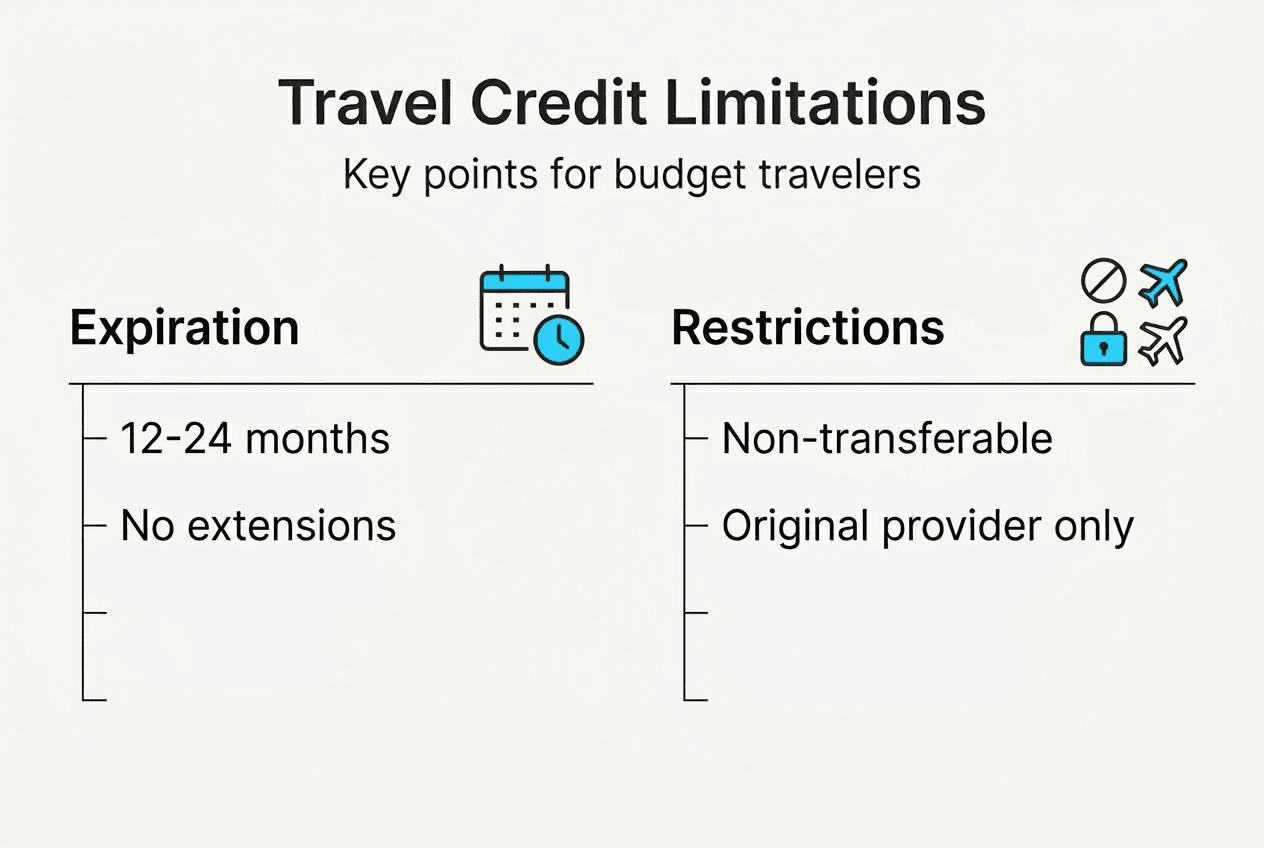
Travel credits come with important limitations you need to know upfront. Most expire within 12 to 24 months from the original booking date, not the issue date. Some airlines extend this window, while budget carriers might give you less time. Restrictions can include blackout dates during peak travel seasons, limited route availability, or requirements to book directly through the airline rather than third party sites. Reading the fine print prevents surprises when you’re ready to use your credits.
Comparing travel credit options: benefits and limitations
Understanding the practical differences between reimbursement types helps you make smart decisions when disruptions happen. Each option carries distinct advantages and constraints that affect your travel budget and flexibility.
| Feature | Travel Credits | Cash Refunds | Travel Vouchers |
|---|---|---|---|
| Usability | Future bookings with issuing company only | Any purpose, complete flexibility | Often restricted to specific routes or dates |
| Value retention | Full original ticket value typically preserved | Full amount returned | May include bonus value but with limitations |
| Expiration | Usually 12 to 24 months | No expiration once received | Varies, often 6 to 12 months |
| Restrictions | Blackout dates, fare class limits possible | None | Significant booking restrictions common |
| Processing time | Immediate account credit | 7 to 20 days depending on payment method | Immediate code delivery |
Travel credits offer excellent value retention when you plan to fly with the same airline again. Your full ticket price stays available for rebooking without losing money to cancellation fees. This works perfectly for travelers with flexible schedules or those loyal to specific carriers. The main constraint is airline exclusivity, meaning you can’t use Delta credits on United flights or switch to hotels if your plans change completely.
Cash refunds provide maximum flexibility but come with stricter eligibility requirements. Airlines must process refunds within 7 business days for credit card payments or 20 days for other methods. You have legal rights to refunds when airlines cancel flights, make significant schedule changes, or cause delays exceeding three hours domestically. Accepting credits makes sense when you don’t meet refund criteria or when you know you’ll travel with that carrier soon and want to avoid processing delays.
Common limitations can significantly impact credit value if you’re not careful. Many airlines restrict credits to the original passenger, preventing you from booking for family or friends. Fare class restrictions might force you into higher priced tickets when redeeming. Some carriers apply credits only to base fares, requiring you to pay taxes and fees separately. International travel credits often exclude partner airlines, limiting your routing options.
Pro Tip: Request a refund first if your situation qualifies under federal protection rules before accepting travel credits. Airlines sometimes offer credits by default even when you’re entitled to cash. Politely insisting on your legal rights can put money back in your account instead of locking it with one carrier.
How to redeem and maximize your travel credits for flights and accommodations
Using travel credits effectively requires knowing the exact steps and strategic timing. Follow this process to redeem your credits without hassle:
- Log into your airline or hotel loyalty account and locate your credit balance in the wallet or credits section
- Note the expiration date and any booking restrictions listed in your account details
- Search for flights or hotels as you normally would on the provider’s website or app
- During checkout, look for the option to apply travel credits or stored value before entering payment information
- Contact customer service if the credit doesn’t appear automatically, as some systems require manual application
- Complete your booking and verify the credit amount deducted from your total
Maximizing credit value takes smart planning and awareness of opportunities:
- Combine credits with flash sales, error fares, or promotional discounts to compound savings
- Book flexible or refundable fares when possible so you can cancel again if plans change
- Use travel comparison sites to verify you’re getting competitive pricing before applying credits
- Choose accommodations strategically by checking if your airline credits extend to hotel partners or vacation packages
- Stack multiple credits from different bookings on a single trip when airline policies allow
- Book earlier in the week when prices typically drop for weekend travel
Travel credits often cover more than just flights. Many airlines let you use credits for seat upgrades, extra baggage, in flight WiFi, and lounge access. Hotel credits frequently apply to room charges, resort fees, dining, and spa services. This flexibility means you can enhance your entire trip experience rather than just covering basic transportation. Some credit card travel portals even accept airline credits for car rentals or cruise bookings, expanding your options significantly.

Pro Tip: Set calendar reminders for 30 days before your credits expire and start browsing booking hacks early. Last minute scrambling often leads to poor value redemptions on inconvenient flights. Planning ahead gives you time to find deals worth using your credits on and ensures you capture the full value.
Common pitfalls drain credit value faster than you’d expect. Missing expiration dates tops the list, with millions of dollars in credits going unused every year. Not reading terms carefully leads travelers to book non refundable fares with credits, losing flexibility if plans change again. Some people assume credits work like cash and get frustrated when blackout dates block their preferred travel dates. Others forget to check if their credit covers taxes and fees or just the base fare. Avoiding these mistakes starts with treating credits like expiring coupons that require active management.
Understanding travel credit policies across airlines and hospitality businesses
Airline and hotel policies vary dramatically in how they handle travel credits. Knowing these differences helps you choose providers wisely and avoid frustrating limitations.
Key policy areas to research before booking:
- Expiration terms ranging from 90 days to multiple years depending on the provider
- Transferability rules determining if credits can be used for other passengers
- Blackout dates blocking credit redemption during holidays and peak seasons
- Refundability indicating whether you can get cash back if you cancel a booking made with credits
- Partial use policies explaining if unused credit portions carry forward to future bookings
- Combination restrictions limiting how many credits you can apply to one reservation
| Provider Type | Typical Expiration | Transferability | Common Restrictions |
|---|---|---|---|
| Major US airlines | 12 to 24 months | Original passenger only | Blackout dates, fare class limits |
| Budget carriers | 90 days to 12 months | Usually non transferable | Limited routes, change fees |
| International airlines | 12 months to 3 years | Varies by carrier | Partner airline exclusions |
| Hotel chains | 12 to 18 months | Often transferable | Property restrictions, minimum stays |
| Online travel agencies | 6 to 12 months | Account holder only | Significant booking limitations |
Recent industry trends have shifted credit policies in travelers’ favor. The pandemic forced airlines to extend expiration dates and waive change fees on many tickets. Some carriers now offer credits valid for multiple years rather than the traditional 12 month window. Budget airlines that previously offered only vouchers have started issuing more flexible credits. These improvements reflect competitive pressure and regulatory scrutiny pushing companies toward customer friendly policies.
Regulatory changes continue reshaping the landscape. The Department of Transportation has strengthened refund requirements and increased transparency mandates. Airlines must now clearly disclose credit terms at booking and provide easy access to balance information. Consumer protection agencies monitor compliance more closely, making it easier to file complaints when providers don’t honor stated policies.
Researching provider terms before booking saves headaches later. Check airline websites for their specific credit policies in the customer service or travel information sections. Read hotel booking terms carefully, as third party sites often have stricter rules than direct bookings. Compare policies when choosing between similar priced options, as better credit terms might make one provider more valuable. Travel compensation guides help you understand your rights across different scenarios.
Keeping documentation protects your interests when disputes arise. Screenshot your credit balance and terms when issued. Save confirmation emails showing credit amounts and expiration dates. Take notes during customer service calls, including representative names and reference numbers. This paper trail becomes invaluable if credits disappear from your account or if you need to escalate issues. Contact customer service immediately if you notice discrepancies, as resolving problems gets harder over time.
Save more on your next trip with PilotTravelDeals
Now that you understand how travel credits work, you’re ready to combine this knowledge with expert deal finding strategies. PilotTravelDeals specializes in uncovering the cheapest flights and hotel rates, helping budget travelers like you maximize every dollar. Our curated guides complement your credit savings by showing you exactly when and where to book for maximum value.

Explore our comprehensive cheap airfare tips to discover pricing patterns airlines don’t advertise. Browse our hotel deals section for accommodations that stretch your budget further. Use our travel comparison sites guide to verify you’re getting the best possible rates before applying your hard earned credits. We’ve helped thousands of travelers save up to 80% by combining smart booking tactics with strategic credit use. Let us help you plan your next adventure without breaking the bank.
FAQ
What is the difference between travel credit and a travel voucher?
Travel credit functions as flexible store value tied to your account with an airline or hotel, usable across most of their booking options. Travel vouchers typically come with more restrictive terms like specific routes, limited date ranges, or blackout periods. Credits generally offer better flexibility for rebooking, while vouchers often compensate for service failures with bonus value but stricter usage rules.
Can I get a cash refund instead of travel credit for canceled flights?
Yes, federal law requires cash refunds when airlines cancel flights or make significant schedule changes affecting your plans. You’re entitled to full refunds for credit card purchases processed within 7 business days. Travel credits become the alternative only when you voluntarily cancel, don’t meet refund criteria, or choose to accept them for future travel convenience. Always check your travel compensation rights before accepting credits.
How can I avoid losing value when using travel credits?
Use credits well before expiration dates by setting calendar reminders for 30 days prior. Combine them with promotional sales and error fares to maximize savings potential. Read all terms carefully to understand restrictions on dates, routes, and booking methods. Book flexible fare options when possible so you maintain rebooking ability if plans change. Track your balance regularly and explore travel booking hacks that help you extract full value from every credit dollar.
Can travel credits be transferred or combined?
Policies vary significantly by airline and hotel provider. Some carriers allow you to use credits for other passengers or combine multiple credits on one booking. Others restrict credits strictly to the original ticket holder with no transfer options. Budget airlines typically enforce the strictest limitations. Check specific terms in your account or contact customer service directly to confirm your options. Understanding travel compensation policies across providers helps you choose the most flexible options when booking.
Do travel credits cover taxes and fees or just the base fare?
Most airlines apply travel credits to the total ticket price including taxes and fees, but policies differ. Some budget carriers credit only the base fare, requiring you to pay government taxes separately when rebooking. International flights often have complex fee structures where certain charges can’t be credited. Always verify the credited amount matches your original payment and ask customer service to clarify what your credit covers. This prevents surprise charges at checkout when you’re ready to use your credits for a new booking.
Recommended
- What is a travel voucher? A 2026 guide for budget travelers – PilotTravelDeals.com
- Travel Budgeting Tips: Complete Guide for 2025 – PilotTravelDeals.com
- Understanding the Budget Travel Planning Guide – PilotTravelDeals.com
- 7 Proven Budget Travel Tips 2025 for Smart Savings – PilotTravelDeals.com
- The Essential Guide to Luxury Safari in 2025 – Namibia Luxury Safaris | Book Your 2025/2026 Adventure Today

