

More than 85 percent of American travelers now rely on their smartphones for booking trips, making mobile travel planning a daily reality. With the sheer variety of options and real-time updates available, navigating these digital platforms can feel both exciting and overwhelming. This guide helps clarify the latest advances in mobile travel booking and reveals how to make smarter choices using technology trusted by millions of Americans.
Table of Contents
- What Is Mobile Travel Booking Today?
- Major Types of Mobile Travel Booking Apps
- How Mobile Apps Find and Display the Best Deals
- Security, Privacy, and User Safety Considerations
- Common Pitfalls and How to Avoid Overpaying
Key Takeaways
| Point | Details |
|---|---|
| Modern mobile travel booking | Mobile apps offer comprehensive platforms for booking travel services, providing instant price comparisons, secure payments, and personalized recommendations. |
| App categories and user needs | Various app types cater to different traveler preferences, including comprehensive platforms, budget apps, and niche-focused solutions. |
| Security measures | Leading apps implement advanced security features, such as end-to-end encryption and multi-factor authentication, to protect user data. |
| Avoiding financial pitfalls | Travelers can minimize costs by comparing multiple platforms, utilizing price alerts, and remaining flexible with travel plans. |
What Is Mobile Travel Booking Today?
Mobile travel booking represents a revolutionary approach to planning and purchasing travel services directly through smartphone applications, transforming how travelers research, compare, and secure their trips. Modern tourism mobile applications provide comprehensive platforms that enable users to book flights, hotels, transportation, and experiences with unprecedented convenience and speed.
Today’s mobile travel booking ecosystem goes far beyond simple reservation systems. Sophisticated tourism mobile apps now analyze user preferences, provide personalized recommendations, and integrate multiple travel services into seamless digital experiences. Travelers can now access real-time pricing, read instant reviews, check availability, and complete transactions within minutes using intuitive smartphone interfaces.
The core features of contemporary mobile travel booking platforms typically include:
- Instant price comparisons across multiple providers
- Secure payment gateways
- Interactive maps and destination information
- Live customer support through chat functions
- Offline access to booking confirmations
- Dynamic currency conversion
- Personalized travel recommendations
Pro Tip – Mobile Booking Strategy: Always download your chosen travel booking app before your trip and enable offline mode to ensure you have access to your reservations even without consistent internet connectivity.
Emerging technologies like artificial intelligence and machine learning are further enhancing mobile travel booking platforms, enabling more intelligent search capabilities and increasingly customized travel experiences that adapt to individual traveler needs and preferences.
Major Types of Mobile Travel Booking Apps
Comprehensive research on tourism mobile applications reveals multiple distinct categories of travel booking apps designed to meet diverse traveler needs. These applications range from comprehensive platforms offering end-to-end travel solutions to specialized apps focusing on specific aspects of travel planning and booking.

Aggregator Apps represent the most common type of mobile travel booking platform. These applications compile pricing and availability information from multiple providers, allowing travelers to compare options instantly. Consumer experience studies highlight how platforms like Booking and Expedia deliver comprehensive travel booking services, enabling users to reserve flights, hotels, rental cars, and experiences through a single interface.
The primary categories of mobile travel booking apps include:
- Comprehensive Travel Platforms: Full-service apps offering end-to-end booking capabilities
- Destination-Specific Apps: Focused on particular locations or regions
- Budget Travel Apps: Specializing in discounted and budget-friendly options
- Niche Travel Apps: Targeting specific traveler segments like business, adventure, or luxury travelers
- Meta-Search Apps: Comparing prices across multiple booking platforms
- Last-Minute Booking Apps: Providing spontaneous travel deals and discounts
Modern mobile travel booking apps increasingly integrate advanced technologies like artificial intelligence and machine learning to personalize recommendations, predict pricing trends, and offer more intuitive user experiences.
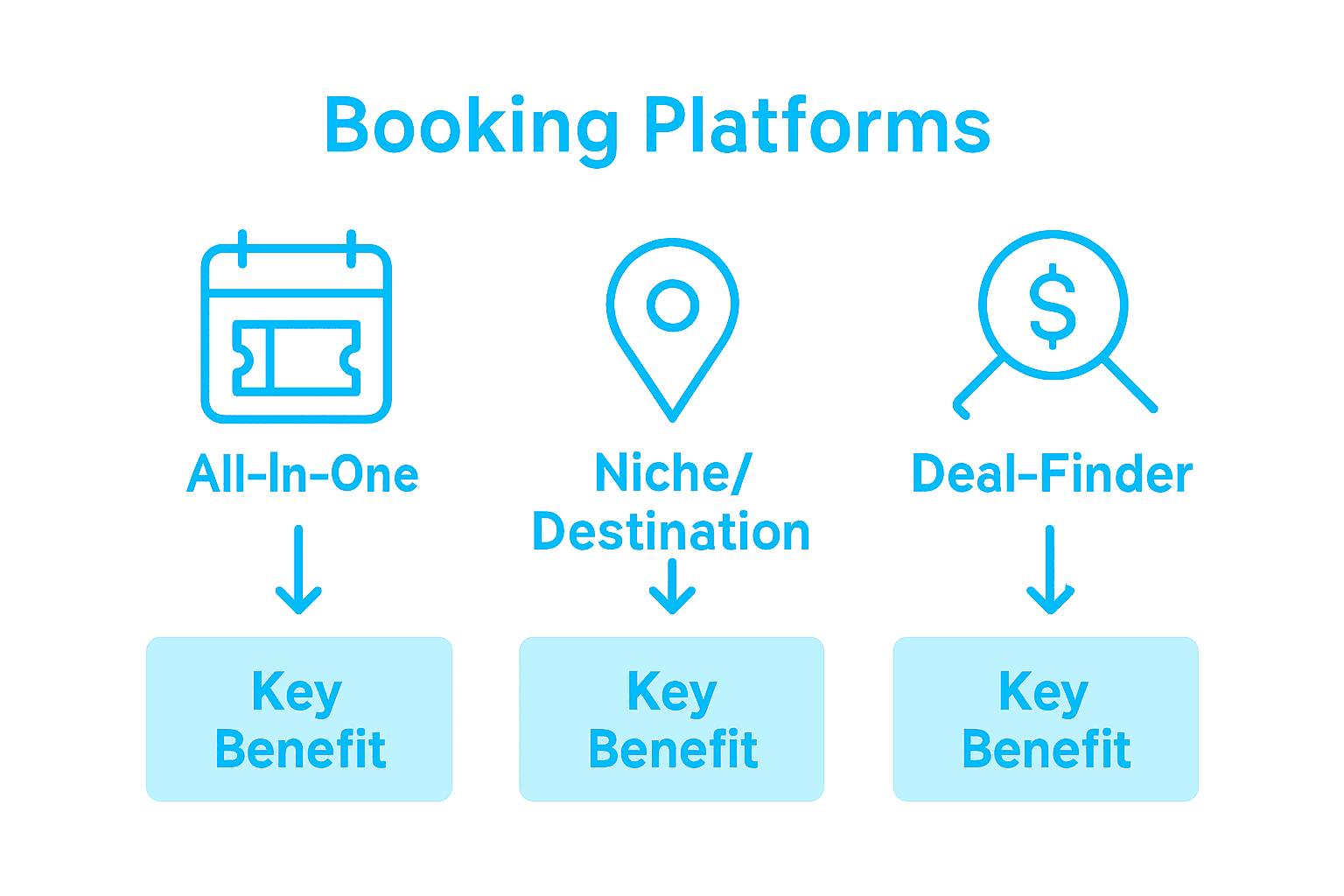
To better understand popular mobile travel booking app categories, here is a concise comparison of their focus and key user benefits:
| App Category | Typical User Needs | Key Benefit |
|---|---|---|
| Comprehensive Platforms | All-in-one trip planning | Streamlined full-service booking |
| Budget Travel Apps | Affordable options | Largest selection of discounts |
| Destination-Specific Apps | Local expertise | Tailored recommendations |
| Last-Minute Booking Apps | Spontaneous travel | Instant access to late deals |
| Niche Travel Apps | Specialized interests | Curated choices for specific groups |
| Meta-Search Apps | Price hunting | Fastest cross-platform comparison |
Pro Tip – App Selection Strategy: Download and compare at least three different travel booking apps before your trip to ensure you find the most comprehensive and user-friendly option for your specific travel needs.
How Mobile Apps Find and Display the Best Deals
Advanced travel recommender systems utilize complex algorithms to help mobile applications discover and present the most relevant travel deals for individual users. These sophisticated platforms analyze vast amounts of data, including historical pricing, user preferences, seasonal trends, and real-time availability to generate personalized travel recommendations.
Machine learning algorithms play a crucial role in how mobile apps identify and display optimal travel deals. By employing sentiment analysis and sophisticated topic modeling techniques, these applications can understand user preferences and predict which deals will be most appealing to specific travelers. The process involves multiple sophisticated steps:
- Aggregating pricing data from multiple sources
- Analyzing historical price fluctuations
- Tracking user search and booking patterns
- Considering individual traveler preferences
- Applying predictive analytics to forecast potential discounts
- Filtering deals based on user-specific parameters
The technological infrastructure behind these apps typically combines several key data processing strategies. Real-time price tracking algorithms continuously scan hundreds of travel providers, comparing rates and identifying potential savings opportunities. Advanced machine learning models then filter these results based on individual user profiles, creating a highly personalized deal recommendation experience.
Pro Tip – Deal Discovery Strategy: Enable push notifications and create multiple traveler profiles in your preferred mobile booking apps to receive the most comprehensive and personalized deal recommendations.
Security, Privacy, and User Safety Considerations
Advanced microservices architectures have transformed travel booking system security, implementing sophisticated mechanisms to protect user data and prevent potential vulnerabilities. These technological frameworks create multiple layers of protection that safeguard personal and financial information throughout the mobile booking process.
User trust remains a critical factor in mobile travel application adoption. Research demonstrates that perceived security significantly influences users’ intentions to utilize digital travel platforms, highlighting the importance of transparent and robust security measures. Mobile travel booking apps now incorporate advanced protection strategies that address various potential risks:
- End-to-end encryption of personal data
- Secure payment gateway integrations
- Multi-factor authentication
- Regular security audits and vulnerability assessments
- Advanced fraud detection algorithms
- Compliance with international data protection regulations
The most sophisticated mobile travel booking platforms implement comprehensive security protocols that go beyond basic data protection. These include real-time monitoring systems, machine learning-powered threat detection, and adaptive security frameworks that can instantly respond to potential security breaches. Continuous technological innovations ensure that user data remains protected while maintaining a seamless and convenient booking experience.
Here’s a summary of advanced security features found in top mobile travel booking platforms:
| Security Feature | Purpose | Example in Practice |
|---|---|---|
| End-to-End Encryption | Protects data in transit | Secures payment and personal info |
| Multi-Factor Authentication | Confirms user identity | Requires SMS code or app prompt |
| Real-Time Threat Monitoring | Rapid response to threats | Instantly detects fraud patterns |
| Compliance Protocols | Meets data protection laws | Adheres to GDPR, CCPA standards |
Pro Tip – Digital Safety Strategy: Always use a unique, strong password for each travel booking app, enable two-factor authentication, and periodically review your account’s security settings to minimize potential risks.
Common Pitfalls and How to Avoid Overpaying
Behavioral research on mobile hotel booking reveals critical insights into the complex landscape of digital travel purchasing. Travelers often encounter numerous financial traps that can significantly increase their overall travel expenses, making it crucial to understand and navigate these potential pitfalls strategically.
Technology readiness plays a fundamental role in helping travelers make informed purchasing decisions. Online travel platforms offer multiple affordances that can either protect or expose consumers to unnecessary spending, depending on how effectively users understand and leverage these digital tools. The most common mistakes travelers make include:
- Booking without comparing multiple platforms
- Ignoring additional hidden fees
- Failing to check price history and trends
- Purchasing during peak pricing periods
- Not utilizing price alert features
- Overlooking package deal opportunities
- Neglecting to read cancellation policies
Successful budget-conscious travelers develop sophisticated strategies to minimize overspending. This involves using advanced price tracking tools, setting up comprehensive price alerts, understanding seasonal pricing variations, and remaining flexible with travel dates and destinations. Machine learning algorithms and predictive analytics now provide travelers with unprecedented insights into pricing dynamics, enabling more strategic booking decisions.
Pro Tip – Budget Booking Strategy: Create price alerts across multiple mobile apps, set up flexible date searches, and always compare at least three different booking platforms before finalizing your travel purchase.
Unlock Smart Savings with Mobile Travel Booking and PilotTravelDeals.com
Struggling to find the best travel deals on your phone without overpaying or missing out on choices The article highlights how mobile travel booking apps use advanced algorithms and personalization yet travelers still face pitfalls like hidden fees and limited comparisons. At PilotTravelDeals.com, we understand your need for convenience, control, and real savings while booking flights hotels or even bike rentals. Our platform aggregates offers from multiple providers so you get instant price comparisons backed by transparent pricing and no surprises.
Ready to master mobile travel booking Explore our Travel Tips for insider strategies, then visit PilotTravelDeals.com to effortlessly compare deals that could save you up to 80 percent. Don’t settle for less when you can combine convenience ease and significant discounts with a few clicks. Start planning smarter today with tools designed just for budget-conscious travelers like you.
Frequently Asked Questions
What are the key features of mobile travel booking apps?
Modern mobile travel booking apps typically offer features such as instant price comparisons, secure payment gateways, interactive maps, live customer support, offline access to confirmations, dynamic currency conversion, and personalized recommendations.
How do machine learning algorithms enhance mobile travel booking?
Machine learning algorithms analyze user preferences, historical pricing data, and booking patterns to provide personalized travel recommendations and identify the best possible deals tailored to individual users.
What types of mobile travel booking apps exist?
The main categories of mobile travel booking apps include comprehensive platforms for end-to-end solutions, destination-specific apps, budget travel apps, specialty niche apps, meta-search apps for price comparison, and last-minute booking apps for spontaneous travel deals.
What are common mistakes to avoid when booking travel through mobile apps?
Common pitfalls include booking without comparing multiple platforms, ignoring hidden fees, failing to check price history, not using price alerts, overlooking package deals, and neglecting cancellation policies.

