
TL;DR:
- Proper preparation turns first international travel from a stressful challenge into a manageable adventure.
- Choosing a beginner-friendly destination, checking passport validity, and booking flights early are essential steps.
Most people assume international travel for the first time has to be complicated. Visa paperwork, foreign airports, languages you don’t speak, money you don’t recognize. The truth is, it’s far more manageable than it looks, and the gap between anxious and confident usually comes down to preparation. This guide walks you through everything you need to know before your first trip overseas: how to plan, what to pack, how to handle airports, and how to get around once you land. Follow these steps and your first international trip will feel a lot less like a gamble and a lot more like a plan.
Table of Contents
- Key takeaways
- International travel first time: your planning roadmap
- Smart packing and budgeting for your first trip abroad
- Navigating the airport on your first international flight
- Getting around and staying connected at your destination
- What I’ve actually learned from first-time international travel
- Plan your first trip with Pilottraveldeals
- FAQ
Key takeaways
| Point | Details |
|---|---|
| Start planning early | Begin 3 to 4 months out to handle passport and visa processing without rushing. |
| Pack with one rule | Use the one-week rule with quick-dry clothes and a carry-on to stay mobile and stress-free. |
| Budget beyond the basics | Always include a contingency fund of 10 to 15 percent on top of your estimated trip cost. |
| Arrive at the airport early | Show up three hours before international departure to clear security and immigration without panic. |
| Stay connected from day one | Get a local SIM card or eSIM before or on arrival to use maps, apps, and communication tools. |
International travel first time: your planning roadmap
The biggest mistake first-timers make is jumping straight into booking flights before settling on a destination and travel dates. Confirm your destination first before anything else, because everything from visa requirements to vaccination schedules depends on where you’re going.
Here’s the logical order that works:
-
Choose your destination and travel dates. Pick somewhere beginner-friendly with English infrastructure, like Japan, Thailand, or Australia. These countries have established tourism systems and clear signage, which dramatically reduces friction on your first trip.
-
Check your passport validity. Most countries require your passport to be valid for at least six months beyond your return date. Airlines can and will deny you boarding if this rule isn’t met. If your passport expires within that window, renew it first.
-
Apply for your passport early if you need one. Passport processing takes 6 to 12 weeks, so start this process 3 to 4 months before your intended departure. Expedited options exist but cost significantly more.
-
Research visa requirements. Some destinations offer visa-on-arrival or e-visa options. Others require an application weeks in advance. Check the official embassy website for your destination country and don’t rely on secondhand information.
-
Book your medical consultation. Vaccinations and travel health checks should happen at least 8 weeks before your trip. Depending on your destination, you may need vaccines for hepatitis A, typhoid, yellow fever, or malaria prophylactics.
-
Book your flights. The best booking window is 2 to 3 months before departure. Flights departing mid-week, particularly Tuesday through Thursday, tend to run cheaper than weekend departures. Use a flight search guide to compare routes and layover times before committing.
-
Map out your itinerary realistically. For a first trip under a week, limit yourself to one base location. Moving cities every two days sounds exciting on paper but leads to transit exhaustion fast.
Pro Tip: Book your accommodation before your flights are confirmed. Knowing your check-in date locks in your full itinerary and gives you concrete travel dates to work from.
Smart packing and budgeting for your first trip abroad
Most first-timers overpack. It’s understandable. When you don’t know what to expect, you pack for every possible scenario. The result is a 70-liter bag you’re dragging through cobblestone streets at midnight.
The fix is the one-week rule. Pack for seven days maximum into a carry-on sized bag (40 to 45 liters), even if your trip is longer. Choose quick-dry fabrics you can hand wash and air dry overnight. This eliminates checked luggage fees, removes the risk of lost bags, and keeps you mobile.
What always goes in your carry-on, no matter what:
- Passport, visa documents, and printed booking confirmations
- Travel insurance policy details and emergency contact numbers
- At least one credit or debit card that has no foreign transaction fees
- Enough local currency to cover your first 24 hours (airport ATMs charge high fees)
- A small power bank and universal plug adapter
- Any prescription medications for the full duration of your trip
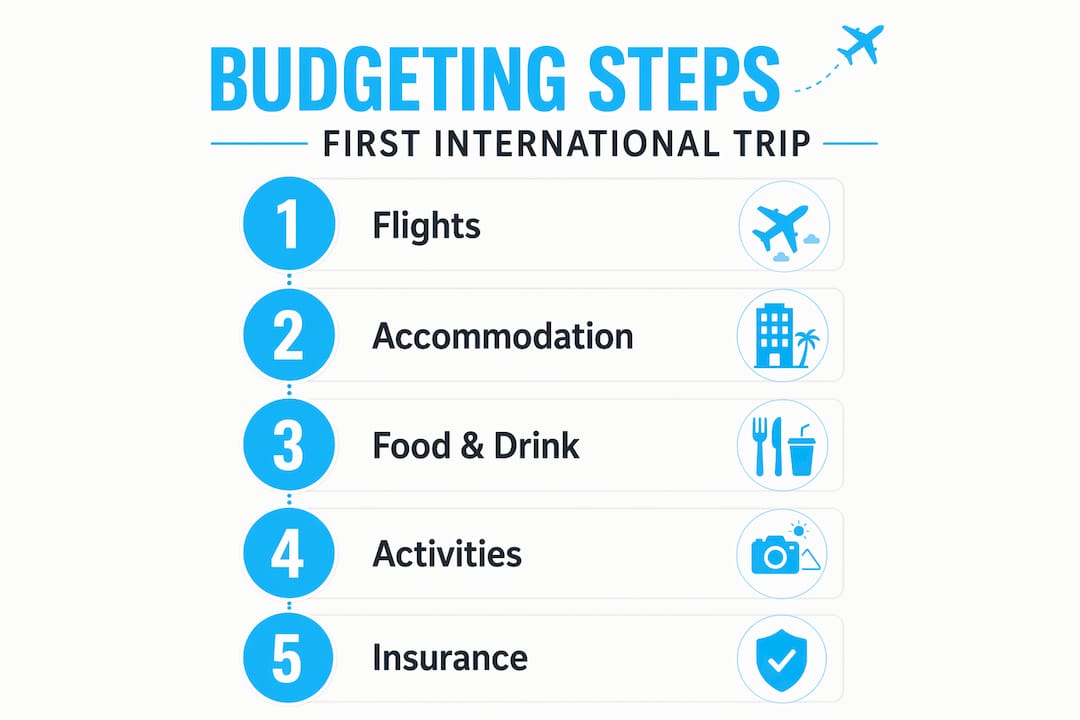
On the budget side, most first-timers underestimate total trip cost by 20 to 30 percent. Build your budget across these categories: flights, accommodation, food, local transport, activities, and a contingency fund of 10 to 15 percent on top. That last category is the one that saves you when your return flight gets delayed and you need an unexpected hotel night.
Travel insurance is not optional for a first international trip. It covers medical emergencies, trip cancellations, and lost luggage. Without it, a single hospital visit abroad could cost more than your entire trip. Learn why travel insurance matters before you skip it to save fifty dollars.
Pro Tip: Make two copies of every critical document: one stored digitally in cloud storage, and one printed and kept in a separate bag from your originals. Physical and digital copies kept separately are your best protection against loss or theft.
Navigating the airport on your first international flight
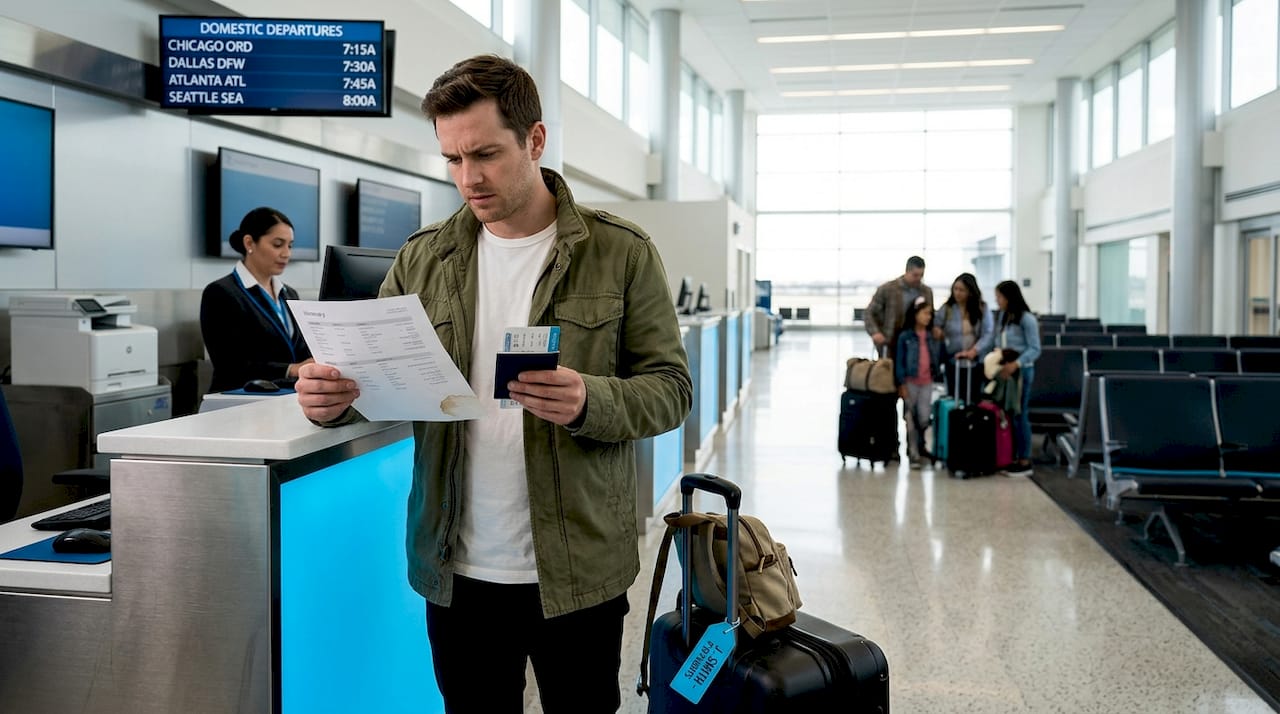
International airports are not complicated once you understand the flow. The stress comes from not knowing what to expect. Here’s what actually happens:
- Check-in and bag drop happen two to three hours before departure. Online check-in the night before saves time. Have your passport and booking reference ready.
- Security screening is straightforward. Remove laptops and liquids from your bag. Wear shoes that come off easily. Keep your boarding pass and passport in one hand.
- Immigration and customs at your destination is where first-timers slow down. Fill out any arrival cards on the plane, not in the queue. Have your accommodation address written down and ready.
- Baggage claim is after customs. Check the arrivals board for your flight number to find the right carousel. If your bag doesn’t show, report it immediately at the airline’s baggage desk before leaving the terminal.
Arrive at the airport three hours before your international departure. Not two hours and forty-five minutes. Three hours. International check-in lines, security, and immigration queues move slower than domestic, and missing your first international flight is a genuinely expensive and stressful experience.
For getting from the airport to your accommodation, pre-book your transfer before you land. After 14 hours in the air, you don’t want to negotiate with unlicensed taxi drivers or figure out a foreign transit map. Use a hotel shuttle, a pre-arranged rideshare, or a verified airport transfer service.
Pro Tip: Write your accommodation’s name and address in the local language in a small notebook. Showing the address in local script to a driver removes every language barrier instantly and takes ten seconds to prepare.
Getting around and staying connected at your destination
Once you land, your two biggest tools are your phone and your transit knowledge. Without both, you’ll feel lost. With both, you’ll feel like a traveler.
Before arriving, research how the city moves. Some destinations have excellent metro systems that cost pennies per ride. Others rely on taxis and rideshare apps like Grab (common across Southeast Asia) or local equivalents. Driving yourself is rarely the right call for first-time international travelers unless you’ve specifically researched local road rules and rented an international driving permit.
What to set up before you land:
- Get a local SIM card or eSIM for your destination. Many can be purchased before departure and activated on landing. This gives you data access from the moment you clear customs, which means working maps, ride-share apps, and the ability to contact your accommodation.
- Download offline maps using Google Maps or Maps.me for your destination city. Data can drop unexpectedly and offline maps work without a signal.
- Save your accommodation’s phone number, your country’s local embassy contact, and your travel insurance emergency line before you board.
- Learn five to ten phrases in the local language: hello, thank you, where is, how much, and do you speak English. Locals respond warmly to even basic effort, and it smooths interactions considerably.
On personal safety, stay aware of your surroundings at night, keep your bag close in crowded areas, and avoid displaying expensive items like cameras or phones in high-traffic tourist zones. Most destinations are far safer than first-timers expect, but basic awareness is always good practice. Check the travel safety checklist from Pilottraveldeals for destination-specific precautions before you go.
Pro Tip: If you’re using a rideshare app abroad, always confirm the driver’s name, car plate number, and photo before getting in. This is standard practice everywhere and takes three seconds.
What I’ve actually learned from first-time international travel
I’ve seen people plan international trips down to every restaurant reservation and return home frustrated because nothing matched their rigid script. I’ve also seen people show up with almost no plan and have an extraordinary time because they stayed curious and flexible.
My honest take: the best thing you can do for your first international trip is prepare your logistics fully and leave your expectations loose. Get your passport, visa, flights, accommodation, and airport transfer locked in. After that, stop micromanaging. The moments that make a first overseas trip memorable are almost never the ones you scheduled.
The anxiety most first-timers feel before departure is real, and I don’t want to dismiss it. But in my experience, that anxiety is almost entirely driven by the unknown. Every single step in this guide is designed to replace the unknown with a clear action. Once you’ve taken care of the documents, the packing, and the airport plan, the remaining anxiety is just excitement wearing a mask.
One thing almost nobody tells you before a first international trip: jet lag hits differently depending on direction. Flying east is harder than flying west for most people. Crossing multiple time zones eastward can leave you wide awake at 3 a.m. and half-asleep by noon. Plan your first full day lightly. Give yourself time to adjust before you commit to a full itinerary.
— Asher
Plan your first trip with Pilottraveldeals
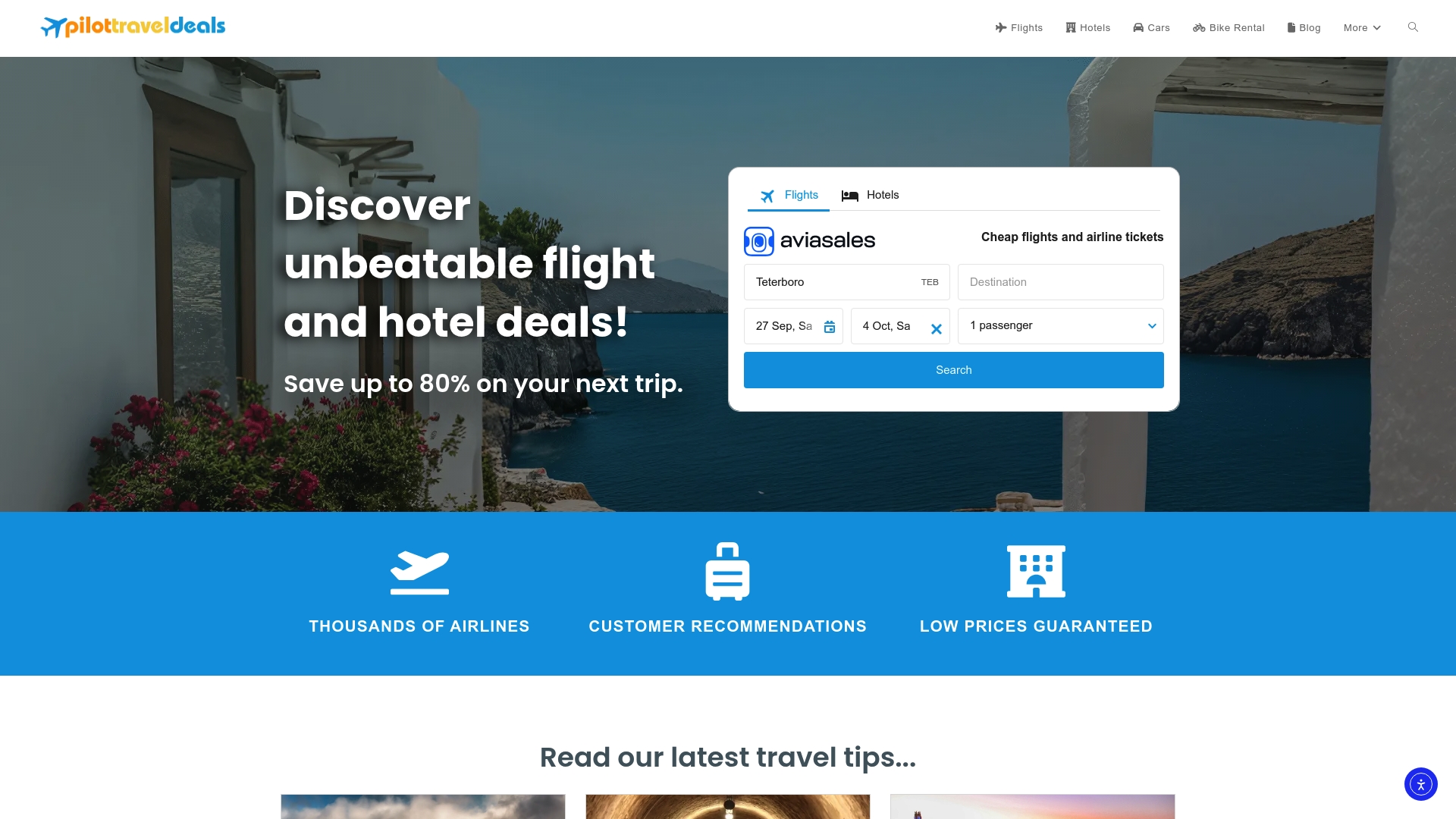
Everything in this guide gets easier when you have the right tools in one place. Pilottraveldeals is built for exactly this situation: travelers who want to find great deals on flights, hotels, and travel essentials without spending hours comparing across dozens of sites.
Start by searching cheap flights to your shortlisted destinations and compare prices across providers in real time. Book your hotel early to lock in the best rates before availability drops. And before you land, pick up a local SIM card or eSIM through Pilottraveldeals so you’re connected the moment you walk out of the terminal. With savings of up to 80% across travel categories, it’s one of the smartest first stops you can make when planning your first trip abroad.
FAQ
How far in advance should I plan my first international trip?
Start planning at least 3 to 4 months before departure. Passport processing alone takes 6 to 12 weeks, and visa applications for some destinations can add additional lead time.
What documents do I need for international travel?
You need a valid passport, any required visa for your destination, travel insurance details, and printed or digital booking confirmations for flights and accommodation. Keep copies stored separately from your originals.
How do I stay connected abroad without paying high roaming fees?
Purchase a local SIM card or an eSIM for your destination before or shortly after arriving. This gives you affordable data access for maps, translation apps, and rideshare services without relying on expensive carrier roaming plans.
Is travel insurance worth it for a first international trip?
Yes, without exception. Travel insurance covers medical emergencies, flight cancellations, and lost luggage. The cost of a single medical incident abroad can far exceed what travel insurance costs for an entire trip.
What is the easiest destination for a first international trip?
Destinations like Japan, Thailand, and Australia are widely recommended for first-timers because they have well-developed tourism infrastructure, English signage in major areas, and reliable public transit systems that make independent travel straightforward.
Recommended
- 7 Essential Steps for Your Travel Planning Checklist – PilotTravelDeals.com
- Top Tips for Flying Internationally: Save More and Stress Less – PilotTravelDeals.com
- Smart Overseas Flight Tips: Save More and Travel Better – PilotTravelDeals.com
- International flight advice: save more and fly smarter – PilotTravelDeals.com

