
TL;DR:
- A travel meal plan helps control costs, improve nutrition, and reduce decision-making stress during trips. It involves pre-planning meals and groceries, saving families significant money by avoiding restaurant expenses. The flexible 1-1-1 structure and smart use of fresh and shelf-stable foods make travel eating convenient and budget-friendly.
A travel meal plan is a deliberate outline of meals, snacks, and food purchases organized before and during a trip to control costs, improve nutrition, and reduce decision fatigue. Travelers who plan meals in advance spend significantly less on food than those who eat reactively. A family spending $100–$150 on groceries for a week of road tripping can avoid far higher dining costs compared to eating out every meal. The core idea is simple: decide what you will eat, when, and roughly how much it will cost, before hunger and exhaustion make those decisions for you.
What is a travel meal plan and why does it matter?
A travel meal plan is the industry term for what many travelers call “trip food prep” or “vacation meal planning.” Both phrases describe the same practice: mapping out your food strategy before you leave home. The goal is not a rigid menu. The goal is reducing decision friction so you spend less mental energy on food and more on actually enjoying your trip.
The financial case is strong. Experienced road trippers report spending $100–$150 on groceries for a full week. That figure covers breakfasts, lunches, snacks, and several dinners. Without a plan, the same family can easily spend that amount in a single day of restaurant meals and convenience store stops. The savings compound fast over a week-long trip.
Meal planning for travel also protects your health. Skipping meals on the road often leads to overeating later or grabbing sugary snacks out of desperation. Planned meals built around protein, fiber, and whole grains keep your energy steady throughout the day. That matters when you are walking miles through a city or driving long stretches of highway.
The mental benefit is underrated. Every meal you pre-decide is one fewer choice you have to make when you are tired, hungry, and far from home. That mental relief adds up across a week of travel.
How to create a travel meal plan for your trip
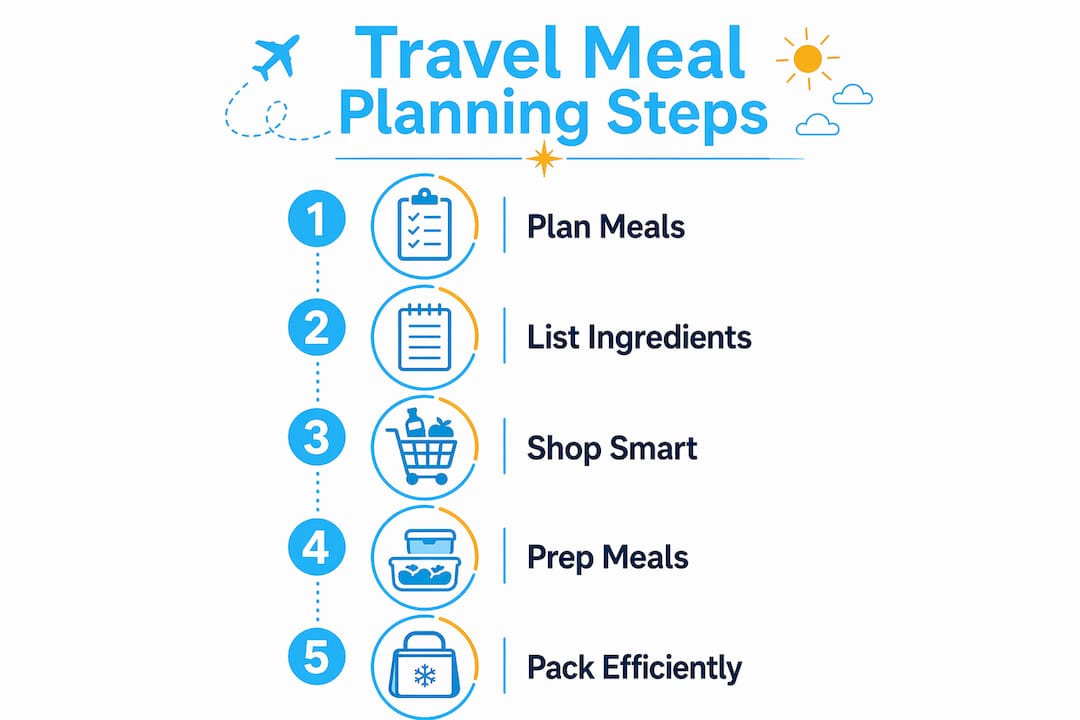
Building a meal plan that actually works on the road takes five clear steps.
-
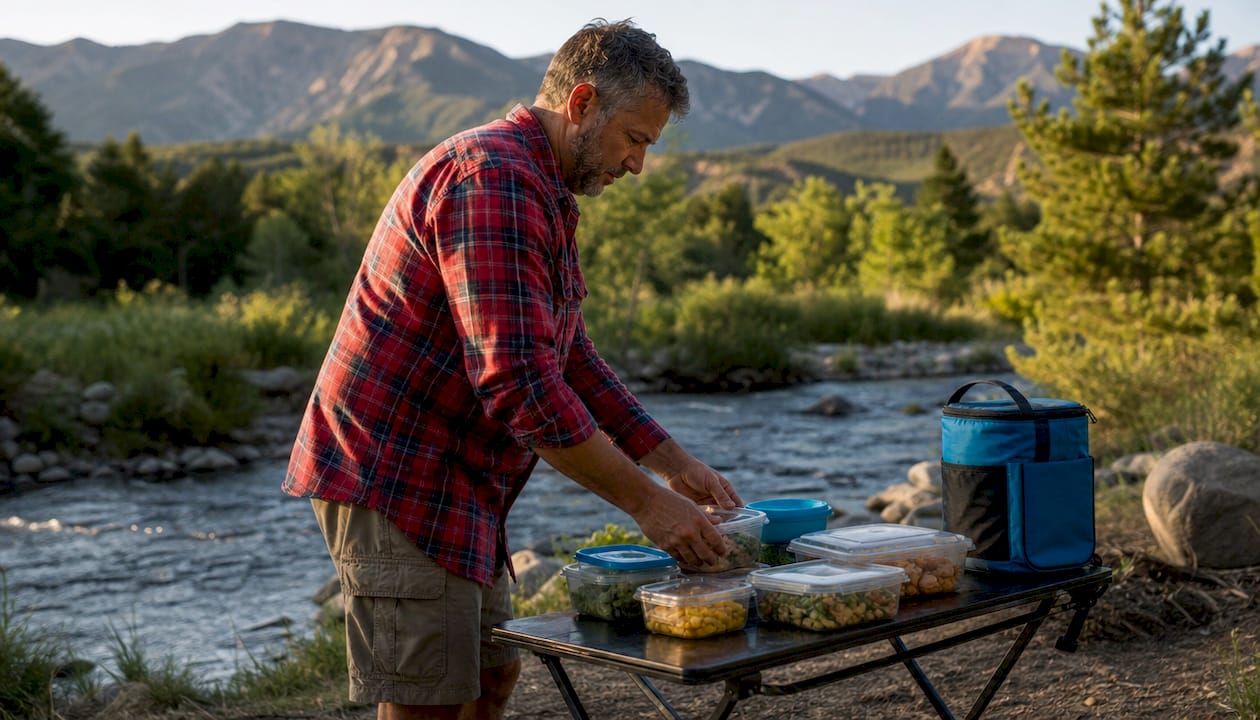
Assess your cooking setup. A hotel room with only a microwave calls for a very different plan than a vacation rental with a full kitchen. An RV gives you the most flexibility. Know what you are working with before you plan a single meal.
-
Use the 1-1-1 meal structure. A balanced one-week framework divides each day into one cooked meal, one or two assembled meals (sandwiches, wraps, charcuterie boards), and one meal eaten out. This structure prevents overbuying while leaving room for spontaneity.
-
Prioritize fresh foods early. Fresh items should be used within the first three days of travel. After that, rely on shelf-stable foods as refrigeration becomes less reliable. Plan your menu in chronological order: fresh salads and deli meat on day one, canned beans and pasta on day five.
-
Plan your arrival night meal. This is the most overlooked detail in trip food prep. You will arrive tired and hungry. Pre-deciding a simple, no-cook meal (rotisserie chicken, bagged salad, pre-sliced cheese) removes the worst decision of the trip before it happens.
-
Build two shopping lists. Experienced travelers split groceries into items to bring from home and items to buy locally. Bring spices, cooking oil, and dry goods. Buy produce, dairy, and bread at your destination. This prevents buying a full jar of mustard for one sandwich.
Pro Tip: Categorize meals into flexible buckets rather than rigid daily menus. Use labels like “repeat breakfasts,” “portable lunches,” and “easy dinners.” Fill each bucket with two or three options and pick based on how the day unfolds.
For travelers staying in hotels, pairing your meal plan with the right accommodation makes a real difference. A room with a mini-fridge and microwave opens up far more meal options than a standard room. Pilottraveldeals offers hotel deals worth comparing before you book, especially if kitchen access is part of your criteria.
Easy and nutritious meal ideas for travel
The best travel meals share three traits: they require minimal prep, they travel well, and they keep you full. Here are practical options organized by meal type.
Breakfasts:
- Instant oatmeal packets with nut butter and dried fruit
- Greek yogurt cups with granola (use within the first two days)
- Hard-boiled eggs prepared at home and stored in a cooler
- Whole grain wraps with peanut butter and banana
Lunches and snacks:
- Whole grain crackers with individual cheese portions and deli meat
- Trail mix built from nuts, seeds, and dark chocolate chips
- Protein bars with at least 10 grams of protein and minimal added sugar
- Baby carrots, celery sticks, and single-serve hummus cups
Dinners:
- Canned tuna or salmon over microwaved rice pouches
- Pasta with jarred marinara sauce (cooks in under 15 minutes)
- Bean and cheese quesadillas made on a portable electric griddle
- Rotisserie chicken from a local grocery store paired with pre-washed salad bags
The gallon-bag system is one of the most practical tools for hotel-based travel. Pre-measure dry ingredients for three days of meals into labeled gallon bags before you leave home. Each bag might hold oats, spices, and dried fruit for breakfast, or pasta and seasoning for dinner. You add water or a fresh ingredient at the destination. This cuts reliance on airport food and fast food stops in unfamiliar areas.
Pro Tip: Pack a small insulated lunch bag inside your main luggage. Use it daily for snacks and portable lunches. It costs almost nothing and eliminates the need to buy overpriced snacks at tourist sites or gas stations.
For more guidance on eating well while traveling, the connection between baseline nutrition and sustained energy during hotel stays is worth understanding before you pack.
Common pitfalls in travel meal planning and how to avoid them
Most meal plans fail not from bad intentions but from predictable mistakes. Knowing them in advance keeps your plan intact.
-
Planning for your ideal self. Most travelers plan meals for their vacation self, imagining they will cook elaborate dinners every night. Real travel involves fatigue, late arrivals, and changed plans. Build a plan for your tired self, not your optimistic self.
-
Ignoring food safety timelines. Perishables in a cooler do not last indefinitely. Ice melts, cooler temperatures rise, and food spoils faster than expected. Use fresh proteins within 24–48 hours and never assume a mini-fridge holds food at a safe temperature without checking.
-
Overbuying at the destination. Tourist-area grocery stores charge premium prices. Buying a full bottle of olive oil, a large container of spices, or a bulk bag of rice for a three-day trip wastes money and creates waste. Bring pantry staples from home in small quantities.
-
Leaving no room for spontaneity. A contingency reserve in your food budget is not optional. It is the difference between enjoying a must-try local restaurant and feeling guilty about blowing your budget. Budget 15–20% of your food spend for unplanned meals. That flexibility makes the whole plan more enjoyable.
Pairing a solid meal plan with a cheap travel checklist helps you catch these mistakes before you leave home, not after you arrive.
Key Takeaways
A travel meal plan saves money, protects nutrition, and reduces mental fatigue by deciding food choices before hunger and exhaustion take over.
| Point | Details |
|---|---|
| Define your cooking setup first | Your accommodation type determines which meals are realistic before you plan anything. |
| Use the 1-1-1 structure | One cooked meal, one assembled meal, and one restaurant meal per day balances budget and flexibility. |
| Prioritize fresh foods early | Use perishables in the first three days and shift to shelf-stable items as the trip continues. |
| Build two shopping lists | Separate what you bring from home and what you buy locally to avoid overbuying and waste. |
| Budget for spontaneity | Reserve 15–20% of your food budget for unplanned meals so the plan stays enjoyable, not restrictive. |
The real value of a meal plan is what it frees you from
I have traveled with a meal plan and without one. The difference is not just financial. It is the feeling of arriving at a destination after a long travel day and already knowing exactly what you are eating for dinner. That one decision, made three days earlier at home, removes a surprising amount of stress.
The mistake I see most often is over-planning. Travelers build detailed menus for every meal of a two-week trip and then feel like failures when day three goes sideways. A meal plan is not a contract. It is a framework. The 1-1-1 structure works precisely because it builds in flexibility. You are not locked into cooking every night. You are just not starting from zero every time hunger hits.
The other thing I have learned is that the best travel meals are not the most elaborate ones. A good loaf of local bread, some cheese, and fruit eaten at a park beats a mediocre restaurant meal every time. A meal plan gives you the budget and the mental space to find those moments instead of defaulting to whatever is closest and most expensive.
Meal planning for trips also changes how you interact with local food culture. When your basics are covered, you can spend your dining-out budget on one genuinely great local meal instead of three forgettable ones. That is a better use of both money and experience.
— Asher
How Pilottraveldeals helps you travel smarter on a budget
Smart meal planning covers one major travel expense. The other big ones are flights, hotels, and getting around. Pilottraveldeals pulls together deals across all of those categories so you can see your full trip cost in one place.
If you are building a budget trip, start with accommodation. A hotel room with a mini-fridge and microwave is worth a few extra dollars per night when it saves you $30 in restaurant meals each day. Pilottraveldeals makes it easy to compare hotel options and filter for the amenities that support your meal plan. For the full picture on keeping your trip affordable, the budget travel tips on Pilottraveldeals cover everything from flights to daily spending so no part of your budget gets overlooked.
FAQ
What is a travel meal plan?
A travel meal plan is a pre-trip outline of meals, snacks, and grocery purchases designed to control food costs, maintain nutrition, and reduce decision fatigue during a trip. It covers what you will eat, where you will source food, and how much you plan to spend.
How much money can a travel meal plan save?
Experienced travelers report spending $100–$150 on groceries for a full week of travel. That compares favorably to eating out for every meal, which can cost a family significantly more per day.
What is the 1-1-1 meal structure for travel?
The 1-1-1 structure means planning one cooked meal, one assembled meal, and one restaurant meal per day. It prevents overbuying and leaves room for spontaneous dining without blowing your food budget.
How do I handle fresh food safely on a road trip?
Use fresh proteins and dairy within the first two to three days of travel. After that, shift to shelf-stable items like canned goods, rice pouches, and dried foods as cooler temperatures become less reliable.
Do I need a full kitchen to use a travel meal plan?
No. A hotel room with a microwave and mini-fridge supports a solid meal plan using the gallon-bag system for dry ingredients, rice pouches, canned proteins, and no-cook assembled meals like wraps and snack boards.
