TL;DR:
- Travel during shoulder season offers significant savings, fewer crowds, and better interactions with locals.
- Timing varies by destination, requiring destination-specific research to avoid weather and service issues.
Shoulder season is defined as the transitional travel period between peak and off-peak times, typically falling in may–june and september–october for Northern Hemisphere destinations. These windows deliver 80–90% of peak experience at a fraction of the cost, making them the single best value proposition in travel planning. Hotel rates drop 30–50% below peak prices, airfares fall 20–40% on popular routes, and crowds thin out enough to actually enjoy the places you paid to visit. For budget-conscious travelers, understanding why travel shoulder season matters is the difference between a stressful, overpriced trip and a genuinely memorable one.
Why travel shoulder season: the core benefits explained
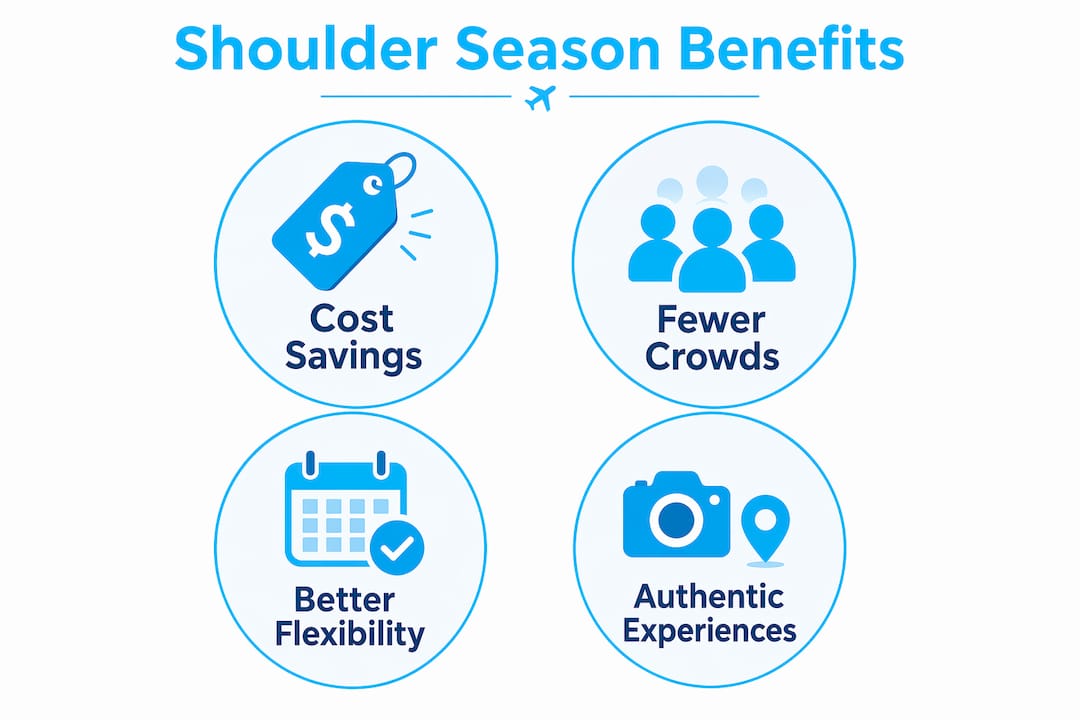
Shoulder season delivers real, measurable savings across every line of a travel budget. Hotel rates fall 30–50% below peak prices, and European airfares run roughly 37% lower during shoulder months. That gap translates to single-trip savings ranging from $800 to $2,400 depending on the destination and duration.

Crowds drop just as dramatically as prices. 40–60% fewer visitors show up at major landmarks during shoulder months. That means you can walk through the Acropolis in Athens or stand in front of the Sagrada Família in Barcelona without fighting through a wall of people. Flexible itineraries become possible when you are not locked into timed-entry slots weeks in advance.
The cultural experience improves too. Locals are more relaxed when they are not managing peak-season crowds, and that shift shows up in every interaction. Restaurant staff have time to talk. Shop owners are less rushed. Tour guides can actually customize a walk instead of herding a group. Travelers consistently report shorter wait times and warmer service during shoulder periods, and that authenticity is hard to put a price on.
Weather during shoulder months is generally mild and well-suited to outdoor activity. May and june in Europe bring long daylight hours and comfortable temperatures before the summer heat peaks. September and october offer the same light without the August crowds. Restaurants are easier to book, popular hiking trails are less congested, and you can actually get a table at the place you read about.
- Cost savings: Hotel and flight prices drop significantly compared to peak season
- Fewer crowds: 40–60% fewer visitors at major sites means better access and less stress
- Authentic interactions: Locals have more time and energy for genuine engagement
- Better availability: Restaurants, tours, and accommodations are easier to book
- Mild weather: Shoulder months often offer comfortable conditions for sightseeing
Pro Tip: Book accommodations with free cancellation during shoulder season. Rates are lower, but flexibility lets you adjust if a weather window shifts.
When exactly is shoulder season, and does it vary by destination?
Shoulder season timing is not universal. The standard Northern Hemisphere windows are may–june and september–october, but those dates shift significantly depending on where you are going. Treating shoulder season as a fixed calendar rule leads to expensive mistakes.
Tropical destinations follow a completely different logic. In Southeast Asia, the shoulder period often falls between the dry and wet seasons, which means you get lower prices but also a real chance of rain. The Caribbean has a similar pattern, with september sitting inside hurricane season. The best time to visit index for 2026 makes clear that customizing your travel window by destination is not optional. It is the only way to avoid trading crowds for dangerous weather.
U.S. National Parks run on their own schedule. Yellowstone and the Grand Canyon see peak crowds in july and august, so june and september function as shoulder months with noticeably lower prices and shorter lines. European beach destinations like the Algarve or the Amalfi Coast hit peak demand in july and august, making june and september the sweet spots. Japan’s shoulder season sits around november and early april, just outside the cherry blossom and fall foliage peaks.
| Destination | Peak season | Shoulder window | Key consideration |
|---|---|---|---|
| Western Europe | July–August | May–June, Sept–Oct | Best weather, manageable crowds |
| Caribbean | December–April | November, May | Hurricane risk in Sept–Oct |
| Southeast Asia | November–February | March–April, October | Monsoon timing varies by country |
| U.S. National Parks | July–August | June, September | Wildfire smoke possible in Sept |
| Japan | March–April, Nov | Early April, November | Overlap with foliage and blossom peaks |
Pro Tip: Check local event calendars before booking. A regional festival during your “shoulder” window can spike prices and crowds back to peak levels overnight.
What are the potential drawbacks of shoulder season travel?
Shoulder season is not without trade-offs. Weather is the most common issue. May in northern Europe can bring rain and wind. October in the Mediterranean gets cool enough to rule out beach days. These conditions are manageable, but travelers who expect peak-season sunshine in a shoulder month will be disappointed.
Service schedules shrink during shoulder periods. Some restaurants and ferry routes close or reduce hours when tourist volume drops. A ferry that runs six times daily in August might run twice in October. A restaurant that stays open until midnight in July might close at 9:00 PM in September. Verifying operational hours before you arrive is not optional.
Daylight hours also shrink in fall shoulder months. October in Scandinavia or Scotland gives you noticeably fewer usable hours for sightseeing than July does. That affects how much you can realistically fit into a day, especially if you are visiting sites with limited artificial lighting.
- Weather variability: Rain, wind, and cooler temperatures are realistic possibilities
- Reduced service frequency: Ferries, buses, and tours may run on limited schedules
- Shorter daylight hours: Fall shoulder months cut sightseeing time, especially at high latitudes
- Seasonal closures: Some attractions, restaurants, and tours close entirely outside peak season
- Event conflicts: Local festivals can temporarily spike prices and crowds
The good news is that shoulder season still outperforms off-season on almost every measure. Off-season delivers the lowest prices but also the highest risk of poor conditions and closed attractions. Shoulder season sits in the middle ground where savings are real and the experience remains solid.
Pro Tip: Build one buffer day into any shoulder season itinerary. If a ferry is canceled or a site is unexpectedly closed, a flexible day turns a problem into an opportunity to explore something unplanned.
How to maximize your shoulder season trip with smart planning
Smart shoulder season travel starts with booking at the right time. Shoulder season trips require only 6–12 weeks of lead time, compared to 4–6 months for peak season bookings. That shorter window is an advantage. You can monitor prices, wait for a dip, and still get good availability.
Here is a practical planning sequence that works for most shoulder season destinations:
- Choose your destination and window first. Confirm the local shoulder season dates, not the generic Northern Hemisphere calendar. Cross-check with local weather data and event listings.
- Search with flexible dates. Use date-flexible search tools to identify the cheapest two or three day combinations within your target window. A Tuesday departure instead of Friday can cut airfare noticeably.
- Book accommodations with free cancellation. Shoulder season rates are already lower, so locking in a refundable rate costs nothing extra and protects you if plans shift.
- Verify operational hours for key attractions. Check official websites for museums, tours, and restaurants. Call ahead for anything critical to your itinerary.
- Pack for variable weather. A light waterproof layer and a mid-layer cover most shoulder season conditions without adding significant luggage weight.
- Plan for authentic local experiences. With fewer tourists around, this is the time to book a cooking class, join a walking tour led by a local guide, or eat at the neighborhood restaurant that has no English menu.
Understanding seasonal pricing patterns helps you time your search for maximum savings. Prices do not drop uniformly across a shoulder window. The first and last weeks of a shoulder period often see higher demand as travelers try to catch the tail end of good conditions.
Travelers who go off-peak consistently report that the planning effort pays off in a less stressful, more personal trip. The key is doing the destination-specific research rather than assuming one set of rules applies everywhere.
Flight pricing in 2026 adds another layer of complexity. Dynamic pricing and capacity limits mean that fares can spike quickly even in shoulder months if demand shifts. Monitoring prices over a two to three week window and setting fare alerts gives you a real edge.
Pro Tip: Contact your hotel directly after booking online. During shoulder season, properties often upgrade guests or add amenities to fill rooms, especially when you mention you are a returning visitor or traveling for a specific reason.
Key Takeaways
Shoulder season travel is the most reliable way to cut costs, avoid crowds, and have more authentic experiences without sacrificing the quality of your trip.
| Point | Details |
|---|---|
| Significant cost savings | Hotel rates drop 30–50% and airfares fall 20–40% compared to peak season. |
| Fewer crowds, better access | 40–60% fewer visitors at major sites means shorter waits and more flexibility. |
| Destination-specific timing | Shoulder season dates vary widely; always verify local windows before booking. |
| Watch for trade-offs | Reduced services, variable weather, and shorter daylight hours require flexible planning. |
| Book 6–12 weeks out | Shorter lead times than peak season give you pricing flexibility without sacrificing availability. |
Shoulder season changed how I think about travel entirely
I used to plan trips the way most people do: pick the most popular month, book as early as possible, and accept the crowds as part of the deal. The first time I traveled in october instead of August, to Portugal’s Alentejo region, I realized I had been doing it wrong for years.
The difference was not just the price, though paying noticeably less for the same hotel room was hard to ignore. The difference was the pace. Restaurants had time for you. The woman running the wine shop in Évora spent forty minutes walking me through the local harvest because she was not managing a line of tourists. That kind of interaction does not happen in August.
Weather unpredictability is real. I have had a shoulder season trip rained out for two full days. But I have also had peak season trips ruined by heat so intense that outdoor sightseeing was genuinely unpleasant. Neither season guarantees perfect conditions. Shoulder season just gives you better odds at a lower price.
My honest advice to anyone hesitant about off-peak timing: try one shoulder season trip before you write it off. The travel for cheap strategies that actually work long-term all point in the same direction. Less competition for everything, more room to breathe, and a trip that feels like yours rather than everyone else’s.
— Asher
Pilottraveldeals makes shoulder season savings easier to find
Shoulder season deals move fast, and finding them across flights, hotels, and activities at the same time takes the right tools.

Pilottraveldeals aggregates offers from multiple providers so you can compare shoulder season flight and hotel prices in one place without bouncing between a dozen tabs. The site’s flexible date search helps you identify the cheapest days within your target window, and the affordable domestic flights guide walks you through exactly how to capture the best fares before they disappear. For hotel bookings, the step-by-step hotel booking guide covers how to lock in shoulder season rates with cancellation protection. Pilottraveldeals also covers weekend stay booking strategies for travelers who want to test shoulder season on a shorter trip before committing to a longer one.
FAQ
What is shoulder season in travel?
Shoulder season is the period just before or after a destination’s peak travel window. It typically falls in may–june and september–october for Northern Hemisphere destinations, offering lower prices and fewer crowds than peak season.
How much can you save traveling in shoulder season?
Hotel rates drop 30–50% and airfares fall 20–40% compared to peak season, with total trip savings often reaching $800 to $2,400 on popular routes.
Is shoulder season better than off-season travel?
Shoulder season outperforms off-season for most travelers. Off-season delivers the lowest prices but carries the highest risk of closed attractions, poor weather, and reduced services. Shoulder season balances savings with a quality experience.
How far in advance should I book a shoulder season trip?
6–12 weeks of lead time is sufficient for most shoulder season destinations, compared to 4–6 months for peak season. That flexibility lets you monitor prices and book when fares dip.
Does shoulder season timing differ by destination?
Yes. Tropical destinations, Asian countries, and U.S. National Parks all have different shoulder windows than Europe. Always verify local peak season dates and weather patterns before assuming the standard may–june or september–october window applies.
Recommended
- Why Travel Off Peak Season: Save More, See More – PilotTravelDeals.com
- Seasonal Pricing in Travel Explained: Smart Savings Strategies – PilotTravelDeals.com
- Unlocking Affordable Adventures: Tips for Cheaper Travel Without Sacrificing Fun – PilotTravelDeals.com
- 8 Smart Ways to Travel for Cheap and Save Big Money – PilotTravelDeals.com