
Roundtrip domestic flights under $100 exist right now, yet most travelers never see them. The reason isn’t bad luck. It’s a combination of booking at the wrong time, using the wrong tools, and falling for pricing myths that airlines quietly benefit from. Sub-$100 roundtrips are common in off-peak periods, but only travelers who know where and when to look actually grab them. This guide breaks down exactly how to find affordable domestic flights, from optimal booking windows and flexible search tools to budget airline traps and advanced discount hacks. Whether you’re a senior, a family of four, or a solo traveler on a tight budget, these strategies work.
Table of Contents
- Why affordable flights are more available than you think
- Timing is everything: The Goldilocks Window for lowest fares
- Flexibility and search tools: Uncovering hidden deals
- Budget airlines versus legacy carriers: Calculating real costs
- Advanced hacks, discounts, and edge cases
- Maximize your entire trip savings with PilotTravelDeals.com
- Frequently asked questions
Key Takeaways
| Point | Details |
|---|---|
| Time your booking | The best deals are typically found when booking flights one to three months in advance. |
| Stay flexible | Being flexible with travel dates and airports can uncover significantly lower fares. |
| Compare total costs | Always add up baggage, seat, and meal fees on budget airlines to see if legacy carriers offer better value. |
| Leverage alerts and tools | Set price alerts and use fare comparison tools to spot flash sales and error fares before they disappear. |
Why affordable flights are more available than you think
Most people assume cheap flights are rare, snatched up instantly by deal hunters with insider access. That’s simply not true. Airline pricing is dynamic, meaning fares shift constantly based on demand, competition, and how full a plane is. When seats go unsold, prices drop. That’s your opportunity.
In the US, sub-$100 roundtrips appear regularly during off-peak travel periods. In Australia, Jetstar frequently lists one-way fares under $60. Across Europe, short-haul routes often run between €20 and €50. In India, budget carriers hold 71% of the domestic market, and fares drop sharply during promotional sales. These aren’t flukes. They’re the result of how airline revenue management actually works.
Here’s what drives affordable fares:
- Dynamic pricing: Fares change multiple times per day based on seat inventory and demand signals
- Seasonality: Off-peak months like January, February, and September consistently produce lower prices
- Route competition: When two or more airlines fly the same route, fares drop to attract passengers
- Promotional windows: Airlines run flash sales to fill planes, especially mid-week
“The biggest mistake travelers make is assuming the price they see first is the best price available. It almost never is.”
Learning the smart ways to find cheap domestic flights starts with understanding that low fares are a regular feature of the market, not a lottery win.
Timing is everything: The Goldilocks Window for lowest fares
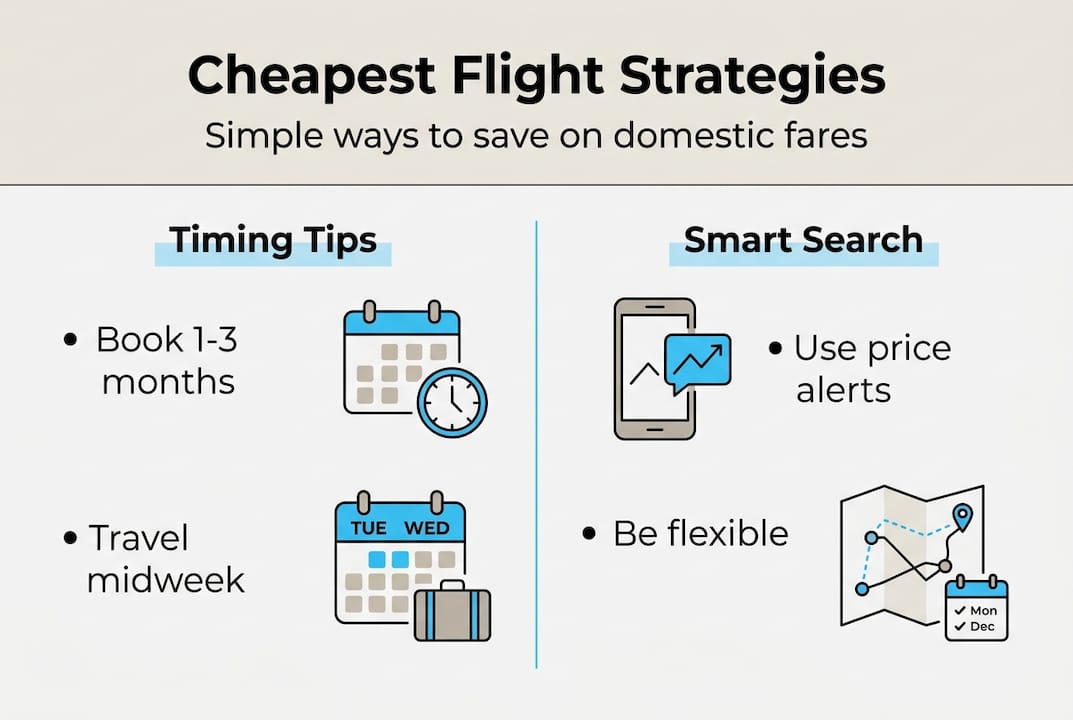
Book too early and airlines haven’t released their best inventory. Book too late and demand has pushed prices up. The sweet spot, often called the Goldilocks Window, is 1 to 3 months before departure for most domestic routes.
Booking 1 to 3 months out consistently produces the lowest average fares for domestic travel. For holiday travel or peak summer routes, extend that window to 3 to 5 months. Last-minute bookings occasionally yield deals, but they’re unreliable and stressful.
Best days to fly (not just to book):
- Tuesday and Wednesday flights are typically 10 to 20% cheaper than Friday or Sunday departures
- Saturday travel often beats Sunday by a meaningful margin
- Early morning and late-night flights carry lower demand and lower prices
- Avoid flying the day before or after a major holiday
| Travel period | Recommended booking window | Expected savings |
|---|---|---|
| Off-peak weekdays | 4 to 6 weeks out | Up to 30% |
| Standard domestic | 6 to 10 weeks out | 15 to 25% |
| Holiday travel | 12 to 20 weeks out | 20 to 35% |
| Peak summer | 10 to 16 weeks out | 15 to 30% |
The myth that Tuesday is the cheapest day to book has been largely debunked. Flexibility matters far more than the specific day you purchase. Avoiding peak seasons entirely can yield savings of 25 to 40% compared to traveling during school breaks or summer.
Pro Tip: Shoulder seasons, like late April through May or October through early November, offer near-peak weather with off-peak prices. That’s the real Goldilocks zone for budget travelers.
For a deeper breakdown, check out our guide on booking the cheapest domestic flights and why flexible travel dates are one of your most powerful tools.
Flexibility and search tools: Uncovering hidden deals
The right search tool can reveal fares that a basic airline website will never show you. The key is using platforms built for flexible, multi-variable searching.
Google Flights, Kiwi, and Skyscanner all offer calendar views and price heat maps that let you see the cheapest days across an entire month at a glance. Instead of searching a fixed date, you search a range and let the data guide your decision. That single shift in approach can save you $50 to $150 on a domestic ticket.
How to search smarter:
- Use the “Explore” or “Everywhere” feature on Google Flights and Skyscanner to find the cheapest destinations from your home airport
- Enable flexible date search to view a full month of prices in one screen
- Check nearby airports. Flying into a secondary airport 60 to 90 minutes away can cut fares significantly
- Use Kiwi’s “nomad” feature to build multi-city routes at lower combined costs
- Set price alerts on multiple platforms simultaneously so you catch drops from different sources
| Platform | Calendar view | Price alerts | Flexible destinations | Best for |
|---|---|---|---|---|
| Google Flights | Yes | Yes | Yes | Overall comparison |
| Skyscanner | Yes | Yes | Yes | International and domestic |
| Kiwi | Yes | Yes | Yes | Multi-city and nomad routes |
| Going (formerly Scott’s) | No | Yes | No | Error fares and flash deals |
| Airline direct | No | Sometimes | No | Loyalty perks and sales |
Always cross-check the airline’s own website after finding a fare on a third-party tool. Sometimes booking direct saves on fees. Our step-by-step cheap flight guide walks through this process in detail, and our step-by-step flight booking tips cover the full booking flow. If you’re traveling with young children, tips for traveling with infants can help you plan around the extra logistics.
Budget airlines versus legacy carriers: Calculating real costs
A $49 base fare sounds incredible until you add a $35 carry-on fee, a $15 seat selection charge, and a $25 change fee. Suddenly that budget ticket costs more than a legacy carrier’s all-in fare.

Budget carriers advertise low base fares but layer on fees for bags, seat selection, meals, and itinerary changes. Legacy carriers like Delta, United, and American often include a checked bag, seat assignment, and sometimes a snack, making their total cost more competitive than it first appears.
| Cost component | Budget airline | Legacy carrier |
|---|---|---|
| Base fare | $49 | $119 |
| Carry-on bag | $35 | Included |
| Seat selection | $15 | Included |
| Snack or drink | $8 | Included |
| Total cost | $107 | $119 |
The gap shrinks fast. For solo travelers packing light with just a personal item, budget airlines win. For families or anyone with luggage, legacy carriers often provide better value once you factor in all the extras.
Pro Tip: Always build your own cost comparison before booking. Add up every fee you’ll realistically pay on a budget carrier, then compare that total to a legacy fare. The answer might surprise you.
For a quick reference on what to watch for, our cheap flight essentials page covers the most common fee traps by airline.
Advanced hacks, discounts, and edge cases
Once you’ve mastered timing and tools, a few advanced strategies can push your savings even further.
Last-minute and error fares occasionally appear when airlines make pricing mistakes or need to fill seats fast. These deals are real but unpredictable. Services like Going specialize in catching them. Last-minute deals exist but carry risk, especially if your travel dates are fixed.
Hidden-city ticketing is a tactic where you book a flight with a layover at your actual destination and skip the final leg. It can save money, but hidden-city ticketing risks airline penalties including voided miles, account bans, and canceled return legs. Use it cautiously and never check a bag.
Here’s a step-by-step approach to advanced savings:
- Search hidden-city options using Skiplagged, but only for one-way trips with no checked luggage
- Call the airline directly to ask about senior, military, or humanitarian discounts not listed online
- Use a VPN set to a different country before searching. Regional pricing differences can reveal lower fares for the same route
- Pool family points and miles into one account to reach redemption thresholds faster
- Book shoulder season travel, late April, May, October, or early November, for the best combination of price and experience
Seniors can call airlines directly for discounts that aren’t advertised on booking sites. Families who consolidate miles across members often unlock free or heavily discounted tickets faster than they expect.
“The travelers who save the most aren’t the luckiest. They’re the most prepared.”
Our collection of proven cheap flight tips covers more edge cases and regional strategies worth bookmarking.
Maximize your entire trip savings with PilotTravelDeals.com
You now have a full toolkit for finding affordable domestic flights. But airfare is just one piece of your travel budget. Accommodation, transfers, and activities add up fast, and the same strategic thinking applies to all of them.

At PilotTravelDeals.com, we aggregate deals across flights, hotels, and travel services so you can compare everything in one place. Explore our cheap airfare tips for the latest fare strategies, browse hotel deals to pair with your flight savings, and check out our cheap ticket strategies for whole-trip planning. With savings of up to 80% across categories, your next trip doesn’t have to cost what you think it does.
Frequently asked questions
How far in advance should I book for the lowest domestic fares?
Book your flight 1 to 3 months ahead for the best prices on most domestic routes. For holiday travel, extend that window to 3 to 5 months.
What search tools help find the cheapest flights?
Flexible tools and price alerts on platforms like Google Flights, Kiwi, and Skyscanner make a significant difference. Use calendar views and set alerts on multiple platforms at once.
Are budget airlines always cheaper than legacy carriers?
Not always. Budget carriers often add fees for bags, seats, and changes that can push the total cost above a legacy fare. Always compare the full price, not just the base fare.
Can families and seniors get discounts on domestic flights?
Seniors can call airlines directly for unadvertised discounts, and families can save significantly by pooling points and miles or booking during shoulder seasons.
Is hidden-city ticketing a good idea?
It can save money in specific situations, but hidden-city ticketing risks penalties including account bans and voided miles. Only consider it for one-way trips with no checked baggage.
Recommended
- 7 Smart Ways to Find Cheap Domestic Flights Easily – PilotTravelDeals.com
- Proven Tips to Find Cheap Flights and Save Big on Travel – PilotTravelDeals.com
- How to book cheapest domestic flights in 2026: guide – PilotTravelDeals.com
- Best Hacks to Get Cheaper Flights for Big Savings – PilotTravelDeals.com