TL;DR:
- Traveling during off-peak season lowers travel costs significantly, with flight and hotel prices dropping up to 50 percent.
- Fewer tourists during this time lead to better access, shorter lines, and more genuine cultural experiences.
Traveling off peak season means visiting a destination during its low-demand period, when tourist numbers drop and prices fall sharply across flights, hotels, and tours. Airfares run 20–40% cheaper during these windows, and accommodation costs drop 30–50% compared to peak rates. That is not a minor discount. That is the difference between a trip you can afford and one you keep postponing. Budget-conscious travelers who understand seasonal pricing in travel consistently get more for their money, and they do it without sacrificing quality. Pilottraveldeals exists to help you find those windows and book them before prices climb back up.
Why travel off peak season: the real cost advantage
The financial case for low-season travel is direct. Peak-season costs run 50% higher or more compared to off-peak periods, making your travel dates one of the most powerful budget levers you control. A flight that costs $800 in july can drop to $480 or less in november. That gap funds two extra nights at a hotel.
Accommodation savings follow the same pattern. Hotels, vacation rentals, and hostels all price by demand. When demand falls, rates fall with it. Savings range from 23% to 50% depending on the destination and the specific month you choose. A beach resort in the Caribbean that charges $350 per night in february may drop to $175 in september.
Ground transportation follows suit. Rental car companies lower daily rates during slow periods, and taxi demand drops enough that surge pricing becomes rare. The total effect compounds: cheaper flights plus cheaper hotels plus cheaper ground transport adds up fast.
Pro Tip: Book flights and hotels together during off-peak windows using a comparison platform. The combined savings often exceed what either booking delivers alone.
Not every cost drops, though. Fixed expenses like visa fees and museum entry tickets stay constant regardless of season. A $160 visa application costs the same in january as it does in july. Factor those fixed costs into your budget before assuming off-peak travel cuts your total spend in half.
| Cost category | Peak season | Off-peak season |
|---|---|---|
| Airfare | Full price | 20–40% lower |
| Hotel rates | Full price | 30–50% lower |
| Rental cars | High demand pricing | Reduced daily rates |
| Visa fees | Fixed | Fixed |
| Museum entry | Fixed | Fixed |
| Restaurant wait times | Long | Short or none |
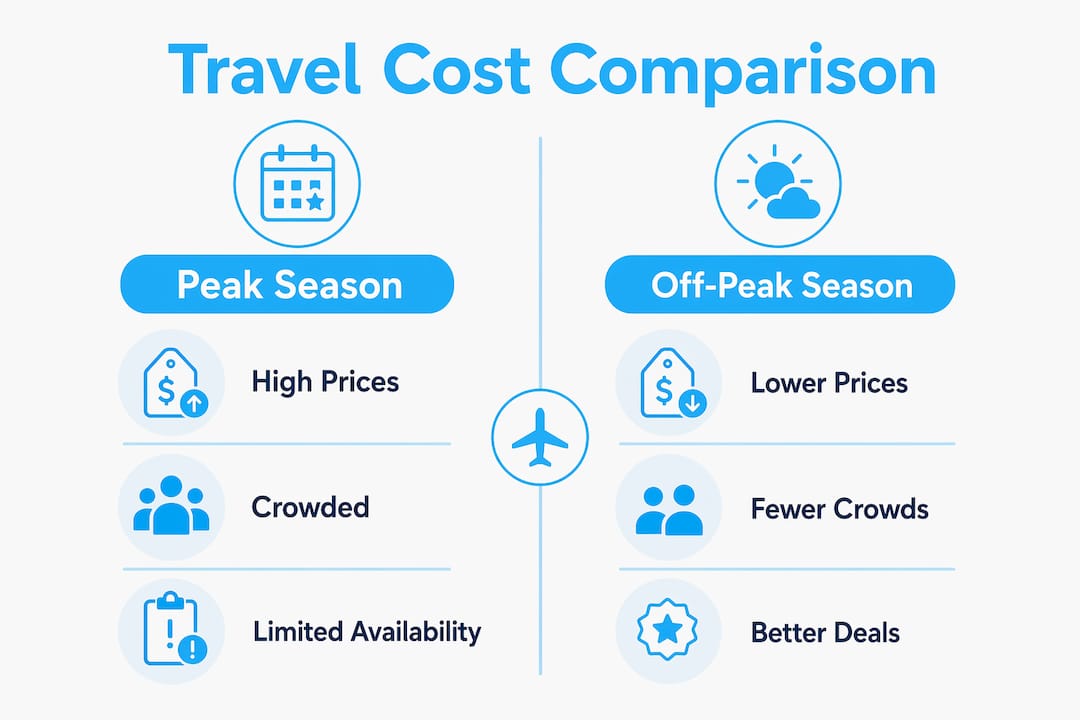
What are the experiential advantages of traveling during the off season?
Lower prices get travelers through the door. What keeps them coming back to off-peak travel is the experience itself. Off-season destinations see 40–60% fewer tourists, which translates directly into shorter lines, faster table service, and open access to sites that feel impossible to enjoy during peak months.

Think about the Louvre in Paris in august versus november. In august, you spend 45 minutes in line and another 20 minutes elbowing through crowds to see the Mona Lisa. In november, you walk in, find a spot, and actually look at it. The painting did not change. The experience did.
The service quality difference is equally real. Hotels and transport providers offer perks like room upgrades, early check-in, and late check-out during slow seasons because staff are less stretched and managers have inventory to fill. A front desk agent with 30 empty rooms is far more likely to move you to a better floor than one managing a full house. These perks are not guaranteed, but they are far more common off-peak.
Pro Tip: When checking in during a slow period, ask politely if any upgrades are available. A calm, direct request at a half-empty hotel works more often than travelers expect.
The deeper benefit is cultural access. Off-season travel creates more authentic interactions because locals are not overwhelmed by tourist volume. Restaurant owners have time to talk. Market vendors are not rushing through transactions. A city like Lisbon or Oaxaca feels entirely different when it belongs to its residents again, not to the summer crowds. Travelers who maximize comfort on a budget often find that off-peak timing delivers both.
What is shoulder season and how does it compare to peak and off-peak travel?
Shoulder season is the transition period between peak and off-peak travel windows. It sits between the highest-demand months and the lowest-demand months, and it is where many experienced travelers choose to go. Travel expert Emmanuel Burgio calls shoulder season the “sweet spot” because it combines lower costs and reduced crowds with weather that is still largely favorable.
The logic is straightforward. Full off-peak travel delivers the deepest discounts but sometimes comes with real trade-offs: monsoon rain in Southeast Asia, hurricane risk in the Caribbean, or closed attractions in mountain destinations. Shoulder season cuts the price without cutting the experience as sharply.
| Travel period | Crowd level | Price level | Weather reliability |
|---|---|---|---|
| Peak season | Very high | Highest | Most predictable |
| Shoulder season | Moderate | 20–40% lower | Generally good |
| Off-peak season | Low | 30–50% lower | Variable |
For most destinations, shoulder season falls in the months just before or after the main tourist rush. In Europe, that means may, early june, september, and october. In Southeast Asia, it often means april or november. The exact window shifts by destination, so checking local climate data before booking is worth the ten minutes it takes.
Shoulder season is the right call when you want meaningful savings without accepting significant weather risk. Full off-peak is the right call when your budget is the top priority and you are comfortable adapting to conditions on the ground.
What should travelers be mindful of when choosing off-peak travel dates?
Off-peak travel is not without its complications. Knowing the common pitfalls before you book protects your trip and your budget.
- Weather variability. Off-peak months often align with less stable weather. A beach destination in its low season may see frequent rain, rough seas, or extreme heat. Research the specific climate patterns for your destination and month, not just the general season.
- Reduced services. Some attractions, restaurants, and tour operators close or cut hours during slow periods. A museum that runs daily tours in july may only run them on weekends in january. Verify operating schedules before you commit to an itinerary.
- The fixed cost trap. As noted earlier, visa fees and entry costs stay constant regardless of season. If fixed costs make up a large share of your total trip budget, the percentage savings from off-peak pricing will be smaller than expected.
- Event-driven price spikes. Local events and conferences can push prices up during otherwise low-demand periods. A city hosting a major trade show or music festival in october may charge peak-season hotel rates that week. Always check the local events calendar for your target dates.
- Shifting demand patterns. Remote work and flexible schedules have blurred traditional peak and off-peak lines in many destinations. What was reliably quiet five years ago may now see steady year-round traffic. Demand patterns in 2026 are less predictable than they once were, making research more important than ever.
The solution to most of these issues is the same: research local conditions, not just general seasonal advice. A destination guide written in broad strokes will not tell you that the town you want to visit closes half its restaurants every november.
How can travelers maximize their off-peak travel experience and savings?
Getting the most out of low-season travel takes more than picking a cheap month. These steps consistently deliver better results.
-
Use flexible travel dates. Shifting your departure by three or four days can cut airfare significantly. Flexible travel dates give you access to the cheapest windows rather than locking you into a fixed itinerary. Mid-week departures almost always beat weekend prices.
-
Book through platforms that aggregate deals. A single booking platform that pulls rates from multiple providers surfaces discounts that individual hotel or airline sites do not show. Pilottraveldeals aggregates flights, hotels, and other travel services so you can compare real options side by side without visiting a dozen separate sites.
-
Ask for upgrades at check-in. Hotels with low occupancy have every incentive to move you to a better room. It costs them nothing and builds goodwill. This works best when you ask politely at check-in, not in advance.
-
Eat and shop where locals do. Off-season is the right time to skip the tourist-facing restaurants near major attractions. With fewer crowds, you have the time and access to find the neighborhood spots that locals actually use. These meals are almost always cheaper and better.
-
Monitor flash sales and last-minute deals. Booking platforms and airlines release discounted inventory closer to departure when seats and rooms go unsold. Travelers with flexible schedules who find cheap tickets at the right moment can capture savings that planned-in-advance bookings miss entirely.
-
Support local businesses directly. Off-season travel benefits local communities by spreading tourism income across the year rather than concentrating it in two or three peak months. Booking locally owned guesthouses and eating at family-run restaurants puts more money into the community and delivers a more genuine experience.
Pro Tip: Set price alerts for your target destination at least 60 days before your intended travel window. Prices often dip sharply during that period as airlines and hotels push to fill remaining inventory.
Key takeaways
Off-peak travel delivers the strongest combination of cost savings, crowd reduction, and authentic local access when travelers research local conditions, avoid event-driven price spikes, and book with flexible dates.
| Point | Details |
|---|---|
| Airfare and hotel savings | Flights run 20–40% cheaper and hotels 30–50% lower during off-peak and shoulder seasons. |
| Crowd reduction | Destinations see 40–60% fewer tourists off-peak, cutting wait times and improving access. |
| Shoulder season sweet spot | Shoulder season balances lower prices with favorable weather, making it ideal for most travelers. |
| Fixed costs stay constant | Visa fees and entry tickets do not drop with season, so factor them into your total budget. |
| Event spikes are real | Local events can push prices up during otherwise low-demand periods. Always check local calendars. |
Off-peak travel changed how I think about vacations
I used to plan trips around the calendar everyone else used. Summer in Europe. Spring break in Mexico. The result was predictable: long lines, inflated prices, and the nagging sense that I was experiencing a curated version of a place rather than the place itself.
The first time I visited Rome in late january, the difference was immediate. The Vatican Museums had a wait of under 20 minutes. Restaurants near the Pantheon had empty tables. A hotel that would have cost me $280 a night in june cost $140. I did not feel like I was getting a discount version of Rome. I felt like I was getting the real one.
What I have come to believe is that off-season travel is a fundamentally different experience, not just a cheaper one. The slower pace forces you to engage with a place on its own terms. You notice things you would miss in a crowd. You talk to people who are not exhausted by tourist volume. The unpredictability of the weather or the occasional closed attraction becomes part of the story rather than a problem to manage.
There is also a sustainability argument that I find genuinely compelling. Off-season travel reduces strain on local ecosystems and spreads income more evenly across the year. The small guesthouse that struggles through a quiet november because everyone crowds in during august benefits directly when travelers choose to go in the off months. That matters to me, and I think it matters to more travelers than the industry gives credit for.
My honest advice: stop treating peak season as the default and off-peak as the fallback. Flip that thinking. Plan your trips around the shoulder and low seasons first, then adjust only when a specific event or experience requires peak timing.
— Asher
Budget travel made easier with Pilottraveldeals
Off-peak travel rewards travelers who do their homework and book at the right moment. Pilottraveldeals makes that process faster by aggregating deals on flights and hotels from multiple providers in one place, so you can compare real options without spending hours across separate sites.

The platform covers airline tickets, hotel rooms, bike rentals, and SIM cards, with savings that can reach up to 80% depending on the destination and timing. Whether you are planning a shoulder-season trip to Europe or a last-minute low-season getaway, Pilottraveldeals gives you the tools to find the best available rate and book with confidence. Start with the hotel savings guide to see how much off-peak timing can cut your accommodation costs.
FAQ
What is off-peak season in travel?
Off-peak season is the period when tourist demand at a destination is at its lowest, typically outside school holidays and major vacation windows. Prices for flights and hotels drop significantly during these periods.
How much can you save by traveling off peak?
Airfares drop 20–40% and hotel rates fall 30–50% during off-peak and shoulder seasons compared to peak rates. Fixed costs like visa fees remain the same regardless of timing.
What is the difference between off-peak and shoulder season?
Off-peak is the lowest-demand period with the deepest discounts but the most weather variability. Shoulder season sits between peak and off-peak, offering lower prices and reduced crowds with generally stable weather.
Are there downsides to traveling in the off season?
Some attractions reduce hours or close entirely, and weather can be unpredictable. Local events can also spike prices during otherwise quiet periods, so checking local calendars before booking is always worth doing.
When is the best time to book off-peak travel deals?
Setting price alerts 60 days before your target travel window captures the sharpest discounts, as airlines and hotels discount unsold inventory closer to departure. Using a comparison platform like Pilottraveldeals surfaces those deals across multiple providers at once.
Recommended
- 8 Smart Ways to Travel for Cheap and Save Big Money – PilotTravelDeals.com
- 7 Proven Budget Travel Tips 2025 for Smart Savings – PilotTravelDeals.com
- 10 Essential Budget Travel Tips for Smart Travelers – PilotTravelDeals.com
- Unlocking Affordable Adventures: Tips for Cheaper Travel Without Sacrificing Fun – PilotTravelDeals.com