TL;DR:
- Smart hotel booking involves comparing prices, timing reservations, and avoiding hidden fees. Booking directly with hotels and using refundable rates can save money and offer better perks. Late bookings work best for last-minute domestic trips, while early planning benefits international and holiday travel.
Effective hotel booking is the process of strategically comparing prices, timing your reservation, and knowing the right moves that save money and improve your stay. Most travelers overpay simply because they skip a few key steps. Direct booking can save you 10%–15% compared to third-party platforms, and last-minute domestic reservations can cut costs by up to 35%. The tips booking hotel experts rely on are not complicated. They are repeatable, and this guide walks you through every one of them.
How to compare hotel prices using the best booking tips
Price comparison is the foundation of every smart hotel reservation. Start with a meta-search engine to establish a baseline rate across multiple suppliers at once. Then go directly to the hotel’s official website. Direct booking rates are frequently 10%–15% lower than OTA prices, and they often come with better cancellation terms or perks like free breakfast. That gap alone justifies the extra two minutes it takes to check.
Watch out for psychological pressure tactics during your search. Travel strategist Amey Myers warns that “only 1 room left” warnings are often artificial scarcity designed to push quick decisions. Slow down and cross-verify prices on at least two platforms before committing. Emotional bookings almost always cost more.
Dynamic pricing algorithms track your browsing behavior and can raise rates based on repeated searches. Using incognito mode during your final price check prevents this from happening. It is a small habit that consistently protects you from inflated quotes.
Pro Tip: Always open a private or incognito browser window before doing your final hotel price check. Booking sites track visits and can quietly raise prices after multiple searches for the same property.
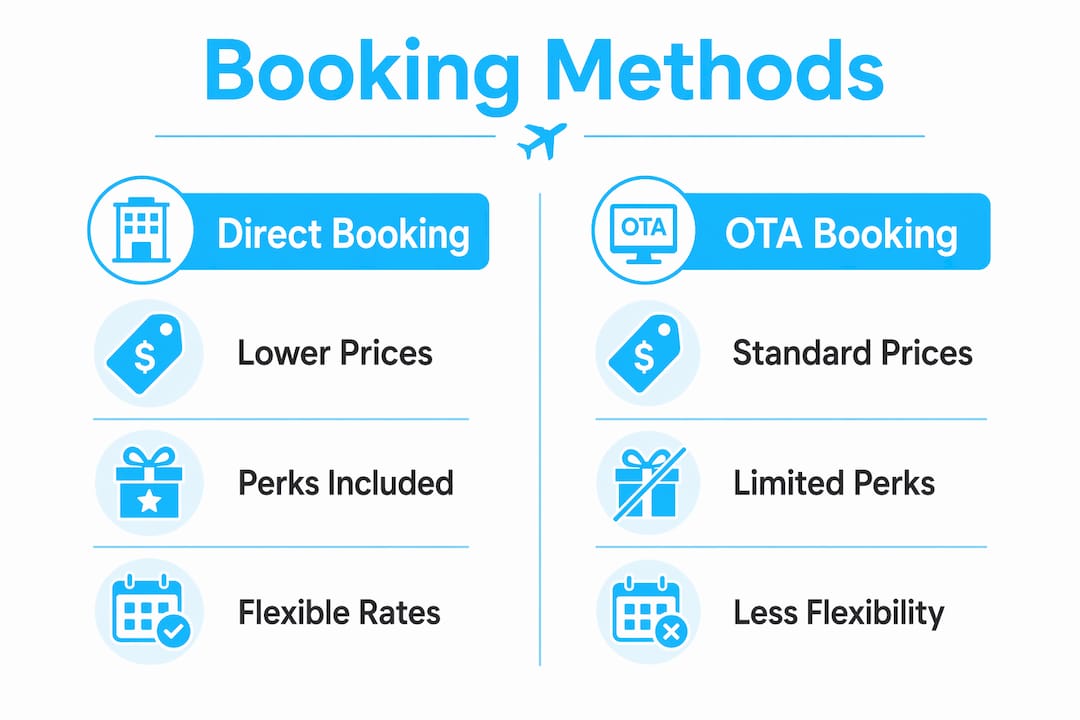
The table below shows the key differences between booking directly with a hotel versus using an online travel agency (OTA).
| Feature | Direct booking | OTA booking |
|---|---|---|
| Price | Often 10%–15% lower | Standard or higher |
| Cancellation terms | More flexible | Varies by platform |
| Loyalty points | Earned and applied | Usually not earned |
| Perks (upgrades, breakfast) | Frequently available | Rarely included |
| Customer service | Direct with hotel | Through third party |
When is the best time to book a hotel for the lowest price?
Timing is the single most underused lever in affordable hotel booking. There is no universal “best day to book,” but there are clear patterns based on trip type and flexibility.
Booking early gives you the widest selection and lets you lock in a refundable rate. Prices can still drop later, so an early booking with free cancellation is a safety net, not a final decision. Rechecking prices three to four weeks before your trip and rebooking at a lower rate is a proven tactic that costs nothing when you hold a refundable reservation.
Last-minute booking works best for domestic trips with flexible schedules. Domestic hotel bookings made about one week before travel can save up to 35% compared to early booking during peak seasons. The tradeoff is fewer room choices and higher risk at popular destinations during holidays or major events.
Here is a timing framework based on common trip scenarios:
- Flexible domestic trip: Book a refundable rate early, then monitor prices and rebook if rates drop in the final two to three weeks.
- International trip: Book three to six months out. International hotels fill faster, and flight timing often dictates your window.
- Holiday or event travel: Book as early as possible. Scarcity is real during peak periods, and prices climb fast.
- Shoulder season travel: Last-minute bookings often yield the best rates. Demand is lower and hotels discount to fill rooms.
- Business travel: Book refundable rates and set a price alert. Corporate rates sometimes appear closer to the travel date.
Pro Tip: Set a price alert for your target hotel using a travel comparison platform like Pilottraveldeals. When the rate drops, you get notified and can rebook before the window closes.
For a deeper look at how to compare hotel rates across different booking windows, Pilottraveldeals has a dedicated guide that breaks down the process step by step.
What hidden fees inflate your hotel bill?
Hidden fees are the most common reason a “cheap” hotel ends up costing more than expected. Resort fees, destination fees, parking, and taxes can inflate your total bill by 20% or more beyond the advertised nightly rate. A $120 room can easily become $160 once all charges are added. Always calculate the total cost, not just the headline price.
Hotels also place an incidental hold of $50–$200 per night on your card at check-in. This hold covers potential damages and is released a few days after checkout. If you pay with a debit card, that money is frozen and unavailable during your trip. A credit card keeps your actual cash free and gives you stronger fraud protection.
Common hidden charges to watch for before you confirm any reservation:
- Resort fees: $20–$75 per night, charged even if you never use the pool or gym.
- Destination fees: Common in urban hotels, often $20–$50 per night.
- Parking fees: Up to $70 per night at city center properties.
- Local taxes: Vary by city and state, sometimes adding 15%–20% on top of the room rate.
- Early check-in or late check-out fees: Often $25–$50 if not waived as a loyalty perk.
- Wi-Fi fees: Less common now but still charged at some budget and mid-range properties.
Take a screenshot of the full price breakdown and cancellation policy before you confirm. If a dispute arises later, that screenshot is your proof. Non-refundable rates save a small amount upfront but carry real financial risk if your plans change.
For a complete breakdown of how to book a hotel without getting caught by surprise charges, Pilottraveldeals covers the full process with practical filters and fee-spotting advice.
Smart tactics to get perks, save money, and upgrade your stay
The best hotel reservation advice goes beyond price. A few deliberate moves before and during booking can turn a standard room into a noticeably better experience without spending more.

Book directly with the hotel. Direct reservations unlock perks that OTAs cannot match, including room upgrades, complimentary breakfast, and more responsive customer service. Hotels prioritize guests who book direct because they avoid paying OTA commission fees.
Join a hotel loyalty program. Loyalty program member rates run 2%–5% cheaper than standard rates, and members receive perks like free room upgrades and late check-out. Programs like Marriott Bonvoy and Hilton Honors are free to join and deliver value from the first stay.
Always book a refundable rate first. Free cancellation rates act as a safety net. If prices drop before your trip, cancel and rebook at the lower rate. Non-refundable rates rarely save enough to justify the risk.
Book longer stays when possible. Stays of seven or more nights often trigger weekly rates and potential upgrades, because hotels prefer fewer turnovers. If your schedule allows, extending by one night can unlock a meaningfully lower nightly rate.
Additional tactics that consistently pay off:
- Call or email the hotel directly after booking to request a quiet room, high floor, or early check-in. Hotels accommodate these requests far more often than travelers expect.
- Pay with a travel credit card to earn points and access trip protection benefits.
- Use a VPN when booking internationally. Regional pricing differences exist, and switching your apparent location can surface lower rates on the same property.
Pro Tip: After booking, send a brief, polite email to the hotel mentioning a special occasion like a birthday or anniversary. Front desk staff often note this and offer a small upgrade or amenity at no charge.
For travelers who want a full list of ways to save on hotels, Pilottraveldeals has compiled eight proven strategies for every type of traveler. You can also find a practical overview of booking a weekend stay and getting the best deal from a hospitality perspective.
Key Takeaways
Booking a hotel at the best price requires comparing direct and OTA rates, timing your reservation strategically, spotting hidden fees before you confirm, and using loyalty programs and refundable rates to protect your budget.
| Point | Details |
|---|---|
| Direct booking saves money | Hotel websites offer rates 10%–15% lower than OTAs, plus perks OTAs cannot match. |
| Timing changes your price | Last-minute domestic bookings can save up to 35%; early refundable rates protect flexibility. |
| Hidden fees add up fast | Resort fees, taxes, and parking can inflate your bill by 20% or more beyond the listed rate. |
| Use a credit card | Credit cards prevent cash holds and provide fraud protection that debit cards do not. |
| Loyalty programs deliver value | Member rates run 2%–5% lower, with free upgrades and late check-out as added benefits. |
What I have learned from years of booking hotels the hard way
Most travelers treat hotel booking as a single decision. It is actually a process with at least three checkpoints: the initial search, a recheck two to three weeks out, and a final review of total costs before confirming. Skipping any one of those steps is where money gets lost.
The biggest mistake I see is locking in a non-refundable rate to save $15 upfront. That decision removes all your leverage. Prices drop regularly, plans change, and a free cancellation rate costs almost nothing extra while keeping every option open. I book refundable by default and only switch to non-refundable when the savings are genuinely significant, usually more than 20%.
Location matters more than most booking guides admit. A hotel that is $30 cheaper but adds $25 in daily transportation costs is not actually cheaper. I always map the property against my planned activities before confirming. The math rarely lies.
Loyalty programs took me too long to take seriously. Joining Marriott Bonvoy and Hilton Honors costs nothing, and the member rate alone pays off within the first stay. The upgrades and late check-out are real, not marketing copy. Build a relationship with two or three hotel brands and the experience compounds over time.
The travelers who consistently get the best rooms at the best prices are not lucky. They follow a repeatable process, stay calm when booking sites flash scarcity warnings, and always read the full price breakdown before clicking confirm.
— Asher
Pilottraveldeals has the tools to book smarter every trip
Finding the right hotel at the right price gets easier when you have a reliable starting point.

Pilottraveldeals brings together hotel deals, flight comparisons, and travel savings guides in one place. The step-by-step hotel booking guide walks you through every stage of the reservation process, from price comparison to fee spotting to confirming the best rate. You can also browse the full hotels section to compare options across destinations. When you are ready to plan the rest of your trip, the cheap flights guide covers domestic airfare savings with the same level of detail.
FAQ
What is the best way to get a lower hotel rate?
Book directly on the hotel’s official website after checking a meta-search engine for baseline prices. Direct rates are frequently 10%–15% lower than OTA rates and often include better cancellation terms.
How far in advance should you book a hotel?
For international trips, book three to six months out. For flexible domestic travel, last-minute bookings made about one week before arrival can save up to 35% compared to early reservations.
What are resort fees and can you avoid them?
Resort fees are mandatory nightly charges of $20–$75 added on top of the advertised room rate. They are rarely avoidable, but you can factor them into your total cost comparison before choosing a property.
Should you use a credit card or debit card to book a hotel?
Always use a credit card. Hotels place incidental holds of $50–$200 per night on your payment method, and a debit card freezes actual cash for days after checkout. A credit card keeps your funds available and offers stronger fraud protection.
What does a free cancellation rate actually give you?
A free cancellation rate lets you cancel without penalty up to a set deadline, usually 24–48 hours before arrival. This lets you rebook at a lower price if rates drop, making it the safest default booking choice for most trips.