
TL;DR:
- Packing light is essential for budget travel, focusing on a 5–7 day wardrobe and versatile, quick-dry clothing.
- Using packing cubes, compression bags, and wearing heavy items during transit helps stay under airline weight limits and reduces baggage fees.
A successful budget travel packing guide is built on one principle: bring less, spend less. The standard carry-on weight limit for most low-cost carriers sits at 7kg in 2026, and exceeding it triggers fees that can erase your savings before you leave the airport. Minimalist packing, the recognized industry term for this approach, means choosing versatile, lightweight items that work across multiple days and situations. Get this right and you cut baggage fees, move faster, and reduce the mental load of managing heavy luggage throughout your trip.
What does a budget travel packing guide actually include?
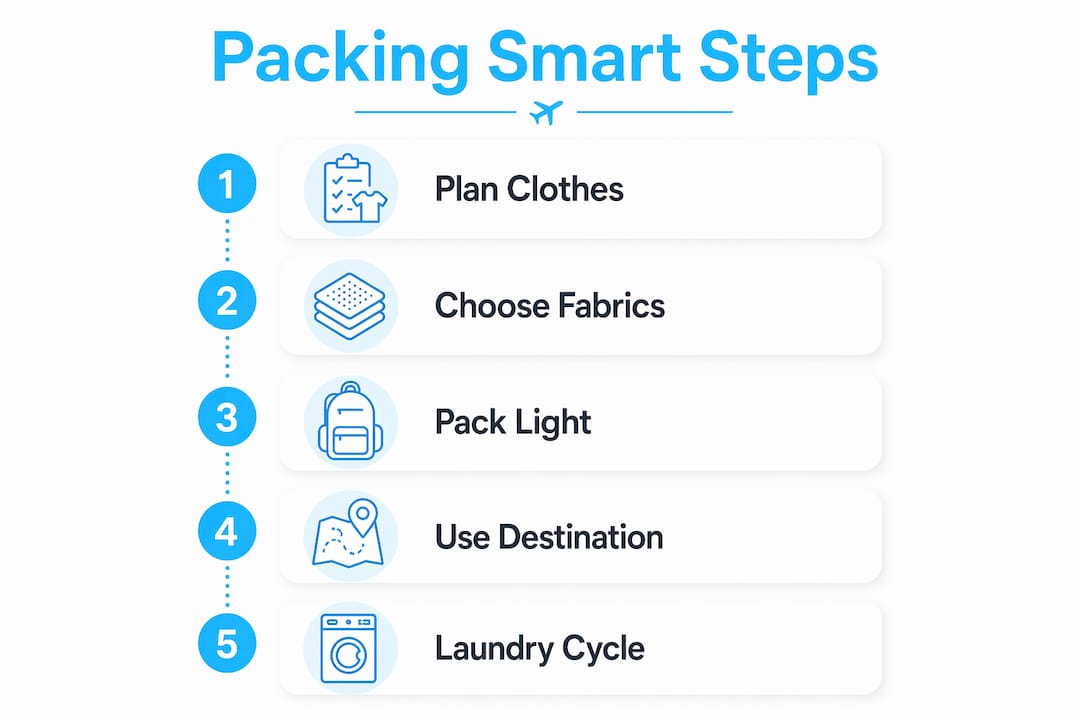
The core of any affordable travel packing strategy is a wardrobe built around a 5–7 day laundry cycle, not trip length. That distinction changes everything. A traveler heading out for three weeks does not need three weeks of clothes. They need one week of clothes and a plan to wash them twice. This approach keeps your bag light regardless of how long you are away.
The recommended clothing ratio for budget travelers is 5 tops, 2–3 bottoms, 6–7 underwear, and 5–6 socks. That ratio covers a full rotation with room for one rest day between washes. It works for solo trips, family travel, and even business trips when you swap one or two tops for collared shirts.
Choosing the right fabrics and colors
Neutral colors and quick-dry fabrics are the foundation of a mix-and-match travel wardrobe. Navy, gray, black, and olive green all pair together without effort. Quick-dry materials like merino wool and nylon blends dry overnight in a hotel bathroom, which means you can wash clothes in the sink and wear them the next morning.
Layering is the other key move. One lightweight fleece or a packable rain jacket covers a wide range of temperatures without adding bulk. You do not need a separate outfit for every climate shift.
- 5 tops (mix of short and long sleeve, neutral tones)
- 2–3 bottoms (one pair of pants that doubles for day and evening)
- 1 lightweight jacket or fleece
- 6–7 underwear and 5–6 socks (quick-dry)
- 1 pair of walking shoes and 1 pair of sandals or flats
Pro Tip: If you arrive somewhere and realize you packed the wrong clothes for the climate, buy a cheap replacement locally. Markets in Southeast Asia, Eastern Europe, and Latin America sell durable basics for a fraction of what you would pay at home.
What are the essential non-clothing items for budget travel packing?
Non-clothing gear is where most travelers waste the most space. The rule is simple: every item must serve at least one clear function, and multi-use items always win over single-purpose ones.
Your core documents and valuables list should include your passport, local currency, a backup debit card, your phone, and a charger. A universal power adapter covers most destinations and replaces a pile of country-specific plugs. A reusable water bottle with a filter saves money on bottled water and reduces plastic waste.
- Passport and travel documents (digital backup stored in email)
- Universal power adapter
- Phone and charging cable
- Portable power bank (10,000 mAh covers two full phone charges)
- Basic medications: pain reliever, antidiarrheal, antihistamine, and any prescriptions
- Reusable water bottle
- Packing cubes or compression bags
For toiletries, the buy-as-you-go approach beats packing full-size bottles every time. Shampoo, conditioner, and body wash are available at every convenience store worldwide. Buying them at your destination eliminates TSA liquid conflicts and removes several hundred grams from your bag before you even start.
Pro Tip: Pack a small bar of solid shampoo and a solid conditioner bar. They are TSA-compliant, last for weeks, and weigh almost nothing. Brands like Lush and many travel-specific lines sell travel-sized versions.
How to pack effectively to stay under the weight limit
The 7kg ultralight packing rule is not a suggestion on most budget carriers. It is a hard limit enforced at the gate. Staying under it requires both the right items and the right packing method.
Packing cubes and compression bags reduce volume significantly. Compression bags work best for bulkier items like fleece jackets. Packing cubes organize clothing by category, which speeds up unpacking and repacking at each stop. Together, they can reduce the apparent volume of a full week’s clothing by roughly a third.
- Lay out everything you plan to pack before putting anything in the bag.
- Remove one item from each category. You will almost never miss it.
- Pack heaviest items closest to your back for better weight distribution.
- Use compression bags for your jacket and any thicker fabrics.
- Weigh your bag on a home scale before leaving. Adjust until you hit your airline’s limit.
Wearing your heaviest items during transit is one of the most effective tricks in minimalist packing. Your heaviest shoes, your thickest pants, and your bulkiest jacket all stay out of your bag and off the scale. That alone can free up 1–2kg of allowance.
| Packing method | Best for | Key benefit |
|---|---|---|
| Packing cubes | Clothing organization | Fast access, clean separation |
| Compression bags | Bulky items like jackets | Reduces volume significantly |
| Rolling clothes | Soft fabrics and T-shirts | Minimizes wrinkles and saves space |
| Wearing heavy items | Transit days | Removes weight from the scale |
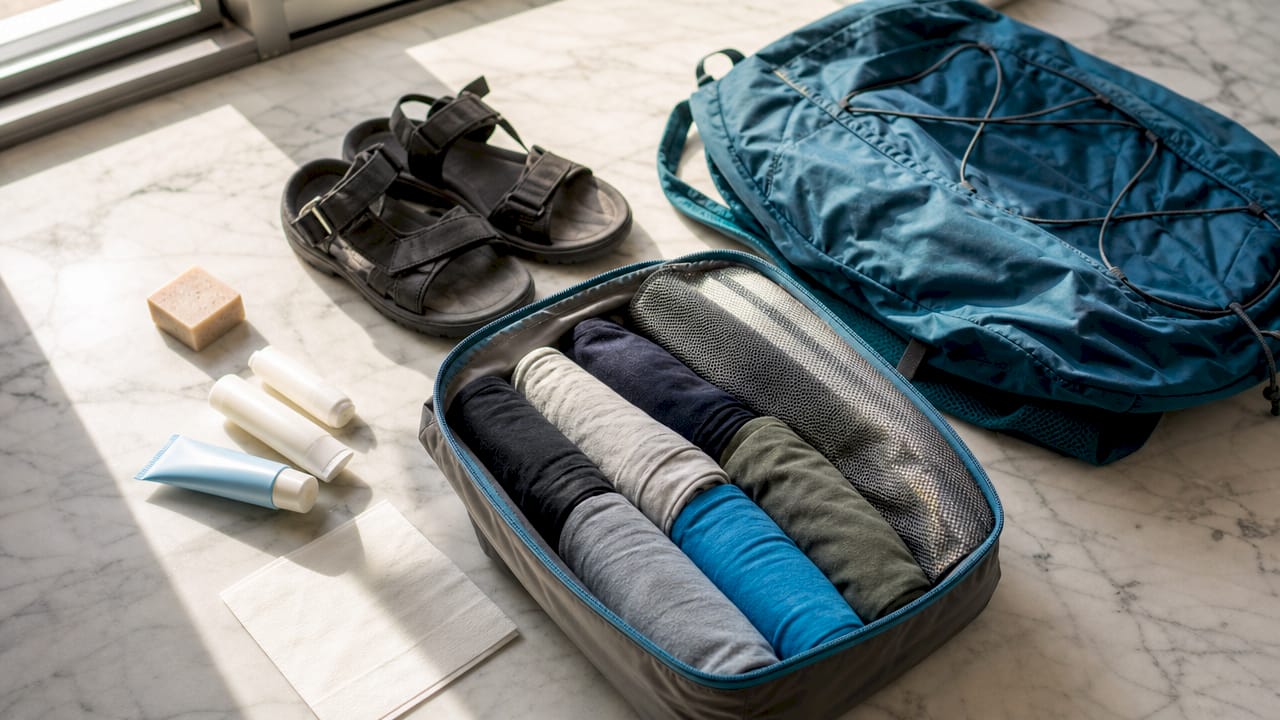
Pro Tip: Pack for a laundry cycle, not your trip length. If you are traveling for 14 days, you need 7 days of clothes and two laundry sessions, not 14 days of outfits.
How to use destination resources to keep your bag light
The smartest cheap packing list is one that stays short on purpose. Buying consumables at your destination is not a backup plan. It is the plan.
Toiletries, sunscreen, and over-the-counter medications are available in virtually every country. Buying them locally means you skip the TSA liquid bag entirely and arrive with a lighter bag. Local pharmacies and supermarkets almost always sell the same brands you use at home, often at lower prices.
- Research your accommodation before you leave. Many hostels and budget hotels provide shampoo, soap, and hair dryers.
- Check if your hotel or hostel has laundry facilities. If it does, you can pack even less.
- Pack laundry soap sheets instead of liquid detergent. They weigh almost nothing and dissolve in any sink.
- Use local markets for cheap clothing replacements if something wears out or you misjudged the climate.
Budget travelers who keep a contingency fund and book flights at least 52 days in advance consistently spend less overall. That financial buffer also covers unexpected purchases at the destination, which removes the pressure to overpack “just in case.”
Pro Tip: Research your destination’s pharmacy options before you leave. In countries like Thailand, Vietnam, and Mexico, pharmacies sell high-quality medications and toiletries at prices far below what you would pay at home. Leave the bulk at home and buy what you need on arrival.
For families, a family travel checklist that accounts for shared toiletries and communal gear reduces the total load per person significantly. One bottle of sunscreen for four people weighs the same as one bottle for one person.
What common packing mistakes cost budget travelers the most?
Overpacking is the single most expensive packing mistake. Budget travelers routinely pack “just in case” items that never leave the bag. A formal outfit for a dinner that might happen, a second pair of shoes for a hike that is not on the itinerary, and a full first aid kit for a trip to a major city all add weight without adding value.
- Do not pack for improbable scenarios. Pack for what you have actually planned.
- Avoid high-maintenance fabrics like linen and silk. They wrinkle badly and often require special washing.
- Check your airline’s baggage policy before you pack, not after. Weight limits and size restrictions vary by carrier and route.
- For business travel, limit formal wear to one outfit and rely on hotel laundry for pressing.
- For family trips, assign each child a small personal bag. Kids as young as five can carry their own snacks, a book, and a change of clothes.
One underrated fix is the “anchor moments” method. Identify the two or three specific activities or events that define your trip, such as a beach day, a city walking tour, and one nice dinner. Pack only for those moments. Everything else can be handled with what you already have in the bag.
Regular laundry on the road removes the need to pack for the full trip length. A sink wash with a soap sheet takes ten minutes and dries overnight in most climates. That habit alone can cut your packing list in half.
Key Takeaways
Minimalist packing is the most reliable way to cut baggage fees, reduce travel stress, and stay within budget on any trip.
| Point | Details |
|---|---|
| Follow the 7kg rule | Stay under the standard budget airline carry-on limit to avoid gate fees. |
| Pack for a laundry cycle | Bring 5–7 days of clothes and wash on the road, regardless of trip length. |
| Use the buy-as-you-go method | Purchase toiletries and consumables at your destination to save weight and money. |
| Wear heavy items in transit | Keep bulky shoes and jackets off the scale by wearing them through the airport. |
| Avoid “just in case” packing | Only pack for planned activities, not improbable scenarios. |
Why I think most travelers are still packing wrong
After years of budget travel across four continents, the pattern I see most often is this: travelers pack for anxiety, not for the trip. They bring the heavy rain jacket because what if it rains, the formal shoes because what if there is a nice restaurant, and the full-size shampoo because what if the hotel does not have any. Every one of those decisions adds weight and cost without adding real value.
The mindset shift that changed how I pack was treating my bag like a carry-on budget. Every item has a cost in weight and space. When you frame it that way, the question stops being “should I bring this?” and starts being “is this worth the cost?” A full-size bottle of conditioner is rarely worth 300 grams of your 7kg allowance.
The other thing most guides do not tell you is that packing light gets easier with repetition. Your first minimalist trip will feel uncomfortable. You will second-guess every item you left behind. By your third trip, you will wonder why you ever checked a bag. The cheap travel checklist you build after two or three trips is worth more than any generic list you find online, because it reflects your actual habits and needs.
My honest advice: take your current packing list, cut it by 30%, and then cut it again. You will not miss what you left behind. You will only notice how much lighter and faster you move.
— Asher
Pilottraveldeals: where smart packing meets smarter booking
Packing light saves money at the airport. Booking smart saves money before you even get there.
Pilottraveldeals aggregates deals on cheap airfare, affordable hotels, and travel SIM cards so you can plan the full trip without overspending on any part of it. Budget travelers using the platform can compare options across multiple providers in one place, which removes the time cost of searching site by site. Whether you are booking a solo weekend trip or coordinating a family group booking, the deals are filtered for value, not just price. Pair a tight packing list with a tight booking strategy and the savings compound fast.
FAQ
What is the standard carry-on weight limit for budget airlines?
Most budget carriers enforce a 7kg carry-on limit in 2026. Exceeding it at the gate typically results in fees that can cost more than a checked bag booked in advance.
How many clothes should I pack for a two-week trip?
Pack for a 5–7 day laundry cycle, not the full trip length. Five tops, two to three bottoms, and six to seven underwear cover a full week with room to wash and repeat.
Should I pack toiletries or buy them at my destination?
Buying toiletries at your destination is almost always the better choice. It eliminates TSA liquid restrictions, reduces bag weight, and often costs less than travel-sized products at home.
What packing method saves the most space?
Compression bags combined with packing cubes save the most space. Compression bags reduce the volume of bulky items like jackets, while packing cubes keep clothing organized and tightly packed.
How do I avoid baggage fees on a budget trip?
Weigh your bag at home before you leave, wear your heaviest items through the airport, and check your airline’s specific size and weight rules before you pack. A summer packing checklist tailored to your destination also helps you avoid bringing items you will not use.
Recommended
- 7 Smart Steps for an Effective Cheap Travel Checklist – PilotTravelDeals.com
- Smart Overseas Flight Tips: Save More and Travel Better – PilotTravelDeals.com
- 7 Proven Budget Travel Tips 2025 for Smart Savings – PilotTravelDeals.com
- Budget travel guide: Proven strategies to save on every trip – PilotTravelDeals.com
