
Over 40 million american travelers participate in group trips each year, revealing just how popular collective journeys have become. Whether it is a corporate retreat, a university field study, or a family reunion, traveling as a group introduces unique dynamics and challenges that solo adventurers rarely face. Learning what truly defines group travel and understanding the processes involved can help anyone plan smarter, minimize stress, and make the most of every shared adventure.
Table of Contents
- Understanding Group Travel: Core Definitions
- Types of Group Travel and Key Differences
- How Group Booking Works Step by Step
- Comparing Deals and Maximizing Savings
- Common Pitfalls and How to Avoid Them
Key Takeaways
| Point | Details |
|---|---|
| Understanding Group Travel | Group travel involves coordinated journeys with shared objectives and logistics, requiring clear communication and planning. |
| Types of Group Travel | Group travel can be categorized into organizational, social, special interest, and professional networks, each needing tailored planning approaches. |
| Group Booking Process | Successful group booking involves key steps such as initial planning, financial coordination, and pre-travel preparations to ensure smooth experiences. |
| Avoiding Common Pitfalls | Identifying potential challenges in communication, expense management, and logistics is essential; proactive planning can mitigate these risks. |
Understanding Group Travel: Core Definitions
Group travel represents a coordinated journey involving multiple individuals traveling together with shared logistics, objectives, and often a centralized planning mechanism. While seemingly straightforward, group travel encompasses diverse scenarios ranging from academic expeditions to corporate retreats, family vacations, and professional conferences.
Universities provide an excellent framework for understanding group travel dynamics. Cornell University defines group travel as a university-sponsored activity where participants move collectively under designated leadership. This definition highlights three critical components: shared purpose, coordinated management, and collective movement. Similarly, the University of Alaska Fairbanks describes group travel as trips where one individual manages travel expenses for multiple participants, which underscores the financial and organizational complexity inherent in group travel planning.
Group travel can be categorized into several distinct types, each with unique characteristics:
- Organizational Groups: Corporate teams, conference attendees, academic research groups
- Social Groups: Family reunions, friend gatherings, club excursions
- Special Interest Groups: Tour groups, hobby-based travel clusters, educational exchanges
- Professional Networks: Industry conferences, training workshops, international seminars
Successful group travel requires meticulous coordination, clear communication, and strategic planning to ensure a seamless experience for all participants. Understanding these core definitions provides a foundational framework for navigating the complexities of collective travel arrangements.
Types of Group Travel and Key Differences
Group travel encompasses a wide array of travel experiences, each with unique characteristics and organizational structures. An escorted tour represents one prominent form of group travel, where travelers move together under professional guidance, typically including comprehensive services like accommodations, transportation, meals, and coordinated sightseeing activities.
Academic Group Travel emerges as a significant category with distinct operational models. The University of Washington highlights two primary academic travel approaches: faculty-led programs and direct exchange initiatives. Faculty-led programs involve students traveling alongside university instructors, creating structured learning environments beyond traditional classroom settings. Direct exchange programs, conversely, enable students to immerse themselves in partner institutions, offering more independent international experiences.
Group travel categories can be comprehensively classified based on purpose and structure:
-
Educational Group Travel
- Study abroad programs
- Research expeditions
- Academic conferences
-
Professional Group Travel
- Corporate retreats
- Industry conferences
- Training workshops
- Team-building excursions
-
Leisure Group Travel
- Family reunions
- Friend group vacations
- Senior citizen tours
- Special interest tours
Successful group travel requires understanding these nuanced categories, recognizing that each type demands specific planning strategies, budget considerations, and logistical approaches. Group travel booking strategies must adapt to the unique requirements of each travel type, ensuring seamless experiences for participants across different travel contexts.
How Group Booking Works Step by Step
Group booking represents a complex process requiring strategic coordination and precise planning. The University of Alaska Fairbanks emphasizes that group travel typically involves a designated leader responsible for managing collective travel arrangements, including financial management and logistical coordination for multiple participants.

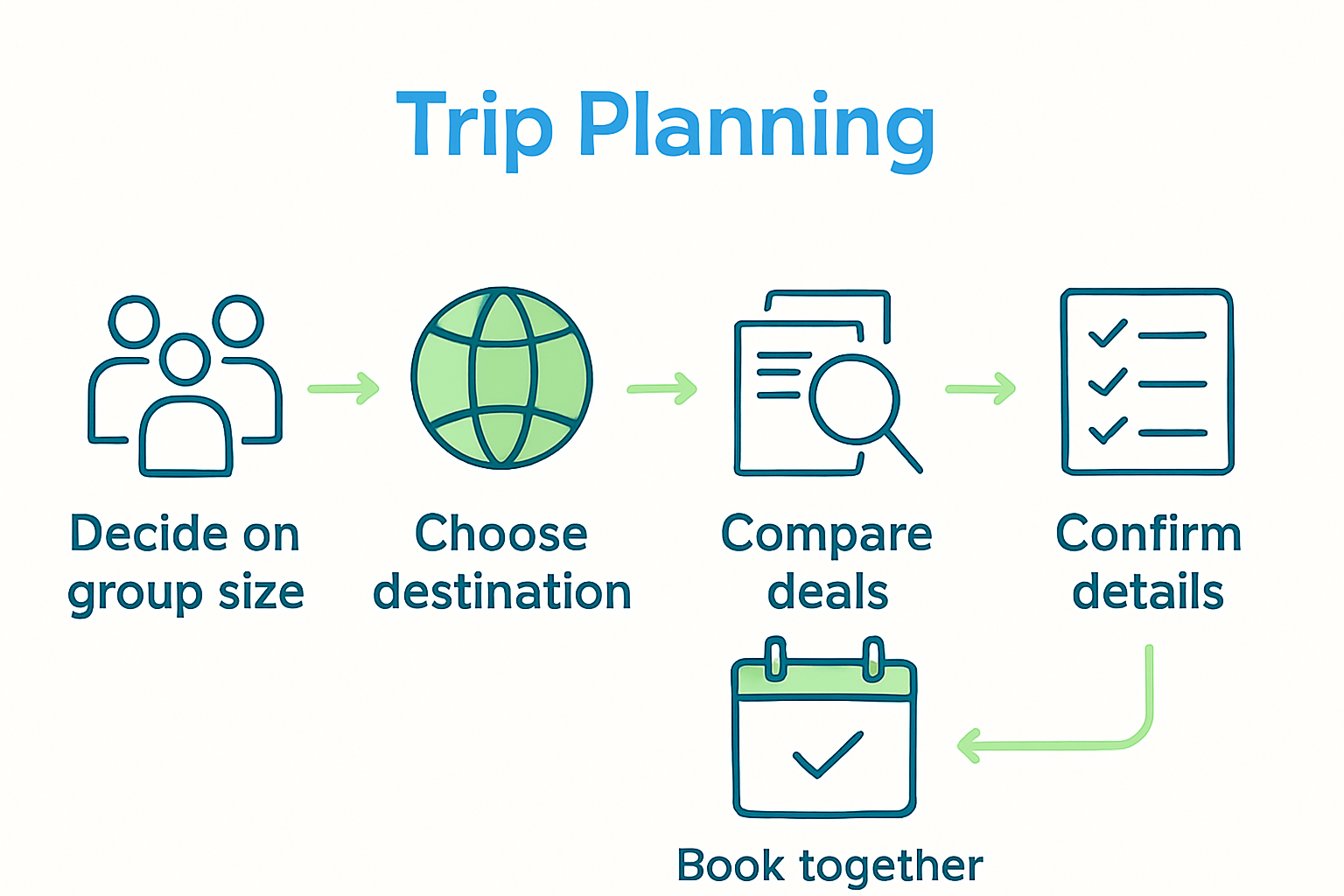
The group booking workflow typically follows a structured progression that involves several critical stages. Initial Planning requires identifying group size, travel preferences, and budget constraints. Financial preparation is crucial, with universities recommending specific approaches like securing travel cards and submitting advance request forms, ensuring smooth financial management throughout the travel process.
A comprehensive group booking process generally involves these key steps:
-
Group Composition and Preliminary Research
- Define group size and participant profiles
- Establish travel objectives
- Determine budget parameters
-
Destination and Logistics Selection
- Research potential travel destinations
- Compare transportation and accommodation options
- Evaluate group-specific requirements
-
Financial Coordination
- Collect initial deposits
- Develop shared payment strategy
- Allocate individual and collective expenses
-
Booking and Confirmation
- Secure group reservations
- Obtain necessary documentation
- Confirm individual participant details
-
Pre-Travel Preparation
- Distribute travel information
- Conduct group briefings
- Address individual participant concerns
Successful group booking demands meticulous attention to detail and proactive communication. Group travel planning strategies must remain flexible, anticipating potential challenges and creating contingency plans to ensure a smooth travel experience for all participants.
Comparing Deals and Maximizing Savings
Group travel deals require strategic analysis and sophisticated comparison techniques to unlock significant cost savings. BCD Travel highlights that efficient group travel management can secure substantial volume discounts while ensuring comprehensive policy compliance, making comprehensive deal evaluation a critical component of successful group booking.
Travel Cost Optimization demands a multifaceted approach that goes beyond simple price comparisons. Research exploring traveler heterogeneity reveals complex variations in travel time value and potential savings, suggesting that group travelers must consider multiple factors beyond immediate price points when evaluating potential deals.
Effective deal comparison strategies include:
-
Comprehensive Price Analysis
- Compare base rates across multiple providers
- Evaluate inclusive vs. exclusive pricing models
- Calculate total trip cost including hidden fees
-
Bulk Booking Benefits
- Identify volume discount thresholds
- Negotiate group rates directly with providers
- Leverage collective purchasing power
-
Flexibility Assessment
- Review cancellation and modification policies
- Analyze potential cost savings from flexible bookings
- Compare insurance and protection options
-
Timing Strategies
- Monitor price fluctuations
- Book during off-peak periods
- Utilize advanced booking discounts
Maximizing travel savings requires a strategic approach that balances cost, convenience, and group-specific requirements, transforming group travel from a logistical challenge into a financially optimized experience.
Common Pitfalls and How to Avoid Them
Group travel planning presents numerous potential challenges that can derail even the most carefully constructed itineraries. The University of Alaska Fairbanks recommends obtaining specialized travel cards and working closely with travel offices to mitigate financial and logistical risks associated with collective travel arrangements.
Expense Management represents a critical area where groups frequently encounter complications. Universities emphasize the importance of comprehensive documentation, noting that all travel expenses must be meticulously tracked and supported by appropriate receipts, transforming financial tracking from a potential nightmare into a streamlined process.
Common group travel pitfalls and their strategic solutions include:
-
Financial Mismanagement
- Establish clear payment responsibilities
- Designate a single financial coordinator
- Implement transparent expense tracking systems
-
Communication Breakdowns
- Create centralized communication channels
- Define roles and expectations early
- Develop contingency communication plans
-
Logistical Coordination Challenges
- Conduct comprehensive pre-travel briefings
- Build flexibility into travel schedules
- Prepare backup plans for potential disruptions
-
Individual Participant Variability
- Screen participants for travel compatibility
- Address individual mobility and accessibility needs
- Create inclusive group dynamics
Proactive planning and strategic risk management can transform potential group travel pitfalls into manageable challenges. Understanding comprehensive travel planning strategies allows groups to navigate complex travel scenarios with confidence and minimal stress.
Simplify Your Group Travel Booking and Save Big Today
Planning group travel can often feel overwhelming with so many moving parts like coordination, budgeting, and logistics demanding your attention. Managing collective travel arrangements needs clear strategies and reliable tools to avoid pitfalls and maximize savings. The article “Complete Guide to Booking Group Travel Efficiently” highlights key challenges such as financial management, communication breakdowns, and finding the best deals for groups. These pain points can easily turn an exciting group trip into a stressful experience.
Travel Tips – PilotTravelDeals.com offers practical advice to help you avoid common mistakes and streamline your process.
Take control of your next group booking with PilotTravelDeals.com where you can compare up to date deals on flights, hotels, and more in one easy place. Enjoy significant discounts that stretch your group budget further. Visit PilotTravelDeals.com now to start planning your efficient and cost-effective group adventure. Don’t wait because smart planning means better savings and a smoother travel experience.
Frequently Asked Questions
What is group travel?
Group travel involves multiple individuals traveling together with shared logistics, objectives, and often centralized planning, encompassing scenarios like academic expeditions, corporate retreats, and family vacations.
How does group booking work?
Group booking includes several critical steps such as defining group size, selecting a destination, coordinating finances, securing reservations, and preparing participants before travel. A designated leader typically manages these arrangements.
What are common types of group travel?
Types of group travel include educational group travel (like study abroad programs), professional group travel (like corporate retreats), and leisure group travel (such as family reunions or friend vacations).
How can I maximize savings when booking group travel?
To maximize savings, engage in comprehensive price analysis, take advantage of bulk booking benefits, assess flexibility options, and utilize timing strategies to monitor price fluctuations and book during off-peak periods.
Recommended
- Group Travel Booking Explained: Complete Guide 2024 – PilotTravelDeals.com
- How to Plan Group Travel Easily and Save Money – PilotTravelDeals.com
- Understanding the Essentials of Business Travel Booking Guide – PilotTravelDeals.com
- Complete Guide to Why Book Travel Online – PilotTravelDeals.com
- How to Join Group Cycling Tours for an Unforgettable Ride | Liverpool Cycle Tours