
Finding affordable hotel deals can feel tricky when prices seem to change every time you check. For budget-conscious travelers, understanding what drives these shifts helps you compare options and plan smarter trips. The rise of hotel dynamic pricing means rates adjust in real time based on factors like demand, seasonality, and competitive pressures. This article breaks down how these algorithms work, explains their effect on your wallet, and offers practical tips for getting the best possible value.
Table of Contents
- Hotel Dynamic Pricing Defined and Debunked
- How Real-Time Hotel Rates Are Calculated
- Major Influencers: Demand, Seasonality, and More
- Risks and Downsides for Travelers
- Smart Strategies to Find the Best Deals
Key Takeaways
| Point | Details |
|---|---|
| Understanding Dynamic Pricing | Dynamic pricing uses algorithms to adjust hotel rates in real-time based on market factors such as demand, seasonality, and competition. This allows for optimized revenue and competitive pricing. |
| Market Influencers | Hotel room rates are influenced by various factors, including local events, economic conditions, and seasonal trends. Understanding these can help travelers time their bookings better. |
| Consumer Risks | Dynamic pricing can lead to unpredictable rate fluctuations and potential overpaying, creating challenges for travelers. Being aware of these risks helps in making informed decisions. |
| Smart Booking Strategies | Utilize price comparison websites and set price alerts to find the best hotel deals. Consider flexible travel dates and off-peak seasons for more competitive rates. |
Hotel Dynamic Pricing Defined and Debunked
Hotel dynamic pricing represents a sophisticated algorithmic approach that adjusts room rates in real-time based on multiple market factors. Unlike traditional fixed pricing models, this strategy allows hotels to optimize revenue by continuously modulating prices according to current demand, seasonality, and competitive landscape.
Understanding how dynamic pricing works requires examining its core components. Algorithmic pricing strategies leverage complex computational models that analyze several key variables:
- Current occupancy rates
- Seasonal travel trends
- Local event schedules
- Competitor pricing
- Historical booking data
- Real-time supply and demand
The primary goal of dynamic pricing isn’t simply to increase rates, but to create a more responsive and efficient pricing ecosystem. Hotels can strategically adjust prices to maximize revenue during peak periods while remaining competitive during slower seasons. This approach allows smaller hotels and boutique properties to compete more effectively with larger chain establishments.
Dynamic pricing isn’t about arbitrary price increases, but creating a responsive pricing strategy that benefits both hotels and travelers.
While some travelers perceive dynamic pricing as potentially unfair, computer-automated pricing strategies actually introduce more transparency and flexibility into the hospitality market. These systems continuously balance consumer expectations with business revenue optimization.
Use this comparison to better understand fixed vs. dynamic hotel pricing models:
| Pricing Model | Rate Adjustment Timing | Market Responsiveness |
|---|---|---|
| Fixed Pricing | Set in advance | Low |
| Dynamic Pricing | Real-time changes | High |
| Hybrid Approach | Mix of both | Moderate |
Pro tip: Download price tracking apps to monitor hotel rates and understand how dynamic pricing fluctuates in real-time, helping you book at optimal moments.
How Real-Time Hotel Rates Are Calculated
Hotel room pricing is a complex mathematical process that goes far beyond simple cost-plus calculations. Hospitality rate calculations involve sophisticated algorithms that continuously analyze multiple interconnected variables to determine optimal pricing strategies in real-time.
The core components of real-time hotel rate calculations typically include:
- Current occupancy levels
- Seasonal demand patterns
- Local market competition
- Upcoming events and conferences
- Historical booking data
- Regional economic conditions
- Transportation availability
- Weather forecasts
Understanding how average daily rates (ADR) are determined requires examining specific computational methods. Per diem rate calculations reveal that hotels divide total room revenue by the number of rooms rented, creating a dynamic pricing mechanism that adapts to market conditions.
Real-time hotel rates represent a complex ecosystem of supply, demand, and strategic pricing decisions.
Modern dynamic pricing models integrate machine learning and predictive analytics to anticipate market shifts, allowing hotels to adjust rates milliseconds before a potential booking. This approach enables properties to maximize revenue while maintaining competitive pricing strategies that respond instantaneously to changing market conditions.

Pro tip: Use price comparison websites and set up price alerts to track hotel rate fluctuations and identify the most strategic booking windows.
Major Influencers: Demand, Seasonality, and More
Hotel pricing strategies are fundamentally driven by a complex interplay of market dynamics that extend far beyond simple supply and demand equations. Hospitality market trends reveal multiple intricate factors that continuously reshape hotel pricing strategies across different regions and travel segments.
The primary influencers of hotel room rates include:
- Business travel cycles
- Holiday and peak tourism seasons
- Regional economic conditions
- Major conference and event schedules
- Local transportation availability
- International travel restrictions
- Consumer spending patterns
- Competitive landscape shifts
Seasonal variations play a critical role in determining hotel pricing strategies. Winter ski destinations, summer beach resorts, and cities hosting international conferences experience dramatic fluctuations in room rates based on predictable demand patterns. Demand forecasting models enable hotels to anticipate these shifts and adjust pricing algorithms accordingly.
Successful hotel pricing is less about fixed rates and more about intelligent, responsive strategies that reflect real-time market conditions.
Understanding these pricing dynamics requires recognizing that market elasticity is not uniform across all destinations. Some markets demonstrate high price sensitivity, while others maintain relatively stable rates regardless of minor demand changes. Hotels continuously refine their pricing models to balance revenue optimization with customer perception and competitive positioning.
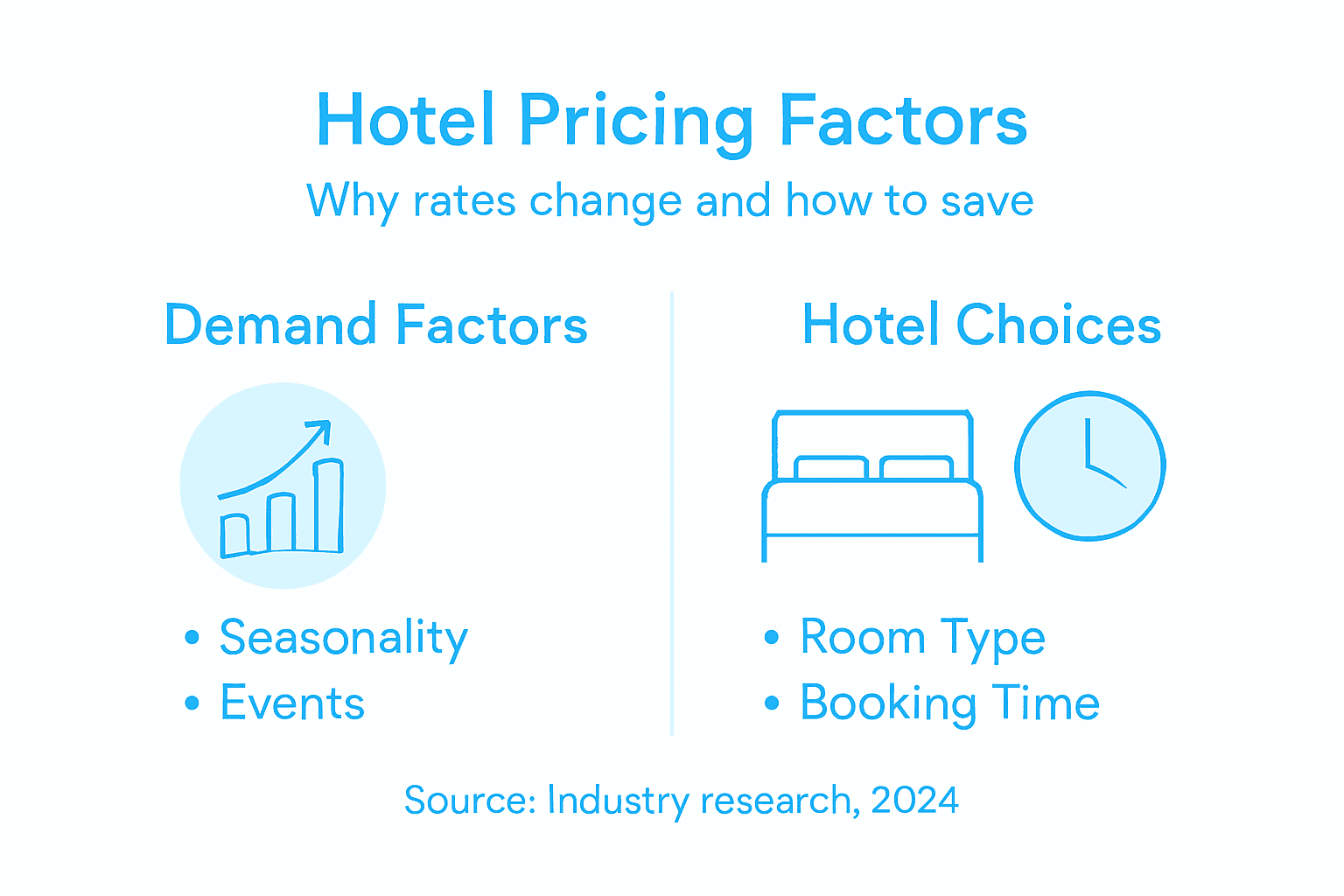
Here’s a summary of how key market factors influence hotel pricing:
| Market Factor | Impact on Pricing | Typical Outcome |
|---|---|---|
| Major local event | Drives rates higher | Higher revenue periods |
| Low occupancy rate | Triggers lower prices | Increased bookings |
| Off-peak season | Decreases demand | Promotional offers likely |
| Economic downturn | Reduces travel budgets | Discounted rates offered |
| Increased competition | Pressures price reductions | Value-added promotions |
Pro tip: Track price trends for your desired destinations across multiple booking platforms to develop a nuanced understanding of how rates fluctuate throughout different seasons.
Risks and Downsides for Travelers
Dynamic hotel pricing isn’t always the consumer-friendly strategy it appears to be at first glance. Price dispersion challenges reveal significant complexities that can potentially harm travelers seeking predictable and fair booking experiences.
The primary risks travelers encounter with dynamic pricing include:
- Unpredictable price fluctuations
- Potential for sudden rate increases
- Information asymmetry
- Complex booking decisions
- Psychological stress from constant price changes
- Difficulty comparing true value
- Risk of overpaying during peak times
- Limited transparency in pricing algorithms
Algorithmic pricing introduces several critical challenges for consumers. Dynamic pricing systems can inadvertently create scenarios where travelers face higher costs due to opaque computational models that may discriminate based on subtle data points like browsing history, location, or previous purchasing behavior.
Not all price variations represent genuine market dynamics – some are engineered to maximize corporate revenue at the traveler’s expense.
Consumers must remain vigilant about the potential manipulation inherent in these sophisticated pricing strategies. Some hotels leverage machine learning algorithms that can instantaneously adjust prices based on micro-level demand signals, creating an environment where the same room might cost dramatically different amounts depending on seemingly minor contextual shifts.
Pro tip: Use incognito browser modes and compare prices across multiple platforms to mitigate potential algorithmic pricing bias.
Smart Strategies to Find the Best Deals
Navigating the complex world of dynamic hotel pricing requires strategic approaches that go beyond simple price comparison. Hotel rate comparison techniques reveal multiple sophisticated methods travelers can employ to secure the most competitive rates available.
Key strategies for finding the best hotel deals include:
- Use multiple price comparison websites
- Set up price alerts and tracking
- Consider flexible travel dates
- Book during off-peak seasons
- Look for package deals
- Check loyalty program discounts
- Investigate corporate and membership rates
- Monitor last-minute booking opportunities
Technology plays a crucial role in modern deal hunting. Dynamic pricing strategies suggest that travelers can leverage advanced tools and techniques to counteract unpredictable hotel pricing algorithms. This means using price tracking apps, setting up automated alerts, and developing a nuanced understanding of how and when prices fluctuate.
Smart travelers don’t just accept the first price they see – they strategically navigate the complex landscape of hotel pricing.
Successful deal hunting requires patience and a multi-platform approach. Sophisticated travelers cross-reference prices across different booking sites, understand seasonal pricing trends, and remain flexible with their travel plans. Some advanced techniques include booking rooms with free cancellation, which allows continued price monitoring even after initial reservation.
Pro tip: Create price comparison spreadsheets and set up browser extensions that automatically track and alert you to price drops for your desired hotels.
Unlock Real Savings by Outsmarting Dynamic Hotel Pricing
Dynamic hotel pricing can make booking a hotel feel confusing and unpredictable. This article highlights key challenges travelers face such as sudden rate increases, complex algorithmic price changes, and difficulty finding the best deal amid fluctuating prices. At PilotTravelDeals.com, we understand these pain points and provide a trusted platform where you can compare real-time hotel rates from multiple providers all in one place. Our tools empower you to navigate dynamic pricing smartly by tracking price changes and uncovering exclusive discounts up to 80 percent.

Discover all the tips and resources to beat unpredictable hotel pricing in our Miscellaneous Category. Take control of your travel budget today by visiting PilotTravelDeals.com and start comparing hotel deals that fit your travel plans and wallet. Don’t let dynamic pricing dictate your trip costs—act now to book with confidence and savings.
Frequently Asked Questions
What is hotel dynamic pricing?
Hotel dynamic pricing is a strategy that adjusts room rates in real-time based on various market factors, such as demand, seasonality, and competitor pricing, to optimize revenue for hotels.
How do hotels calculate real-time room rates?
Hotels calculate real-time room rates using sophisticated algorithms that analyze multiple variables, including occupancy levels, local market competition, and historical booking data, enabling them to adjust prices dynamically.
What are the main factors that influence hotel pricing?
Key factors influencing hotel pricing include business travel cycles, seasonal demand patterns, local events, economic conditions, and competition in the market.
How can travelers find the best deals on hotel bookings?
Travelers can find the best hotel deals by using multiple comparison websites, setting up price alerts, being flexible with travel dates, booking during off-peak seasons, and monitoring last-minute deals.
Recommended
- Travel Deal Terminology Explained: Maximizing Savings – PilotTravelDeals.com
- Understanding the Role of Travel Discounts for All Travelers – PilotTravelDeals.com
- 7 Essential Hotel Booking Tips 2025 for Smart Travelers – PilotTravelDeals.com
- Why Flexible Travel Dates Matter for Savings – PilotTravelDeals.com
- Doryssa Theorem – Longevity Travel