Booking your next trip can feel like a maze of prices and hidden fees, especially when every dollar counts. Travelers worldwide are turning to meta search engines that pull real-time data from hundreds of airlines and hotels to spot deals faster and compare options side-by-side. With the global market valued at USD 14.12 billion for 2026, these smart tools are changing how solo explorers and families plan vacations, offering clear choices and fresh opportunities for savings.
Table of Contents
- Understanding Meta Search Engines In Travel
- Comparing Meta Search Engines And OTAs
- How Meta Search Engines Maximize Savings
- Key Benefits And Limitations For Travelers
- Common Pitfalls And How To Avoid Them
Key Takeaways
| Point | Details |
|---|---|
| Understanding Meta Search Engines | Meta search engines aggregate data from multiple travel providers, allowing for real-time comparison but do not handle actual bookings. |
| Differences Between Platforms | Unlike Online Travel Agencies, meta search engines do not own inventory and redirect users for purchases, providing more price visibility but less of a streamlined booking process. |
| Maximizing Travel Savings | They help uncover hidden deals and ensure users see current pricing, enabling quick identification of the best deals available. |
| Cautious Use Recommended | Verify prices on provider websites post-meta search results to exploit exclusive offers or lower rates not captured by the search engines. |
Understanding Meta Search Engines in Travel
Meta search engines are not travel websites themselves—they’re aggregators that pull data from countless travel providers and display results side-by-side so you can compare everything at once. Think of them as travel comparison middlemen that connect you to airlines, hotels, and booking sites without handling the actual reservation.
Here’s what makes them different from regular travel sites:
- No direct booking capability – They show prices but redirect you to the actual vendor to complete your purchase
- Real-time data from multiple sources – Pulling information from hundreds of airlines, hotels, and car rental companies simultaneously
- Algorithm-driven price comparisons – Using advanced technology to evaluate and rank options by price, duration, convenience, and other factors
- Comprehensive option overview – Showing you combinations you might never discover searching individual sites
The global travel meta-search engine market is experiencing explosive growth, valued at USD 14.12 billion in 2026. This surge reflects how travelers increasingly depend on these platforms to cut through the chaos of flight and hotel hunting.
When you search for a flight on a meta search engine, it queries multiple airlines and booking platforms simultaneously. You see what United, Delta, and Southwest are offering, plus deals from budget carriers and third-party booking sites. All on one screen. All updated in real-time.
This is fundamentally different from visiting individual airline websites. Instead of checking five different sites manually, a meta search engine does the legwork instantly.
The real power emerges when you’re budget-conscious. Meta search engines excel at surfacing deals you’d otherwise miss—those obscure combinations, off-peak flight times, or hotel packages that individual site searches bury under their default sorting.
Meta search engines streamline travel planning by comparing prices across multiple providers simultaneously, helping you find better deals without visiting dozens of websites.
For families and solo travelers planning trips, this efficiency matters. You save hours of clicking through separate websites. You reduce decision fatigue. And you’re far more likely to spot that flight or hotel that actually fits your budget.
These platforms work because travelers have become savvier. You no longer accept the first price you see—you know alternatives exist. Meta search engines acknowledge that reality and built their entire business around it.
Pro tip: Use meta search engines for initial price research across multiple options, but note the specific booking site each result links to—sometimes booking directly on the provider’s own website offers exclusive discounts or loyalty perks that meta search results won’t show.
Comparing Meta Search Engines and OTAs
Meta search engines and Online Travel Agencies (OTAs) sound similar but operate fundamentally differently. Understanding this distinction shapes how you’ll use each platform when planning trips.
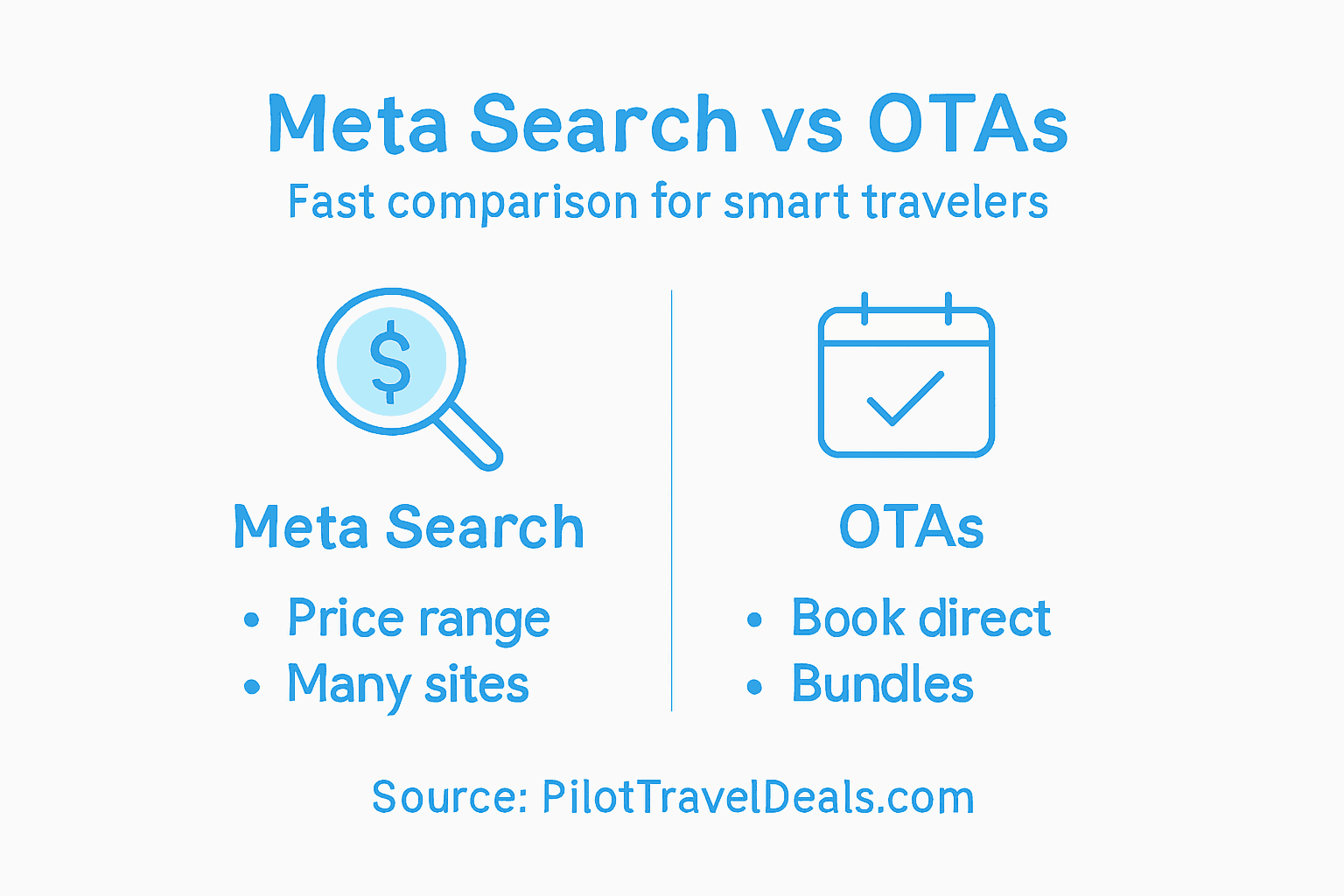
Here’s the core difference: Meta search engines don’t own inventory or process bookings themselves. They pull pricing data from hundreds of airlines, hotels, and other providers, then redirect you to complete your purchase on those third-party sites.

OTAs, by contrast, handle the entire transaction. Platforms like Expedia and Booking.com manage inventory directly and process bookings on their own platforms. You search, compare, and buy all in one place.
Key operational differences:
- Meta search engines – Aggregate and compare; redirect for booking
- OTAs – Own inventory; handle full booking process
- Direct booking – Bypasses both; you book straight from the provider
When you use a meta search engine, you’re doing research. You’re discovering what’s available across multiple sources simultaneously. When you use an OTA, you’re shopping within a curated selection that the platform controls.
The difference between meta-search engines and OTAs reflects different business models. Meta search engines profit from referrals and advertising. OTAs profit from the actual bookings they process, which means they can negotiate exclusive inventory deals.
Budget travelers often benefit from meta search engines because they eliminate the middleman markup. You see raw prices from airlines and hotels, then book directly with the provider. OTAs add convenience but sometimes add cost through their commission structure.
Meta search engines provide transparency and price discovery across multiple suppliers, while OTAs offer one-stop convenience with direct booking and customer support.
For solo travelers planning international trips, meta search engines excel at surfacing deals OTAs might not prominently feature. For families wanting seamless customer service and unified bookings, OTAs provide peace of mind.
Both coexist because travelers have different priorities. Some want the absolute lowest price and don’t mind redirects. Others value simplicity and are willing to pay slightly more for integrated booking.
The table below outlines differences among meta search engines, OTAs, and direct booking to help you choose the right approach for your next trip:
| Channel Type | Who Handles Booking | Best For Travelers Who | Drawback to Consider |
|---|---|---|---|
| Meta Search Engines | Third-party provider | Want maximum price visibility | May lack access to exclusive offers |
| Online Travel Agencies | The OTA itself | Prefer unified booking process | May include commission-based markups |
| Direct Booking | Airline/Hotel directly | Value loyalty perks, extra support | Limited price comparison on one site |
Pro tip: Start with meta search engines to discover price ranges and available options, then verify if booking directly on the provider’s website or through an OTA offers better loyalty rewards or cancellation policies for your specific trip.
How Meta Search Engines Maximize Savings
Meta search engines are built for one purpose: helping you spend less money on travel. They accomplish this through mechanisms that simply don’t exist when you search individual websites.
The core mechanism is real-time price comparison across hundreds of suppliers simultaneously. Instead of checking Expedia, then United, then Kayak separately, a meta search engine queries all of them at once and displays results side-by-side. You spot price differences instantly that would take hours to discover manually.
Here’s how the savings actually happen:
- Algorithm-driven price analysis – Sophisticated technology evaluates rates across providers continuously
- Visibility of lesser-known deals – Reveals discounts from budget carriers and smaller booking sites you’d never find alone
- Real-time dynamic pricing – Shows you updated prices as they change, catching the best moments to book
- Direct supplier links – Eliminates middleman markups by redirecting you to booking directly with providers
When airlines and hotels change prices (which happens constantly), meta search engines update within minutes. You’re seeing current market rates, not stale information from yesterday. This timing matters enormously for budget travelers catching flash sales or price drops.
The comparison of multiple offers side-by-side reveals lower fares and special discounts that remain invisible on individual sites. An obscure budget airline, a package deal from a regional supplier, or a flash sale from a booking platform—meta search engines surface all of it together.
For solo travelers, this means discovering flights you didn’t know existed. A connection through a smaller hub might cost 40% less than the direct route. An off-peak departure time might save you hundreds. Meta search engines find these combinations because they search comprehensively.
Real-time price monitoring and side-by-side comparisons help you identify the most cost-effective options quickly, reducing the risk of overpaying significantly.
Families planning multi-destination trips benefit enormously. You can compare not just flight prices but entire itineraries—seeing which combination of dates and routes actually minimizes total cost. A Wednesday departure instead of Friday might save more than changing your hotel choice.
The filtering features matter too. You can sort by price, duration, number of stops, or departure time. You can instantly rule out 500 flights and focus on the 20 that fit both your budget and schedule.
Pro tip: Set up price alerts on meta search engines for your planned travel dates weeks in advance—these platforms can notify you when fares drop significantly, allowing you to book at the optimal moment rather than guessing when prices bottom out.
Here is a summary of key ways meta search engines maximize travel savings:
| Savings Mechanism | How It Works | Impact on Travel Budget |
|---|---|---|
| Real-time Price Checks | Monitors providers for latest fares | Captures sudden drops and deals |
| Hidden Deal Discovery | Finds offers from niche suppliers | Uncovers budget-friendly options |
| Dynamic Fare Alerts | Notifies users when prices change | Allows booking at optimal moment |
| Direct Supplier Links | Removes middleman markups | Helps secure base-level pricing |
Key Benefits and Limitations for Travelers
Meta search engines offer real advantages for budget-conscious travelers, but they’re not perfect solutions. Understanding both sides helps you use them strategically.
The benefits are substantial. You gain access to a vastly wider selection than any single website could show. Budget airlines, regional carriers, smaller hotel chains, and niche booking platforms all appear in one search. This democratization of travel options means smaller providers reach you directly.
Key advantages include:
- Consolidated price comparisons – See hundreds of options simultaneously without manual searching
- Transparent pricing – Clear visibility into what different providers charge for identical services
- Detailed customization – Filter by price, duration, stops, amenities, and dozens of other criteria
- Expanded provider access – Discover smaller providers you’d never find otherwise
For families, this transparency matters enormously. You’re not trusting Expedia’s “recommended” hotels—you’re seeing what’s actually available across the entire market at every price point.
But limitations exist. Meta search engines sometimes face challenges like incomplete price accuracy due to technical delays. A price shown might change between when you click and when you reach the booking page. Availability data occasionally lags because meta search engines depend on third-party updates.
The redirect process confuses some users. You search on the platform, find what you want, then get redirected elsewhere to actually book. This adds a step that OTAs eliminate.
Another limitation: exclusive deals. Airlines and hotels sometimes offer prices or packages only on their own websites or specific OTAs. Meta search engines, by definition, can’t show what they don’t aggregate. You might miss a flash sale or loyalty discount.
Meta search engines expand your options and reveal transparent pricing, but they don’t capture every exclusive deal available directly from providers or OTAs.
For solo international travelers, the lack of unified customer support can be problematic. If something goes wrong, you’re dealing with the third-party provider directly—no intermediary to advocate for you.
Trust also matters. Some travelers worry about unfamiliar booking sites appearing in results. Smaller providers sometimes feel riskier, even when they’re legitimate.
Pro tip: Use meta search engines to establish baseline pricing and discover options, then verify your final choice by visiting the provider’s website directly—you might find better cancellation policies, loyalty credits, or package deals not visible through the meta search platform.
Common Pitfalls and How to Avoid Them
Meta search engines are powerful tools, but using them poorly can cost you money and create frustration. The good news: these pitfalls are entirely avoidable with awareness.
The biggest mistake is trusting meta search results as your final answer. You find a flight for $289 and assume that’s the best price available. But that airline might offer it for $279 directly on their website. Or an OTA might have bundled it with a hotel discount you didn’t see. Meta search engines show what they aggregate—not necessarily everything.
Common pitfalls to watch for:
- Assuming lowest prices are always shown – Some providers restrict what they display; high commissions limit coverage
- Ignoring dynamic pricing changes – Prices shift rapidly between search and booking
- Booking without verifying terms – Cancellation policies and fees vary by booking source
- Not checking provider websites – Exclusive deals exist outside meta search aggregation
- Redirect delays or errors – Technical glitches can create booking complications
Dynamic pricing deserves special attention. An airline might reduce fares by 30% in the two hours after your initial search. Or increase them. Relying solely on meta-search results without cross-verifying prices on direct airline and hotel sites means you might overpay or miss flash sales.
The redirect process itself creates risk. You see a great deal, click to book, and suddenly land on an unfamiliar third-party site. That site charges a booking fee you didn’t anticipate. Or the availability disappeared. Or the price shifted between pages.
For budget travelers, exclusive promotions matter enormously. Airlines launch limited-time deals on their own websites. Hotels offer loyalty discounts. OTAs create package bundles. If these aren’t aggregated into meta search results, you’re missing potential savings.
Verify prices directly on provider websites before committing, act quickly on good deals before prices shift, and read cancellation terms carefully since they vary by booking source.
Trust your instincts. If a result comes from an unfamiliar booking site offering prices significantly lower than competitors, verify legitimacy before proceeding. Legitimate bargains exist, but so do sketchy operators.
Pro tip: When you find a promising deal on a meta search engine, open a second browser tab and visit the provider’s website directly to compare the exact same itinerary—you’ll immediately see if exclusive discounts, loyalty benefits, or package deals make booking directly worthwhile.
Maximize Your Savings with Smart Travel Tools from PilotTravelDeals.com
Meta search engines are a game changer for budget-conscious travelers who want to see real-time price comparisons across multiple providers and avoid overpaying. But with challenges like redirect delays and exclusive deals hidden from aggregated results, getting the absolute best price requires a trusted platform that combines comprehensive deal aggregation with easy navigation and transparent options.
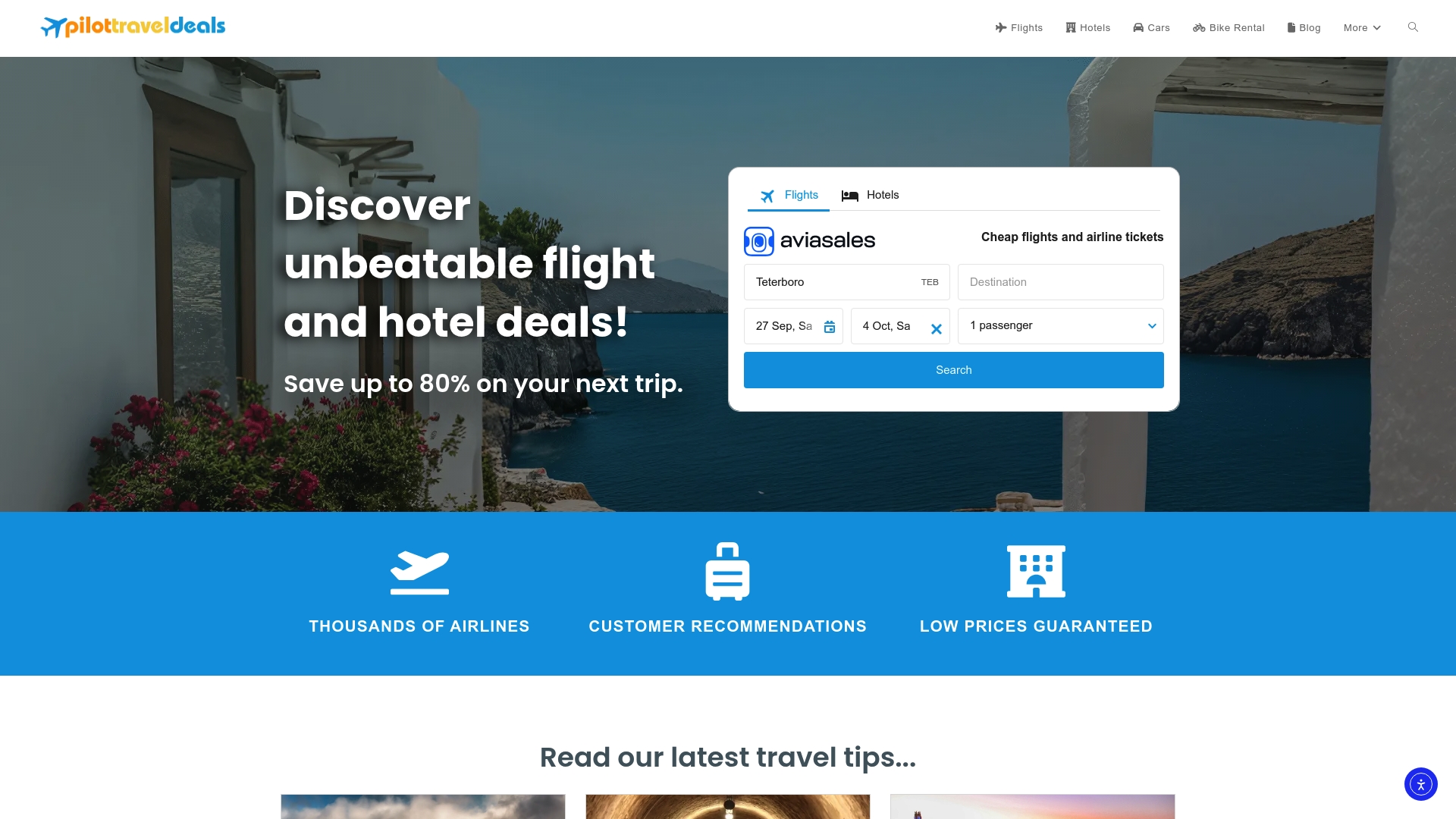
At PilotTravelDeals.com, we understand that finding the best flight, hotel, or rental deal requires more than just seeing options side-by-side. Our site takes smart travel planning a step further by offering savings up to 80% while showing a diverse range of travel solutions for every traveler. Whether you want to discover unique experiences in our Adventure category or explore exclusive tips in our Miscellaneous section, we give you the tools to act quickly on the best opportunities.
Start your journey with PilotTravelDeals.com now and unlock powerful price comparisons, deal alerts, and seamless booking links so you never miss the perfect travel deal again.
Frequently Asked Questions
What is a meta search engine in travel?
Meta search engines are aggregators that pull data from various travel providers, allowing users to compare prices and options for flights, hotels, and car rentals simultaneously, without directly handling bookings.
How do meta search engines help save money while traveling?
Meta search engines provide real-time price comparisons across multiple suppliers, revealing discounts and hidden deals that might not be visible on individual travel sites, helping users maximize their travel budget.
What is the difference between meta search engines and online travel agencies (OTAs)?
Meta search engines aggregate pricing data from various sources and redirect users to complete bookings on third-party sites, whereas OTAs own inventory and handle the entire booking process on their platforms.
What are the limitations of using meta search engines for travel planning?
The limitations of meta search engines include potential inaccuracies in price due to dynamic changes, missing exclusive deals offered directly by airlines or hotels, and the need to complete bookings on third-party sites, which may lead to confusion or additional fees.
Recommended
- Travel Meta-Search Explained: Find the Best Deals – PilotTravelDeals.com
- Role of Booking Engines in Affordable Travel Deals – PilotTravelDeals.com
- Why Use Travel Comparison: Complete Planning Guide – PilotTravelDeals.com
- Understanding the Role of Travel Comparison Sites – PilotTravelDeals.com
- Attractions | Bnei Mitzvah