
TL;DR:
- Comparing total prices, including taxes and fees, is essential for budget hotel booking success. Timing reservations correctly and leveraging membership discounts or direct negotiations can significantly reduce costs. Consistently rechecking rates and utilizing cashback portals help travelers secure the lowest possible prices.
Booking budget hotels the right way means comparing total prices, not just the nightly rate shown on a search results page. Most travelers overpay because they stop at the headline number and miss mandatory fees, resort charges, and taxes that can add $40–$55 per night to the final bill. The strategies in this guide cover timing, platform selection, hidden fee detection, and negotiation tactics that consistently produce the lowest total cost. Whether you travel domestically a few times a year or internationally every season, these methods work.
How to book budget hotels: start with the right platforms
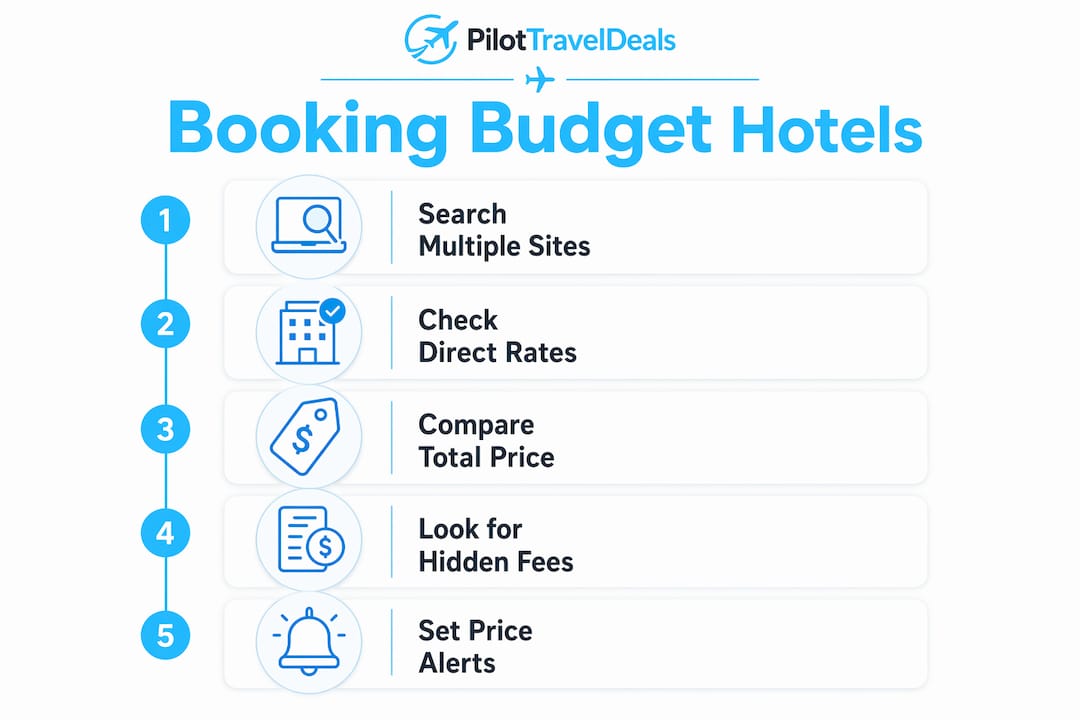
The cheapest hotel room is not always found on the first site you check. Multiple booking sites often show different prices for the same room, which means cross-checking is not optional. It is the core skill of budget hotel booking.
The best comparison platforms to use
Start your search on metasearch engines that pull rates from multiple sources at once. Google Hotels, Kayak, and Expedia are the three most reliable starting points. Google Hotels has a “Show taxes and fees” toggle that, when enabled, displays the true total price rather than the stripped-down nightly rate. Kayak lets you filter by total price and set price alerts for specific dates. Expedia bundles hotel and flight deals that can reduce overall trip costs.
- Google Hotels: Enable the taxes and fees toggle before comparing any rates. This single step prevents the most common budget miscalculation.
- Kayak: Use the “Price Forecast” feature to see whether rates are trending up or down for your travel dates.
- Expedia: Check bundle pricing if you are also booking a flight. Bundled rates sometimes unlock discounts unavailable on hotel-only searches.
- HotelTonight and One:Night: These apps specialize in last-minute hotel deals but carry real risk during peak demand periods like holidays or major events. Use them only when your dates are flexible.
- Direct hotel websites: Always check the hotel’s own site after finding a rate on an OTA (online travel agency). OTAs are third-party booking platforms like Booking.com or Expedia. Direct booking perks can include free breakfast, free parking, or waived resort fees that make the direct rate cheaper overall even if the nightly number looks higher.
For budget travelers who want alternatives to traditional hotels, hostels and short-term rental platforms offer lower per-night costs in most cities. A private room in a well-reviewed hostel in Lisbon or Bangkok routinely costs 40–60% less than a comparable budget hotel room.
Pro Tip: Always open the hotel’s direct website in a separate tab while browsing Google Hotels. If the direct rate is within $5–$10 of the OTA rate, book direct. You gain more flexibility and often avoid third-party cancellation headaches.
How does booking timing affect hotel prices?
Timing is the variable most budget travelers underestimate. The same room at the same hotel can cost dramatically different amounts depending on when you book and which nights you stay.
AAA advises booking domestic hotels at least 30 days in advance and international hotels 1–3 months out. That window captures the best balance of availability and competitive pricing. Waiting longer than that, especially for popular destinations, means fewer rooms and higher rates.
Here is a practical timing framework to follow:
- Book domestic trips 30+ days out. Rates below this threshold tend to rise as inventory shrinks. Exceptions exist for off-season travel in low-demand cities.
- Book international trips 1–3 months in advance. Currency fluctuations and limited inventory make last-minute international bookings expensive and risky.
- Choose weeknight stays over weekends when possible. Business hotels in city centers drop rates significantly on Fridays and Saturdays when corporate travelers leave. Leisure destinations do the opposite, with weekend rates higher than weekday rates.
- Book refundable rates and monitor prices. Free cancellation rates let you rebook at a lower price if one appears before your arrival date. Set a calendar reminder to recheck your booking two weeks out.
- Use last-minute apps only as a backup. HotelTonight works well for spontaneous trips in mid-size cities with healthy hotel supply. It fails during conferences, festivals, or holiday weekends when occupancy hits 90%+.
Pro Tip: After booking a refundable rate, set a weekly Google Hotels price alert for your exact dates and property. If the rate drops by more than $15 per night, cancel and rebook. This strategy costs nothing and regularly saves $50–$100 on a three-night stay.
How to compare hotel prices and avoid hidden fees
Total price awareness is the single biggest factor in finding genuinely cheap hotels, because headline rates often mislead. A $79 per night rate at a resort property can become $130 per night after taxes and a mandatory resort fee. A $95 rate at a no-frills chain hotel with no resort fee is actually cheaper.

What hidden fees look like in practice
Resort fees are the most common trap. These are mandatory daily charges that cover amenities like pools, gyms, and Wi-Fi, whether you use them or not. Resort fees typically add $40–$55 per night at properties in Las Vegas, Miami, and Hawaii. Budget hotel brands like Motel 6, La Quinta, and WoodSpring Suites rarely charge resort fees, which is one reason they deliver better value than their nightly rates suggest.
| Fee Type | Typical Amount | Where It Appears |
|---|---|---|
| Resort fee | $25–$55 per night | Las Vegas, Miami, Hawaii, ski resorts |
| Parking fee | $15–$45 per night | Urban hotels, airports |
| Wi-Fi fee | $5–$15 per night | Older full-service hotels |
| Early check-in fee | $25–$50 one-time | Most hotel categories |
| Pet fee | $25–$75 per stay | Pet-friendly properties |
To find the true total before booking, follow this three-step check. First, enable the “Show taxes and fees” toggle on Google Hotels. This toggle prevents underestimating costs by 15–30% compared to headline rates. Second, proceed to the checkout page on the booking platform before entering payment details. The final price breakdown always appears there. Third, search the hotel name plus “resort fee” on Google if you suspect a charge is not being disclosed upfront. Sites like ResortFeeChecker.com catalog known fees by property.
Not all booking channels appear on metasearch engines, so verifying prices on the hotel’s direct site is always worth the extra two minutes.
Pro Tip: If a hotel charges a resort fee but you are booking direct, ask the reservations agent to waive it. This works more often than most travelers expect, especially for multi-night stays or off-peak periods.
What discounts and negotiation tactics cut hotel costs further?
Discounts from membership organizations and direct negotiation are two of the most underused tools in budget hotel booking. Most travelers assume the rate on screen is fixed. It often is not.
Membership and affiliation discounts
- AARP: AARP member discounts at major hotel brands range from 5%–10% off standard rates. Brands participating include Wyndham, Choice Hotels, and Hilton. The annual AARP membership fee pays for itself after one or two hotel bookings.
- AAA: AAA members receive negotiated rates at thousands of properties. The discount varies by brand and location but consistently beats standard OTA rates at mid-tier chains.
- Military and government rates: Active duty military, veterans, and government employees qualify for deeply discounted rates at Marriott, IHG, and Hilton properties. These rates are not always visible on public booking pages. Call the hotel directly or use the brand’s government rate portal.
- Student discounts: Student Universe and STA Travel offer hotel discounts for travelers with a valid student ID. These work best in college towns and major European cities.
- Group bookings: Traveling with four or more rooms? Group booking discounts are available at most full-service hotels. Call the group sales department directly rather than booking online.
How to negotiate by phone
Calling hotels after finding a lower price online can produce a negotiated rate better than anything advertised. The script is simple: tell the reservations agent you found a lower rate on a competing platform and ask if they can match or beat it. Many properties will match the rate and add a small perk like free parking or late checkout. This works best at independent hotels and smaller chains where front desk staff have more pricing authority than large corporate properties.
Cashback portals like Rakuten and credit card travel portals like Chase Travel also layer savings on top of existing rates. Booking through a cashback portal while using a travel rewards credit card can add 3%–8% back on top of the lowest rate you find.
Key takeaways
Booking cheap hotels consistently requires comparing total costs, timing reservations correctly, and using every available discount before confirming a rate.
| Point | Details |
|---|---|
| Compare total prices, not headline rates | Enable the taxes and fees toggle on Google Hotels to see true costs before comparing. |
| Book at the right time | Domestic trips need 30+ days lead time; international trips need 1–3 months for best rates. |
| Check direct hotel websites | Direct booking often includes perks or fee waivers that make it cheaper than OTA rates. |
| Use membership discounts | AARP, AAA, military, and student rates cut 5%–10% off standard prices at major brands. |
| Negotiate by phone | Referencing a lower online rate when calling the hotel directly often yields a better deal. |
The habit that separates smart hotel bookers from everyone else
Most travelers book a hotel once and forget about it. That single decision costs them money every trip. The travelers who consistently pay less do something different: they treat the first booking as a placeholder, not a final answer.
My experience watching prices across dozens of trips confirms that rates move constantly in the weeks before arrival. Booking a refundable rate early locks in availability. Rechecking the price weekly costs five minutes. Rebooking when the rate drops costs nothing. Over a year of regular travel, this habit alone saves hundreds of dollars.
The other thing I have learned is that the phone call is underrated. Most travelers are conditioned to book everything online, which is exactly what hotels count on. Calling a property’s direct line and mentioning a lower rate you found takes two minutes. It works often enough that skipping it is leaving money on the table.
The fee transparency issue is the one that frustrates me most. A $79 rate that becomes $130 after fees is not a budget hotel. It is a misleading listing. The fix is simple: always reach the checkout page before comparing rates. Never judge a hotel by the number on the search results screen.
— Asher
Find budget hotel deals faster with Pilottraveldeals
Pilottraveldeals aggregates hotel deals from multiple providers so you can compare real total prices without opening ten browser tabs. The platform covers everything from no-frills budget properties to discounted mid-range hotels, with savings that can reach up to 80% off standard rates.

Browse the hotel deals on Pilottraveldeals to see current rates across destinations, or use the hotel booking tips to sharpen your search strategy before you book. If you are planning a full trip, the cheap airfare tips page pairs well with hotel savings to cut your total travel spend significantly. Pilottraveldeals is built for travelers who want the lowest real price, not just the lowest advertised one.
FAQ
What is the cheapest way to book a hotel?
The cheapest way to book a hotel is to compare total prices including taxes and fees across Google Hotels, Kayak, and the hotel’s direct website, then apply any membership discounts before confirming. Calling the hotel to negotiate after finding a lower rate online can reduce costs further.
How far in advance should i book a budget hotel?
Book domestic hotels at least 30 days ahead and international hotels 1–3 months in advance for the best combination of price and availability. Last-minute apps like HotelTonight can work for flexible travelers but are unreliable during peak demand.
What are resort fees and how do i avoid them?
Resort fees are mandatory daily charges added to your hotel bill, typically ranging from $25–$55 per night at resort properties. Avoid them by choosing budget hotel brands that do not charge them, or by asking the hotel directly to waive the fee when booking.
Does booking direct save money on hotels?
Booking direct can save money when the hotel offers perks like free parking, breakfast, or waived fees that offset any price difference versus OTA rates. Always check the direct website after comparing rates on a metasearch engine.
Which membership discounts work best for hotel savings?
AARP and AAA consistently deliver 5%–10% off at major hotel brands including Wyndham, Hilton, and Choice Hotels. Military and government rates offer deeper discounts but require verification and are often only available by calling the hotel directly.