TL;DR:
- Travel apps now use AI and intent modeling to surface relevant destinations early in the trip planning process.
- They improve recommendation accuracy, reduce planning time, and better serve travelers uncertain about destinations.
Travel apps are the primary tools for trip discovery today, shifting the moment of inspiration from a browser tab to a conversational AI that surfaces relevant destinations in seconds. The role of travel apps in trip discovery goes far beyond search. Platforms like Tripadvisor, Airbnb, and Jenova.ai now use AI and intent modeling to match travelers with destinations before they even know exactly what they want. AI is redefining discovery by moving influence earlier in the decision journey, so travelers form preferences and shortlists long before they ever reach a booking page.
How do travel apps use AI and intent modeling for trip discovery?
Intent modeling is the process of reading what a traveler actually wants, not just what they typed. Traditional search required travelers to know their destination before they could find useful results. AI-powered apps flip that model by inferring preferences from behavior, past trips, and conversational cues.

Tripadvisor’s 2026 planning flow consolidates the entire research process into a single conversational interface. Travelers ask for recommendations, browse photos, check ratings and prices, and refine options without switching between tabs or apps. That consolidation removes the friction that causes most travelers to abandon planning mid-session.
Research published at the AAAI 2026 conference found that explicit intent modeling improves trip recommendation quality by 13.7% compared to standard recommendation baselines. That number matters because it represents a measurable gap between apps that guess at preferences and apps that actively model them.
Key AI features that power modern trip discovery include:
- Conversational planning assistants that ask follow-up questions to narrow destination options
- Autosuggest systems that surface destinations based on partial queries or browsing patterns
- Abandoned search notifications that re-engage travelers who showed interest but did not book
- Neighborhood and experience filters that help travelers narrow vague preferences into specific options
- Content alignment tools that match destination information to emerging traveler intent
Pro Tip: When evaluating a travel app, test how it handles a vague query like “warm beach trip in October.” An app with strong intent modeling will ask clarifying questions or offer a ranked shortlist. An app without it will return a generic list of popular beaches.
The AI in travel booking space is moving fast. Apps that invest in intent detection give travelers a fundamentally different experience than those relying on keyword search alone.
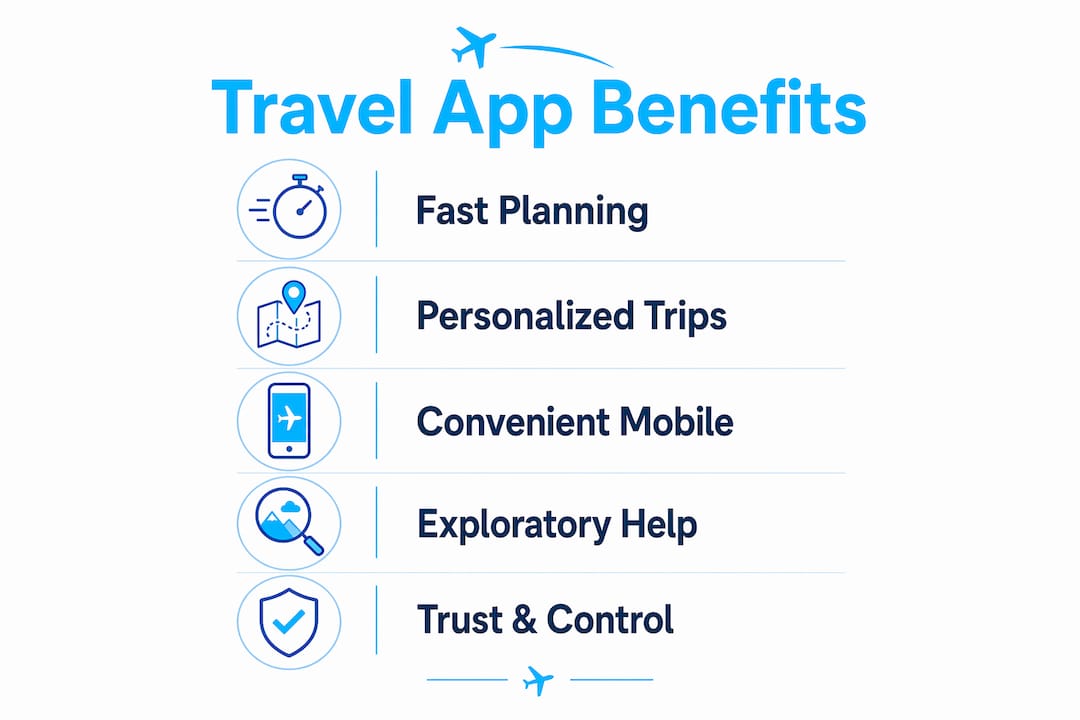
What are the main travel app benefits for trip discovery?
Travel apps reduce the time cost of trip planning more than any other single tool. Traditional international trip research takes 20–40 hours across multiple websites, review platforms, and booking engines. Jenova.ai and similar AI travel planners compress that process into minutes through conversational AI that handles itinerary building, accommodation shortlisting, and activity suggestions in one session.
The convenience factor goes beyond speed. Travelers no longer need to maintain ten open browser tabs comparing hotels, reading reviews on one platform, checking prices on another, and cross-referencing visa requirements on a third. Apps like Tripadvisor consolidate recommendations, reviews, and pricing into a single interface. That consolidation reduces decision fatigue and keeps travelers engaged through the planning process.
Three practical benefits stand out for travelers who use apps regularly:
- Faster shortlisting. AI surfaces a ranked list of relevant destinations or accommodations in seconds, not hours.
- Personalized recommendations. Apps learn from past behavior and stated preferences to filter out irrelevant options before they appear.
- Access to offbeat options. Sustainability-focused apps like those developed through the TOEP research project actively promote less saturated local events and destinations, giving travelers access to experiences that standard search results bury.
The mobile travel booking shift also means travelers can plan and adjust trips from anywhere. A layover, a lunch break, or a commute becomes productive planning time. That flexibility changes how travelers approach the entire decision process.
How do travel apps help travelers who are unsure about destinations?
Exploratory travelers represent a large share of app users. These are travelers who know they want to go somewhere but have not decided where. Apps that treat destination as uncertain rather than fixed serve this group far better than traditional search engines.
Airbnb’s destination recommendation system addresses this directly. The Airbnb intent framework predicts exploratory intent and responds with inspiration-stage content, autosuggest options, and abandoned search follow-ups. The system helps travelers with vague preferences find relevant destinations without requiring them to already know what they want.
Apps that handle exploratory users well share several design features:
- They treat destination as a variable, not a required input field
- They offer experience-based filters (“beach relaxation,” “city culture,” “mountain hiking”) before asking for a location
- They use neighborhood-level recommendations to help travelers understand a destination before committing
- They send re-engagement notifications when a traveler browses a destination but does not follow through
Pro Tip: If you are unsure about a destination, use the experience or activity filter first rather than the location search. Apps like Airbnb and Tripadvisor will surface destinations that match your preferred experience type, which is a faster path to a decision than browsing by geography.
The role of mobile booking apps in guiding uncertain travelers is one of the most underappreciated travel app benefits. Good apps do not just answer questions. They help travelers figure out what questions to ask.
How do travel apps balance personalization with trust and user control?
Personalization only works when travelers trust the recommendations they receive. A 2026 MDPI study with 469 respondents found that trust in AI recommendations depends on four factors: competence, relatedness, autonomy, and intrusiveness. Accuracy alone does not drive adoption. Travelers need to feel the app respects their choices.
Intrusiveness is the factor most apps get wrong. Push notifications that arrive too frequently, recommendations that feel surveillance-based, or interfaces that remove traveler control all reduce willingness to follow suggestions. The MDPI study confirms that perceived intrusiveness directly reduces trust, even when the underlying recommendation is accurate.
“Users’ willingness to follow AI recommendations depends on perceived intrusiveness and autonomy support, not just accuracy.” — MDPI, 2026
Apps that support autonomy give travelers ways to adjust constraints, ask follow-up questions, and override suggestions without friction. Tripadvisor’s conversational interface does this by letting travelers refine results mid-conversation rather than starting over. That design choice signals respect for traveler judgment, which builds trust over time.
Transparency also matters. Travelers who understand why an app is recommending a destination are more likely to act on that recommendation. Apps that show their reasoning (“Based on your interest in hiking and your past trips to Colorado…”) outperform black-box systems that simply present a ranked list.
How do different travel apps compare on trip discovery features?
The major platforms take distinct approaches to trip discovery, and the differences affect which travelers each app serves best.
| Platform | Discovery approach | Key strength | Best for |
|---|---|---|---|
| Tripadvisor | Conversational AI with Claude integration | Consolidated research in one chat interface | Travelers who want reviews, photos, and prices in one place |
| Airbnb | Intent prediction and autosuggest | Handles exploratory users with vague preferences | Travelers unsure about destination or accommodation type |
| Jenova.ai | AI itinerary builder | Compresses 20–40 hours of planning into minutes | Travelers planning complex international trips |
| TOEP platform | Sustainability-focused recommendations | Promotes local events and reduces tourist concentration | Travelers prioritizing low-impact or offbeat experiences |
The top hotel booking platforms differ not just in inventory but in how they surface options. Tripadvisor’s strength is depth of user-generated content. Airbnb’s strength is handling uncertainty. Jenova.ai’s strength is speed. No single platform wins every use case, which is why most travelers use two or three apps across a single planning session.
Sustainable travel discovery is an emerging feature category. Apps that incorporate destination capacity and local impact into their recommendation logic serve travelers who care about where their tourism dollars go. This goes beyond typical recommendation engines and requires balancing personalized discovery with real-world destination constraints.
Key Takeaways
Travel apps improve trip discovery by combining AI intent modeling with conversational interfaces that surface relevant options faster and earlier in the planning process than traditional search.
| Point | Details |
|---|---|
| AI shifts discovery earlier | Travelers form shortlists during inspiration, not just at booking, thanks to intent-driven apps. |
| Intent modeling improves accuracy | Explicit intent modeling improves recommendation quality by 13.7% over standard baselines. |
| Exploratory users need flexible tools | Apps that treat destination as uncertain serve undecided travelers far better than fixed-input search. |
| Trust requires autonomy | Travelers follow recommendations more when apps support user control and reduce intrusiveness. |
| Platform choice depends on use case | Tripadvisor, Airbnb, and Jenova.ai each excel at different stages and traveler types. |
What I’ve learned from watching AI reshape how travelers discover trips
The most interesting shift I have observed is not the technology itself. It is the change in traveler behavior that follows. When discovery becomes fast and low-effort, travelers explore more options before committing. That sounds like a good thing, and mostly it is. But it also means the apps that win long-term are not the ones with the biggest databases. They are the ones that know when to stop showing options and help a traveler make a decision.
The trust problem is real and underappreciated. I have seen travelers abandon apps that felt too pushy or too opaque, even when the recommendations were genuinely good. The MDPI research on intrusiveness confirms what I have noticed anecdotally. Travelers want to feel like they are in charge. Apps that design for autonomy, not just accuracy, will hold users longer.
The sustainability angle is where I think the biggest gap exists right now. Most major platforms still optimize for booking volume, not destination health. The TOEP research project shows there is a viable model for apps that balance traveler convenience with local impact. That model will matter more as overtourism becomes a harder problem to ignore.
My honest prediction: the next wave of trip discovery tools will not just recommend destinations. They will help travelers understand the full picture of a trip, including cost, timing, local conditions, and environmental impact, before a single booking is made. The apps that get there first will define the category for the next decade.
— Asher
Pilottraveldeals makes trip discovery easier to act on
Once a travel app helps you find the right destination, the next step is locking in the best deal. Pilottraveldeals aggregates hotel offers from multiple providers so you can compare prices and availability without jumping between platforms.
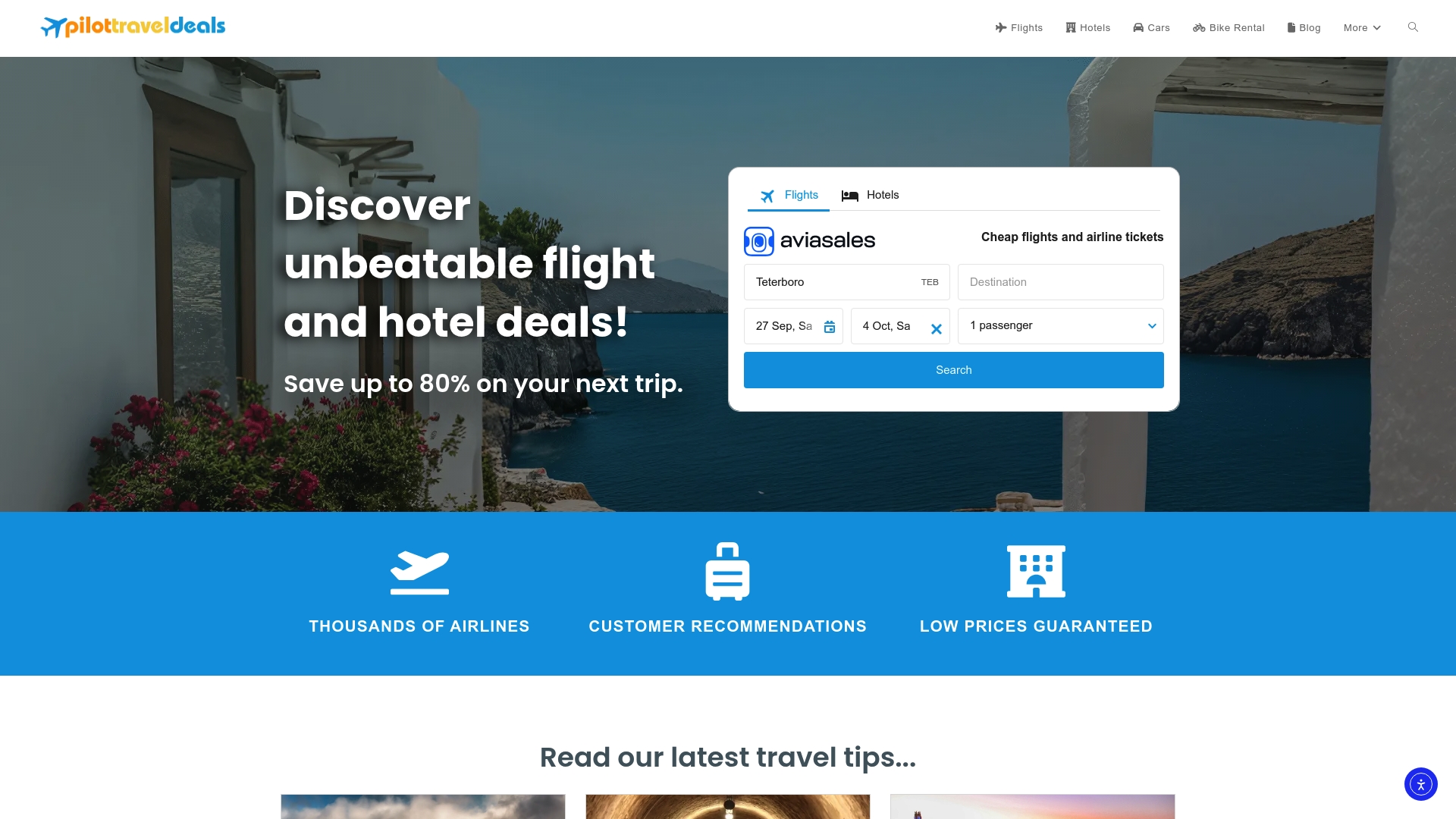
The hotels landing page gives you a direct path from inspiration to booking, with options across budget ranges and destination types. If flights are part of your plan, the cheap airfare tips guide covers how to find the lowest fares once your destination is set. Pilottraveldeals also covers travel passes and SIM cards for travelers who want to handle every part of trip prep in one place.
FAQ
What is the role of travel apps in trip discovery?
Travel apps accelerate trip discovery by using AI and intent modeling to surface relevant destinations during the inspiration phase, before a traveler has committed to a specific location. Platforms like Tripadvisor and Airbnb consolidate research, reviews, and booking into a single interface.
How do travel apps save time in trip planning?
AI travel planners like Jenova.ai reduce traditional research time from 20–40 hours down to minutes by handling itinerary building, accommodation shortlisting, and activity suggestions through conversational AI.
Which travel app is best for undecided travelers?
Airbnb’s destination recommendation system is built specifically for exploratory users. It predicts vague intent and responds with autosuggest options and experience-based filters rather than requiring a fixed destination input.
Why do travelers sometimes distrust AI travel recommendations?
A 2026 MDPI study found that perceived intrusiveness and lack of autonomy reduce trust in AI recommendations, even when the suggestions are accurate. Apps that let travelers adjust constraints and understand the reasoning behind suggestions earn higher trust.
Can travel apps support sustainable trip planning?
Yes. Sustainability-focused platforms, including those developed through the TOEP research project, use personalized recommendations to promote less saturated local events and reduce tourist concentration at popular destinations.