TL;DR:
- Proper search habits can save families hundreds on flights and hotels.
- Using flexible dates, multiple platforms, and timing optimizations significantly reduces travel costs.
- Building a routine with key tools like Google Flights and cross-checking leads to smarter bookings.
Finding cheap travel deals isn’t reserved for full-time nomads or people who spend hours glued to flight trackers. With the right search habits, a family of five can save down to $317 per person on domestic flights and $723 per person on international trips during peak summer. The difference between paying full price and scoring a serious discount almost always comes down to how you search, not just when you book. This guide walks you through every layer of travel search optimization, from basic timing tricks to advanced multi-tool workflows, so you can stop overpaying and start traveling smarter.
Table of Contents
- Understanding travel search optimization: What it means and why it matters
- Unlocking cheaper flights: Search tactics that work
- Maximizing hotel savings: Optimization beyond flights
- Advanced hacks: Edge cases and hidden travel search opportunities
- Making it work: Building your travel search optimization habit
- A smarter mindset: What budget travelers still get wrong about search optimization
- Ready to save more? Your toolkit for optimized travel searches
- Frequently asked questions
Key Takeaways
| Point | Details |
|---|---|
| Flexibility yields big savings | Shifting dates and airports can save travelers 20–60% on flights and hotels. |
| Tools and timing matter | Using Google Flights’ features and booking at the right moment unlocks major deals. |
| Multi-step searches beat simple queries | Layering multiple search tactics consistently uncovers better prices and avoids common traps. |
| Don’t ignore hotels | Strategic hotel search timing often offers savings as dramatic as flights. |
| Habits trump luck | Making travel search optimization part of every trip planning process ensures lasting savings. |
Understanding travel search optimization: What it means and why it matters
Travel search optimization is the practice of using the right tools, timing, and flexibility to find the lowest possible price on flights, hotels, and other travel expenses. Think of it like comparison shopping, but with a system behind it. Instead of opening one website and booking whatever comes up first, you use a deliberate process to surface deals that most travelers never see.
The problem is that most people search the same way every time. They pick fixed dates, search on one platform, and book within minutes. That approach is convenient, but it leaves serious money on the table. Here are the most common mistakes budget travelers make:
- Searching with rigid dates when even a one-day shift could save hundreds
- Using only one booking platform instead of cross-checking results
- Booking too early or too late outside the optimal pricing window
- Ignoring alternative airports or nearby departure cities
- Missing price alerts that could lock in a deal automatically
The savings from fixing these habits are not small. Flexibility and off-season travel can cut costs by 40 to 60 percent, and using flexible travel dates alone consistently beats average prices by 20 to 60 percent depending on the route. Google Flights also loads search results 2.6 times faster than Expedia, which matters when you’re comparing dozens of options in real time.
The core idea is simple: treat your travel search like a skill, not a chore. Once you build the habit, it takes less time and delivers far better results than random searching ever could.
Unlocking cheaper flights: Search tactics that work
Once you know why smart search matters, let’s get into the specific airfare tactics that deliver the greatest value. The goal is a repeatable framework, not a one-time lucky find.
Here’s a step-by-step flight search process that works:
- Open Google Flights in an incognito browser window
- Enter your origin and a flexible or open destination
- Use the date grid to compare prices across a full month
- Switch to the Explore map to find cheap destinations if you’re flexible on where you go
- Check the Cheapest tab to sort by lowest fare
- Set a price alert so Google notifies you when the fare drops
- Cross-check the result on ITA Matrix for routing details if the itinerary looks complex
Booking timing matters just as much as the tool you use. For domestic flights, the sweet spot is 6 to 8 weeks before departure. For international routes, aim for 2 to 3 months out. Booking too early often means paying premium prices before airlines release sale inventory.
Here’s a quick comparison of the two most powerful flight search tools:
| Feature | Google Flights | ITA Matrix |
|—|—|—|
| Speed | Very fast | Moderate |
| Flexible date view | Yes | Limited |
| Price alerts | Yes | No |
| Advanced routing | Basic | Detailed |
| Best for | Most travelers | Power users |
Alternate airports are another underused lever. Flying into a secondary airport near your destination can save 15 to 25 percent on the base fare. Splitting a round trip into two one-way tickets on different carriers sometimes beats the bundled price too. You can find more detail on these approaches in our cheap airfare tips and our complete guide to flexible dates.

Using Google Flights’ flexible tools including the date calendar, Explore map, and Cheapest tab can save up to 40 percent on airfare.
Pro Tip: A 14-hour layover might look tempting at $80 cheaper, but factor in meals, airport transfers, and exhaustion. The real cost often exceeds the savings.
Maximizing hotel savings: Optimization beyond flights
Optimizing flight searches is crucial, but hotel savings offer a surprising amount of leverage as well. The tactics are different from flight search, and most travelers don’t realize how much timing and channel choice affect the final price.
Hotel pricing is highly dynamic. Rates change based on demand, day of the week, and how far out you’re booking. The general rules that work for flights don’t always apply here. For hotels, booking on Tuesdays at 3pm local time tends to surface lower rates, with domestic hotels best booked 15 to 21 days ahead and international properties 30 to 45 days in advance.
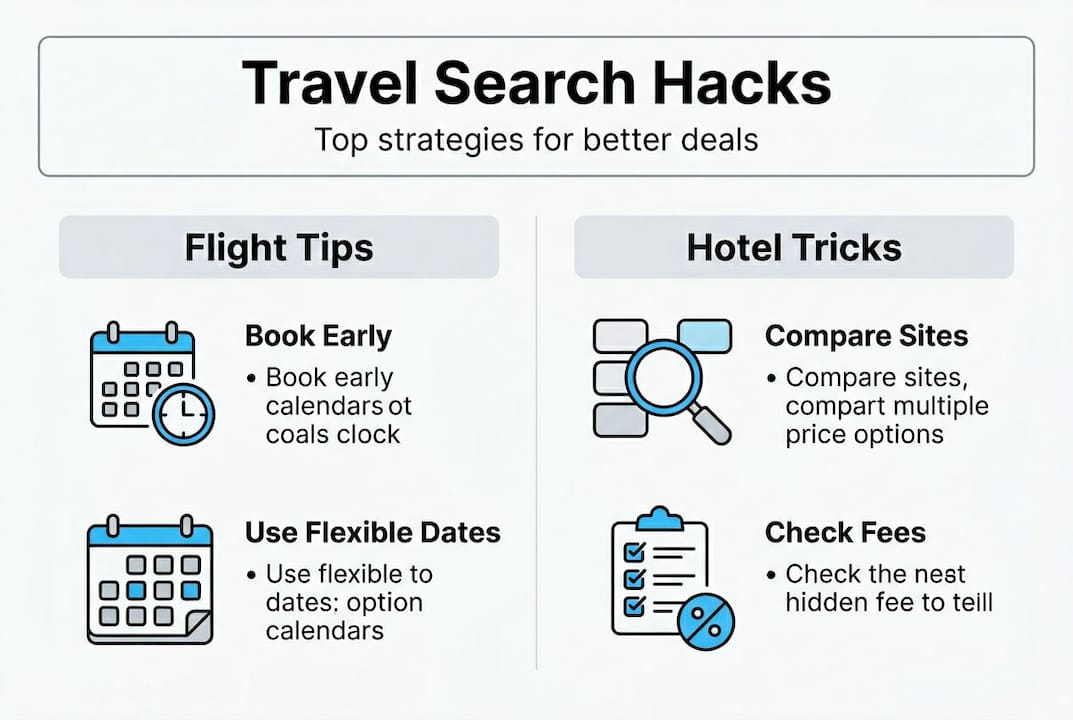
Here’s what typically happens to hotel prices based on booking timing:
| Booking window | Domestic savings | International savings |
|---|---|---|
| 60+ days ahead | Moderate | Moderate |
| 30 to 45 days | Best for international | Strong |
| 15 to 21 days | Best for domestic | Good |
| Under 7 days | Last-minute risk | Last-minute risk |
Direct booking versus online travel agencies (OTAs) is a debate worth settling. OTAs like Booking.com and Expedia are great for comparison, but booking directly with the hotel often unlocks perks like free breakfast, room upgrades, or flexible cancellation. Many hotels also offer a best rate guarantee, meaning they’ll match or beat any OTA price if you call and ask.
Key tactics for hotel search optimization:
- Always compare the OTA price against the hotel’s own website before booking
- Use rate alert tools on platforms like Hotelscombined or Google Hotels
- Check for hotel saving strategies that include loyalty program stacking
- Understand hotel dynamic pricing so you know when to wait and when to book
Pro Tip: Watch for “drip pricing,” where a hotel advertises a low base rate but adds resort fees, parking, and Wi-Fi charges at checkout. Always click through to the final price before comparing options.
Advanced hacks: Edge cases and hidden travel search opportunities
With foundational tactics covered, budget-minded travelers can supercharge results using a few advanced, lesser-known search optimizations. These are the moves most travelers skip because they seem complicated, but they’re actually straightforward once you know the logic.
Opaque bookings are deals where the hotel or airline is hidden until after you pay. Platforms like Hotwire use this model. The tradeoff is flexibility for savings, and it’s worth it when you’re locked into a destination and date. Opaque bookings can save 20 to 40 percent compared to standard rates.
Nearby airports are another powerful lever. Searching alternate departure or arrival cities can cut airfare by 18 to 22 percent on many routes. If you live within two hours of a secondary airport, it’s almost always worth checking.
Shoulder season travel is one of the highest-return strategies available. Traveling just two to four weeks before or after peak season delivers 40 to 60 percent in savings on both flights and hotels, with minimal impact on the actual travel experience. Crowds are thinner, service is often better, and prices are dramatically lower.
“The biggest savings don’t come from one magic trick. They come from layering flexibility, timing, and the right tools together on every single search.”
Useful advanced tactics to add to your workflow:
- Use the advantages of travel flexibility to compare shoulder season windows
- Study seasonal travel pricing patterns for your favorite destinations
- Mix one-way tickets from different carriers to build cheaper round trips
- Always verify total cost including fees before committing to any opaque deal
Pro Tip: The Cheapest tab on Google Flights sometimes surfaces itineraries with 20-plus-hour layovers. Always click through to review the full routing before celebrating a low price.
Making it work: Building your travel search optimization habit
Mastering advanced hacks is one thing, but turning these tactics into an ongoing travel habit locks in savings over time. The goal is a repeatable process you can run in under 30 minutes for any trip.
Here’s a practical routine to follow for every booking:
- Start in incognito mode to avoid dynamic pricing inflation from repeated searches
- Use Google Flights first to get a baseline price and check the date grid for flexibility
- Set a price alert immediately, even if you’re not ready to book yet
- Cross-check with ITA Matrix if the routing looks complex or involves multiple carriers
- Search hotels on Google Hotels and one OTA, then visit the hotel’s direct site
- Compare total costs including all fees before making any decision
- Book direct when the price matches, to capture loyalty points and flexible cancellation
Dynamic pricing is countered most effectively by using incognito browsing combined with a multi-tool cross-check. Booking direct after matching an OTA rate also earns you loyalty perks that compound over time.
For family trips, run the search with the full party size and then individually to catch split-seat pricing quirks. For last-minute travel, skip the date grid and go straight to the Cheapest tab or opaque booking platforms. Work trips with fixed dates benefit most from price alerts set four to eight weeks in advance.
The habit takes about three searches to feel natural. After that, it becomes automatic. Use our flexible booking strategies guide to build a personalized checklist that fits your travel style.
A smarter mindset: What budget travelers still get wrong about search optimization
Here’s an uncomfortable truth: chasing the absolute lowest price is often the most expensive thing you can do. We see it constantly. A traveler books a $180 flight with a brutal 19-hour layover, no carry-on included, and a non-refundable ticket. Then the itinerary changes, and they’re out $200 in fees and a day of vacation.
Travel search optimization is not about finding the cheapest number on the screen. It’s about finding the best value for your specific situation. That means factoring in cancellation policies, baggage fees, travel time, and whether you’re building loyalty with a carrier or hotel brand that rewards repeat business.
Tool-hopping is another trap. Checking 12 platforms for every trip feels thorough, but it creates decision fatigue and rarely surfaces a meaningfully better deal than a focused two-tool workflow. Pick two tools, run them well, and trust the process.
The importance of flexible booking goes beyond saving money on one trip. It builds a travel mindset that consistently finds better options without burning hours on research.
Pro Tip: Before booking, ask yourself what the cost of a mistake is. If the answer is high, spend the extra $20 on a refundable rate. The peace of mind is worth it.
Ready to save more? Your toolkit for optimized travel searches
You now have a full framework for finding better deals on every trip you take. The next step is putting it into practice with the right resources at your fingertips.

At PilotTravelDeals.com, we’ve built a set of tools and guides specifically for travelers who want to apply these strategies without spending hours searching. Start with our best airfare search tips to sharpen your flight-finding skills, then work through our hotel savings guide for accommodation deals. When you’re ready to compare across multiple providers at once, our comparison site savings guide shows you exactly how to use aggregators without getting lost in the noise. Real savings come from applying the right technique at the right moment. We make that easier.
Frequently asked questions
How far in advance should I book flights for the best price?
For domestic flights, the sweet spot is 6 to 8 weeks before departure. For international trips, aim to book 2 to 3 months ahead to catch the best fares before prices climb.
Does searching in incognito mode really give me lower prices?
Yes. Incognito prevents price inflation of 3 percent or more that can occur after repeated searches, because airlines and booking sites track your browsing behavior to adjust rates dynamically.
What are the best tools for travel search optimization?
Google Flights suits most budget travelers with its speed, flexible date views, and price alerts. ITA Matrix is the better choice for advanced users who need detailed routing control and complex itinerary analysis.
How can I save more on hotels with search optimization?
Book on Tuesdays at 3pm local time, compare OTA prices against the hotel’s direct site, and ask about the best rate guarantee to lock in the lowest available price with added flexibility.