
Airfare can shift hundreds of dollars in just hours, making it tough for travelers to know when to book. With airlines using secretive pricing strategies and last-minute changes, catching the best deal feels nearly impossible. Research shows advanced prediction technologies can analyze thousands of past prices and trends to forecast ticket costs more accurately than ever before. This article breaks down how these smart systems work and what they mean for anyone hoping to outsmart airline pricing.
Table of Contents
- Defining Flight Price Prediction Technologies
- Popular Methods And Tool Types Explained
- How Machine Learning Predicts Airfares
- Benefits And Real-Life Travel Applications
- Limitations, Accuracy Risks, And Common Pitfalls
Key Takeaways
| Point | Details |
|---|---|
| Machine Learning Techniques | Flight price prediction utilizes advanced algorithms like Random Forest and Artificial Neural Networks to analyze data for accurate fare forecasting. |
| Key Influencing Factors | Factors such as flight duration, historical pricing, and seasonal demand are crucial in understanding ticket pricing dynamics. |
| Practical Benefits for Travelers | Prediction technologies assist both budget and business travelers in making cost-effective booking decisions by identifying the best times to purchase tickets. |
| Limitations and Risks | While useful, flight price predictions are subject to market volatility, data inaccuracies, and algorithmic biases, necessitating cautious interpretation. |
Defining Flight Price Prediction Technologies
Flight price prediction represents an advanced technological approach that leverages sophisticated algorithms and data analysis techniques to forecast future airline ticket costs with remarkable precision. According to research from iarjset, these technologies primarily utilize machine learning techniques like decision tree and random forest algorithms to analyze complex pricing dynamics.
The core mechanisms of flight price prediction involve analyzing multiple intricate factors that influence ticket pricing. Key features typically examined include:
- Flight duration
- Source and destination locations
- Specific arrival and departure times
- Historical pricing trends
- Seasonal demand patterns
- Competitive market conditions
According to ijraset, these prediction technologies dig deep into historical data to understand the complex interplay of factors affecting airline ticket pricing. Machine learning models are particularly effective because they can process vast amounts of historical information, identifying subtle patterns and correlations that human analysts might miss.

Modern flight price prediction technologies represent a sophisticated intersection of data science, statistical modeling, and artificial intelligence. By processing massive datasets and using advanced algorithms, these systems can provide travelers with nuanced insights into potential future pricing trends, helping them make more informed booking decisions and potentially save significant amounts on travel expenses. Understanding the workflow for booking flights can further enhance your ability to leverage these predictive technologies effectively.
Popular Methods and Tool Types Explained
Flight price prediction technologies encompass a diverse range of sophisticated machine learning approaches designed to help travelers anticipate ticket costs with increasing accuracy. According to research from ijirt, several key machine learning algorithms have emerged as powerful tools in this domain, including Random Forest, support vector regression, artificial neural networks, and advanced deep learning models.
The most prominent methods for flight price prediction can be categorized into several key types:
-
Machine Learning Models
- Random Forest Algorithms
- Support Vector Regression
- Artificial Neural Networks
- Deep Learning Predictive Systems
-
Statistical Forecasting Techniques
- Time Series Analysis
- Regression-Based Prediction
- Stochastic Modeling
- Historical Trend Extrapolation
Research from cuestionesdefisioterapia highlights the complexity of airfare prediction, emphasizing that these tools must adapt to intricate variables like seasonality, demand fluctuations, airline competition, and volatile fuel costs. The most effective prediction technologies go beyond simple linear projections, instead utilizing complex algorithmic approaches that can process multiple dynamic inputs simultaneously.
Advanced prediction tools often integrate multiple methodological approaches, creating hybrid systems that leverage the strengths of different machine learning techniques.
These sophisticated platforms not only predict prices but also provide contextual insights about potential price variations, helping travelers make more informed booking decisions. Understanding who sets airline fares can further complement your understanding of these intricate prediction technologies.
How Machine Learning Predicts Airfares
Machine learning transforms airfare prediction by converting complex pricing dynamics into sophisticated mathematical models that can anticipate future ticket costs with remarkable accuracy. According to research from ijraset, these advanced algorithms analyze extensive datasets containing critical variables like airline, travel date, source, destination, and specific route characteristics to generate precise price forecasts.
The machine learning prediction process typically involves several key stages:
-
Data Collection
- Gathering historical flight pricing information
- Compiling relevant contextual data points
- Ensuring comprehensive and diverse dataset representation
-
Feature Selection
- Identifying most influential pricing factors
- Eliminating irrelevant or redundant information
- Preprocessing and normalizing data inputs
-
Model Training
- Splitting data into training and testing sets
- Implementing machine learning algorithms
- Iterative refinement of predictive models
Research from ijcrt emphasizes that machine learning models are uniquely capable of detecting subtle patterns and correlations in flight pricing that traditional statistical methods might overlook. These algorithms can simultaneously process multiple complex variables, creating nuanced predictive frameworks that adapt to constantly changing market conditions.
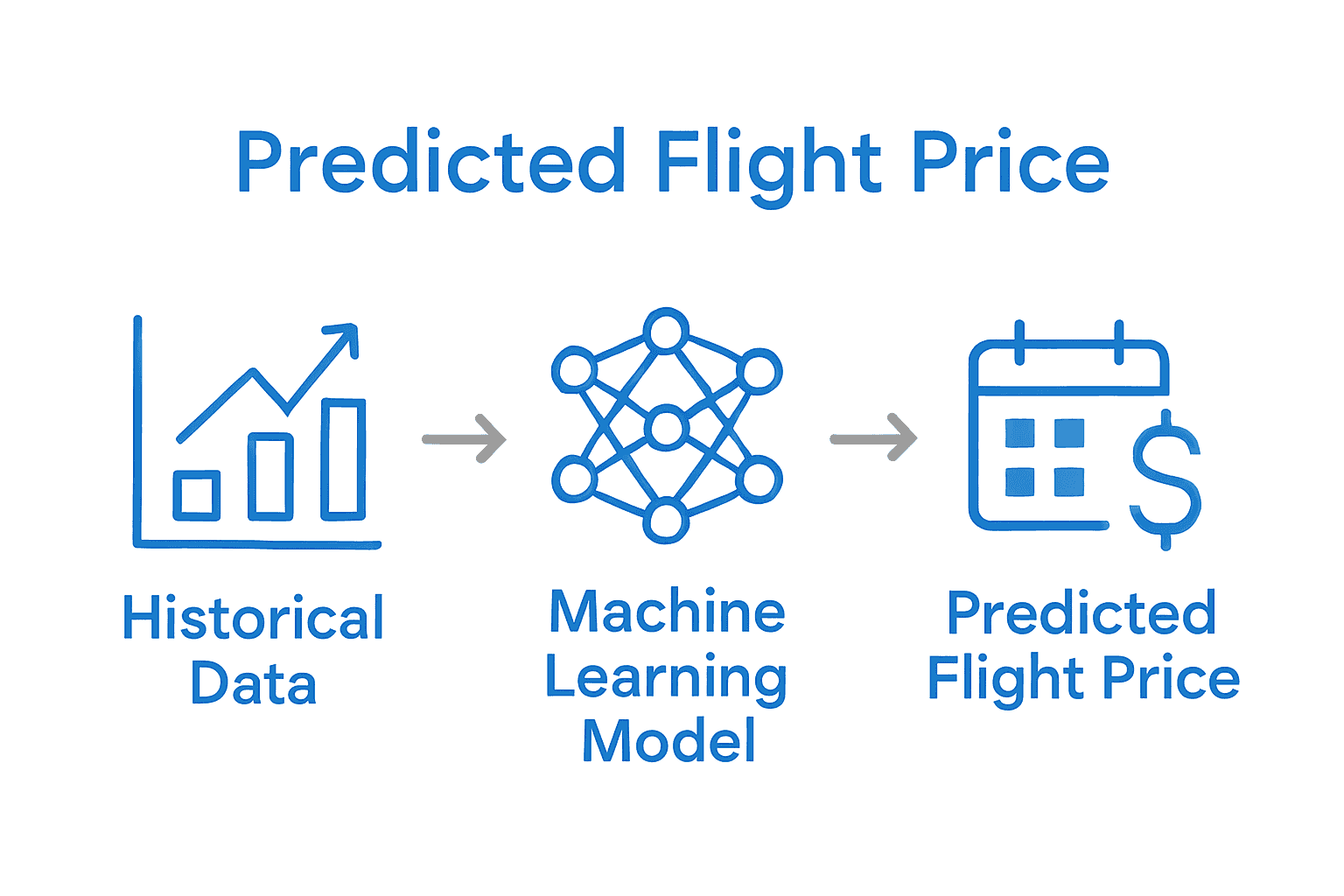
Ultimately, machine learning airfare prediction represents a powerful intersection of data science and travel economics. By leveraging advanced computational techniques, these systems provide travelers with unprecedented insights into potential pricing trends, enabling more strategic and cost-effective booking decisions. Flight comparison checklist can further enhance your ability to interpret and utilize these sophisticated prediction technologies effectively.
Benefits and Real-Life Travel Applications
Flight price prediction technologies offer transformative benefits for travelers, revolutionizing how individuals plan and book their journeys. According to research from ijraset, these advanced algorithms can identify minimum airfares with unprecedented accuracy, enabling travelers to make significantly more cost-effective booking decisions and helping airlines optimize their revenue management strategies.
The practical applications of flight price prediction span multiple dimensions for different user groups:
-
For Budget Travelers
- Identifying lowest possible ticket prices
- Planning trips during most economical periods
- Tracking price fluctuations
- Setting personalized price alerts
-
For Business Travelers
- Optimizing corporate travel expenses
- Predicting best booking windows
- Managing travel budget allocations
- Minimizing last-minute booking costs
Research from ijirt highlights that incorporating additional contextual features like weather conditions, departure times, and other nuanced information can dramatically enhance prediction performance. These sophisticated models provide travelers with a comprehensive understanding of pricing dynamics that extend far beyond traditional booking approaches.
Ultimately, flight price prediction represents a powerful tool for democratizing travel planning. By providing transparent, data-driven insights, these technologies empower travelers to make more informed decisions, potentially saving significant amounts of money. Understanding the benefits of travel comparison sites can further complement your strategy for leveraging these advanced predictive technologies and maximizing travel value.
Limitations, Accuracy Risks, and Common Pitfalls
Flight price prediction technologies, while incredibly powerful, are not infallible. According to research from ijcrt, these systems face significant challenges due to the inherently dynamic nature of airline pricing, which is influenced by numerous complex and rapidly changing variables that can quickly render predictions obsolete.
Key limitations and potential risks in flight price prediction include:
-
Data-Related Challenges
- Rapid market price fluctuations
- Incomplete or outdated historical datasets
- Unpredictable external economic factors
- Limited visibility into airline internal pricing strategies
-
Algorithmic Constraints
- Difficulty capturing sudden market disruptions
- Potential bias in machine learning models
- Challenges in real-time data processing
- Complexity of modeling human decision-making patterns
Research from ijraset emphasizes the critical need for careful model selection and continuous tuning to mitigate prediction inaccuracies. Different machine learning methods demonstrate varying levels of accuracy, underscoring the importance of understanding each algorithm’s specific strengths and limitations.
Travelers should approach flight price predictions as valuable guidance rather than absolute guarantees. While these technologies provide sophisticated insights, they cannot completely eliminate the inherent uncertainty of travel pricing. Understanding travel deal alerts can help you develop a more nuanced approach to interpreting and leveraging these predictive technologies effectively.
Take Control of Your Travel Budget with Smarter Flight Price Insights
Understanding the complexities of flight price prediction can be overwhelming especially when ticket costs fluctuate due to countless hidden factors like seasonal demand and competitive pricing. If you want to avoid costly last-minute bookings and master the art of timing your flights just right, you need a reliable way to compare deals and track price changes effortlessly. Our platform understands your challenge and helps you navigate through these pricing dynamics with confidence.

Start saving up to 80 percent by exploring the best airline ticket options at PilotTravelDeals.com. Use our comparison tools to quickly identify the ideal booking windows and make informed choices based on real-time offers. Don’t wait for prices to rise unexpectedly. Visit our flight comparison checklist to sharpen your booking strategy, and get inspired by our expert guides like understanding who sets airline fares to deepen your knowledge. Take charge today to unlock exceptional travel deals and make every trip affordable and stress-free!
Frequently Asked Questions
What is flight price prediction?
Flight price prediction refers to the use of advanced algorithms and data analysis techniques to forecast future airline ticket prices, helping travelers make informed booking decisions.
How do machine learning models predict airfare?
Machine learning models predict airfare by analyzing extensive datasets containing critical variables such as airline, travel date, destinations, and historical pricing trends to generate accurate price forecasts.
What factors influence flight price predictions?
Key factors influencing flight price predictions include flight duration, source and destination locations, specific arrival and departure times, historical pricing trends, seasonal demand patterns, and competitive market conditions.
What are the benefits of using flight price prediction technologies?
Benefits of flight price prediction technologies include the ability to identify the lowest possible ticket prices, optimize travel expenses for business travelers, track price fluctuations, and set personalized price alerts.
Recommended
- Understanding Who Sets Airline Fares and Why It Matters – PilotTravelDeals.com
- Flight Comparison Checklist: Secure the Best Airline Deals – PilotTravelDeals.com
- Why Compare Flight Deals: Complete Travel Guide – PilotTravelDeals.com
- Understanding the Workflow for Booking Flights Clearly – PilotTravelDeals.com