TL;DR:
- Affordable travel requires planning, flexibility, and smart budgeting strategies.
- Using early bookings, reward programs, and choosing less popular destinations save money.
- Focus on intentional spending and local experiences rather than cutting all comforts to maximize value.
Travel costs keep climbing, and for most people, that means either stretching a budget uncomfortably thin or skipping the trip altogether. Neither option feels great. The good news is that affordable travel is not about deprivation. It is about planning smarter, staying flexible, and knowing which corners to cut and which ones to protect. Whether you are a solo adventurer hopping between hostels, a family trying to keep four people fed and entertained without breaking the bank, or a business traveler looking to trim expenses on the road, this guide gives you the practical playbook to make it work.
Table of Contents
- Getting started: Essentials for planning cheap trips
- Step-by-step guide: How to plan affordable trips for every traveler type
- Cost-cutting strategies: Flights, lodging, food, and activities
- Troubleshooting and mistakes to avoid when planning budget trips
- Our take: What most guides miss about affordable trip planning
- Save more on your next trip with expert resources
- Frequently asked questions
Key Takeaways
| Point | Details |
|---|---|
| Plan around flexibility | Being flexible with dates and locations can cut travel costs dramatically for all traveler types. |
| Strategize by traveler type | Distinct tactics work for families, solo adventurers, and business travelers—customize your approach. |
| Save on big-ticket items | Major savings come from smart choices on flights, accommodation, and food rather than skipping fun. |
| Avoid common pitfalls | Booking late, overpacking, or misunderstanding rewards programs can quickly erase your savings. |
| Mindset matters most | Value and enjoyment don’t always align with the lowest cost—embrace flexibility and immersion. |
Getting started: Essentials for planning cheap trips
Before you search for flights or browse hotel listings, you need the right foundation. Think of this phase as building your toolkit. The travelers who consistently save money are not just lucky. They show up prepared with the right apps, the right mindset, and a clear sense of what they actually want from a trip.
Booking early, redeeming credit card points, and packing light are the three tactics that consistently deliver the biggest savings across all traveler types. But none of them work if you do not plan for them in advance.
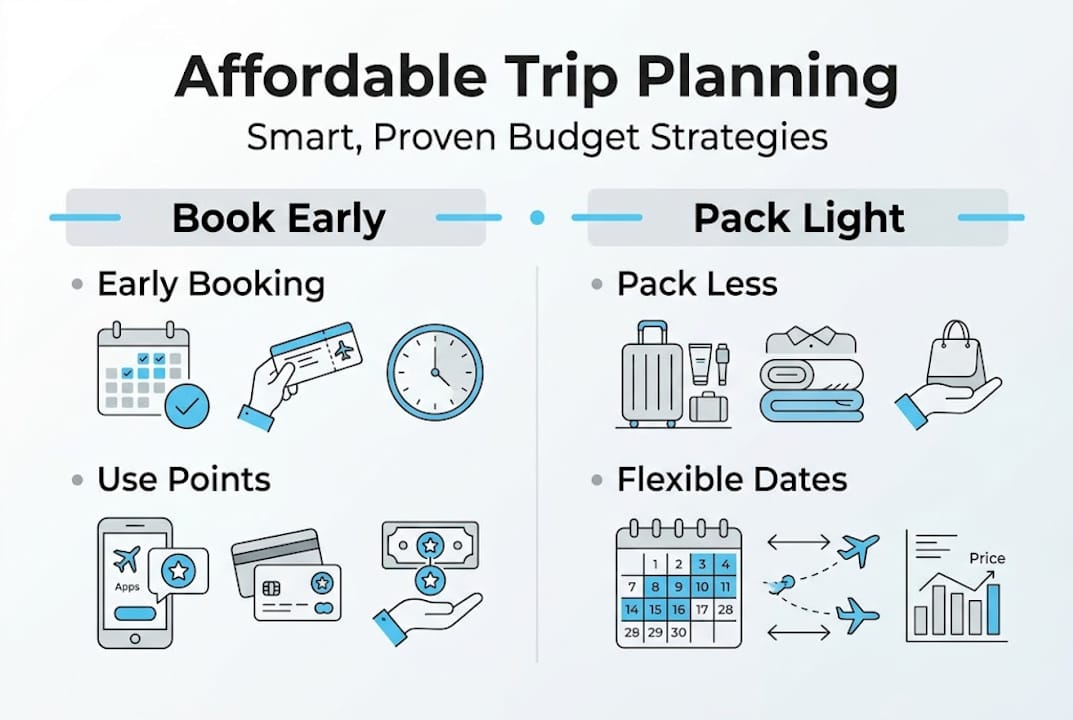
Here is a quick overview of what you need before you book anything:
| Tool or resource | Why it matters |
|---|---|
| Flexible travel dates | Unlocks off-peak pricing and better availability |
| Credit card rewards tracker | Maximizes points for flights and hotels |
| Budget spreadsheet or app | Keeps spending visible and accountable |
| Deal alert apps | Catches price drops before they disappear |
| Passport and documents checklist | Prevents last-minute scrambles and fees |
Must-have tools and essential resources:
- Google Flights or Skyscanner for fare tracking
- Trail Wallet or TravelSpend for daily budget monitoring
- Airbnb, Hostelworld, or Booking.com for accommodation comparisons
- Your bank’s rewards portal for point redemption
- A simple notes app for saving destination research
Pro Tip: Before locking in your travel dates, look up the off-season window for your chosen destination. Traveling just two or three weeks outside peak season can cut accommodation costs by 30% or more in popular spots.
The mindset piece matters just as much as the tools. Budget travel rewards flexibility. If you are attached to a specific hotel brand, a particular seat class, or a rigid itinerary, costs will rise fast. Shifting your focus from luxury to experience, and from comfort to curiosity, opens up a much wider range of affordable options. Explore essential cheap family tips and a smart cheap travel checklist to get your planning started on the right foot.
Step-by-step guide: How to plan affordable trips for every traveler type
Once you have the basics in place, the next step is tailoring your approach to your specific situation. A solo traveler has very different leverage points than a family of five or a road warrior logging 50 flights a year.
Top tactics by traveler type:
| Traveler type | Tactic 1 | Tactic 2 | Tactic 3 |
|---|---|---|---|
| Solo traveler | Pack light using the 10-$10 packing rule | Stay in hostels or shared rentals | Travel during shoulder season |
| Family | Book self-catering accommodations | Redeem loyalty points for flights | Choose less-visited destinations |
| Business traveler | Use corporate rates and book early | Combine work trips with leisure | Stack credit card and hotel rewards |
The 10-$10 rule for solo travelers is worth understanding. It means every item in your bag should cost at least $10 to replace, or it is not worth the checked baggage fee. It sounds simple, but it forces real prioritization and keeps you out of the $35-per-bag trap at the gate.
For business travelers, early booking combined with corporate negotiated rates can cut hotel and flight costs significantly. Many companies leave these savings on the table simply because employees do not know the programs exist.
Step-by-step trip planning process:
- Set a total trip budget before researching anything
- Choose two or three destination options and compare costs
- Identify your traveler type and apply the matching tactics above
- Set fare alerts for your target route at least 6-8 weeks out
- Book accommodation early, especially for peak travel windows
- Map out daily spending limits for food, transport, and activities
- Review your rewards balances and apply them before paying cash
Pro Tip: Check essential travel hacks and airline deal aggregators at least once a week in the month before your trip. Prices shift constantly, and a single alert can save you hundreds. Also look into corporate travel discount examples if your employer has negotiated rates you have never used.
Cost-cutting strategies: Flights, lodging, food, and activities
With your plan in place, here is how to maximize savings on the most expensive parts of travel. The big four are flights, accommodation, food, and activities. Each one has specific levers you can pull.

89% of travelers take active steps to cut travel costs, including choosing price over amenities. That is not a fringe behavior. It is the norm. So you are in good company.
Flight savings:
- Book 6-8 weeks ahead for domestic, 3-4 months for international
- Use open-jaw flights (fly into one city, out of another) to avoid backtracking
- Set alerts on Google Flights, Hopper, or Skyscanner
- Consider nearby airports, which are often 20-40% cheaper
Accommodation hacks:
- Hostels with private rooms offer hotel comfort at hostel prices
- Apartments with kitchenettes cut food costs dramatically
- Stay one or two neighborhoods away from the main tourist zone
- Use loyalty points for free nights whenever possible
Food and dining:
- Shop at local markets for lunch and breakfast supplies
- Eat your big meal at lunch when restaurant prices are lower
- Avoid restaurants directly adjacent to major attractions
- Ask locals where they actually eat, not where they send tourists
Activities:
- Most cities offer free walking tours, museums with free entry days, and public parks
- City tourism cards often bundle transit and attractions at a steep discount
- Check local event listings for festivals, markets, and community events
As Rick Steves puts it: “The best travel is about connecting with local life, not insulating yourself from it. Eat where the locals eat, ride the buses they ride, and your money goes twice as far.”
Always compare prices across at least two platforms before booking, and read the fine print on cancellation policies. A cheap rate that locks you in can become expensive fast if plans change. For more depth, browse tips for cheaper travel and our budget travel tips collection.
Troubleshooting and mistakes to avoid when planning budget trips
Even solid plans fall apart when common mistakes creep in. Here are the five most frequent errors budget travelers make, and how to fix them.
- Booking too late. Last-minute deals exist, but they are rare and unreliable. Waiting too long almost always means paying more, especially for families who need multiple seats together.
- Over-packing. Checked baggage fees add up fast. One bag per person, carried on, is the goal for trips under two weeks.
- Ignoring loyalty programs. Nearly half of travelers find rewards programs complicated, which means they skip them entirely and leave real value behind. Spend 30 minutes learning one program well rather than dabbling in five.
- Dismissing less popular destinations. The second city in any country is almost always cheaper and just as interesting as the first. Krakow over Warsaw. Porto over Lisbon. Medellin over Bogota.
- Cutting too deep and burning out. Skipping every comfort to save a few dollars creates a miserable trip. Many travelers skip vacations entirely rather than accept ultra-budget conditions. That is not a win for your wallet or your wellbeing.
Pro Tip: Always balance frugality with value. One well-chosen upgrade, like a private room after five nights in a dorm or a single nice dinner, can reset your energy and make the rest of the trip feel worth it.
The goal is a realistic plan, not a perfect one. Build in a small buffer for unexpected costs, usually 10-15% of your total budget, and give yourself permission to adjust without guilt. Check proven budget tips and a solid family travel booking guide to avoid the most common traps before they cost you.
Our take: What most guides miss about affordable trip planning
Most budget travel guides treat affordability as a math problem. Find the cheapest flight. Book the lowest-rated acceptable hotel. Eat street food every night. And yes, those tactics work. But they miss something important.
The travelers who get the most out of budget trips are not the ones who spend the least. They are the ones who spend intentionally. They know which experiences genuinely matter to them and protect those, even if it means paying a bit more. They also know which things they can cut without feeling the loss.
Flexibility is the real currency of affordable travel. Not just flexible dates, but flexible expectations. A willingness to take the slow train, eat at the counter instead of the table, or stay in a neighborhood you have never heard of. That openness almost always leads to the best stories.
Curiosity and patience are worth more than any single booking hack. A traveler who talks to locals, wanders without a fixed agenda, and treats inconvenience as part of the adventure will have a richer trip than someone who optimized every dollar but arrived stressed and rigid.
Plan with intention, not just with constraints. Visit affordable adventures tips for a broader look at this mindset in action.
Save more on your next trip with expert resources
Putting these strategies into practice is easier when you have the right tools in your corner. At PilotTravelDeals.com, we compare deals from dozens of providers so you spend less time searching and more time actually traveling.
Start with our cheap airfare tips to find the best flight prices across multiple airlines in one place. Browse our hotels deals section to compare accommodation options that fit your budget and your style. And if you want to see how deal aggregation works to your advantage, our travel deal aggregation guide breaks it all down. Sign up for deal alerts and let the savings come to you, rather than hunting for them every time you plan a trip.
Frequently asked questions
What is the best time to book affordable flights?
Booking early and traveling outside peak season consistently delivers the lowest fares for both families and solo travelers. Aim for 6-8 weeks ahead for domestic routes and 3-4 months for international.
Are loyalty points or reward programs worth the effort?
Rewards programs deliver strong value when you stay out of debt and plan redemptions in advance, but 48% of travelers find them complicated enough to skip entirely. Pick one program, learn it well, and the savings add up faster than you expect.
How can families with kids save on travel accommodations?
Self-catering rentals, points redemption, and choosing less-visited destinations are the top strategies for families. A kitchenette alone can cut daily food costs by $30 to $60 for a family of four.
Is it better to drive instead of fly for a cheap trip?
For shorter distances, driving is often the smarter call. 35% of travelers choose to drive rather than fly specifically to save money, and it also gives you more flexibility once you arrive.
Recommended
- Travel Smart: Essential Tips for Affordable Adventures Around the Globe – PilotTravelDeals.com
- Cheap Trips: Smart Strategies for Maximum Savings – PilotTravelDeals.com
- 8 Smart Ways to Travel for Cheap and Save Big Money – PilotTravelDeals.com
- 10 Essential Budget Travel Tips for Smart Travelers – PilotTravelDeals.com
- Cum găsești cazare ieftină în Costinești: ghid complet 2026 – Cazare Costinesti