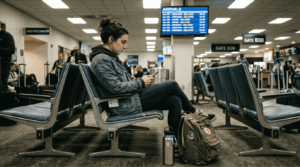
Ever wonder how budget airlines offer such cheap tickets? The secret lies in a surprising fact: ancillary revenue accounted for 44.5% of low cost airline revenue in North America in 2025. Low cost airlines aren’t just selling seats. They’re masters at unbundling services and charging separately for everything from checked bags to seat selection. Understanding this model helps you navigate budget air travel smarter and avoid surprise costs.
Table of Contents
- Introduction: Defining Low Cost Airlines
- Operational Strategies of Low Cost Airlines
- Revenue Models and Ancillary Fees in Low Cost Airlines
- Common Misconceptions and Safety of Low Cost Airlines
- Comparison of Major U.S. Low Cost Carriers
- Traveler Preferences and Service Tradeoffs
- Practical Booking Tips for Budget Travelers
- Conclusion: Making Low Cost Airlines Work for You
Key Takeaways
| Point | Details |
|---|---|
| Low cost airlines use simplified operations and ancillary fees to enable rock-bottom base fares | They cut costs through single aircraft fleets, point-to-point routes, and fast turnarounds |
| Safety standards match traditional carriers despite lower prices | FAA regulations ensure equivalent safety regardless of ticket price |
| U.S. low cost airlines vary significantly in fee structures and included services | Southwest includes bags and changes free while Spirit charges for nearly everything |
| Direct booking reveals true costs and avoids third-party markups | Airline websites display full fee breakdowns and exclusive promotions |
| Smart travelers calculate total trip cost including all ancillary fees before booking | Comparing base fares alone misleads, add baggage and seat fees for accurate comparison |
Introduction: Defining Low Cost Airlines
Low cost airlines are carriers that offer simplified service models focused on cost efficiency rather than premium amenities. They strip air travel down to the essentials: a seat and safe transport from point A to B. Everything else costs extra.
The budget airline basics trace back to the 1970s United States when Southwest Airlines pioneered the model. Deregulation allowed airlines to compete on price, sparking innovation in cost reduction. The concept spread globally, democratizing air travel for millions who previously couldn’t afford to fly.
Today’s low cost carriers share defining features. They operate no-frills cabins with minimal free amenities. Most fly point-to-point routes instead of hub-and-spoke networks, avoiding connection delays and costs. Single-aisle aircraft like Boeing 737s or Airbus A320s dominate their fleets, cutting maintenance and training expenses.
These operational choices enable ticket prices 30 to 50 percent lower than traditional airlines on comparable routes. The budget airlines guide explains how carriers pass savings directly to travelers willing to forgo complimentary snacks, entertainment screens, and spacious legroom. You pay only for what you use.
Operational Strategies of Low Cost Airlines
How do budget carriers sustain such low fares without cutting corners on safety? The answer lies in relentless operational efficiency.
Low cost airlines save costs by using a single aircraft type and point-to-point routes with fast turnarounds. Operating just one plane model means mechanics need training on a single system. Parts inventory shrinks. Pilot certification becomes simpler and cheaper. This uniformity slashes maintenance budgets by millions annually.
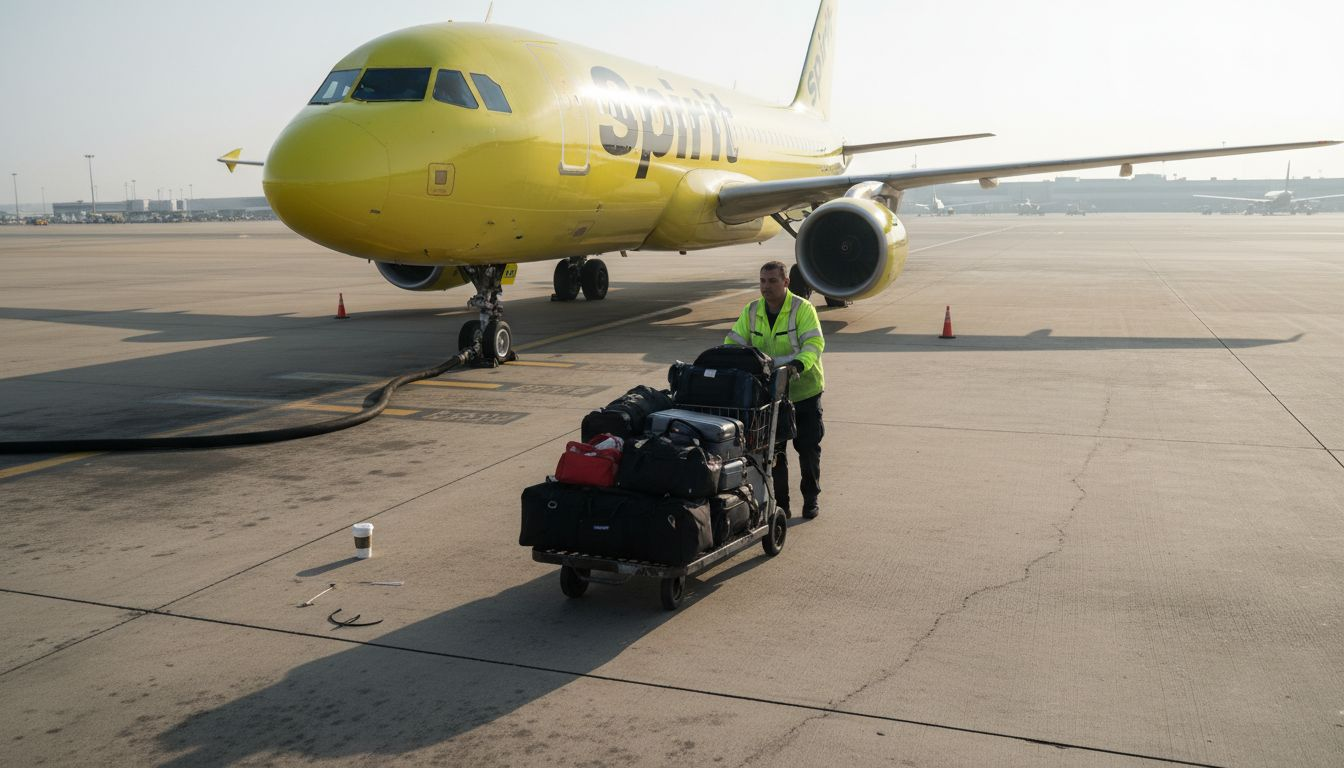
Point-to-point routing eliminates expensive hub operations. Planes fly direct between cities without funneling passengers through central connection points. This cuts ground staff needs, reduces gate time, and avoids delay cascades when one flight runs late. Each aircraft completes more flights daily, maximizing revenue per plane.
Turnaround speed separates budget airlines from competitors. Traditional carriers might take 45 minutes to an hour between flights. Low cost airlines target 25 to 30 minutes. Crews clean cabins quickly, passengers board efficiently, and planes return to the air fast. More flight hours per day per aircraft means better asset utilization.
In-flight service simplification saves substantially. No hot meals to prepare, load, or serve. No entertainment systems to install or maintain. Smaller cabin crews handle more passengers. These operational cost savings directly translate to lower ticket prices.
Key cost-cutting mechanisms include:
- Single aircraft fleet reduces training, parts, and maintenance expenses
- Point-to-point routes eliminate hub infrastructure and connection costs
- 25-minute turnarounds maximize daily flight hours per plane
- No-frills cabins cut catering, entertainment, and staffing costs
- Secondary airport usage lowers landing fees and gate charges
Pro Tip: Expect to bring your own snacks and prepare for minimal in-flight amenities when flying budget carriers to avoid disappointment.
These cost-cutting strategies prove that lower prices stem from operational brilliance, not safety compromises.
Revenue Models and Ancillary Fees in Low Cost Airlines
Low base fares tell only part of the story. Ancillary fees drive massive revenue for budget airlines, fundamentally changing how they profit.
Ancillary fees are charges for services beyond basic transportation. Checked baggage, carry-on bags, seat selection, priority boarding, and onboard food purchases all generate additional income. These fees aren’t minor revenue streams. Ancillary revenue accounted for 44.5% of low cost airline revenue in North America in 2025, nearly matching ticket sales.
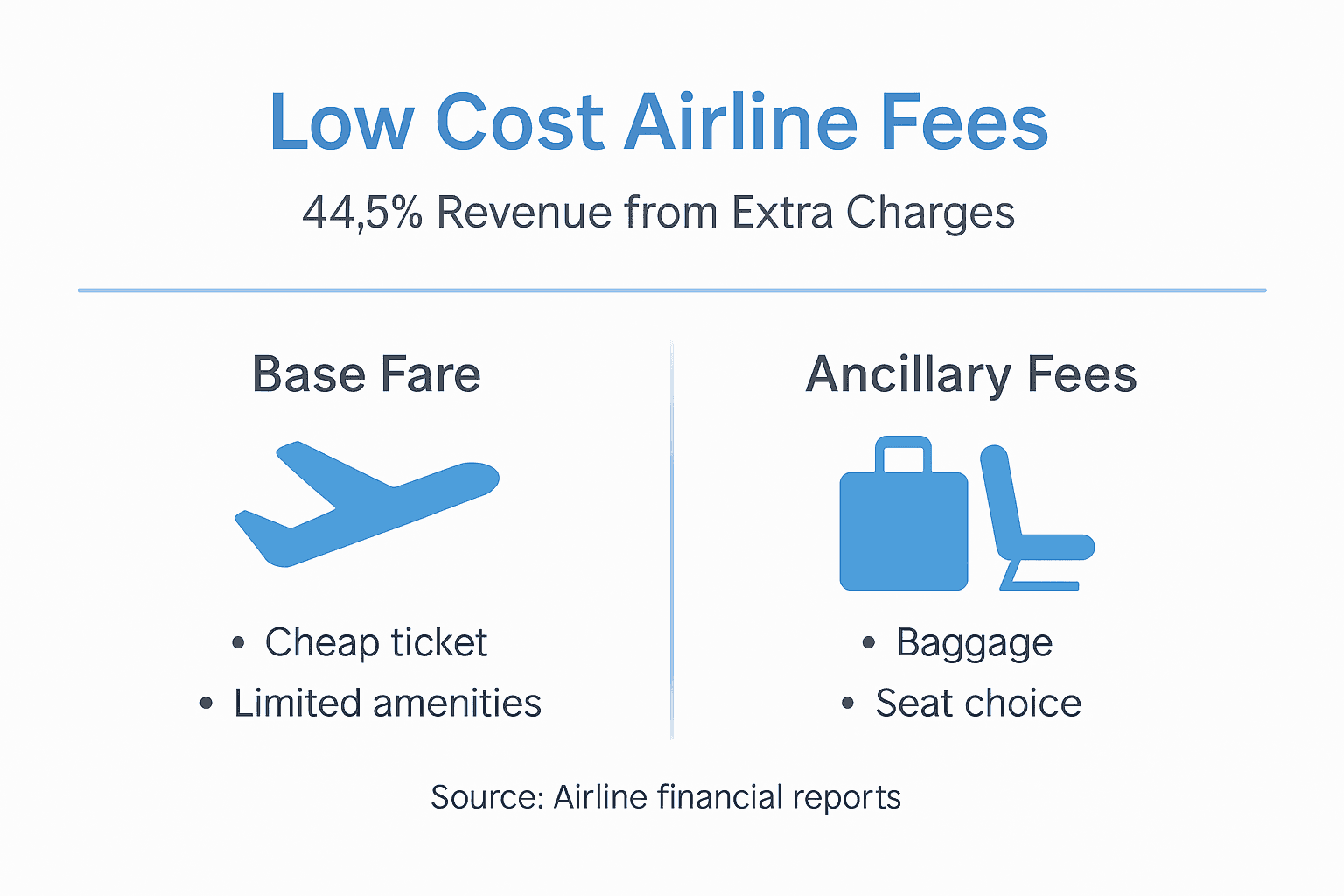
This business model flips traditional airline economics. Instead of bundling everything into one fare, low cost carriers unbundle aggressively. You start with a bare-bones ticket, then add only what you need. Traveling light with just a personal item? Pay nothing extra. Checking two bags and wanting extra legroom? Fees add up quickly.
Understanding ancillary fee reduction tips becomes crucial for accurate trip budgeting. A $49 base fare can balloon to $150 after baggage, seat selection, and boarding fees. Compare total costs, not just advertised prices.
| Airline | Checked Bag (First) | Carry-On Fee | Seat Selection | Change Fee |
|---|---|---|---|---|
| Spirit Airlines | $41-$65 | $41-$65 | $1-$50 | $90-$119 |
| Frontier Airlines | $30-$60 | $30-$60 | $6-$50 | $99 |
| Southwest Airlines | Free (2 bags) | Free | Free | Free |
| Allegiant Air | $20-$75 | $10-$75 | $1-$80 | $75 |
Common ancillary costs budget travelers encounter:
- Checked baggage fees ranging from $30 to $75 per bag
- Carry-on bag charges from $35 to $65 on ultra-low-cost carriers
- Seat selection from $1 for middle seats to $50 for exit rows
- Priority boarding costing $10 to $30
- Change and cancellation fees from $75 to $119
Pro Tip: Always add estimated ancillary fees to base fare to compare prices fairly across airlines and avoid sticker shock at checkout.
Understanding ancillary fees transforms how you evaluate ticket prices and choose the right carrier for your trip.
Common Misconceptions and Safety of Low Cost Airlines
Myths about budget airlines persist despite evidence proving otherwise. Safety concerns top the list of traveler worries, but data tells a different story.
Low cost airlines maintain safety records equivalent to major carriers. The Federal Aviation Administration (FAA) enforces identical maintenance, training, and operational standards regardless of ticket price. A Spirit Airlines pilot undergoes the same rigorous certification as a United Airlines pilot. Aircraft inspections follow identical protocols.
The misconception that cheap equals unsafe stems from confusion between service level and safety standards. Low cost carriers cut amenities, not corners on maintenance. Planes receive the same inspections, parts meet identical specifications, and crews train to uniform standards.
Another myth claims budget airlines always offer the cheapest total price. False. Once you add baggage fees, seat selection, and other charges, traditional carriers sometimes cost less. A Southwest ticket including two free checked bags often beats Spirit’s base fare plus bag fees for travelers with luggage.
Service quality differs from safety or reliability. Budget airlines focus resources on essentials: safe flights and on-time departures. You won’t get free drinks or extra legroom, but you’ll arrive safely and usually on schedule. Budget airline myths often exaggerate service differences.
Third-party booking creates problems incorrectly blamed on airlines. Booking through aggregator sites can result in reservation errors, missed fee disclosures, and customer service nightmares. The airline didn’t cause these issues; the booking method did.
Common misconceptions corrected:
- Myth: Low cost airlines cut safety corners. Fact: FAA enforces identical safety standards across all carriers.
- Myth: Budget tickets always cost least overall. Fact: Ancillary fees can make total price higher than traditional airlines.
- Myth: Poor service means unreliable operations. Fact: No-frills service differs from operational performance and punctuality.
- Myth: Third-party sites offer better deals. Fact: Direct booking reveals true costs and avoids booking errors.
Comparison of Major U.S. Low Cost Carriers
U.S. budget airlines vary dramatically in policies and pricing models. Understanding differences helps match your priorities to the right carrier.
| Feature | Southwest Airlines | Spirit Airlines |
|---|---|---|
| Base Fare Level | Moderate | Ultra-low |
| Checked Bags | 2 free (up to 50 lbs each) | $41-$65 first bag |
| Carry-On Policy | Free full-size carry-on | $41-$65 for standard carry-on |
| Seat Selection | Free open seating | $1-$50 assigned seats |
| Change Fees | None | $90-$119 |
| Flight Credits | Reusable indefinitely | Limited validity |
Southwest Airlines pioneered the low cost model but maintains passenger-friendly policies. Two free checked bags eliminate surprise baggage fees. No change fees provide flexibility. Open seating speeds boarding. These inclusive policies appeal to travelers wanting predictability and fewer nickel-and-dime charges.
Spirit Airlines exemplifies the ultra-low-cost carrier (ULCC) approach. Rock-bottom base fares attract price-focused shoppers. Then fees apply to nearly everything: carry-on bags, seat selection, drinks, even printing boarding passes at the airport. Total costs can exceed Southwest for travelers with baggage or preferences.
Choosing between models depends on your travel style:
- Southwest suits travelers with checked luggage who value flexibility and upfront pricing
- Spirit works best for minimalist packers willing to skip amenities for lowest base price
- Families benefit from Southwest’s free bags and no change fees
- Solo travelers with just a personal item maximize Spirit’s ultra-low base fares
The best budget airlines for you depends entirely on trip specifics and personal priorities. Choosing the right low cost airline requires calculating total trip cost including all fees, not just comparing advertised base fares.
Traveler Preferences and Service Tradeoffs
Budget travelers prioritize different factors when booking flights. Understanding common tradeoffs helps set realistic expectations.
Price dominates decision-making for most low cost airline customers. Surveys consistently show budget travelers willing to sacrifice amenities, legroom, and free snacks for significantly lower fares. The base ticket price matters more than in-flight comfort for trips under three hours.
Loyalty programs differ markedly between budget and traditional carriers. Low cost airlines offer simplified programs focused on immediate discounts rather than elite status perks. You earn points toward future flights but won’t get lounge access, priority security, or complimentary upgrades. Programs reward frequent flyers with fare credits, not premium experiences.
Flexibility represents a major tradeoff. Budget airline tickets typically come with restrictions. Non-refundable fares mean losing your money if plans change, unless you paid extra for cancellation protection. Change fees often cost $75 to $119 plus fare differences. Flexible booking guides explain strategies for maintaining options without overpaying.
Key service tradeoffs with popular low cost airlines:
- No complimentary snacks, drinks, or entertainment on most flights
- Tighter seat pitch (legroom) averaging 28-30 inches versus 31-32 on traditional carriers
- Limited customer service with phone support often requiring fees
- Fewer flight frequency options on many routes
- Basic boarding process without priority lanes unless purchased
- Strict baggage policies with fees for violations
The booking flexibility importance becomes clear when comparing refund policies. Traditional airlines often allow 24-hour cancellations and easier changes. Budget carriers enforce stricter rules, transferring risk to passengers.
Smart travelers weigh these tradeoffs against savings. A $100 fare difference might justify cramped seats for a two-hour flight but not a cross-country journey. Evaluate comfort needs honestly before booking.
Practical Booking Tips for Budget Travelers
Maximizing savings while avoiding fee surprises requires strategic booking. Follow these steps for smarter low cost airline purchases.
- Search multiple low cost airline websites directly rather than relying solely on aggregators to see actual fees.
- Calculate total trip cost by adding all anticipated ancillary fees to base fare before comparing options.
- Review baggage policies carefully and pack to avoid fees, using just a personal item when possible.
- Select seats during booking if location matters, as airport seat assignment often costs more.
- Join airline email lists for exclusive promotions and fare sales announced to subscribers first.
- Book during off-peak hours and days (Tuesdays and Wednesdays) when airlines often release sales.
- Consider flight timing, as early morning and late evening departures typically cost less.
Monitoring ancillary fees before purchase prevents budget-busting surprises. Most airline websites display fee breakdowns during the booking process. Review baggage allowances, carry-on rules, and seat selection costs. Factor these into your total to compare fairly.
Understand change and cancellation policies before clicking purchase. Budget airlines enforce strict rules. Spirit charges $90 to $119 to change flights plus fare differences. Frontier offers similar policies. Southwest stands alone allowing free changes, making it preferable for uncertain schedules.
Pro Tip: Always book directly on airline websites to access exclusive offers and fee transparency unavailable through third-party sites.
Cheap airfare booking tips emphasize timing and flexibility as keys to lowest prices. Reduce baggage fees tips show how smart packing eliminates the largest ancillary cost most travelers face.
Conclusion: Making Low Cost Airlines Work for You
Low cost airlines democratized air travel by offering fares traditional carriers couldn’t match. Their success stems from operational efficiencies like single aircraft fleets, point-to-point routing, and rapid turnarounds. Ancillary fees supplement low base prices, generating nearly half of total revenue.
Safety and quality don’t suffer despite rock-bottom fares. FAA regulations ensure equivalent standards across all carriers. The difference lies in service level, not safety or reliability.
Smart travelers weigh tradeoffs carefully. Calculate total trip costs including baggage, seats, and changes. Compare final prices across carriers rather than base fares alone. Match airline policies to your specific needs: Southwest for bags and flexibility, Spirit for absolute minimum price with carry-on only.
Strategic booking practices maximize value. Book directly, understand fee structures, and pack light. Low cost airlines deliver incredible savings when you know how to use them.
Explore More Ways to Save on Travel with PilotTravelDeals
Now that you understand how low cost airlines work, amplify your savings across all trip components. PilotTravelDeals helps budget-conscious travelers find deals on flights, hotels, and travel essentials.
Our platform aggregates offers from multiple providers, letting you compare prices quickly and book with confidence. Discover cheap airfare tips that complement your low cost airline strategy. Find affordable hotel bookings to stretch your budget further. Stay connected abroad with competitively priced travel sim cards avoiding expensive roaming charges. We combine deal aggregation with expert travel guidance, helping you plan trips efficiently while maximizing every dollar.
FAQ
Are low cost airlines safe to fly with?
Low cost airlines meet identical FAA safety regulations as major carriers, ensuring equivalent maintenance standards, pilot training requirements, and operational oversight. Statistical safety records show no significant difference between budget and traditional airlines. Price reflects service level, not safety standards.
How can I avoid hidden fees when booking low cost airline tickets?
Book directly on the airline’s official website to access full fee disclosures and transparent pricing breakdowns. Carefully review baggage allowances, carry-on policies, seat selection costs, and change fees before completing purchase. Add all anticipated ancillary charges to base fare for accurate total cost comparison.
What is the best low cost airline for travelers wanting upfront, predictable fares?
Southwest Airlines offers the most predictable pricing with two free checked bags and no change fees included in base fares. This inclusive approach suits travelers valuing upfront cost certainty over absolute lowest base price. Check the best low cost airlines comparison for detailed policy differences.
Why should I book low cost airline tickets directly from the airline website?
Direct booking eliminates third-party markups and reveals complete fee structures during the reservation process. Airlines offer exclusive promotions, clearer baggage policy explanations, and better customer service for direct bookings. Third-party sites often add booking fees and complicate changes or cancellations.
Recommended
- 7 Top Picks: What Are the Best Budget Airlines Now – PilotTravelDeals.com
- Airline Baggage Tips: Cut Fees by 30% with Smart Packing – PilotTravelDeals.com
- The Essential Guide to Budget Airlines Worldwide – PilotTravelDeals.com
- Cheap Airfare Tips to Find the Best Deals Easily – PilotTravelDeals.com
- Clawdbot API Cost Optimization: Smart Model Routing for Massive Savings